


Using Munich as a gateway, it is surprisingly easy to design a loop through the German Alps that strings together fairy tale castles, glacier views and quiet lakeside walks. The key is to choose a realistic route for the time you have, keep daily travel segments short, and build in at least one low-effort day so that the journey feels like a holiday rather than a checklist. The following three sample itineraries of roughly 5, 7 and 9 days stay entirely within the German Alps, from the Allgäu near Füssen to Berchtesgaden near the Austrian border, and can be done either by rental car or largely by train and bus.
Get the latest updates straight to your inbox!
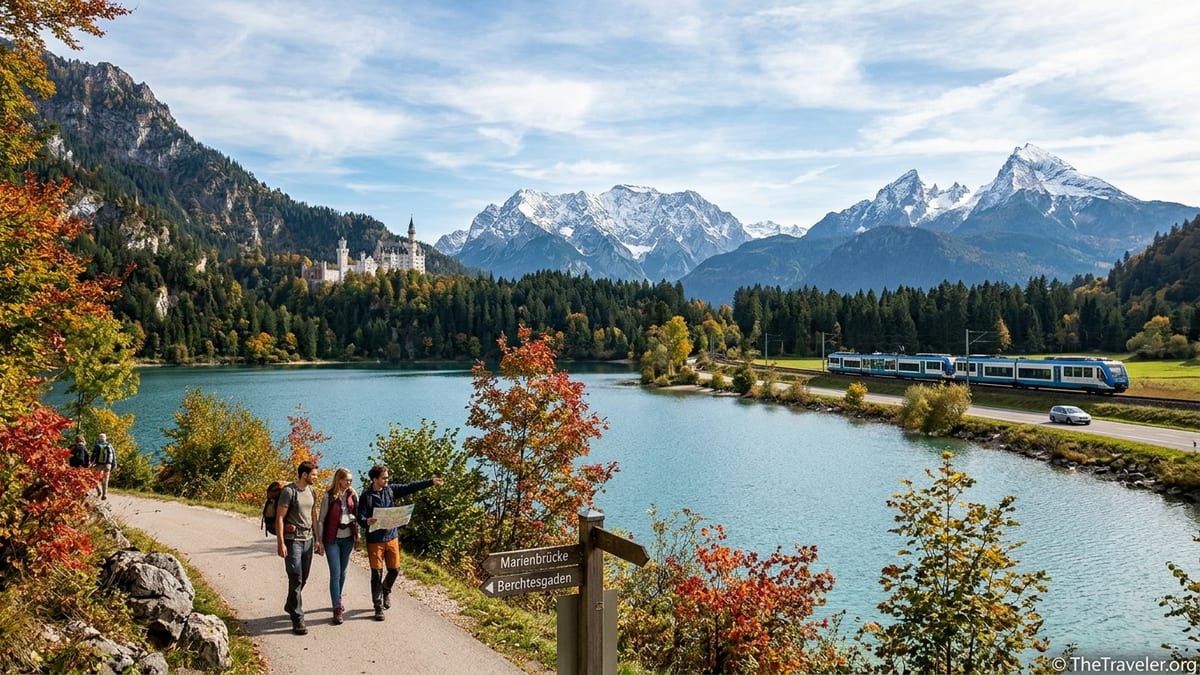
How to use these German Alps itineraries
All three itineraries begin and end in Munich and focus on a mix of castles, lakes and mountain viewpoints, with time for simple hiking or strolling rather than technical routes. Each day suggests a main activity and, where reasonable, one lighter secondary option. Distances are short by Alpine standards, and most travel legs are under three hours whether by car or public transport.
Travel times are based on typical schedules and mapping tools as of late 2026. As regional timetables, prices and road conditions change, you should always confirm details with official operators close to your departure date, particularly for mountain lifts, boats and seasonal buses, and be prepared for reduced services in winter or shoulder seasons.
For each route there is a driving and a car free version. Train and bus combinations in Bavaria are generally reliable, with Munich connected by regional trains to Füssen, Garmisch Partenkirchen, Tegernsee, Chiemsee and Berchtesgaden. A car becomes more useful if you want to connect smaller villages or viewpoints in a single day, or if you are traveling with children and bulky luggage, but it also adds parking costs and the stress of mountain driving in bad weather.
Prices for key attractions are given as point in time examples to help you budget. These are typical public rates as checked in autumn 2026 and may differ at your actual date of travel, especially in high season or if special offers apply. Accommodation ranges are illustrative mid range hotel or guesthouse estimates for two adults in a private room.
5 day highlights loop: Munich, Füssen and Garmisch Partenkirchen
This short itinerary suits first time visitors who want a compact taste of castle country and high mountains without rushing. It focuses on two bases: Füssen or Schwangau for Neuschwanstein and Hohenschwangau, then Garmisch Partenkirchen for classic Alpine scenery and a day on the Zugspitze or in the surrounding valleys.
On day one travel from Munich to Füssen. By car, the drive is roughly two hours via the A96 and B17 in normal traffic. By public transport, expect around 2 to 2.5 hours, usually with a change at Munich Pasing or Buchloe to a regional train towards Füssen; at peak times there are direct regional services in under two hours. Aim to arrive by early afternoon, check into your hotel and spend the rest of the day wandering Füssen’s old town and riverside or walking a short section of the Lech river trail.
Day two is dedicated to the royal castles at Hohenschwangau, a short drive or 10 to 15 minute bus ride from Füssen. Entrance to Neuschwanstein typically costs around 20 euros per adult in 2025 plus a small online booking fee, and visits are only possible on a timed, guided tour of about 30 minutes. Hohenschwangau tours last about 45 minutes. Tickets frequently sell out in high season, so you should reserve through the official system well in advance and arrive at the ticket center at least an hour before your first tour, especially if you need to pick up pre booked tickets. Use any spare time for the easy walk up to the Marienbrücke viewpoint if it is open and not under maintenance, or stroll the shore of Alpsee.
On day three travel from Füssen to Garmisch Partenkirchen. By car, the fastest route via Reutte and the B23 takes about 1.5 hours in good conditions. Without a car, you can use regional buses via Reutte or Oberammergau or travel east by train via Munich which takes closer to 3.5 hours; the bus combination through the Ammergau Alps is usually around 2.5 to 3 hours if the connections align. Keep the rest of the day gentle: explore the historic parts of Garmisch and Partenkirchen, or take an easy walk into the Partnachklamm gorge if it is open and conditions are safe.
Day four is your major mountain day. From Garmisch Partenkirchen the Bayerische Zugspitzbahn cogwheel train runs from the town up towards the Zugspitze glacier plateau, with the combined cogwheel and cable car journey to the summit taking around 75 minutes one way. As of the 2026 summer and winter seasons, a typical adult summit ticket for the full round trip with either cogwheel train or cable car is in the upper double digit euro range, often around 70 to 80 euros. Because prices and products change between seasons, you should check current tariffs on the operator’s official site and be prepared for weather related closures. In poor visibility many visitors choose to stay lower and spend the day walking in the Garmisch Classic hiking area instead, reached by local cable cars with separate tickets.
On day five return to Munich. By car, expect around 1.5 hours on the A95; by train, regional services from Garmisch Partenkirchen to Munich Hauptbahnhof typically take 1.25 to 1.5 hours. If you have a late afternoon or evening departure from Munich, consider a relaxed morning coffee in town or a short valley walk before checking out. For a mid range budget, plan roughly 130 to 200 euros per night for a double room in Füssen and Garmisch, 30 to 50 euros per person per day for meals, 60 to 90 euros per person in castle tickets and mountain lifts combined, and either regional train passes or fuel and parking for a small rental car.
7 day lakes and peaks route via Tegernsee and Berchtesgaden
The seven day itinerary adds more lakes and a second high mountain region by extending east to Tegernsee or the Chiemgau and on to Berchtesgaden and Königssee. It suits travelers who enjoy scenic boat rides, moderate lakeside walks and one or two higher elevation excursions, while still keeping overnight bases to three locations.
Day one sees you arrive in Munich and transfer directly south to Tegernsee. By car, the drive via the A8 and B318 usually takes about one hour. By public transport, regional trains from Munich to Tegernsee station take roughly one hour as well, often with a change at Holzkirchen depending on the time of day. Spend your first afternoon strolling the promenade, visiting a lakeside café or walking an easy section of the lakeside path between Tegernsee and Rottach Egern. This is a deliberate low key day to ease into the trip.
On day two stay based at Tegernsee and explore the surrounding peaks on a non technical hike or cable car ride. Local tourism offices promote a number of waymarked routes that are suitable for fit but non expert walkers, including upland paths starting from the Wallberg cable car or other nearby lifts. Choose a half day circuit whose duration and difficulty are clearly graded by the regional tourism authority, and always check trail conditions, operating hours and any early or late season closures before setting out. In poor weather, substitute a spa afternoon at a lakeside wellness hotel or thermal facility.
Day three takes you from Tegernsee to Garmisch Partenkirchen. Driving via the A95, the journey is about 1.5 hours in normal traffic. Using public transport, you typically travel by regional train back towards Munich or Holzkirchen and onwards to Garmisch, often taking around 2.5 hours depending on connections. In the afternoon, take a gentle walk through town or, in summer, an easy valley hike such as the route towards the Kramerplateauweg for broad views without serious elevation gain.
Day four in Garmisch can mirror the Zugspitze or Garmisch Classic mountain day described in the five day itinerary, but consider downshifting the pace. Instead of a full summit day, some travelers prefer a combination of an easy gorge or valley walk in the morning and a short cable car ride in the afternoon, or simply café hopping and shopping in town. Always check lift maintenance schedules, which often include several weeks of closure in spring and autumn.
On day five travel from Garmisch Partenkirchen to Berchtesgaden, your eastern Alpine base. With a car, the most direct route via the A8 near Munich and onwards towards Salzburg generally takes 2.5 to 3 hours, longer in holiday traffic. Using public transport, a typical journey combines a regional train to Munich, a long distance or regional service towards Freilassing or Salzburg, then a local train or bus to Berchtesgaden; total travel time is usually between 3.5 and 4.5 hours, so start early and treat this as a primarily transit day.
Day six focuses on Königssee. From Berchtesgaden bus services run frequently to the lake in about 15 minutes, and parking is available for drivers near the boat dock. Electric passenger boats cross the lake year round, but the timetable and how far they go depend strongly on the season. In winter and early spring, services often operate only as far as the St Bartholomä peninsula, while in summer many boats continue to Salet at the far end, where additional walking paths start. A typical adult return fare from the main dock to St Bartholomä has recently been in the low to mid 20 euro range. You must check the official timetable for your exact travel month and verify same day notices about weather disruptions or reduced runs, and in high summer it is wise to arrive before late morning to avoid long queues.
On day seven, enjoy a relaxed morning in Berchtesgaden before traveling back to Munich. Drivers can expect around 2 hours on the A8 in light traffic, more at busy times. Public transport passengers usually need about 2.5 to 3 hours via Freilassing or Salzburg. For a representative mid range budget over seven days, allow around 130 to 220 euros per night for accommodation in Tegernsee, Garmisch and Berchtesgaden, 35 to 60 euros per person per day for food depending on restaurant choices, around 25 euros per adult for a Königssee boat excursion, a similar range for individual mountain lifts, and either a regional pass or moderate fuel and parking outlays for a small vehicle.
9 day extended German Alps loop from Allgäu to Berchtesgaden
The nine day loop combines elements of both shorter itineraries and adds more variety in lake regions and viewpoints. It is inspired by longer German Alps routes featured in major guidebooks, but updated with current connection times and more deliberate rest days. There are four principal bases: Füssen in the Allgäu, Garmisch Partenkirchen, a lake region such as Chiemsee, and Berchtesgaden.
On day one travel from Munich to Füssen as described earlier and settle in. Day two is dedicated to Neuschwanstein and Hohenschwangau, again with advance reservations essential in peak periods. On day three, instead of departing immediately, stay another night in the region and use it for a low stress activity: perhaps a half day, well signposted hike to one of the nearby lakes, or a visit to the Füssen Heritage Museum and riverside promenades. This buffer allows for weather flexibility and reduces pressure if castle ticket times are only available later in the day.
Day four takes you from Füssen to Garmisch Partenkirchen, where you stay for two nights. Use the arrival afternoon for a short walk or simply to enjoy the town. Day five is your main mountain excursion via the Zugspitzbahn or a mid altitude hiking area, always chosen according to the lift and trail information from official sources for your exact dates. If you are traveling in winter, this day might turn into a ski or snowboard day at Garmisch Classic or a guided snowshoe excursion instead of a summit visit, with weather and avalanche bulletins checked in advance.
On day six drive or ride trains and buses from Garmisch to the Chiemsee or broader Chiemgau region, near the foothills of the eastern Bavarian Alps. With a car, the route typically takes around 2 to 2.5 hours. Without a car, you can usually reach Prien am Chiemsee from Garmisch in roughly 3 hours via Munich. In the afternoon, stroll the lakeside promenade or visit a local spa. Day seven can be spent on the lake itself, for example by taking a boat to the island that houses the Herrenchiemsee palace. Boat services operate year round but with different frequencies and sometimes reduced routes in winter and shoulder seasons, so timetables from the local lake shipping company must be checked close to travel. Palace tickets and combined boat and palace offers have distinct pricing structures that change periodically; expect palace entry in a similar broad range to other major Bavarian palaces.
Day eight brings you from the Chiemsee area to Berchtesgaden, a drive of around 1.5 hours by car or a roughly 2 to 2.5 hour journey by regional trains and buses via Traunstein or Freilassing. Depending on arrival time, visit the historic center or one of the valley viewpoints. Day nine completes the loop back to Munich in about 2 to 2.5 hours by car or by train and bus, leaving time for an evening in the city before onward travel. Spreading the route over nine days keeps individual legs short and allows for one or two weather related changes without derailing the whole trip.
For budgeting, nine days in mid range hotels or guesthouses might average 130 to 220 euros per night per double room across the different bases, with higher prices common in lakeside or peak season stays. Add to this daily food costs, cumulative attraction tickets including at least one castle visit, one or two major mountain lifts, a couple of boat trips and any spa entry. For public transport, compare individual tickets with regional day or multi day passes, and note that national subscriptions often cover regional trains and buses but not private mountain railways or long distance expresses. Drivers should include fuel, motorway vignettes if crossing briefly into Austria, parking fees at busy sites and potential winter tire or chain surcharges.
Transport choices: car versus car free loops
All three itineraries can be completed without a car by relying on the German rail network and regional buses, though the nine day loop offers the most comfortable margins for making connections. Munich is a major rail hub with frequent regional trains south and east, and base towns like Füssen, Garmisch Partenkirchen, Tegernsee, Prien am Chiemsee and Berchtesgaden have dedicated stations or well linked bus terminals.
The car free version has clear advantages for cost predictability and environmental impact, particularly if you make use of regional day passes or nationwide subscriptions that cap the price of local and regional travel. It also reduces the stress of driving on unfamiliar mountain roads, dealing with snow or fog or finding parking at popular sites. The trade off is less flexibility to detour spontaneously to small villages or quiet viewpoints, and the need to pay closer attention to the last bus or train of the day, especially outside peak tourist seasons.
Driving offers significantly more freedom in timing and routing, and it can shorten some cross country segments, such as from Füssen to Garmisch Partenkirchen or from Garmisch to the Chiemsee and on to Berchtesgaden, by avoiding backtracking through Munich. However, in high summer, on holiday weekends or in winter storms, traffic and road conditions can slow travel dramatically. Parking at Neuschwanstein, Königsschlösser, popular lakefronts and lift stations also adds daily costs, and certain mountain roads may require winter equipment or be closed entirely in bad weather.
As a rough comparison, a five day car free loop might involve 8 to 10 total hours in transit, with the longest single segment around 2.5 hours. The seven day lakes and peaks route might mean 12 to 15 hours total on trains and buses, and the nine day circuit perhaps 16 to 20 hours, spread across many short hops. Driving typically trims one to three hours off the overall transit time on the longer itineraries but at the expense of fuel, tolls or vignettes if your route crosses borders, parking fees and higher carbon emissions.
Seasonality, safety and reservations
Season plays a major role in how these itineraries feel and what is realistically possible each day. In winter and early spring, high altitude trails are snowbound and many are unsafe without specialized equipment. Mountain lifts sometimes shift focus to snowsports and may close for maintenance between ski and summer seasons. In these months, replace high ridge walks with valley floor hikes, guided snowshoe tours or simply more time exploring historic towns and spa facilities, and always check local avalanche bulletins and safety advice before venturing off groomed routes.
Spring and autumn shoulder seasons can be ideal for lighter crowds at castles and lakes, but they also bring less predictable weather and occasional lift or boat closures. The Königssee boat company, Chiemsee boat operators and mountain railway companies publish seasonal timetables and explicitly reserve the right to alter or cancel services in fog, storms or high water, so you should confirm both the season of operation and the daily status notices just before travel. In some shoulder periods, services only run a few times per day, which requires more careful planning of outward and return journeys.
Summer, particularly school holiday periods, brings the most reliable opening hours and transport frequencies but also the largest crowds and the highest prices for sought after rooms. For Neuschwanstein and other royal castles, reserving tickets weeks ahead is strongly recommended. For the Zugspitze, Chiemsee and Königssee boat trips and major lifts, advance bookings or early morning arrivals are wise in July and August. Always carry sun protection, water and a light weatherproof layer even on apparently easy walks, as conditions in the Alps can change quickly.
Regardless of season, choose hiking routes that are clearly waymarked and recommended by local tourism authorities for your fitness level. Estimate walking times conservatively, factor in breaks and photo stops, and do not hesitate to turn back in deteriorating weather. Official visitor centers are usually the best place to check current trail and lift information on the morning of your outing.
Customizing and extending your German Alps route
These itineraries are intended as templates rather than rigid schedules. Travelers who prefer a slower pace can add rest days at any base, perhaps using them for spa visits, leisurely boat trips or unstructured time in café lined town squares. Others might swap the suggested hubs for quieter nearby villages: for example, staying in Schwangau rather than central Füssen, Grainau instead of Garmisch Partenkirchen, or a small lakeside village around Chiemsee instead of Prien.
The balance of castles, lakes and mountain tops can also be adjusted. Those less interested in palaces might reduce time around Füssen or Chiemsee and spend more days hiking near Berchtesgaden or Garmisch. Conversely, travelers drawn to baroque and historic sites could add visits to extra Bavarian palaces and monasteries within short driving or train distance of the main loop. Families with younger children may want to prioritize shorter travel legs, frequent playground stops and accommodations with pools or family rooms.
For travelers with more than nine days, it is straightforward to extend the route into adjacent non German Alpine regions, clearly marking this as an international addition. Common options include continuing from Berchtesgaden into the nearby Salzkammergut lake district in Austria or crossing from the Allgäu into the Austrian Tyrol. Such extensions introduce new transport passes, border crossing considerations for rental cars and sometimes different peak seasons, so they should be researched separately from the German section.
By starting and ending in Munich, keeping daily distances modest and focusing on a few well chosen bases, these sample itineraries offer a balanced framework for exploring the German Alps. With up to date checks on transport and opening times and a willingness to swap days around in response to weather, you can shape them into a memorable journey that suits your own timeframe, interests and travel style.