


More news on this day
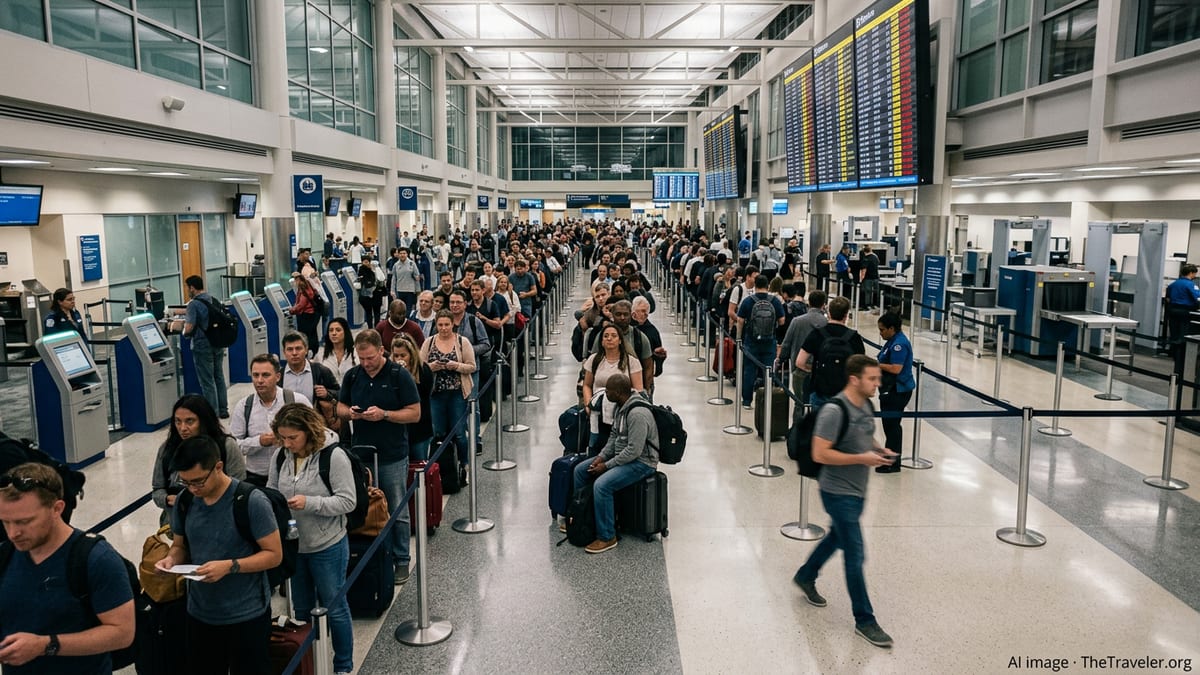
Hundreds of international passengers were left waiting in snaking queues outside Chennai airport’s international terminal this week, after a prolonged closure of several entry gates triggered hours-long delays and disrupted departures for scores of flyers.
Get the latest news straight to your inbox!
Gate closures spark early-morning chaos
Published coverage from local outlets indicates that the disruption unfolded during the busy early-morning departure window, when long-haul and regional international flights typically leave Chennai. Several entry points to the international terminal reportedly remained closed for close to six hours, forcing all departing passengers through a limited number of security screening lanes.
Images and accounts shared in Indian media described lines stretching far outside the terminal building, with passengers and baggage crowding the access roadway. Travellers scheduled on multiple international services waited in slow-moving queues under humid conditions, raising concerns about missed flights and connections.
Reports suggest that around 17 departing flights were affected to varying degrees, with some operators delaying check-in cut-off times to accommodate passengers stuck outside. Others are understood to have proceeded with scheduled pushback, leaving late-arriving customers scrambling to rebook.
Publicly available information shows that many affected passengers took to social media to highlight the gridlock, questioning why entry gates were not opened in anticipation of the morning rush and why there appeared to be limited crowd management at the curbside.
Passengers voice frustration over crowding and communication
Travellers who reached the check-in area after lengthy waits reported additional queues at airline counters and pre-departure security, compounding the delay. Some accounts describe families with young children and elderly passengers standing in line for more than two hours before even entering the main terminal hall.
According to published coverage in national and regional media, passengers expressed particular frustration at what they perceived as poor communication. Many said they received little guidance on which gates were open, how long delays might last, or whether their flights would be held for those still stuck outside.
Observers noted that a lack of clear signage and public announcements added to the confusion, with crowds bunching at a few active entrances while other doors reportedly remained unused. The situation has renewed debate among frequent flyers about the overall passenger-handling capacity and wayfinding at Chennai’s international facilities.
Travel forums and local discussion boards have in recent months carried a steady stream of complaints about congestion, limited amenities and inconsistent information at the airport, with this latest bottleneck reinforcing concerns over the experience for both outbound and connecting passengers.
Operational bottlenecks at a growing regional hub
Chennai International Airport is one of India’s busiest aviation gateways, serving a mix of Middle East, Southeast Asia and Far East routes alongside domestic connections. Government documents and earlier statements on capacity expansion highlight ongoing work to upgrade and integrate terminal facilities to handle higher passenger volumes.
Despite the infrastructure investments, reports indicate that peak-hour crowding at immigration, security and kerbside drop-off remains a recurring challenge. Analysts note that limited entry points combined with strict security screening can quickly translate into backlogs if even a few screening lanes or gates are unavailable during a surge of departures.
Recent weeks have already tested Chennai’s resilience, with separate disruptions linked to regional geopolitical tensions and weather systems affecting flights to West Asia and East Asia. Those events left hundreds of travellers dealing with cancellations and long waits within the terminals, adding pressure on staff and facilities still adapting to post-pandemic demand patterns.
Against that backdrop, the latest gate-closure episode is being viewed by frequent travellers as a symptom of deeper operational bottlenecks, rather than an isolated inconvenience, especially when multiple early-morning departures coincide.
Calls grow for better peak-hour planning and passenger flow
Following the incident, consumer voices and aviation commentators have urged airport stakeholders to reassess how entry and security checkpoints are managed during known peak waves. Suggestions highlighted in public discussions include opening all available gates during high-demand periods, deploying more staff for crowd control, and providing real-time updates on queue times and gate availability.
Travel advocates also point to practices at other high-traffic airports, where dynamic allocation of access doors, flexible queuing systems and proactive digital communication help reduce congestion outside terminal buildings. Similar approaches, they argue, could reduce the risk of passengers missing flights simply because they were unable to clear the first layer of security in time.
There is also growing interest among passengers in clearer escalation channels when bottlenecks form. Some have called for visible on-ground coordinators who can prioritise travellers with imminent departures, as well as better coordination between airport management, security agencies and airlines on adjusting check-in and boarding timelines during disruptions.
For international tourists and nonresident Indians transiting through Chennai, such improvements are seen as critical to maintaining confidence in the airport as a convenient gateway to southern India’s major technology, medical and cultural hubs.
What travellers should know before flying from Chennai
In light of the recent incident, travel planners are advising flyers using Chennai’s international terminal to allow extra time for departures, especially during early-morning and late-night peaks when multiple long-haul services operate. Arriving at the airport well ahead of airline-recommended check-in cut-offs may provide a buffer against unexpected queues at the perimeter.
Passengers are also encouraged to monitor airline notifications closely on the day of travel and to check for any advisories related to security checks or gate changes. Keeping travel documents and baggage ready while in line can help speed up screening when bottlenecks ease.
For those with tight onward connections, some experts suggest booking longer layovers or choosing itineraries with more flexible change policies, at least while reports of congestion and intermittent disruptions at Chennai continue. Travel insurance products that cover missed connections and delays can also mitigate potential costs if flights are affected.
As Chennai’s airport continues to expand and modernise, travellers and industry observers will be watching closely to see whether operational changes follow the latest episode of gridlock outside the international terminal, and whether peak-period passenger experiences improve in the months ahead.