


More news on this day
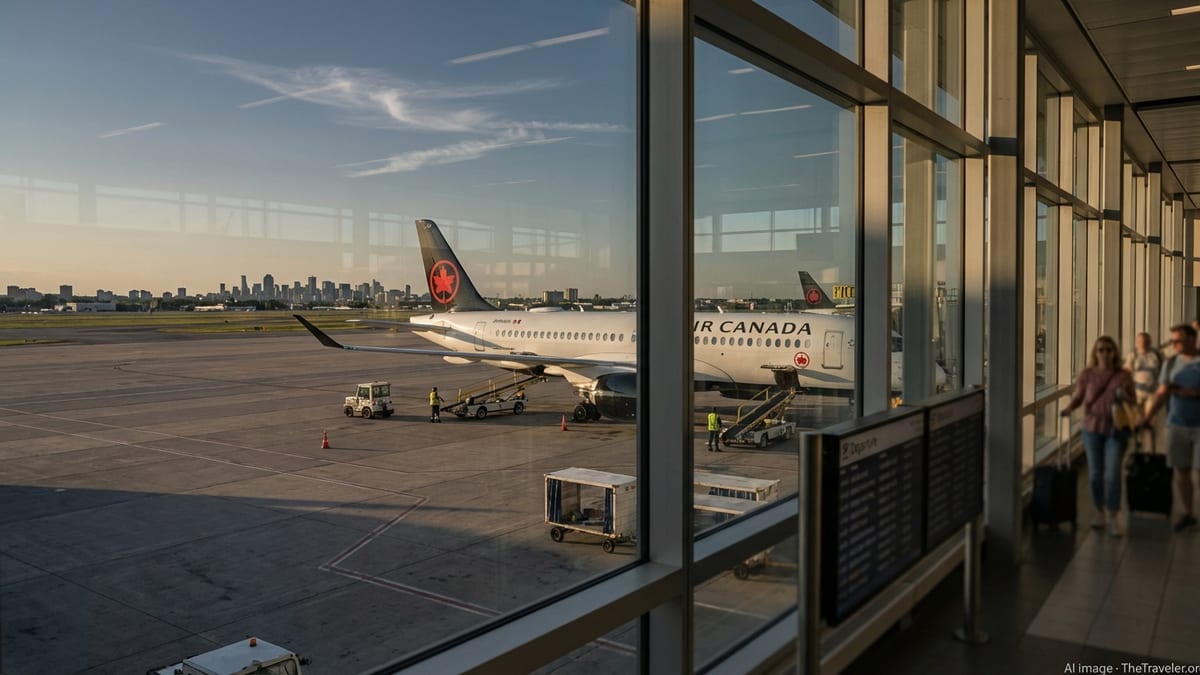
Flights from Montreal’s Trudeau airport to the United States resumed on Thursday after a temporary halt in U.S. customs preclearance operations prompted by a strong construction-related odour in part of the terminal, according to publicly available airport and media reports.
Get the latest news straight to your inbox!
Customs pause triggers disruption for U.S.-bound travelers
Published coverage indicates that U.S.-bound departures at Montreal–Trudeau International Airport were interrupted when an unexpected odour, believed to be linked to nearby construction work, affected the area used for United States border preclearance. The pause in customs processing effectively halted passenger screening for transborder flights, causing delays and a temporary backlog of travelers already at the airport.
Information from airport communication channels and news reports suggests that U.S.-bound flights were held at gates or delayed at check-in while the situation was assessed. With preclearance facilities central to Trudeau’s operation of flights to American destinations, any interruption in customs processing quickly reverberated through the departure schedule.
Reports indicate that the odour issue was confined to a specific zone of the terminal and that there were no immediate reports of serious injuries. Airport teams and partner agencies moved to identify the source, while airlines began warning passengers of potential delays and advising them to monitor flight status closely.
Once the affected space was evaluated and deemed safe for use, customs processing restarted and airlines began working through the backlog of departures, gradually restoring regular operations on U.S. routes.
Construction and air-quality concerns at a busy Canadian hub
Montreal–Trudeau has been undergoing multi‑year construction and modernization projects, which have brought periodic traffic congestion and infrastructure changes around the terminal. Publicly available information on the airport’s development plans highlights new road layouts, expanded facilities, and work near key passenger areas, including those serving U.S. flights.
In large construction zones, strong odours can sometimes result from materials such as sealants, paints, adhesives, or ventilation changes. Aviation incident reports in other jurisdictions show that unusual smells occasionally trigger temporary closures or evacuations as a precaution, even when the underlying cause is not hazardous. The latest interruption in Montreal fits into that broader pattern of short, safety‑driven pauses in operations while air quality is checked.
The incident also underscores how closely construction activity is intertwined with day‑to‑day terminal operations at major airports. Even when work is scheduled outside peak times or in cordoned‑off areas, airflow, shared mechanical systems, and passenger circulation can cause unexpected knock‑on effects, especially near sensitive functions like border control and security screening.
For Montreal–Trudeau, the challenge is balancing the need to modernize infrastructure serving millions of passengers each year while keeping critical services such as customs and security shielded from construction‑related disruptions as much as possible.
Impact on passengers and airline operations
The pause in customs operations created immediate uncertainty for travelers bound for U.S. cities. Passengers already in the preclearance area faced extended waits, while others were held at check‑in or security as airlines tried to sequence boarding around the temporary shutdown. Some flights experienced departure delays, and in a few cases schedules were adjusted as carriers worked within crew duty limits and aircraft rotations.
Operationally, disruptions at customs or security tend to ripple across an airline’s network. Aircraft arriving in Montreal to operate transborder services can be kept on the ground longer than planned, potentially affecting later flights on the same aircraft. Crews may also be pushed closer to regulated duty‑time limits, which can constrain how long a recovery effort can continue on a given day.
Published aviation analyses show that once core processes such as security or border screening are interrupted, delays can compound quickly unless additional resources or schedule adjustments are introduced. In this case, the relatively short duration of the customs pause appears to have limited the longer‑term impact, allowing airlines to restore most services later in the day.
Travelers reported longer lines and some missed connections, but publicly available information suggests that widespread cancellations were avoided. Many airlines encouraged affected passengers to rebook without penalty or use self‑service tools to adjust itineraries as operations normalized.
How U.S. preclearance shapes disruption at Canadian airports
Montreal–Trudeau is one of several major Canadian airports hosting United States border preclearance facilities. Under this system, travelers pass through U.S. customs and immigration before departure, allowing flights to arrive in the United States as if they were domestic services. The arrangement is designed to streamline arrivals at busy U.S. hubs and spread the processing workload across a wider geographic footprint.
This structure, however, means that any interruption in preclearance immediately affects the ability to dispatch U.S.‑bound flights. Unlike domestic or other international departures, where airport operators can in some cases reroute passengers to alternative screening points, transborder flights are tightly bound to the designated preclearance zone and its staffing, equipment, and environmental conditions.
Incidents at other airports have shown that problems as varied as power failures, technology outages, or suspicious odours can prompt short halts in operations until safety checks are complete. When that happens in a preclearance environment, departure gates can remain full even if aircraft and crews are ready, because passengers are not yet legally cleared to enter the United States.
The recent odour‑related pause at Montreal illustrates how crucial environmental controls and contingency planning are in these shared facilities. Ensuring robust ventilation, clear incident‑response procedures, and rapid communication between airport authorities, airlines, and border agencies can help reduce the length and impact of similar interruptions.
Guidance for upcoming travelers using Montreal–Trudeau
Travel information channels and news reports emphasize the importance for passengers to verify their flight status before heading to the airport in the wake of any disruption. For those traveling from Montreal to U.S. destinations, arriving well in advance of departure remains advisable, particularly during periods of ongoing construction or peak holiday traffic.
Passengers are encouraged to build extra time into their journey for customs and security, and to be prepared for temporary reconfigurations of terminal spaces, including changed entrances, closed corridors, or relocated screening lanes. Airlines typically update digital channels first, so checking for gate changes and revised departure times can help minimize surprise delays on arrival at the airport.
Travelers with tight onward connections in the United States may wish to consider slightly longer layovers when booking itineraries that begin at airports undergoing major construction programs. While most days pass without incident, events such as the recent odour‑driven customs pause in Montreal show how quickly an otherwise routine trip can be affected by local infrastructure issues.
For now, publicly available information shows that U.S.‑bound flights from Montreal–Trudeau are operating again, with customs preclearance back in service and airlines focused on stabilizing schedules. The episode is likely to feed into broader reviews of how construction projects near critical processing areas are planned, monitored, and communicated to the traveling public.