


For many Boston-area travelers, the biggest stress of flying is not the security line or the boarding scrum. It is figuring out how to get to Logan Airport without burning time in traffic or paying more for parking than the plane ticket. Logan Express, Massport’s network of suburban park-and-ride buses, is designed to solve that problem. Used smartly, it can be cheaper, calmer, and often faster than driving into the airport and parking at the terminals yourself.
Get the latest updates straight to your inbox!
What Logan Express Is and Where It Runs
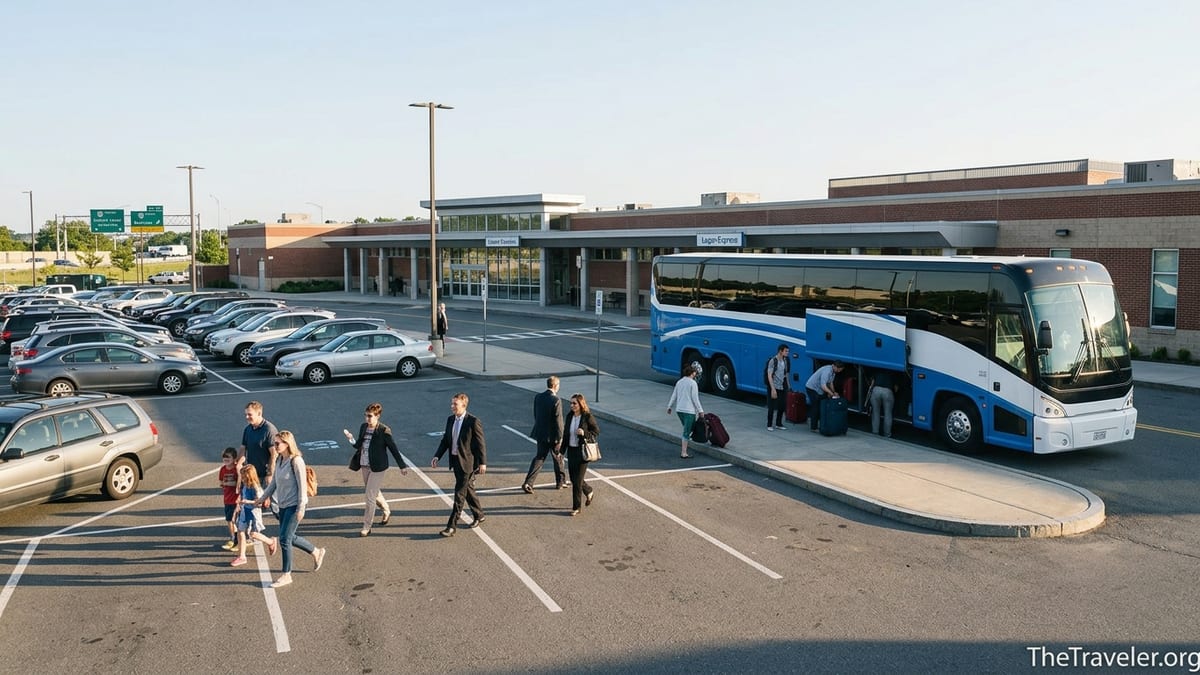
Logan Express is a dedicated bus service operated for Boston Logan International Airport that connects the terminals with large park-and-ride lots in several suburban locations. As of mid-2026, the core suburban routes run from Braintree on the South Shore, Framingham to the west, Woburn to the north, and Peabody / Danvers to the northeast, along with a city route serving Back Bay. Buses go directly to Logan’s terminals, looping past each one so you can get off at your airline’s check-in area without changing vehicles.
Most suburban routes are designed around highway access. Braintree sits near the “Braintree Split” where Route 3, I‑93, and Route 128 converge, making it convenient for drivers from the South Shore and parts of the South Coast. Woburn is near the junction of I‑93 and I‑95, ideal for travelers from New Hampshire or the Merrimack Valley. Framingham serves drivers coming from Worcester County and the MetroWest suburbs, while Peabody / Danvers works well for the North Shore and Cape Ann.
Compared with regular MBTA buses or the subway, Logan Express is meant for people with luggage who are willing to pay a modest premium for a reserved seat, under-the-bus baggage storage, and a predictable nonstop trip. Seats are typically coach-style with overhead racks and a luggage bay underneath, and many buses have Wi‑Fi and power outlets. Service starts early in the morning and runs into the late evening; some routes operate close to hourly during off-peak times and more frequently around peak flight banks.
If you live within a 10 to 30 minute drive of one of these suburban terminals, Logan Express is often the most straightforward option: you park once, ride directly to your terminal, and reverse the trip when you land, without hunting for airport parking or coping with congested pickup areas after a long flight.
Fares, Discounts and How Ticketing Works
Logan Express fares are structured to be noticeably lower than a typical private airport shuttle or rideshare, especially for solo travelers. As of 2026, Massport has advertised suburban Logan Express round-trip tickets in the single-digit to low double-digit dollar range, with one-way fares roughly half of that. For example, a typical pattern has been something in the ballpark of just under ten dollars one way or under twenty dollars round trip from the suburban lots, while the Back Bay shuttle has often been priced at a lower, almost symbolic fare to encourage use.
Tickets can be purchased online in advance or at kiosks and staffed counters at the suburban terminals. Online purchases generate an electronic ticket or QR code that you can show on your phone. Many regular users find it easiest to buy a round-trip ticket at once, especially for short trips where they know their return date. Massport’s terms typically give you a grace period for using each leg of the ticket, so you are not locked into a specific departure time. That flexibility is helpful if your flight is delayed or you clear customs earlier than expected.
There are usually discounts for certain passengers. Children under a specified age often ride free with a paying adult, making the bus particularly economical for families compared with paying multiple full-price fares on the subway or booking an oversized rideshare. Seniors and airport employees have historically received reduced fares as well. Because exact policies can shift from year to year, it is wise to confirm current child age limits and senior eligibility on the official Logan Express site or at the ticket counter before you travel.
When boarding, bus drivers typically scan or visually check tickets as you step on. If you are returning from Logan and did not purchase a return leg in advance, you can usually buy a ticket right at the airport bus stop using a card, though having your ticket sorted before you arrive with jet lag and luggage often makes for a smoother experience.
Parking at Logan Express Lots: Costs, Capacity and Gotchas
One of the main reasons travelers choose Logan Express is the predictable parking cost. Massport’s current suburban Logan Express rate is generally around seven dollars per calendar day in the on-site lots, a fraction of what you would pay at Logan’s central parking garages or economy lots. For example, a weeklong trip might add up to under fifty dollars in suburban Logan Express parking, versus well into three figures if you parked on airport property.
Each suburban terminal has its own quirks. The Braintree lot, for instance, has historically been very popular and can get quite full during school vacation weeks, long weekends, or holiday periods. Recent public planning documents and local announcements have discussed expanding and redeveloping that site to add thousands more parking spaces, reflecting the consistently high demand. Woburn, located adjacent to an MBTA commuter rail hub, sometimes uses an overflow arrangement with the neighboring MBTA lot when Logan Express parking is tight. On peak days, signage at the entrance or Massport alerts may notify you if a particular lot is at capacity or in overflow mode.
Because these lots serve overnight travelers, they are generally open 24 hours and allow multi-day stays, but not all nearby commuter parking has the same rules. A traveler who usually parks at a suburban MBTA garage for day trips into Boston might assume the same rules apply, but MBTA parking sometimes has different pricing and overnight policies, so it is important to follow Logan Express–specific signs and pay at the correct machines or in the designated app for the airport bus lot, not for the commuter rail garage next door.
In practice, most travelers simply drive in, take a ticket or record their license plate at the entrance, park in an open spot, and pay for parking either before exiting or via an automated system that matches payment to your plate. For example, a family heading to Orlando for five nights from Woburn might arrive on a Saturday morning, park in a clearly signed Logan Express section, ride the bus, and come back the following Thursday to pay roughly five days of parking plus the bus fares. Compared to paying for a rideshare both ways from a distant suburb, the total can be significantly lower, especially if more than two travelers are involved.
Step-by-Step: Using Logan Express With Kids and Luggage
For families, the combination of predictable costs and an easy boarding process can be a major relief. A typical trip from the suburbs might look like this: You check your flight time and then look up the Logan Express schedule from your nearest terminal. If your winter morning flight leaves at 10:30 a.m., and the bus ride from your lot is advertised at about 40 to 50 minutes under normal traffic, you might aim for a bus around 7:30 or 8:00 a.m. to allow for security and any highway delays.
When you arrive at the suburban lot, you park, gather your bags and kids, and walk to the terminal building. Inside, you will usually find restrooms, seating, and ticket machines or a staffed window. Parents often buy all the tickets at once; if children ride free with a paying adult on the route you are using, you simply count the eligible kids with each fare. When the bus pulls up, the driver opens the luggage compartment and helps stow larger suitcases underneath. Strollers can either be folded and placed in the under-bus bay or, if compact, brought onboard and stored in an overhead rack or at the front, subject to the driver’s safety instructions.
On the bus, younger kids can sit beside a parent and watch out the window while older children use devices. Many Logan Express coaches now have USB ports or standard outlets; if that is important for your family, it is worth bringing a small power bank as backup in case a particular vehicle’s outlets are out of service. The ride itself tends to be calmer than the subway and less chaotic than piling everyone into a crowded rideshare at rush hour. By the time you reach your terminal, you simply retrieve your luggage from the under-bus compartment and walk directly into the departures area.
On the return, Logan Express stops are typically located on the arrivals level outside each terminal, in signed bus islands dedicated to the service. After collecting your bags from baggage claim, you follow the Logan Express signs to the curb, find the stop for your suburban route, and wait for the next bus. During peak times, there may be airport staff on hand to direct passengers, which is particularly helpful for families arriving from late-night flights who are not eager to puzzle through ground transportation maps.
Is Logan Express Really Easier Than Driving to Logan?
Deciding whether Logan Express is “easier” than just driving and parking at the airport depends on your starting point, the time of day, and how much you value predictability over flexibility. For a solo traveler living in Framingham with a midday weekday flight, the equation is often clear: a short drive to the Logan Express lot, roughly seven dollars per day in parking, and a modest bus fare likely beats sitting alone in toll and tunnel traffic, then paying significantly higher daily rates in Logan’s garages.
For a family of four driving from a far suburb like Nashua, New Hampshire, the math can still favor Logan Express. They might drive to Woburn, pay parking for the duration of the trip, and buy bus tickets for two adults while children ride at discounted or free rates, depending on current policy. The total transportation cost might land somewhere in the range of a single expensive rideshare plus tolls, but with the bonus of not asking a friend to drive an hour each way or leaving a car sitting in an unfamiliar private lot near the airport.
However, there are scenarios where Logan Express may not be the obvious winner. If you live in East Boston or directly on the Blue Line, the subway or a short taxi ride might be faster and cheaper than driving out to a suburban lot only to ride a bus back toward the airport. Couples traveling with minimal luggage from central Boston may prefer the Back Bay Logan Express shuttle or even the Silver Line bus, which has the advantage of being part of the regular transit system rather than a separate park-and-ride service.
Traffic patterns matter too. On a Sunday morning in August, driving from Milton directly to Logan might be quick and relatively low-stress, especially if you are comfortable navigating the tunnels. On a Friday evening before Patriots Day, with tunnel construction and rush-hour traffic, the bus’s dedicated routing and the ability to sit back rather than jockey for lanes on I‑93 can be worth far more than the difference in raw dollars.
Practical Ticket and Timing Strategies
Because Logan Express schedules can vary by season and day of the week, the most important step is to check the current timetable for your specific route a few days before departure. Massport occasionally adds early-morning or late-night trips around heavy travel periods and may adjust frequencies during off-peak times. Building your airport arrival plan backward from your flight’s boarding time, rather than just the departure time, gives you a safer buffer.
A useful rule of thumb for domestic flights is to aim to reach your terminal at least 90 minutes before boarding begins, which often means arriving more than two hours before the posted departure time. For international flights on carriers like British Airways or Lufthansa, you might want to arrive even earlier. Once you know when you want to be at the terminal, check the Logan Express schedule and pick a bus that arrives 30 to 45 minutes earlier than absolutely necessary. That buffer covers traffic slowdowns at known choke points like the Zakim Bridge or tunnel approaches.
On the ticketing side, many frequent Logan Express users prefer buying e‑tickets online and saving them in a phone wallet app or email folder labeled “Logan Bus.” That way, you are not fumbling for paper at the curb. For families or groups traveling together, assigning one person to be “transportation captain” who handles all bus and parking payments can avoid confusion when everyone lands tired and just wants to get home. Keeping a screenshot of the return ticket barcode is smart insurance against spotty airport Wi‑Fi or a dead phone battery.
If your return time is uncertain due to business meetings or stand-by travel, consider buying one-way tickets instead of round-trip. While round-trip fares may be slightly cheaper on some routes, the flexibility of simply buying a ticket at the airport after you land can be worth a small price difference, especially if weather disruptions or missed connections are possible.
Comparing Logan Express to Rideshare, Taxis and MBTA
In practical terms, Logan Express sits in the middle ground between budget transit and door-to-door services. A solo traveler from Framingham or Peabody will almost always find Logan Express cheaper than a rideshare like Uber or Lyft for the full distance to Logan, especially at peak times when surge pricing can push a one-way ride into the fifty-dollar-plus range before tips and tolls. Even when accounting for parking and bus fare, the total for a typical four- or five-day trip often comes in lower than two one-way rideshare trips.
Compared with standard taxis from downtown Boston or Cambridge, Logan Express is less directly comparable, because taxis are usually hired by people who are already in the city core. Still, a traveler staying in Back Bay can often take the Back Bay Logan Express shuttle to the airport for a small fare that is significantly less than a cab ride. On the return, they might ride the shuttle back and then walk a few blocks to their hotel rather than waiting in the taxi queue at the terminals.
The MBTA’s subway and Silver Line buses remain the lowest-cost options from many neighborhoods, particularly from East Boston, downtown, or the Seaport. For instance, someone living a block from the Blue Line in Revere might reasonably choose the T over Logan Express, especially for short trips or solo travel. But travelers hauling skis, golf clubs, or multiple checked bags often prefer Logan Express’s under-bus storage and limited stops to the jostling of a crowded subway car.
There are also newer shuttle-style services launched by private companies that run from areas like Cambridge and Somerville to Logan using 10‑ to 15‑seat vans. These typically cost more than Logan Express on a per-person basis but trade off higher price for closer-to-home pickup locations. The fact that Logan Express suburban fares remain relatively modest is one reason these private services position themselves as premium or niche offerings rather than direct competitors.
The Takeaway
Using Logan Express effectively comes down to three questions: how far you live from a suburban terminal, how many people are in your group, and how much you value a predictable, low-stress trip over absolute flexibility. For many South Shore, MetroWest, North Shore, and Merrimack Valley residents, a short drive to Braintree, Framingham, Peabody / Danvers, or Woburn, seven-dollar-a-day parking, and a reasonably priced bus ticket add up to a simple, budget-conscious way to start and end a trip.
Families with children tend to appreciate the ability to park once, settle into coach-style seats with luggage safely stowed below, and be dropped directly at their terminal without transferring between trains and buses. Business travelers often prefer the chance to answer emails on the ride rather than wrestling their own car through tunnel traffic during rush hour. Even for those who only fly a few times a year, knowing there is a straightforward option that avoids asking friends or relatives for yet another airport ride can be liberating.
That said, Logan Express is not the perfect solution for every traveler. If you live in a neighborhood well-served by the MBTA, particularly along the Blue Line or Silver Line, public transit may beat the bus on both price and time. If you are traveling in a large group from very close to the airport, splitting a rideshare or arranging a private van may make more sense. The smart move is to compare your real numbers for parking, tolls, and fares a few days before you fly, factoring in the time of day and your tolerance for uncertainty.
Viewed broadly, Logan Express is best thought of as a stress-reduction tool. If the idea of driving into Logan, circling for a parking space, and navigating congested pickup zones makes your blood pressure spike, then parking in the suburbs and letting a professional driver handle the last leg may be worth it even when the savings are modest. For many Greater Boston travelers, that calmer start and finish is precisely why Logan Express has become a default part of their flight routine.
FAQ
Q1. How far in advance should I arrive at a Logan Express lot before my bus?
For most trips, arriving 20 to 30 minutes before your planned bus departure is enough time to park, buy tickets if needed, and board calmly, though busy holiday periods may justify a slightly longer buffer.
Q2. Can I leave my car at a Logan Express lot for more than a week?
Overnight parking is generally allowed, and many travelers routinely leave cars for one to two weeks, but very long stays may be discouraged, so it is wise to check posted rules or ask staff if you plan to be away longer than about two weeks.
Q3. Do kids ride free on Logan Express?
Children under a certain age often ride free with a paying adult on many routes, though the exact age limit and any cap on the number of free children per adult can change, so confirm current rules before purchasing tickets.
Q4. Are Logan Express buses accessible for travelers with mobility challenges?
Most Logan Express coaches are equipped with accessibility features such as lifts or ramps and designated seating; if you use a wheelchair or have specific needs, contacting the service in advance can help ensure the right vehicle is available.
Q5. Is Wi‑Fi available on Logan Express buses?
Many Logan Express buses offer complimentary Wi‑Fi and power outlets, but availability is not guaranteed on every coach or trip, so travelers who need connectivity should bring a mobile hotspot or plan to work offline if necessary.
Q6. What happens if my flight is delayed and I miss my planned bus back?
Logan Express tickets are typically not tied to a specific departure time, so if your flight is late, you can usually board the next available bus to your lot without penalty, subject to space on board.
Q7. Can I bring skis, golf clubs, or oversized luggage on Logan Express?
Yes, larger items like skis or golf clubs are generally accepted and are stored in the under-bus luggage bay, though if your gear is unusually bulky or fragile, arriving a bit early and speaking with the driver is a good idea.
Q8. Are Logan Express buses pet-friendly?
Service animals are allowed, but regular pets may be restricted or only allowed in approved carriers, so travelers should verify the latest pet policy before showing up at the lot with an animal.
Q9. Do Logan Express lots fill up during peak travel times?
Yes, popular lots like Braintree and Woburn can reach capacity during school vacations and major holidays, sometimes triggering overflow parking arrangements, so checking for service alerts and allowing extra time during peak periods is prudent.
Q10. Is Logan Express still worth it if I live close to a subway or commuter rail station?
If you live near the Blue Line, Silver Line, or a direct commuter rail connection, public transit may be cheaper or faster, but Logan Express can still be attractive if you value a single-seat ride with luggage storage and predictable travel times.