


Hagia Sophia is one of the world’s great monuments, but visiting it in 2026 is not as simple as walking up to the door. The building is a working mosque with a separate paid visitor route, security rules, a strict dress code and plenty of opportunities for confusion or overpaying. With a little planning, though, you can avoid the most common tourist mistakes and experience Hagia Sophia in a calmer, more meaningful way.
Get the latest updates straight to your inbox!
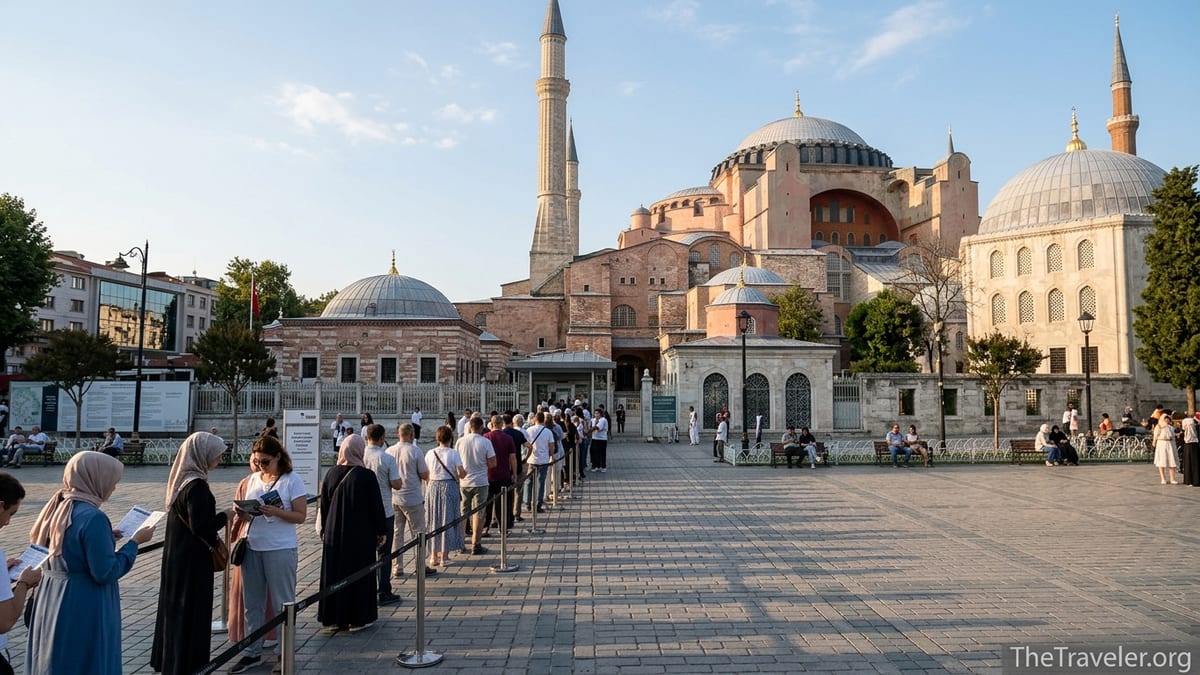
Understand How Hagia Sophia Works Today
The first mistake many visitors make is assuming Hagia Sophia still functions like a traditional museum. Since its reconversion to a mosque, the interior has been divided in practice into two experiences. The ground floor prayer hall is considered mosque space and is free for worshippers, while the upper gallery is where foreign tourists now pay to enter, see the mosaics and get the classic elevated view of the nave. If you read an older guidebook that says “Hagia Sophia is free” or “buy a museum ticket at the door,” you are looking at pre‑2024 information that no longer matches reality.
As of mid‑2026, foreign visitors typically pay about 25 euros for a ticket to the upper gallery. That ticket does not automatically give you free rein over the entire mosque at any time of day. Instead, you follow a well‑defined visitor route that keeps tourist crowds away from the main prayer area on the ground floor. Turkish citizens have a different, much lower lira price for the gallery, and children under 8 usually enter free with ID. None of the common museum passes for Istanbul cover Hagia Sophia, so you should budget for this as a separate expense.
It is possible to enter the ground floor prayer space without paying, but only if you are going in specifically to pray and you follow the rules of the mosque. Security and staff are increasingly alert to tourists who try to “pretend to pray” for a free visit. If you are a non‑Muslim, or you simply want to explore the architecture, mosaics and history at your own pace, plan on doing the official visitor route rather than trying to game the system. It will be a calmer, more honest experience.
Another point that often surprises people is that you no longer enter through the same monumental portals that appear in many old photos and films. Instead, the main tourist entrance for the gallery is on the northeast side, near the outer walls facing the Topkapi Palace area. Following outdated instructions can easily add fifteen frustrating minutes of walking around security fences in the sun.
Time Your Visit Around Crowds and Prayer Times
The second classic mistake is arriving at Hagia Sophia at the wrong time. In high season, particularly in June, July and August, queues at the tourist entrance can stretch across the square by late morning. Visitors routinely report waiting an hour or more in the sun if they turn up around 11 am without tickets. Add Istanbul’s humidity and reflective stone paving, and it is not the atmospheric visit many people imagined.
In 2026, official visiting hours for the paid gallery area generally run from morning to early evening, with last entry about half an hour before closing. A typical pattern is 9:00 to 19:00 in winter and 8:00 to 19:00 in peak season, but the building pauses tourist entry around major prayer times, especially the midday prayer on Friday. If you show up on a Friday around 12:30, you may be turned away from the visitor section for several hours while the mosque fills for congregational prayers. Many first‑timers are caught off guard by this and end up reshuffling their entire Old City day.
The most reliable strategy is to visit early on a weekday. Aim to be in Sultanahmet Square by 7:45 or 8:15 in summer, enjoy a quick Turkish breakfast from a nearby bakery or café, and then walk to the entrance just before it opens. By 9:30, tour buses start dropping off groups, and by late morning the line can snake around the corner. If you are not a morning person, your next‑best option is late afternoon: after 17:00 the tour groups thin, the light softens on the domes and the interior feels less hectic.
It is also important to remember that Hagia Sophia is not the only major site in the area. The Basilica Cistern, Blue Mosque and Topkapi Palace all surround the same square and often share the same peak hours. A smart itinerary might pair an early visit to Hagia Sophia with a timed ticket for the Basilica Cistern late morning, then lunch and an afternoon at Topkapi. What you should avoid is trying to squeeze Hagia Sophia into a one‑hour gap between other tours, because security checks, ticketing and prayer breaks rarely fit neatly into tight schedules.
Dress Code and Security: What Actually Happens at the Door
Dress code surprises are one of the fastest ways to derail a visit. Hagia Sophia is an active mosque, and by 2026 staff have become stricter about modest clothing even for the ticketed gallery. Shoulders and upper arms must be covered. Shorts, skirts and dresses need to come at least to the knees when you stand and walk. Sheer or very tight clothing that reads as beachwear is likely to be flagged, even if you technically have fabric over your knees.
Women are expected to cover their hair in the mosque sections. While enforcement can feel inconsistent, you should plan as if a headscarf is required. The simplest solution is to pack a lightweight scarf or shawl in your day bag and put it on before you reach the front of the queue. Disposable scarves are usually sold near the entrance for a small fee, often around 1 euro or a modest amount in lira, but they are short and synthetic. Many travelers regret relying on them when they realize they will also be visiting the Blue Mosque and Süleymaniye later in the trip.
Clothing issues are not hypothetical. Visitors regularly report being pulled aside because a side slit in a skirt rode higher than the knee while climbing the gallery stairs, or because a cropped T‑shirt left a strip of midriff visible when they raised their camera. In those cases, guards will insist on covering up with a shawl, rental wrap or elasticated “skirt” panel. If you know Istanbul will be hot, plan for loose, breathable clothing that still meets mosque standards: linen trousers, cotton maxi skirts, light shirts with sleeves and long tunics are all safer than shorts and tank tops.
Security screening is similar to an airport but faster. You pass through a scanner and your bag may be opened. Large backpacks, rolling suitcases and bulky camera gear can draw extra attention and slow you down. It is better to arrive with a small daypack or cross‑body bag containing essentials only. Tripods are often not allowed inside, and drones are strictly forbidden. Food and drinks are checked; a small water bottle is acceptable, but picnic bags and full coffee cups are not. Any argument with security over what you can bring inside will hold up the line and start your visit on a stressful note.
Tickets, Tours and Avoiding Overpriced “Shortcuts”
Ticketing is where many tourists lose both time and money. There are multiple websites using phrases like “official tickets” in their name, and some charge substantial markups for basic timed entry. On the ground, you will meet freelance guides and touts in Sultanahmet Square offering “express entry,” “private access” or “no‑line tickets” to Hagia Sophia. Some are licensed guides offering legitimate small‑group tours; others are simply reselling the same ticket for a higher price or bundling it with a rushed explanation.
In 2026, a standard registered ticket for the upper gallery is around 25 euros for foreign visitors. Expect any price much higher than that to involve either a guided tour or an unnecessary markup. A common scam reported by travelers involves a cashier or intermediary pushing a more expensive “combined” ticket, telling you that the cheaper gallery ticket “is only for the balcony” or “does not include the main mosque.” In reality, as a non‑Muslim visitor you are only allowed in the designated visitor sections anyway, so paying nearly double for ambiguous wording adds no real benefit.
To avoid these traps, decide in advance whether you want a guide. If you are deeply interested in Byzantine and Ottoman history, paying for a reputable, licensed guide can transform your experience. They can explain the iconography of the Deesis mosaic in the upper gallery, point out subtle structural details from Justinian’s sixth‑century design and answer questions about the building’s conversion back to a mosque. Small‑group walking tours that include Hagia Sophia alongside the Blue Mosque and Hippodrome typically range from roughly the cost of a nice dinner per person to a higher fee for private arrangements, and often include pre‑purchased gallery tickets.
If you prefer to explore on your own, buy your ticket through a trusted channel or at the official on‑site ticket office and ignore anyone approaching you outside the cordoned ticket area. Do not hand over your passport, phone or credit card to someone claiming to “help you buy online.” A practical approach is to use a physical credit card at the ticket window, confirm the price matches the posted board and keep your receipt. Expect to show the QR code or paper ticket again at the entrance to the upper gallery.
Inside the Building: Photography, Etiquette and What You Will Actually See
Once you pass through security and climb to the visitor levels, the atmosphere changes from the bustle of the square to a quieter, echoing interior. This is where many visitors suddenly realize they are in an active place of worship, not a neutral museum. Even in the gallery, loud conversations and phone calls carry across the space. A frequent mistake is treating Hagia Sophia like a backdrop for performance: talking on speakerphone, staging elaborate photo shoots or sprawling across barriers to get dramatic selfies. Guards are increasingly quick to intervene in these cases.
Photography for personal use is allowed, but flash and tripods are discouraged or prohibited. The best approach is to keep your camera gear simple. A wide‑angle lens is ideal for capturing the full dome from the upper gallery, while a smartphone does a good job with the glowing calligraphic roundels and marble columns. Respect the no‑photo signs where they exist, particularly around active prayer areas on the ground floor, and avoid pointing cameras directly at people in prayer without their consent.
In terms of what you will actually see in 2026, it is important to set expectations. Ongoing restoration and structural work mean that parts of the interior may be covered with scaffolding, protective netting or temporary flooring. Some of the most famous Byzantine mosaics, including the Christ Pantocrator in the dome and various apse decorations, remain partially obscured to comply with mosque regulations. Others, such as certain imperial and Virgin and Child mosaics in the upper gallery, can be viewed more easily, though lighting conditions vary. Several travelers over the last year have commented that the “museum experience” is shorter than they expected, but still deeply moving if you focus on details like the stonework, enormous dome and the way Christian and Islamic elements coexist in the same volume of space.
Another subtle mistake is rushing through without pausing to absorb the scale and sound of the building. Even during busy hours, there are pockets of relative quiet where you can stand by a column, look across the nave and imagine the building in different eras: the processions of Byzantine emperors, the first call to prayer after the Ottoman conquest, the decades as a museum and the present‑day rhythm of worshippers and tourists mingling. Giving yourself ten minutes simply to look and listen, without a camera in hand, often becomes the most enduring memory of the visit.
Combining Hagia Sophia With the Rest of Sultanahmet
Many people arrive in Istanbul with a list of must‑see sites and then try to tick them all off in one day. Hagia Sophia, the Blue Mosque, the Basilica Cistern and Topkapi Palace are all within easy walking distance, which makes it tempting to schedule them back‑to‑back. The mistake is underestimating how draining security checks, queues, crowds and emotional overload can be. Pushing yourself and your travel companions through all four straight in one stretch often leads to frayed tempers and superficial impressions.
A more thoughtful approach is to anchor your Old City day around Hagia Sophia. For example, you might start with the mosque in the morning, when interior light is soft and crowds lighter, then take a break in nearby Gülhane Park or at a tea garden with a view of the Bosphorus. Later, visit the Basilica Cistern, where the dark, cool interior contrasts beautifully with the luminous vastness of Hagia Sophia. Alternatively, pair Hagia Sophia with the Blue Mosque, but avoid scheduling both around Friday midday prayers when both sites are heavily used by worshippers.
Logistics also matter. Public transport is often the quickest way to reach Sultanahmet, with the T1 tram stopping just steps from the main square. Taking a taxi directly to Hagia Sophia during rush hour can take significantly longer than expected, and drop‑off points are sometimes several minutes’ walk from the entrance due to pedestrianized streets and security barriers. Build in time for walking, security checks and a brief pause in the square before you go inside. This not only reduces stress but also lets you appreciate the exterior silhouette of Hagia Sophia in context with the surrounding mosques and palaces.
Finally, think about energy, hydration and sun. In summer, the marble plazas around Hagia Sophia reflect light and heat, and shade is limited. Bring a refillable water bottle, a hat you can remove before entering, and perhaps a small handheld fan. Comfortable walking shoes are essential: between queuing, climbing stairs inside the building and exploring the broader neighborhood, it is easy to cover several thousand steps in a morning without realizing it.
The Takeaway
Visiting Hagia Sophia today is different from leafing through an old guidebook or watching a documentary made when it functioned primarily as a museum. The building is again a mosque at the heart of Istanbul’s spiritual life, and tourism has been reshaped around that reality. The biggest mistakes travelers make are relying on outdated information, turning up at the wrong time, arriving in clothes that conflict with the dress code and falling for overpriced or misleading ticket offers.
With up‑to‑date knowledge and a little planning, however, Hagia Sophia remains one of the world’s great travel experiences. Treat it as both a sacred space and a historic monument. Respect the rhythms of prayer, dress modestly, keep your expectations realistic about what you will see and give yourself time to look closely at the building’s details. Plan your visit around cooler hours and pair it thoughtfully with other nearby sites instead of rushing through everything in a single sprint.
If you do, your memories of Hagia Sophia will not be of standing in a queue under the noon sun or arguing at a ticket window, but of standing under a vast dome that has witnessed fifteen centuries of worship, empire and change. That is the experience most travelers dream of when they picture Istanbul, and it is still entirely within reach.
FAQ
Q1. Is Hagia Sophia free to visit or do I need a ticket?
For worshippers entering the ground floor prayer hall, access is free. Foreign tourists who want to visit the upper gallery and main visitor route should expect to buy a ticket, which in 2026 is around 25 euros.
Q2. What is the current dress code for Hagia Sophia?
All visitors must dress modestly. Shoulders and upper arms should be covered, and shorts, skirts or dresses need to come at least to the knee. Women are expected to cover their hair in the mosque areas, so bringing a light scarf is recommended.
Q3. Can non‑Muslims enter the main prayer area on the ground floor?
Non‑Muslims may enter only under certain conditions and generally not during major prayer times. The standard tourist experience is focused on the upper gallery and designated visitor spaces, which are designed to separate sightseeing from active worship.
Q4. What are the best times of day to visit Hagia Sophia?
Early weekday mornings and late afternoons are usually the least crowded. Midday, especially on Fridays, is the busiest period and often coincides with prayer times when access for tourists can be restricted or paused.
Q5. Do I really need to book tickets or tours in advance?
While you can still buy tickets on site, in peak months lines can be long and popular time slots may sell out. Booking a verified timed ticket or small‑group tour ahead of your visit makes the experience smoother and reduces the chance of queueing unnecessarily.
Q6. Are photos allowed inside Hagia Sophia?
Personal photography without flash is generally allowed in visitor areas, but tripods and professional lighting are not. You should avoid photographing people in prayer without their permission and respect any no‑photo signs near sensitive zones.
Q7. How strict is security and what bags can I bring in?
Security involves metal detectors and bag checks, similar to an airport but usually quicker. Small daypacks and handbags are fine, but large backpacks, luggage and tripods can be refused or cause delays. Food is discouraged, though a small water bottle is acceptable.
Q8. Is Hagia Sophia suitable for children and strollers?
Children are welcome, and those under a certain age typically enter the gallery free with ID. However, the historic stairways to the upper gallery are steep and uneven, so strollers are impractical inside. A baby carrier is more convenient for infants and toddlers.
Q9. How much time should I plan for a proper visit?
If you already have a ticket, allow at least 60 to 90 minutes inside to see the main points of interest without rushing. If you are buying tickets on site during busy periods, add extra time for queuing and security checks.
Q10. Is it still worth visiting Hagia Sophia while restoration work is ongoing?
Yes. Some sections may be under scaffolding and certain mosaics partially covered, but the overall sense of space, the dome, marble columns and surviving mosaics in the gallery still offer a powerful experience that many visitors consider a highlight of their trip to Istanbul.