


Üsküdar sits directly opposite Istanbul’s historic peninsula, lining the Asian shore of the Bosphorus with mosques, tea gardens, and busy ferry piers. For many visitors it is a place glimpsed briefly from the water on the way to Kadıköy or back to Eminönü. Yet more travelers are now choosing to stay here, attracted by calmer streets and a lived-in, local feel. That naturally raises a key question: is Üsküdar actually safe, and what should first-time visitors know before booking a hotel or wandering its waterfront at night?
Get the latest updates straight to your inbox!
How Safe Is Üsküdar Overall?
By Istanbul standards, Üsküdar is generally regarded as a safe, residential district with a family-oriented character. It does not appear in local lists of the city’s higher-crime fringe districts, which tend to highlight western suburbs such as Esenyurt and Bağcılar rather than central, established neighborhoods like Üsküdar. Residents often describe the area as conservative, quiet in the evenings, and watched over by a strong sense of community, which alone deters many opportunistic crimes that target obvious tourists.
Recent traveler-oriented safety summaries usually rate Üsküdar in the “low risk” or “above-average safety” category for Istanbul, especially for violent crime. Petty theft and pickpocketing do occur, particularly around crowded ferry piers and bus stops, but the scale is more comparable to a typical European city neighborhood than to a high-risk district. You are more likely to lose track of your phone while photographing the sunset by the Şemsi Paşa Mosque than you are to face a mugging.
Local perception also matters. Istanbulites who want calmer, less tourist-saturated living often mention Üsküdar and Kadıköy on the Asian side as areas that feel relatively safer and less hectic than the European-side tourist belt. When residents themselves aspire to move somewhere, it is usually a sign that visitors will find it comfortable too, provided they use the same basic street smarts they would in any big metropolis.
That said, Üsküdar is still part of a 16-million-person city. Crowds surge when ferries arrive, traffic can be chaotic, and there are pockets that feel rougher or poorly lit. Treat it as a safe but busy urban district, not a small seaside town, and you will calibrate your expectations correctly.
Day vs Night: Walking, Waterfront Strolls, and After-Dark Atmosphere
By day, central Üsküdar has a relaxed, everyday feel. Around Mihrimah Sultan Mosque, the main square, and the streets leading down to the water, you will walk among commuters with plastic bags from local bakeries, students from nearby campuses, and pensioners nursing tulip glasses of tea in waterfront cafés. It feels less like a tourist stage set and more like a working neighborhood, which helps many visitors feel at ease as long as they keep an eye on bags in crowds.
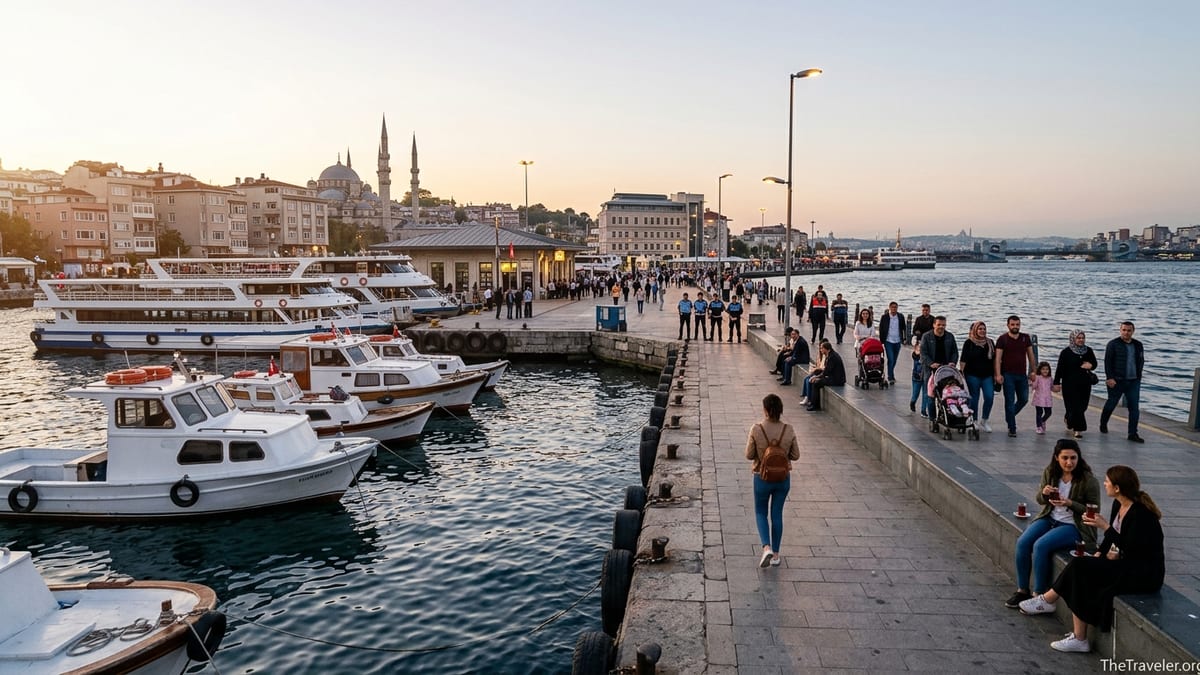
The waterfront promenade between the main Üsküdar ferry terminal and the Küçük Çamlıca direction is particularly pleasant in daylight. Families push strollers, teenagers take selfies with the Maiden’s Tower in the background, and fishermen line up with rods near the simple tea gardens. This is one of the safest-feeling parts of the district, especially from morning until sunset. As a practical example, a solo traveler can comfortably walk from the ferry terminal to the Şemsi Paşa Mosque and sit on the low sea wall to watch the currents, provided they keep valuables zipped away and avoid dangling phones over the water.
After dark, the energy changes but does not become hostile. Unlike Beyoğlu’s Istiklal Avenue, which often stays noisy with bars and clubs until 2 or 3 a.m., Üsküdar’s streets empty earlier. Most family restaurants around the center close by 11 p.m. or midnight. The main square, bus stops, and ferry approaches remain busy and are monitored by both uniformed police and municipal security staff, but side streets quiet quickly, especially uphill towards more residential zones.
Visitors who enjoy late-night Bosphorus watching can safely linger on the waterfront until around midnight on mild evenings, when there are still families and couples sitting on the sea wall with takeaway tea. Past that, the area becomes noticeably quieter: not automatically dangerous, but more isolated. Sensible precautions include walking on the main coastal road instead of the very edge, avoiding headphones that block out traffic and people, and choosing a taxi or ride-hail back to your hotel if you are more than a 10–15 minute walk away uphill.
Ferries, Squares, and Transport Hubs: Crowds vs Crime
Üsküdar’s identity is closely tied to its ferries. The main terminal is one of the busiest on the Bosphorus, with boats departing roughly every 10 minutes in peak times toward Eminönü, Karaköy, Beşiktaş, and Kadıköy. Crowded transport hubs like this are the one place in Üsküdar where petty theft risk feels comparable to tourist-heavy European districts. When you line up for an evening ferry after sunset prayers, you may find yourself packed shoulder to shoulder, which is ideal conditions for pickpockets.
In practice, most visitors avoid trouble simply by using basic anti-theft habits. Wear a small crossbody bag that zips closed and keep it in front of you while boarding, avoid keeping wallets or passports in back pockets, and tuck phones away once you step into a moving crowd. If you must check a map on your phone while exiting a ferry, step to the side against a wall instead of stopping in the middle of the flow, both for your safety and for courtesy to commuters behind you.
Üsküdar’s Marmaray rail station and bus hub, located just behind the ferry piers, are also busy but not particularly menacing. They are routinely patrolled, have CCTV, and are used by thousands of local commuters each day. Waiting here at 10 p.m. for a train toward Ayrılıkçeşmesi or Yenikapı generally feels no more intimidating than waiting at a suburban metro stop in a Western European capital. As always, avoid isolated corners of platforms, especially if you are alone and trains are running less frequently after midnight.
Real incidents around the ferry and metro area tend to involve scams or minor hustling rather than overt violence. An example that visitors sometimes encounter is an unofficial “helper” trying to guide you through the ticket machines, then asking aggressively for a tip. Decline politely, keep moving, and use the official Istanbulkart machines. If you are visibly confused, it is usually safer to approach the staffed ticket office or a kiosk selling snacks and ask in simple English or with translation on your phone.
Backstreets, Residential Hills, and Choosing Where to Stay
Üsküdar extends far inland from the Bosphorus into hilly, mostly residential neighborhoods. As in any large district, the feel can change street by street. Central areas near the waterfront, around Valide-i Atik, and towards the popular Kuzguncuk quarter are generally well looked-after, with a mix of mid-range apartment buildings, small groceries, and schools that generate foot traffic throughout the day.
Backstreets uphill from the main square can feel very quiet at night, with few shops open after 10 p.m. This is not automatically a sign of danger, but it does mean fewer “eyes on the street” if something goes wrong or if you simply lose your way. When booking accommodation on platforms like major hotel sites or apartment rentals, consider how many minutes’ walk it is to the sea and to the nearest ferry or Marmaray station. A guesthouse that is a 5-minute walk down a gentle slope to the waterfront will feel very different late at night from an apartment 20 minutes uphill through dimly lit residential lanes.
Locals sometimes advise visitors to avoid specific micro-neighborhoods such as parts of Selamsız, not because tourists are actively targeted, but because these areas are poorer, more densely packed, and less accustomed to out-of-town visitors. If a listing in Üsküdar seems very cheap compared with similar properties, check user reviews carefully for comments about lighting, steep hills, or noise. Look for real-world signals like nearby chain supermarkets, bakeries, or pharmacies, which indicate an area that stays active enough to feel safe walking back after dinner.
For many visitors, the sweet spot is to stay near the waterfront between the main Üsküdar square and the more village-like Kuzguncuk area, or near the Salacak stretch facing the Maiden’s Tower. In these zones you will usually be within a short walk of ferries and see a constant flow of families, dog walkers, and joggers, which creates a comfortable urban environment without the intense touting or nightlife of Beyoğlu.
Solo Travelers, Women, and Families: What to Expect
Solo travelers, especially women, often report feeling more relaxed on the Asian side of Istanbul, including Üsküdar, than in the dense nightlife and bar streets around Taksim. The district’s more conservative profile means you will see fewer intoxicated groups and more families and older residents on the streets in the evening. Catcalling and aggressive approaches are not as common here as around some tourist-heavy European-side streets, though they can never be ruled out entirely.
A solo woman walking from the ferry up to a hotel near the main square at 9 or 10 p.m. is unlikely to attract much attention beyond the standard curiosity directed at foreigners. Dressing as locals do, which often means modest but modern clothing like jeans, long skirts, and light jackets, helps you blend in. As elsewhere in Istanbul, if an interaction makes you uncomfortable, the best response is usually to ignore, keep walking toward a busy spot like a bakery or café, and, if needed, step inside and ask staff for assistance.
Families tend to find Üsküdar particularly comfortable. There are playgrounds and green strips along the waterfront, and it is common to see extended families spreading picnic cloths on the grass at sunset. Child-focused crime, such as abductions or targeted scams, is extremely rare in local reports, and parents allow children to play with a degree of freedom that visitors from some Western cities may even find surprising. As a foreign parent, follow your own comfort levels but know that local norms of communal watchfulness generally work in your favor.
For digital nomads or long-stay travelers, Üsküdar offers a blend of safety and local life, with enough cafés to work from but without the party scene that can make Beyoğlu feel wearing after a few weeks. Your biggest everyday risk is likely to be traffic rather than crime, especially when crossing multi-lane roads near the waterfront. Use underpasses or pedestrian crossings wherever possible and remember that drivers do not always yield to pedestrians, even at marked crosswalks.
Taxis, Rides, and Getting Around Safely
Taxi concerns in Istanbul are real, and Üsküdar is not immune. The most common issues visitors face include drivers refusing short rides, trying to negotiate a fixed fare instead of using the meter, or taking a longer route over one of the Bosphorus bridges instead of a short ferry crossing if the passenger seems uninformed. These behaviors are annoying but rarely dangerous, and they can be minimized with a few practical habits.
First, use licensed yellow taxis from marked ranks near the ferry terminal or main square, or use reputable ride-hailing apps that connect to the city’s metered taxis. When you get in, clearly state your destination and make sure the meter is turned on. If a driver suggests a fixed price instead of the meter for a cross-Bosphorus trip, you can politely insist on the meter or step out and choose another cab. For instance, a metered ride from Üsküdar’s main square to Taksim at off-peak times will typically be significantly cheaper than a flat fare offered verbally.
Within Üsküdar itself, many short journeys are walkable, but for steep hills or late-night returns, taxis are a sensible safety tool. An example: if you have dinner around Kuzguncuk and finish at 11 p.m., walking the 25–30 minutes back to a hotel near the main Üsküdar pier along quiet residential streets may feel unnecessarily isolated. A 10-minute taxi ride instead reduces both personal safety concerns and fatigue, and the fare will usually be modest compared with Western cities.
On public transport, including ferries, trams, and Marmaray trains, safety standards are reasonable and there is a regular presence of security guards and conductors. Incidents of harassment are uncommon, but during very crowded rush hours, pickpocketing risk rises. Try to avoid carrying passports on your person on these days; leave them locked at your accommodation and travel with a copy or a digital scan instead.
How Üsküdar Compares to Beyoğlu and Sultanahmet
When visitors ask whether Üsküdar is safe, they are often really asking how it compares to the two most famous districts on the European side: Beyoğlu and Sultanahmet. Each area has a distinct personality, and that personality shapes the kind of safety issues you are likely to encounter.
Sultanahmet, the old city district with Hagia Sophia and the Blue Mosque, is the most tourist-saturated part of Istanbul. Streets are full of souvenir shops, tour touts, and restaurants aimed squarely at visitors. This concentration of tourists attracts more targeted scams and aggressive sales tactics. You are not likely to face violent crime here either, but you may experience persistent attempts to draw you into overpriced carpets, boat tours, or “special menu” restaurants. Compared with that, Üsküdar feels much calmer and more genuine, with ordinary prices at local lokantas and few people pushing you to buy anything.
Beyoğlu, particularly around Istiklal Avenue and Taksim, is the nightlife and entertainment heart of the city. Its crowds are lively well past midnight, which brings its own risks: pickpocketing in bar districts, occasional drunken fights, and rare but possible incidents of harassment in late-night side streets. For a solo traveler or a family with young children, the sensory overload of Beyoğlu at 1 a.m. can feel far more intense than anything you are likely to encounter in Üsküdar, where most streets are quiet by that hour.
By contrast, Üsküdar is best characterized as calmer and more residential, with a strong traditional streak. You will not be in walking distance of major imperial monuments or the trendiest bars, but you gain quieter nights, more local eateries, and waterfront promenades that attract Istanbulites rather than tour groups. If safety to you means fewer scams, less alcohol-fueled behavior, and a sense that you are in a neighborhood where people know each other, Üsküdar compares favorably to both Beyoğlu and Sultanahmet.
This does involve trade-offs. If you plan to visit museums and mosques intensively for two days, staying in Sultanahmet still offers unmatched convenience. If you crave rooftop bars and live music, Beyoğlu will serve you better. Many repeat visitors solve this by splitting their stay: a couple of nights in or near Sultanahmet for early sightseeing, then moving to Üsküdar or Kadıköy for a more relaxed, neighborhood-based experience.
The Takeaway
Üsküdar in 2026 is, for most visitors, a safe and rewarding base on the Asian side of Istanbul. It combines a lived-in, local atmosphere with practical transport connections, especially via its busy ferry terminal and Marmaray station. Violent crime against tourists is rare, and everyday risks are largely limited to pickpocketing in crowded transport hubs, occasional taxi overcharging, and the universal big-city challenge of navigating traffic and unfamiliar streets.
Waterfront promenades are comfortable for daytime and early-evening walks, solo travelers and women generally report feeling at ease following routine precautions, and families appreciate the parks, playgrounds, and picnic culture. Compared to the heavily touristed streets of Sultanahmet and the nightlife corridors of Beyoğlu, Üsküdar is calmer and less focused on extracting money from visitors, which many travelers interpret as a form of safety in itself.
As with any major city destination, the key is not to assume that “safe” means you can switch off completely. Keep valuables secure in ferry queues, favor well-lit routes in the late evening, choose accommodation within comfortable reach of the waterfront and transit, and treat taxis with commonsense skepticism about routes and fares. Do that, and Üsküdar will likely feel not only safe but also like one of the more authentic windows onto everyday life in Istanbul.
FAQ
Q1. Is Üsküdar safe to walk around at night?
Üsküdar’s main streets, waterfront, and areas around the ferry and Marmaray stations are generally safe until late evening, with families and commuters out. After about midnight, many side streets become very quiet rather than dangerous, so solo travelers may prefer taxis for longer or uphill walks back to their accommodation.
Q2. Is Üsküdar safer than Beyoğlu for tourists?
In many ways yes, especially if you are concerned about nightlife-related issues such as drunken behavior or late-night harassment. Beyoğlu’s bar streets stay crowded into the early hours, while Üsküdar is more residential and conservative, with quieter nights and far fewer touts or scams aimed specifically at tourists.
Q3. How does Üsküdar compare to Sultanahmet in terms of safety?
Both districts are broadly safe, but risks differ. Sultanahmet’s heavy concentration of tourists leads to more aggressive sales tactics and occasional scams around tours, carpets, and restaurants. Üsküdar has fewer tourist-focused businesses, so you are less likely to face pushy touts, though you will be farther from the major historic sites.
Q4. Are the ferry terminals in Üsküdar safe?
The main ferry terminal is busy but well monitored, with a constant flow of commuters. Safety concerns are mostly about pickpocketing in tight crowds and the need to watch your footing on wet or uneven surfaces. As long as you keep bags zipped, pockets secure, and avoid standing too close to the edge when boarding, ferries are a safe and scenic way to travel.
Q5. Is Üsküdar a good area for solo female travelers?
Yes, many solo women feel comfortable in Üsküdar because the atmosphere is family-oriented and calmer than Istanbul’s main nightlife zones. Dressing similarly to locals, avoiding very dark and empty streets late at night, and using taxis for long uphill walks after hours will help you feel even more at ease.
Q6. Are there parts of Üsküdar I should avoid booking accommodation in?
Most of Üsküdar is fine for visitors, but some micro-neighborhoods uphill and farther from the waterfront can feel very isolated at night or simply inconvenient. When in doubt, choose accommodation within a short walk of the main square, ferry terminal, Salacak, or toward Kuzguncuk, where streets are better lit and more frequented by locals in the evening.
Q7. How safe is Üsküdar for families with children?
Üsküdar is well suited to families. Parks, playgrounds, and the waterfront promenades attract many local parents and children, and crime targeting families is rare. Your main concerns will be traffic on busy roads and keeping children away from the unguarded edges of the sea wall rather than from other people.
Q8. What should I watch out for when taking taxis in Üsküdar?
Use licensed yellow cabs or reputable ride-hailing apps, insist on the meter, and be ready to step out if a driver pushes for an inflated flat fare. For cross-Bosphorus trips, some drivers may propose longer routes; checking the approximate route beforehand on your phone helps you recognize detours that are not justified by traffic.
Q9. Is it safe to stay in Üsküdar if I plan to go out late in other districts?
Yes, many visitors stay in Üsküdar and head to Beyoğlu, Karaköy, or Kadıköy for nightlife. The key is planning your return: after midnight, ferries run less frequently, so you may rely on taxis or the Marmaray. As long as you budget time and money for a safe late-night ride back, staying in quieter Üsküdar while going out elsewhere works well.
Q10. Do I need to worry about political protests or unrest in Üsküdar?
Large demonstrations in Istanbul are more commonly associated with central European-side squares than with Üsküdar’s residential streets. While small local gatherings can happen anywhere in a big city, visitors in Üsküdar are unlikely to encounter significant unrest. As always, if you see a crowd forming around a political event, the safest option is to take a different route and avoid lingering.