


Floating alone at the mouth of the Bosphorus, the Maiden’s Tower is one of Istanbul’s most photographed landmarks. Yet many visitors are unsure how to see it best: Should you pay for a boat and museum ticket, or simply enjoy the view from Üsküdar’s waterfront? This guide breaks down the options with current, on-the-ground details so you can decide how to experience this tiny but iconic tower.
Get the latest updates straight to your inbox!
Where the Maiden’s Tower Is and What You Actually See
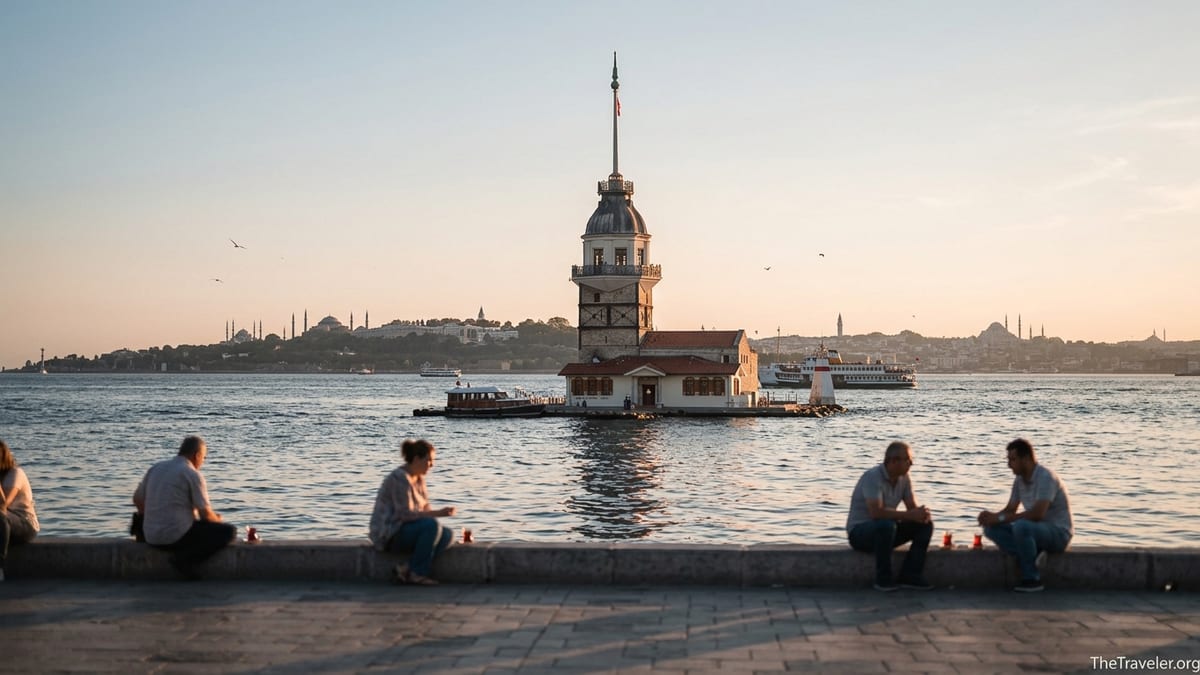
The Maiden’s Tower, or Kız Kulesi, stands on a small islet just off the Asian-side district of Üsküdar, close to where the Bosphorus meets the Sea of Marmara. When you stand on the Salacak waterfront and look toward the Old City skyline, the tower appears almost perfectly framed between Sultanahmet and Galata, with ferries, cruise boats and container ships moving around it all day. It is not in the middle of the Bosphorus, as some photos suggest, but fairly close to Üsküdar’s shore.
For most travelers, the primary experience of the Maiden’s Tower is visual. The classic postcard view is from Salacak coast: the tower in the foreground, behind it the domes and minarets of Hagia Sophia and the Blue Mosque, and the sun dropping into the Sea of Marmara on a clear evening. Even if you never set foot on the islet, this west-facing angle gives you that cinematic skyline that appears in travel magazines and Turkish films.
Because the tower is small, even when you go out to the islet you still appreciate it most from outside rather than from deep inside the structure. The museum rooms are compact, and there are limited exhibits. What really sells the experience is the 360-degree view from the outdoor terraces and upper levels: tankers heading to the Black Sea, commuter ferries zig-zagging between Eminönü, Beşiktaş and Kadıköy, and seagulls gliding almost at eye level.
Think of the Maiden’s Tower as a viewpoint and symbol first, and an interior museum visit second. This mindset will help you decide whether to invest time and money into going out to the islet or focus on the free views from Üsküdar and nearby hills.
Boats, Tickets and How to Get There from Üsküdar
The practical starting point for most visitors is Üsküdar. From the European side, you can take public ferries from Eminönü, Karaköy or Beşiktaş to Üsküdar in around 20 to 25 minutes. These ferries run frequently during the day and cost the standard Istanbul public transport fare on your Istanbulkart, making them a low-cost way to approach the tower and enjoy open-air Bosphorus views along the way.
Once in Üsküdar, you have two different experiences to choose from. If you want to visit the islet itself, you need a combined museum and boat ticket. The official ticket includes the short shuttle boat from Salacak pier to the tower and back. Recent prices for foreign visitors have been in the mid-range compared with major Istanbul attractions, and they have changed several times since the tower’s restoration and reopening in 2023. Expect the ticket cost to be similar to or slightly lower than high-profile museums like Dolmabahçe Palace. Turkish citizens can typically use or purchase national museum passes, which makes the visit more affordable for locals.
Boats to the tower generally depart from the small Salacak pier on the Üsküdar waterfront throughout the day, roughly from mid-morning to late afternoon. Schedules can vary by season and weather, but as an example, boats may run every 15 to 30 minutes in busy periods, with a brief crossing of about 5 to 10 minutes. In high season weekends, lines can form, especially close to sunset, so it is wise to buy tickets a bit earlier in the day if you know you want to be on the islet for golden hour.
If you prefer not to go out to the tower, you do not need any special ticket. Simply walk from Üsküdar ferry terminal toward Salacak, hugging the coast. Within 10 to 15 minutes you will start to see uncluttered views of the tower. Many locals never actually visit the islet; they consider the walk, the fresh sea air and the free view from the shore to be the real experience. You can combine this walk with a visit to nearby mosques like Mihrimah Sultan or Şemsi Paşa, then end your day with tea at a waterfront café overlooking the tower.
Best Viewpoints: Salacak, Hills and Ferries
Salacak is the undisputed classic viewpoint. The promenade runs almost directly opposite the tower, giving you a low, eye-level angle over the water. In summer evenings the steps and low walls along the promenade fill with couples, families, students with takeaway simit, and photographers with tripods trying to catch the last light. On calm days, reflections of the tower shimmer in the water, and long-exposure shots can capture the movement of ferries as streaks of light behind the stationary silhouette of the tower.
Another excellent perspective is from the ferries themselves. On a public ferry between Eminönü and Üsküdar, stand on the open deck on the starboard side as you leave Eminönü, or port side when heading back. As the ferry curves around the point, the tower glides across your field of vision with the Old City behind it. This moving perspective is ideal for short video clips. Some travelers choose to ride the ferry two or three times back-to-back at sunset simply because the experience is inexpensive and constantly changing with the light.
For a higher, more panoramic view, head up to Çamlıca Hill or to some of the rooftops and terraces on the Üsküdar side. From above, the tower looks like a tiny outpost in the water and helps you understand the geography: the Bosphorus stretching north, the Sea of Marmara to the south, and the mass of the European peninsula spreading opposite. Although the tower itself is small in the frame, these viewpoints are excellent if you are capturing wide-angle cityscapes where the tower is one of several recognizable elements.
Finally, Bosphorus cruises provide a more distant but dramatic view. On standard two-hour Bosphorus tours that depart from Kabataş or Eminönü, the boat often passes relatively close to the Maiden’s Tower at the start or end of the route. If you sit on the right-hand side leaving from Eminönü or Kabataş, you will typically get a clean profile of the tower with Üsküdar behind. This is less intimate than the Salacak view but still photogenic, especially in early evening when the tower’s lights come on and the sky turns deep blue.
Photo Spots, Timing and Practical Photography Tips
For photographers, the Maiden’s Tower is as much about timing as location. Because you are looking west from Üsküdar toward the historical peninsula, sunset often paints the sky behind the tower in warm oranges, pinks and purples. In summer, sunset in Istanbul is usually between about 20:30 and 21:00; in winter it can be as early as around 16:30. Check local sunset times for your travel dates and aim to reach Salacak at least 45 minutes beforehand to find a spot and watch the light evolve.
Concrete spots that work well in practice include the low walls and stone seating areas near the Salacak pier, where locals spread blankets and order tea from nearby kiosks. Slightly further south along the promenade the crowds thin out, and you can frame the tower a bit more to the right of the skyline. If you prefer fewer people in your shot, arrive on a weekday and walk away from the main pier area; you will quickly find stretches of waterfront where tripods are easier to set up.
In terms of gear, a mid-range zoom lens such as a 24–70 mm on a full-frame camera works well for both context shots and tighter compositions. At around 50 to 70 mm from Salacak, the tower fills a good portion of the frame while still leaving room for the skyline behind. A light travel tripod is useful for blue hour long exposures, especially when you want to smooth the water and turn ferry movement into light trails. Even with a smartphone, use the telephoto lens if you have one, and try the HDR or night mode as the sky darkens and the tower lights switch on.
If you decide to visit the islet, factor in that shooting the tower itself becomes more about details and atmosphere. You can capture close-ups of the lighthouse-style lantern, the stone textures, and the wooden walkways, as well as 360-degree views of the city. However, you will not be able to photograph the tower’s silhouette from outside while you are on it. Many photographers therefore schedule two sessions: one afternoon on the islet to explore and shoot the views, and a second evening from Salacak purely for skyline and silhouette photos.
Cafés, Snacks and Nearby Neighborhood Walks
One of the pleasures of visiting the Maiden’s Tower from Üsküdar is how easily you can turn it into a relaxed half-day with food and neighborhood wandering. Starting from Üsküdar square, you might grab a quick fish sandwich, or a pastry from a local bakery on the side streets, before walking toward Salacak. Along the way, small tea gardens and simple cafés set up low tables and chairs almost at the water’s edge. Ordering a tulip-shaped glass of black tea and watching the tower as ferries pass is a very typical local ritual, and prices remain moderate compared with more touristic European-side terraces.
Right behind the Salacak waterfront, the residential streets of Üsküdar climb gently uphill. Here you will find a more everyday Istanbul: small grocery shops, kids playing football, and traditional wooden houses mixed with newer apartment blocks. You can loop back toward Üsküdar center via historic mosques like Mihrimah Sultan, designed by the famed Ottoman architect Mimar Sinan, and Şemsi Paşa, a small waterfront mosque that gives another angle toward the tower framed by its courtyard and minaret.
For something slightly further afield, you can continue north along the Asian shore toward Kuzguncuk or Çengelköy, either on foot or with short bus rides. Both neighborhoods offer leafy streets, wooden houses and waterside tea gardens that locals recommend for relaxed afternoons. On a clear day, you might structure a full itinerary that starts with lunch in Kuzguncuk, continues with an afternoon walk back toward Üsküdar, and ends with sunset tea at Salacak facing the Maiden’s Tower.
Food on the islet itself is more limited and tends to be priced above average for Istanbul. In the past the tower housed a full-service restaurant, and while the current setup after restoration focuses more on museum and heritage functions, anything sold on-site is usually at a premium compared with grabbing a tea or snack on the Üsküdar shoreline. For both budget and atmosphere, many visitors prefer to eat and drink in Üsküdar and treat the islet, if they visit it, as a short, focused excursion rather than a dining destination.
A Short History and Legends Behind the Tower
The Maiden’s Tower has stood in some form on this tiny islet since Byzantine times. Historical records mention a structure here as early as the 12th century, initially serving as a defensive outpost or customs station controlling ships entering the Bosphorus. Over the centuries it has been rebuilt, expanded, burned, restored and repurposed as a lighthouse, quarantine station, signaling post and more. Each layer of history has added to its slightly mysterious aura offshore from Üsküdar.
The most famous legends associated with the tower are romantic and tragic. One popular story tells of a sultan who received a prophecy that his beloved daughter would die from a snake bite. To protect her, he built a tower on the islet and kept her there, visited only by trusted servants bringing food in baskets. Inevitably, a snake is said to have hidden in one of the baskets and bitten her, fulfilling the prophecy despite all efforts. This version of the tale explains both the tower’s name and its association with doomed love and fate.
Another legend links the site to the Greek myth of Hero and Leander, with the tower serving as a setting for forbidden love across the strait. Although historians note that the original myth was set in the Dardanelles, the story became attached to the Istanbul tower over time, reinforcing its status as a symbol of yearning and separation between shores. These stories have inspired Turkish films, poems and songs, which is why many local visitors feel an emotional connection to the tower that goes beyond its physical size.
In practical terms, the most recent chapter in the tower’s story is its extensive restoration, completed in 2023. The work focused on structural reinforcement, conservation of stone and wooden elements, and redesign of visitor circulation. The reopening brought renewed attention and higher visitor numbers, but also modernized safety features and interpretive materials. Exhibits inside now explain the tower’s historical roles, while outdoor viewing platforms prioritize the panoramic Bosphorus setting that made the site strategically important in the first place.
Is It Worth Going Inside or Better to Enjoy the View?
Whether the Maiden’s Tower is “worth it” depends on your expectations, budget and time. Many Istanbul residents and frequent visitors will tell you that you do not need to visit the islet to appreciate the tower. From their perspective, the romance lies in sitting on the Salacak steps with tea, watching the sun sink behind the Old City while the tower stands in silhouette. This experience is free apart from whatever you spend on drinks and snacks, and it fits easily into an afternoon wander through Üsküdar even if you are traveling on a tight schedule.
Travelers who enjoy small but atmospheric heritage sites and are comfortable with the ticket price often feel the visit is worthwhile, especially if they are already spending several days in the city. Being on the islet itself gives you a unique sense of perspective on Istanbul’s geography, as the city wraps around you on both the European and Asian sides. The restored interior spaces, while compact, offer a break from the crowds of the historic peninsula, and the short boat ride can be enjoyable in its own right, particularly for families with children.
On the other hand, budget-conscious visitors who are prioritizing big-ticket sights like Topkapı Palace, Dolmabahçe or the Basilica Cistern might reasonably skip paying for the tower visit and allocate those funds to other attractions or a Bosphorus cruise. The tower’s interior does not have the same level of architectural or artistic richness as major mosques or palaces, and the experience is more about the view and story than about elaborate decoration.
A sensible compromise is to treat the tower as a flexible option. Plan to enjoy the Salacak waterfront at sunset one evening regardless, because this is one of Istanbul’s finest viewpoints. If, during your stay, you find you have spare time on a clear morning or afternoon and the budget to match, you can then decide to buy tickets and visit the islet. That way, you do not hinge your entire Maiden’s Tower experience on a potentially crowded or overcast visit, but you keep the possibility open if conditions are favorable.
The Takeaway
Standing alone just off Üsküdar’s shore, the Maiden’s Tower is small in scale but large in symbolism. It anchors one of Istanbul’s most iconic views and offers, in a single frame, water, skyline and history. Understanding that the main experience lies in the view rather than the interior helps you choose how to spend your time and money. For many travelers, a slow evening walk along Salacak promenade and sunset tea with the tower in front will be entirely sufficient and deeply memorable.
If you are inclined toward viewpoints, photography or romantic city stories, the short boat trip and museum visit can add another dimension, placing you literally in the middle of one of the world’s great natural harbors. Either way, combining the tower with a few hours exploring Üsküdar’s streets, mosques and cafés makes for a balanced, less touristy day on Istanbul’s Asian side. Plan around daylight and weather, arrive early for sunset, and let the tower work its quiet magic as the ferries criss-cross the water and the city lights come on.
FAQ
Q1. Do I need a ticket to see the Maiden’s Tower from Üsküdar?
You only need a ticket if you want to visit the islet and enter the tower. Views from Üsküdar and Salacak promenade are completely free.
Q2. How much time should I allow for a visit including the boat?
Most visitors spend around 1.5 to 2 hours in total, including the short boat ride, exploring the small museum and enjoying the terrace views.
Q3. What is the best time of day to photograph the Maiden’s Tower?
Late afternoon into sunset and the following blue hour are ideal, when the sun sets behind the Old City and the tower lights turn on.
Q4. Can I use public transport to get close to the tower?
Yes. Take public ferries from Eminönü, Karaköy or Beşiktaş to Üsküdar, then walk 10 to 15 minutes along the Salacak waterfront for direct views.
Q5. Is visiting the inside of the tower suitable for children?
Yes, the short boat trip and small museum are usually enjoyable for children, though spaces are compact and you will need to supervise them near railings.
Q6. Are there restaurants or cafés on the islet itself?
Services on the islet are limited and typically more expensive than on shore, so many visitors prefer to eat and drink at cafés along Üsküdar and Salacak.
Q7. What should I wear or bring when visiting?
Comfortable walking shoes, a light jacket in case of wind on the water, and sun protection in summer are advisable, plus a camera or smartphone for photos.
Q8. Is the Maiden’s Tower visit accessible for people with mobility issues?
The boat and some outdoor areas may be manageable with assistance, but upper levels and certain interior spaces involve stairs, so accessibility is limited.
Q9. Can I see the Maiden’s Tower on a Bosphorus cruise instead?
Yes, many Bosphorus cruises pass by the tower, offering good views from the water, though you will not stop at the islet unless it is a dedicated tour.
Q10. How does the tower compare to other Istanbul viewpoints?
The Maiden’s Tower offers a low, waterfront panorama, while places like Galata Tower or Çamlıca Hill give higher, wider cityscapes. Each complements the others.