


More news on this day
China’s national rail network has delivered one of its strongest summer travel seasons on record, approaching one billion passenger trips as leisure travel, student journeys and family visits surged across the country’s expanding web of high speed and conventional lines.
Get the latest news straight to your inbox!
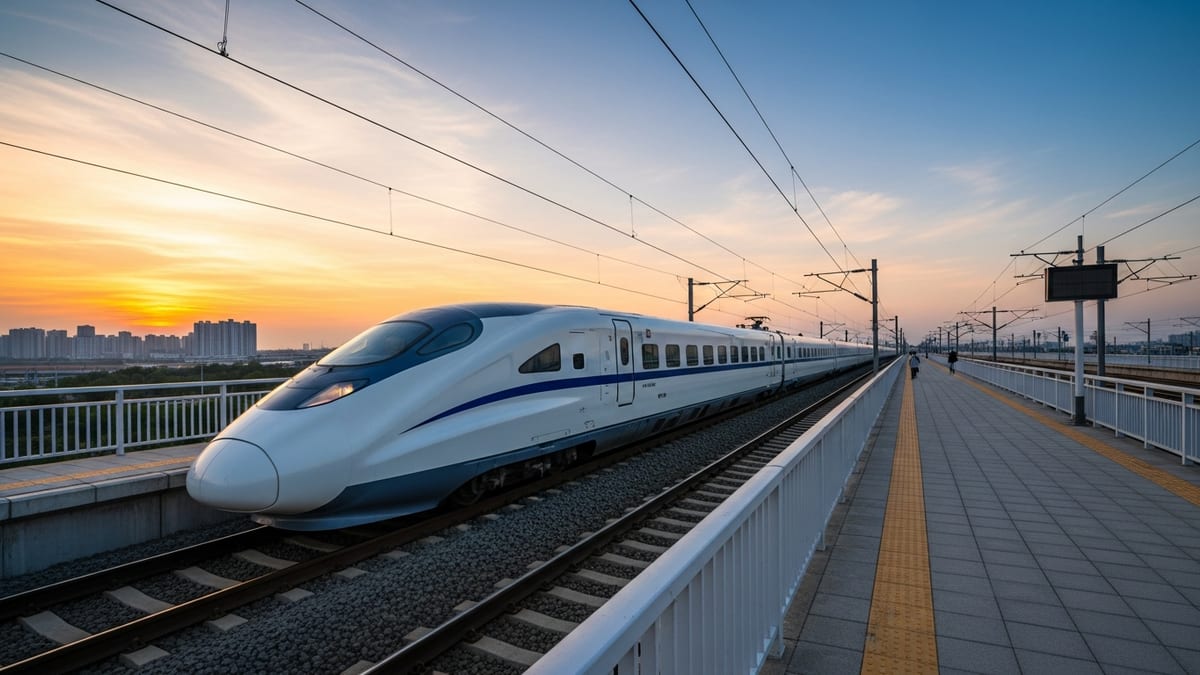
Record Summer Volumes Mark New Milestone
Publicly available data indicate that China’s 62 day summer transport season in July and August 2024 set a new benchmark for rail travel. Figures reported by Xinhua show that the railways handled 887 million passenger trips between July 1 and August 31, an all time high for the period and an increase of 6.7 percent compared with the previous year.
Over those two months, the network averaged more than 14.3 million passenger trips per day, reflecting sustained high demand rather than a short lived spike. Earlier updates during the season noted that China had already surpassed 800 million railway passenger trips by August 25, underscoring the strength of the final week’s traffic as travelers completed summer holidays and students returned to campuses.
Industry focused material summarizing January to August 2024 points to nearly 3 billion total rail passenger trips nationwide, with the summer peak accounting for a significant share. Against that backdrop, the nearly one billion journeys concentrated into the official summer rush highlight how Chinese Railways have become the backbone of seasonal mobility.
Drivers: Tourism, Students and Urban Clusters
China’s summer rail surge is closely tied to domestic tourism and education calendars. The July August period coincides with university and school vacations, when millions of students travel home at the start of summer and return to cities before the autumn term. Reports on the 2024 season note that more than 14 million student tickets were sold, illustrating the scale of this segment alone.
Tourism flows added another powerful layer of demand. Destinations in coastal provinces, mountain regions and historic cities saw dense rail timetables linking major hubs such as Beijing, Shanghai, Guangzhou and Chengdu with regional tourist centers. Regional rail operators in the Yangtze River Delta projected daily volumes in the millions as travelers opted for high speed services that can connect cities like Shanghai, Nanjing and Hangzhou in under an hour.
These patterns mirror broader shifts in Chinese travel behavior since pandemic restrictions were lifted. Media analyses of the 2024 market describe a “revenge travel” effect persisting into a second summer, as households prioritize domestic trips over overseas journeys and increasingly rely on rail for both cost and convenience. For many medium haul corridors, high speed trains now compete directly with short haul flights on total journey time door to door.
High Speed Network Underpins Capacity Gains
The ability to move nearly one billion passengers in a single summer rests on a high speed rail system that is now the world’s largest by route length. Recent assessments put China’s high speed network at around 45,000 kilometers of operational lines, linking almost every major city and many mid sized regional centers.
Throughout the 2024 summer rush, China State Railway Group added extra train pairs, lengthened formations and refined timetables on key high speed corridors to absorb peak demand. International rail statistics and domestic yearbooks show that high speed services account for the majority of passenger volume, with some estimates suggesting three quarters or more of all trips now occurring on lines designed for 200 kilometers per hour and above.
Infrastructure investment has continued to expand this capacity. Official transport and economic communiqués for 2024 detail ongoing construction and opening of new routes, including intercity links in dense regions such as the Guangdong Hong Kong Macao Greater Bay Area and the Yangtze River Delta. These additions create new city pairs and relieve older trunk lines, making it possible to schedule more frequent summer services without overloading existing tracks.
Operational Focus: Service Quality and Logistics
Handling hundreds of millions of passengers in a compressed time frame requires operational planning that extends beyond passenger seating. China’s summer transport plans combine passenger and freight objectives, and published figures for 2024 show that approximately 670 million tonnes of goods were moved by rail during the same July August window, including large volumes of thermal coal critical for power generation in peak air conditioning season.
Railway operators have emphasized a dual focus on safety and service quality during the rush. Measures highlighted in official summaries include advance sales of student tickets, more flexible ticketing channels, and adjustments to boarding processes at busy hubs to keep flows orderly. Onboard upgrades, such as improved catering options and digital seat selection on newer trainsets, are described in transport sector reports as part of a wider effort to make long distance rail more attractive for families and older travelers.
From a logistics perspective, the system’s ability to sustain dense passenger operations while maintaining freight throughput is increasingly seen as an economic asset. Policy documents on transport cost reduction reference rail’s role in shifting bulk cargo off highways, even during peak holiday seasons, in order to support industrial supply chains and reduce emissions.
Implications for Future Travel Seasons
Forward looking projections suggest that China’s rail passenger volumes will continue to climb in upcoming summer periods. Planning documents for the 2025 and 2026 seasons anticipate further growth in seasonal trips, building on the nearly 953 million journeys forecast for a recent summer rush and implying that the symbolic one billion trip mark for a single summer window is within sight.
For the travel and tourism sector, this trajectory reinforces rail’s central role in shaping where and how Chinese residents choose to spend their holidays. Destinations with direct or frequent high speed connections stand to benefit disproportionately as travelers seek to minimize in transit time and avoid airport congestion. Local governments in several provinces have been coordinating rail schedules with cultural festivals and scenic area promotions, aiming to convert high passenger flows into longer stays and higher tourism revenue.
At the same time, the rapid growth in summer passengers is prompting renewed attention to station capacity, last mile connections and crowd management at large hubs. Urban planners and transport agencies are using recent data to refine bus, metro and taxi integration around major rail terminals, aiming to ensure that record setting volumes on the tracks translate into smooth journeys from origin to final destination.
China's summer rush ends with record-high railway passenger trips
China sees over 800 mln railway passenger trips so far in summer rush
Analysis of China’s high-speed rail network after summer travel surge