


Rising abruptly from the Pacific just off San Cristóbal, Kicker Rock (León Dormido) is a pair of sheer volcanic cliffs split by a narrow channel that has become one of the most talked‑about marine experiences in the Galápagos. Many visitors describe it as a highlight of their trip, yet it also requires a full day, a significant budget and a willingness to be in open ocean where wildlife encounters and visibility can never be guaranteed. This guide focuses on what you can realistically expect from a Kicker Rock excursion from Puerto Baquerizo Moreno, and how to decide between snorkeling and scuba diving here.
Get the latest updates straight to your inbox!
What Kicker Rock Is Like and Why It Matters
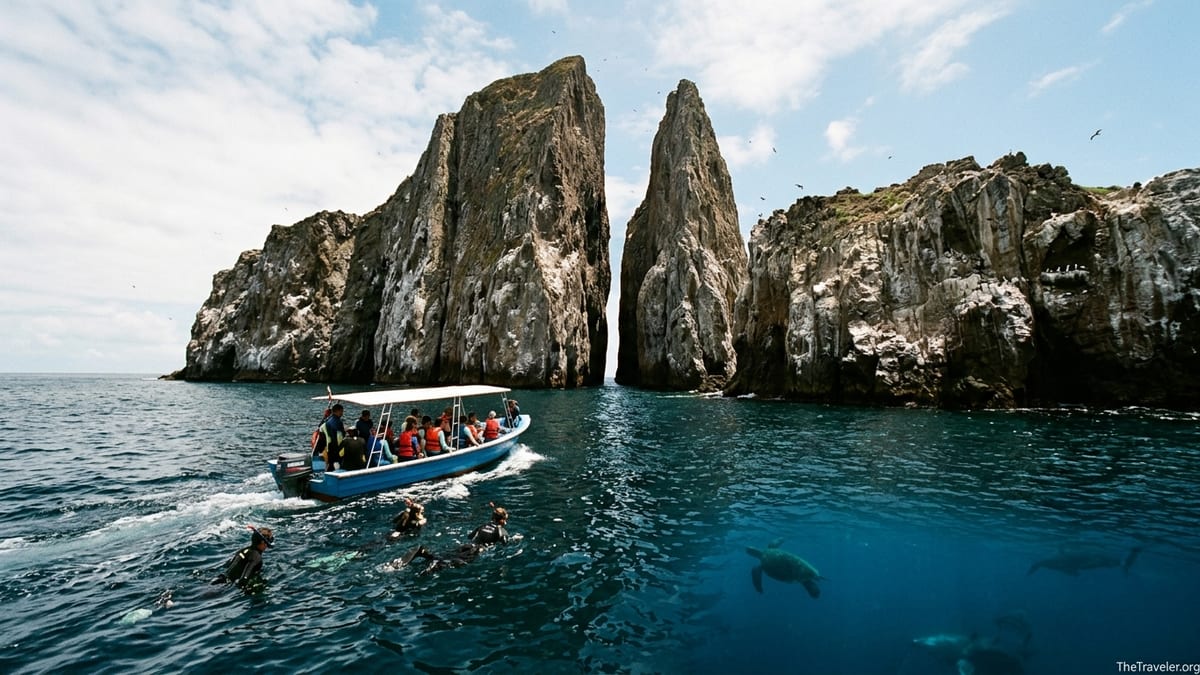
Kicker Rock, known in Spanish as León Dormido for its resemblance to a sleeping lion, consists of two steep tuff cones that rise to roughly 140 meters from the sea and are separated by a deep channel. The walls drop away sharply underwater, creating ledges and vertical faces rather than shallow reef. That topography, combined with nutrient‑rich currents, concentrates marine life around the rock and in the cut between the spires.
The site is uninhabited and there are no landing facilities on the rock itself. All activity here is from a boat and in the water. Boats typically drift or anchor in lee areas while groups snorkel or dive sections of the walls and, conditions permitting, the channel. The experience feels remote and exposed, closer to pelagic blue‑water than to sheltered coastal coves around San Cristóbal.
Part of Kicker Rock’s reputation comes from the potential to see large animals in relatively accessible depths. Many trips report encounters with sea turtles, rays, big schools of fish and several shark species in the top 10 to 20 meters. At times schooling hammerheads pass through, but their presence is very dependent on currents, season and plain luck. Even on good days, you may glimpse silhouettes below you rather than close‑up encounters.
It is important to approach the site with realistic expectations. Sea conditions, plankton blooms and tides can change visibility from clear blue to milky green in a day. Some tours enjoy abundant sharks and rays; others on the same week may see mostly reef fish and turtles. Guides and operators will share recent sightings, but no particular species or level of visibility can be guaranteed.
Marine Life: What Recent Reports Suggest
Recent reports from San Cristóbal day boats and dive centers describe Kicker Rock as a consistently good place for mixed schools of tropical and temperate fish, such as surgeonfish, jacks and snapper, along with frequent encounters with green sea turtles and Galápagos sea lions. White‑tip reef sharks are commonly spotted resting in ledges or gliding along the wall, and Galápagos sharks are occasionally seen deeper in the blue. Eagle rays and stingrays are regular, though not guaranteed, visitors.
Dive operators and recent visitor accounts indicate that schooling hammerhead sharks are still encountered here, especially along the outer walls and in slightly deeper water, though sightings can be brief or at the edge of visibility. Some dives record groups of a dozen or more passing through; others see none on a given day. Divers have also reported barracuda, wahoo and, in cooler seasons, more pelagic life cruising past in the mid‑water column.
Snorkel groups, which remain closer to the surface, tend to focus on the channel and more protected sides of the rock. Here, large turtles are often the stars of the show, with many tours describing multiple turtle sightings in a single drift. Sea lions sometimes dart around snorkelers near the surface. Reef fish density is generally high along the walls where barnacles, sponges and encrusting organisms provide texture rather than colorful coral gardens.
Visibility is highly variable. Operators report days with 15 to 20 meters of clarity as well as days where plankton and suspended matter reduce it to 5 to 8 meters or less. Cooler, nutrient‑rich months tend to increase plankton, which feeds the food chain but can limit how far you can see. When deciding whether to snorkel or dive, factor in how comfortable you are with potentially murky water and silhouettes of larger animals appearing at the edge of your vision.
What a Typical Day Trip from San Cristóbal Looks Like
Most Kicker Rock excursions start in Puerto Baquerizo Moreno, the main town on San Cristóbal. After an early morning check‑in at the agency office or pier, guests board a mid‑size speedboat at the town dock. Operators commonly schedule departures around 8:00 in the morning, though exact times vary and may adjust with tides and park regulations.
The navigation from Puerto Baquerizo Moreno to Kicker Rock usually takes about 45 minutes to 1 hour in normal sea conditions. Some boats make a brief stop near coastal sites en route; others head directly to the rock to maximize time in the water. Expect moderate motion in open water and come prepared with sea‑sickness prevention if you are prone to nausea, particularly in the cooler, rougher months.
Once at Kicker Rock, tours generally offer either two snorkeling sessions at different sides of the formation or two dives separated by a surface interval, depending on the trip type you booked. The boat may reposition between sessions to work with current direction and swell. In between, passengers rest on board, have snacks or lunch and warm up from the often brisk water.
Many itineraries then continue to a nearby authorized beach, such as Cerro Brujo, Manglecito or Puerto Grande, where you can relax on shore, swim in shallower water and observe sea lions and shorebirds. Exactly which site you visit depends on current Galápagos National Park regulations and which combinations each operator has permits for. Itineraries can change from season to season, so ask agencies at the time of booking which landing is currently included and whether it is confirmed or subject to park reassignment.
Snorkeling Tours: Skills, Conditions and Included Gear
Kicker Rock snorkeling tours are marketed to a broad range of travelers, but conditions are closer to an open‑ocean drift than a gentle bay swim. You should be a confident swimmer, comfortable floating and kicking in deep water while wearing fins and a mask, and able to manage short periods of chop or current without panic. Many tours provide life jackets or flotation vests, and guides often accompany the group in the water, but this does not replace basic swimming competence.
Water temperatures around San Cristóbal vary with the seasons. Roughly from June to November, the cool Humboldt and Cromwell currents dominate and surface temperatures can drop to about 18 to 22 degrees Celsius. From December to May the water usually warms to the mid‑20s Celsius, which is more comfortable for casual snorkelers. Even in warm months, staying in the water for long sessions can feel chilly, particularly for lean or less active swimmers.
Most snorkeling tours currently include short wetsuits, fins, mask and snorkel in the advertised price, and many boats also carry life jackets and simple buoyancy aids. However, there are variations in thickness and fit of wetsuits and some operators may charge extra for full‑length suits or prescription masks. Before you pay, confirm clearly which gear is included, which sizes are available and whether there are any additional rental fees, especially if you get cold easily and may want thicker neoprene.
CURRENTS at Kicker Rock can range from mild to moderate, occasionally stronger on the outer walls. Guides usually choose routes that follow the current so snorkelers drift rather than fight against it, with the boat following to pick up the group. Even so, you should be prepared for some effort and for entering and exiting the boat via ladders in waves. If you are an anxious swimmer, have limited mobility or strongly dislike being far from shore, you may prefer calmer coastal snorkeling sites on San Cristóbal instead.
Dive Trips: Experience Requirements and Safety Standards
Most dive centers on San Cristóbal classify Kicker Rock as an intermediate to advanced site because of depth, current and the potential for choppy surface conditions. Operators typically require at least an Open Water certification and a minimum number of logged dives. Current requirements among reputable shops often start around 8 to 10 logged dives, and some programs and itineraries request 20 or more, especially when combining Kicker Rock with other demanding sites.
Dive operators usually begin the day with a check‑in and gear fitting in town, followed by a detailed safety briefing on the boat. It is increasingly common to include a short checkout dive in a more sheltered bay before proceeding to Kicker Rock, particularly when divers have limited recent experience. This allows guides to assess buoyancy control and comfort before entering stronger current or deeper water at the main site.
Group sizes and guide ratios vary, but responsible centers keep certified divers in relatively small teams per guide, often around 4 to 6 divers, with overall boat limits commonly in the low to mid‑teens. Depth limits generally follow recreational profiles, with planned maximums around 18 to 25 meters depending on certification and daily conditions. Standard safety procedures include pre‑dive briefings, buddy checks, the use of surface marker buoys, safety stops and remaining within no‑decompression limits.
When comparing operators, ask concrete questions about safety: whether there is medical oxygen and a first‑aid kit on board, the presence of marine radios and communication with port authorities, maximum group size per guide, how often they dive Kicker Rock and what their protocol is for strong current or poor visibility days. Several reputable shops on San Cristóbal emphasize that they will modify or cancel dives if conditions are not appropriate; you should feel comfortable walking away from any operator whose answers are vague or dismissive.
Current Prices, Inclusions and Value for Money
Recent listings from San Cristóbal agencies show full‑day Kicker Rock snorkeling tours generally starting around 160 to 180 US dollars per person in 2026, with some boats slightly below or above that range depending on inclusions and season. Prices for dedicated dive trips, including two tanks at Kicker Rock and a beach stop, tend to fall roughly between 200 and 300 US dollars per diver with reputable outfits, again varying by boat size, equipment quality and whether lunch and park‑related charges are included.
At these price points, most tours include the boat ride, guiding, standard snorkeling or scuba gear, a simple lunch or boxed meal, drinking water and occasionally hotel pickup in town. Not all packages include the mandatory Galápagos National Park entrance fee or the separate transit control card fee, which are typically paid on arrival to the islands rather than tied to a single excursion. Always check written inclusions and exclusions before paying a deposit.
Be wary of outliers that are significantly cheaper than the prevailing range without a clear explanation. Lower costs can reflect older boats, larger groups or fewer staff per passenger. On the other hand, premium‑priced tours may justify higher rates with more spacious vessels, smaller groups, higher‑quality gear or more experienced guides. Since wildlife encounters are never guaranteed, your main decision is often between comfort and safety standards rather than promises of specific animals.
For divers, ask specifically whether the price covers all equipment, including wetsuit, regulator, BCD, computer and weights, or whether there are surcharges for certain items. Clarify tank size, whether nitrox is offered and at what cost, and whether the operator charges extra for a checkout dive in the bay if they require or recommend one before Kicker Rock.
Booking Strategies, Seasons and Cancellations
In busier months such as June to August and around major holidays, Kicker Rock day tours often fill several days to a week in advance, and popular operators and 360‑degree circumnavigation tours that include Kicker Rock can sell out even earlier. If your itinerary is fixed and you are set on a particular day, it is wise to reserve at least a week or two ahead through a local agency or directly with a dive center, especially for scuba trips where space is more limited.
Outside peak periods, many travelers successfully secure spots once they arrive on San Cristóbal by visiting agencies along the waterfront a day or two in advance. This can sometimes allow for minor price negotiation or choosing among several boats based on group size and feel. Waiting until the last minute carries the risk of reduced options or weather‑related disruptions, but it does allow you to look at forecasts and recent reports of conditions before committing.
Seasonally, roughly June to November brings cooler, nutrient‑rich waters and a higher likelihood of larger pelagic species, including hammerheads, at the cost of colder water and often choppier seas and wind. December to May tends to offer warmer, calmer surface conditions and somewhat clearer water, which many snorkelers find more comfortable, though big‑animal activity can be more variable. These are broad patterns rather than guarantees, and any single day may buck the trend.
Because tours operate in open ocean, weather and sea conditions can force last‑minute route changes or cancellations. Current booking terms among local operators usually allow for rescheduling or a refund if the operator cancels due to unsafe conditions or park decisions, but policies on partial refunds and customer‑initiated changes vary. Always read the cancellation policy, ask how they handle rough‑sea forecasts and keep a degree of flexibility in your island schedule in case your first choice day does not run.
Is Kicker Rock Right for You?
For confident snorkelers who are comfortable in deep, open water and who accept uncertainty around marine life sightings, Kicker Rock can be a memorable and often thrilling day. The combination of dramatic geology, schooling fish, turtles, potential shark encounters and a remote setting offers a different feel from shore‑based snorkeling around San Cristóbal. Certified divers with at least intermediate experience and solid buoyancy control often rate Kicker Rock highly for its pelagic possibilities and the sense of immersion in an active marine ecosystem.
On the other hand, the excursion is not ideal for everyone. If you are a very nervous swimmer, strongly prone to sea sickness or uncomfortable being far from land, the boat ride and open‑ocean conditions may feel stressful rather than enjoyable. Families with younger children or older travelers with limited mobility may find the ladder entries, swells and currents challenging. In these cases, spending your time and budget on calmer coastal spots around San Cristóbal, such as sheltered beaches and coves accessible from town or via shorter boat rides, may be more rewarding.
It is also important to weigh expectations against reality. Tour promotions often feature clear water and close‑up shark encounters, but your particular day might bring green, plankton‑rich water, fewer big animals or choppy seas that shorten in‑water time. You are paying primarily for access to a special site under strict protection, a professionally guided experience and the chance, not the promise, of iconic wildlife encounters.
If you understand those trade‑offs and still feel excited by the prospect of being in deep blue water alongside towering cliffs with the possibility of rays and sharks materializing from the green or blue, then Kicker Rock likely deserves a place on your San Cristóbal itinerary. If not, you may be better served by exploring the island’s many accessible shore sites, where sea lions and turtles often appear in shallower, calmer water just off the beach, and keeping Kicker Rock in mind for a future visit when your skills and comfort align with its demands.