


Landing at Kilimanjaro International Airport is an exciting moment: you are finally in northern Tanzania, with the Serengeti and its vast savannahs just over the horizon. Yet that last step from the arrivals hall to your safari camp can feel surprisingly complex. Distances are long, domestic flights have strict luggage limits, and road journeys can easily run to a full day. Planning your transfer from Kilimanjaro International Airport to the Serengeti before you fly can save you hours of fatigue and unlock extra time on game drives once you arrive.
Get the latest updates straight to your inbox!
Understanding the Route from Kilimanjaro Airport to the Serengeti
Kilimanjaro International Airport, usually referred to as JRO, sits roughly midway between the towns of Arusha and Moshi, about an hour by road from each. For most Serengeti visitors, JRO is the main international gateway, served by airlines such as KLM, Qatar Airways, Turkish Airlines and Ethiopian Airlines via regional hubs. From here, the Serengeti lies far to the west, with central areas around Seronera roughly 280 to 320 kilometres away in a straight line and significantly farther by road as the route detours through Karatu and the Ngorongoro highlands.
There are two broad ways to cover this distance: fly on a small safari aircraft to one of the Serengeti’s many airstrips, or drive on a combination of paved and gravel roads through Tanzania’s northern safari circuit. In practice, many travellers combine the two, perhaps driving as far as Tarangire or the Ngorongoro Crater and then flying into the heart of the Serengeti a few days later. Your choice will depend on budget, the length of your trip, how much time you want to spend on the road and whether you plan to visit other parks along the way.
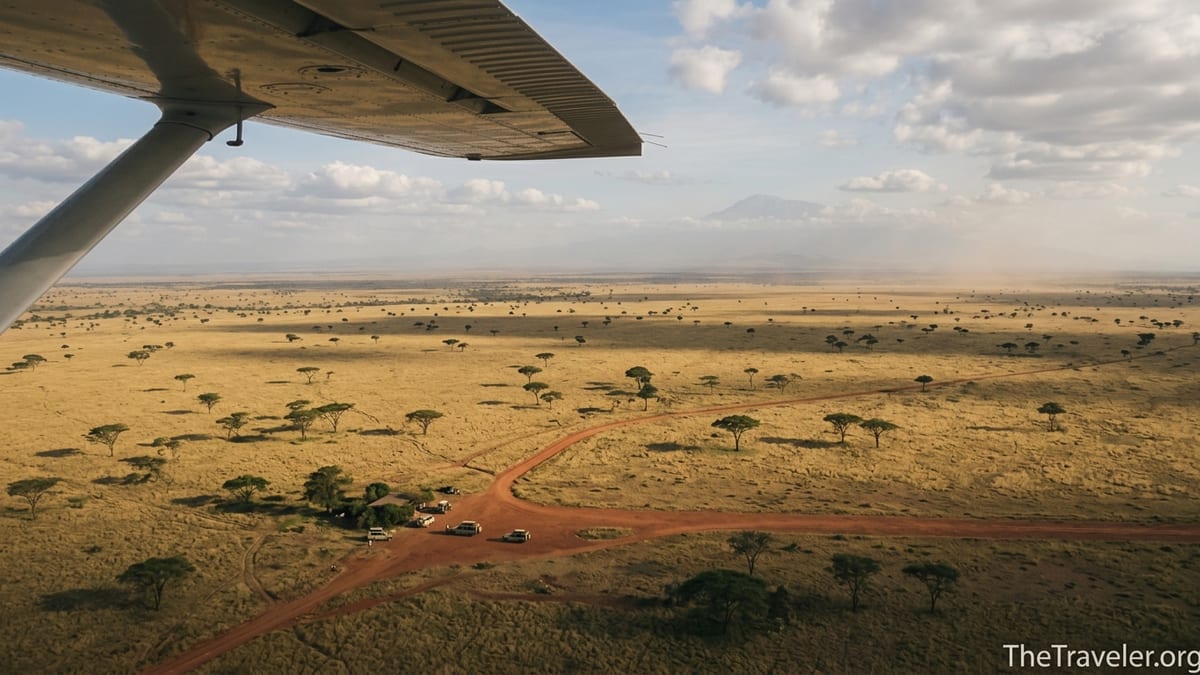
It is also important to understand timing. Even with perfect conditions, a full road transfer from Kilimanjaro Airport or Arusha to central Serengeti typically takes 7 to 10 hours door to door, including a section of rough corrugated track after Ngorongoro. That means attempting it after a long overnight flight can leave you arriving at your camp in darkness and exhausted. By contrast, a light aircraft flight from either Kilimanjaro or Arusha to Seronera or another Serengeti airstrip usually takes 1 to 2 hours in the air, but comes with tighter baggage rules and higher cost.
Because the Serengeti is huge, you should also match your transfer to the part of the park you are visiting. For example, travellers heading to the central Seronera region have fairly frequent flights and a well-established road route, while those booked into seasonal camps in the far north near the Mara River may need a connecting flight or to route via different airstrips at certain times of year. Checking which airstrip serves your specific lodge or camp is an essential first step in planning.
Flying from Kilimanjaro or Arusha into the Serengeti
For many visitors, the most efficient way to reach the Serengeti after landing at Kilimanjaro Airport is to connect to a domestic flight. Depending on the day of the week and the time your international flight lands, you may be able to fly directly from JRO to a Serengeti airstrip, or you may transfer by road to nearby Arusha Airport and depart from there. Auric Air currently operates scheduled services between Kilimanjaro International and Seronera airstrip in central Serengeti on selected days, often routing via Lake Manyara, while other regional carriers focus their Serengeti routes on Arusha Airport.
From Arusha, safari airlines such as Coastal Aviation, Auric Air and Regional Air operate daily flights to multiple Serengeti airstrips, including Seronera in the central region, Kogatende and Lamai in the north, and Grumeti or Sasakwa in the west. Flight times vary between about 50 minutes and 2 hours depending on routing and intermediate stops. A typical one-way fare for a seat on a scheduled safari flight between Arusha and central Serengeti might range from roughly 250 to 400 US dollars per person, while more remote northern sectors can be moderately higher, especially in peak migration months of July through October.
When connecting off an international arrival, tour operators usually build in a buffer of at least 2 to 3 hours between landing at JRO and a scheduled departure from Arusha or Kilimanjaro. Immigration, baggage claim and customs at Kilimanjaro are generally straightforward, but queues can build if several wide-body flights arrive close together. If your safari company is handling your booking, they will typically monitor your inbound flight and adjust transfers where possible, but you should still aim to arrive on an early morning international flight if you hope to reach the Serengeti the same day by air.
Some camps and high-end safari operators also offer charter flights either shared or private, particularly for groups or guests combining multiple remote lodges. A private charter from Kilimanjaro direct to a private concession in the Serengeti can cost several thousand US dollars but buys complete flexibility on timing, routing and luggage arrangements. For most independent travellers, however, scheduled flights from Arusha represent the best balance between cost and convenience, with the added benefit of spectacular views of the Ngorongoro highlands and the plains as you approach the park.
Luggage Limits, Aircraft Types and Packing for Safari Flights
One of the biggest surprises for many first-time safari-goers is how strict luggage limits are on Serengeti flights. Small regional aircraft are typically Cessna Caravan or similar bush planes, carrying 9 to 13 passengers. To maintain safety margins on short gravel runways and at hot high-altitude airstrips, airlines usually cap checked luggage at about 15 to 20 kilograms per person, including hand luggage, and require bags to be soft-sided duffels that can compress into small storage compartments.
If you arrive in Tanzania with a large hard-shell suitcase exceeding those limits, it will almost certainly need to stay in Arusha or at a left-luggage facility rather than travelling on to the Serengeti. Many safari operators and hotels in Arusha, such as city lodges and boutique guesthouses, routinely store excess bags for returning guests at no additional cost, provided you are booked for a night on either side of your trip. When planning, picture one medium-sized soft duffel plus a small daypack per person, and keep valuables and medications in your carry-on in case bags need to be distributed across different flights.
Weight limits also count camera gear, which can add up quickly for photographers. Those bringing long lenses and multiple camera bodies sometimes purchase an extra seat specifically for baggage on small aircraft, particularly on flights into remote northern airstrips where payload is tightly controlled. This is an accepted practice in East Africa, but you need to request it when booking, and the cost will usually be 75 to 100 percent of a normal passenger fare. If you plan to do this, flag it early with your tour operator so they can coordinate with the airline.
Inside the aircraft, space is tight and the experience is informal. Pilots often give a quick safety briefing before boarding from the airstrip and may make one or two stops along the way to drop other passengers at different locations. Seats are unassigned, engines are noisy and headroom is limited, but the views are superb. From the air you can often see crater rims, volcanic cones and herds of wildebeest or elephants below. Wearing comfortable clothing, packing a light jacket in your daypack and keeping your camera easily accessible will help you make the most of the flight while staying within the strict baggage rules.
Overland Transfers: Road Journeys and Classic Safari Circuits
Driving to the Serengeti from Kilimanjaro or Arusha remains a classic way to experience northern Tanzania, particularly for visitors who want to see multiple parks in one trip. A typical overland route begins with a one-hour transfer from Kilimanjaro Airport to Arusha, followed by a paved highway west towards Lake Manyara and the town of Karatu, roughly 3 to 4 hours away depending on traffic and stops. From there the road climbs to the forested rim of the Ngorongoro Crater and then descends onto the wide, dusty tracks that eventually cross the border into the Serengeti.
On paper, mapping apps may show a 5 or 6 hour drive from Arusha to central Serengeti, but frequent travellers and guides consistently report that the real-world journey is closer to 7 to 9 hours once you factor in park gate formalities, slower speeds on corrugated gravel and inevitable stops for wildlife sightings. After leaving the paved road at the entrance to the Ngorongoro Conservation Area, speeds often drop to 40 kilometres an hour or less as vehicles navigate potholes, washboard sections and occasional mud in the rainy seasons. It is a full day on the road even if you do not stop at viewpoints or for a game drive along the way.
Because of this, very few operators recommend driving directly from Kilimanjaro Airport to central Serengeti in one day after an overnight flight. You could, in theory, land mid-morning at JRO and reach your lodge 9 or 10 hours later, but you would arrive tired and after dark, which is both less safe and not permitted in some park areas. A more comfortable overland itinerary usually breaks the journey with at least one night in either Tarangire National Park, near Lake Manyara, or on the Ngorongoro Crater rim. For example, you might spend two nights near Tarangire watching elephant herds, then a night at a crater rim lodge, and only then drive on into the central Serengeti.
Road transfers can be run as private safaris in 4×4 Land Cruisers with pop-up roofs, or as shared group tours where a guide and vehicle serve several guests following the same itinerary. Private vehicles give you full flexibility to stop for photos, adjust the day’s plan in response to weather or animal sightings, and tailor travel times to your own pace. Group departures are usually cheaper per person but less flexible, which can make long-transit days feel more tiring. Self-drive is possible for experienced overlanders, but many rental companies exclude the Serengeti and the Ngorongoro crater roads from their permitted routes, largely because of the rough conditions and strict park regulations.
When to Overnight near Kilimanjaro Airport or in Arusha
Whether you proceed directly to the Serengeti or overnight near Kilimanjaro Airport depends largely on your arrival time, energy level and the next day’s schedule. If your international flight lands at JRO after about 14:00, most tour operators will recommend a nearby overnight rather than trying to continue the same day. Even if you are connecting to a domestic flight, the last services to the Serengeti usually depart by mid-afternoon. Delays on your inbound flight could leave you stranded, so building in an overnight is often the safest option.
Several accommodation options sit within a short drive of Kilimanjaro Airport. Kia Lodge is practically next to the runway and has long been popular with travellers who want to sleep as close to the terminal as possible before an early morning departure. Airport Planet Lodge operates a property closer to the highway with free shuttles to the airport, a swimming pool and landscaped gardens, appealing to guests looking for a more comfortable rest after a long-haul flight. A range of smaller guesthouses and lodges in the surrounding villages offer simpler rooms at lower prices for those on a tighter budget.
Staying in Arusha itself is a better option if you have at least one full day to spare or want more choice of restaurants, shops and activities between your arrival and your Serengeti departure. The one-hour road transfer from JRO to Arusha is straightforward, and many city hotels provide airport pick-ups or work with reliable taxi services. Once in town, you can rest, adjust to the time zone, repack your luggage for the lighter safari flights and perhaps visit a local market or cultural centre. This can be especially welcome for families with children or older travellers who prefer to break long journeys into smaller segments.
On the return leg, an overnight stop is also worth considering, particularly if your Serengeti flight arrives at Kilimanjaro in the early afternoon but your international departure is late at night. Spending a few hours by the pool at an airport lodge, showering and having a proper meal can feel far more civilised than sitting in a departure hall for six or seven hours. Some upscale safari companies even arrange VIP lounge access and meet-and-greet services at Kilimanjaro as part of their itineraries, smoothing the transition from bush to boarding gate.
Choosing Safari Lodges and Camps with Smart Transfer Logistics
Where you choose to stay in the Serengeti can have just as much impact on your transfer logistics as how you choose to travel. Large permanent lodges in central Serengeti, such as well-known camp brands and tented lodges near Seronera, are generally well served by daily flights and have short game-drive transfers from the airstrip. This makes them convenient for shorter trips or for travellers who are nervous flyers, since flight legs are shorter and there are usually alternative routing options if weather disrupts a particular airstrip.
More remote seasonal camps in the northern or southern Serengeti, positioned to follow the path of the Great Migration, can require longer transfer times. For example, reaching a camp near the Mara River in the far north often involves flying to Kogatende or Lamai airstrip and then driving 45 minutes to an hour across rugged tracks to camp. In the green season from about December to March, many camps relocate to the southern plains around Ndutu, which may be better accessed by road via the Ngorongoro Conservation Area or via seasonal flights to smaller airstrips. When booking, ask your safari planner to spell out the exact sequence from Kilimanjaro arrivals hall to your tent door, including how long each segment takes in typical conditions.
Some luxury operators such as Singita, andBeyond and other high-end brands coordinate seamless transfers between their properties using scheduled charters and private 4×4 vehicles. Guests might fly from Kilimanjaro directly to a private concession airstrip, stay a few nights in one lodge, then connect by short hop flight or road to a sister camp in a different part of the Serengeti. This style of itinerary can minimise long bumpy drives while still giving access to several distinct ecosystems, but it comes at a premium price and usually needs to be planned many months in advance to secure the right flight connections.
Mid-range travellers can still benefit from smart routing by choosing lodges that sit close to the airstrip serving their sector and by avoiding too many one-night stays. Two or three nights in one camp is usually the sweet spot, giving you several unhurried game drives in the immediate area and reducing how often you need to pack up and move. If you are mixing road and air transfers, try to cluster road-based nights around Tarangire and Ngorongoro at the beginning or end of your trip, with a pure fly-in segment to the Serengeti in the middle to minimise backtracking.
Costs, Booking Tips and Practical Transfer Advice
Budgeting for transfers from Kilimanjaro to the Serengeti means considering both the visible ticket prices and the hidden costs of time and fatigue. A private road transfer from JRO to Arusha might cost in the region of 50 to 100 US dollars per vehicle depending on provider and time of day, similar to the commonly quoted rates for transfers from JRO to Moshi that fall in the 40 to 80 dollar range for a 45 kilometre journey. From Arusha into the safari circuit, most visitors book complete packages where vehicle, driver-guide, fuel and park fees are bundled into a daily rate rather than paid separately.
Domestic flight prices vary by season, route and availability, with high-season fares on popular routes such as Arusha to central Serengeti rising significantly in July and August. Booking early through a safari operator or reputable agent gives you the best chance of locking in convenient schedules and through-ticketing that links your international arrival with your bush flights. If you are piecing the trip together yourself, avoid very tight same-day connections. Aim for at least a two- to three-hour window between landing at Kilimanjaro and any onward domestic departure, and do not rely on the final flight of the day if a missed connection would ruin your itinerary.
Travel insurance that covers missed connections and schedule changes is highly recommended in this region, especially if you are travelling in the long rain season from March to May when weather-related delays are more common. Pack a change of clothes, basic toiletries and one night’s essentials in your carry-on in case a bag is delayed or you unexpectedly need to overnight near Kilimanjaro or in Arusha. Having a small reserve of US dollars in cash is also helpful for paying for airport taxis, tips and incidentals where card facilities may be unreliable.
Finally, communication with your safari operator is key. Share your international flight details as early as possible, update them if anything changes and ask for a written outline of your transfer plan that includes meeting points at the airport. At Kilimanjaro, it is common to see drivers waiting outside arrivals with printed signs bearing guest names or lodge logos. Confirm the name of your guide or company in advance and match it before you follow anyone to a vehicle. Simple steps like this help ensure that your first hours in Tanzania are smooth and stress-free, setting the tone for the days you will spend among the wildlife of the Serengeti.
FAQ
Q1. Can I fly directly from Kilimanjaro International Airport to the Serengeti the same day I arrive?
Yes, it is often possible if your international flight lands in the morning and there is a scheduled safari flight later that day, but availability and timing are limited, so you should plan connections carefully and consider an overnight if you land after early afternoon.
Q2. How long does it take to drive from Arusha to central Serengeti?
In real conditions, most travellers should expect a full day of 7 to 9 hours from Arusha to central Serengeti, including slower sections on rough gravel roads and time for park gate formalities and brief stops.
Q3. What are the typical luggage limits on Serengeti safari flights?
Most regional airlines serving the Serengeti allow roughly 15 to 20 kilograms of luggage per person, including hand luggage, and require soft-sided bags so they can be loaded into small aircraft holds.
Q4. Do I need to stay overnight near Kilimanjaro Airport if my flight lands late?
If your international flight arrives at Kilimanjaro after about 14:00, it is usually safer and more comfortable to stay overnight at an airport lodge or in Arusha and continue to the Serengeti the following morning.
Q5. Are road transfers from Kilimanjaro to the Serengeti safe?
Yes, road transfers are routinely used and generally safe when arranged through reputable safari companies, but driving after dark and at high speeds on gravel roads is avoided, and conditions can be tiring on the rough sections beyond Ngorongoro.
Q6. Can I store excess luggage in Arusha while I fly to the Serengeti?
Many Arusha hotels and safari operators offer secure luggage storage for guests during their time in the Serengeti, which is useful if you arrive with larger hard-shell suitcases that cannot go on small aircraft.
Q7. Is it worth paying extra for a charter flight instead of a scheduled safari flight?
A private or shared charter flight is more expensive but can be worthwhile for groups, tight schedules or remote camps, since it offers flexible departure times, direct routing and more control over luggage arrangements.
Q8. How far is Kilimanjaro Airport from Arusha, and how much does the transfer cost?
Kilimanjaro Airport is roughly an hour by road from Arusha under normal traffic, and private transfers typically cost on the order of 50 to 100 US dollars per vehicle depending on provider and time of day.
Q9. When in my itinerary is it best to visit the Serengeti?
Many travellers start with Tarangire or Lake Manyara, then visit the Ngorongoro Crater, and finish with several nights in the Serengeti so they arrive when they are rested and can fly back to Kilimanjaro at the end.
Q10. Do I need to book all transfers in advance or can I arrange them on arrival?
It is strongly recommended to book all key transfers, especially domestic flights and long road safaris, before you travel, as same-day availability can be limited and last-minute arrangements may be more expensive or impractical.