


The Montenegrin coast is compact enough that you can visit both Kotor and Budva in a single day, yet the two feel like different worlds. One is a fjord-like bay wrapped in mountains and medieval stone, the other a Riviera of long beaches, high-rise hotels and late-night clubs. If you are planning a trip to Montenegro, the real question is not whether to visit both, but which one should be your base. This guide compares Kotor and Budva on the things that matter most in practice: beaches, nightlife, old towns, views, prices, transport, day trips, cruise crowds and how long you are staying.
Get the latest updates straight to your inbox!
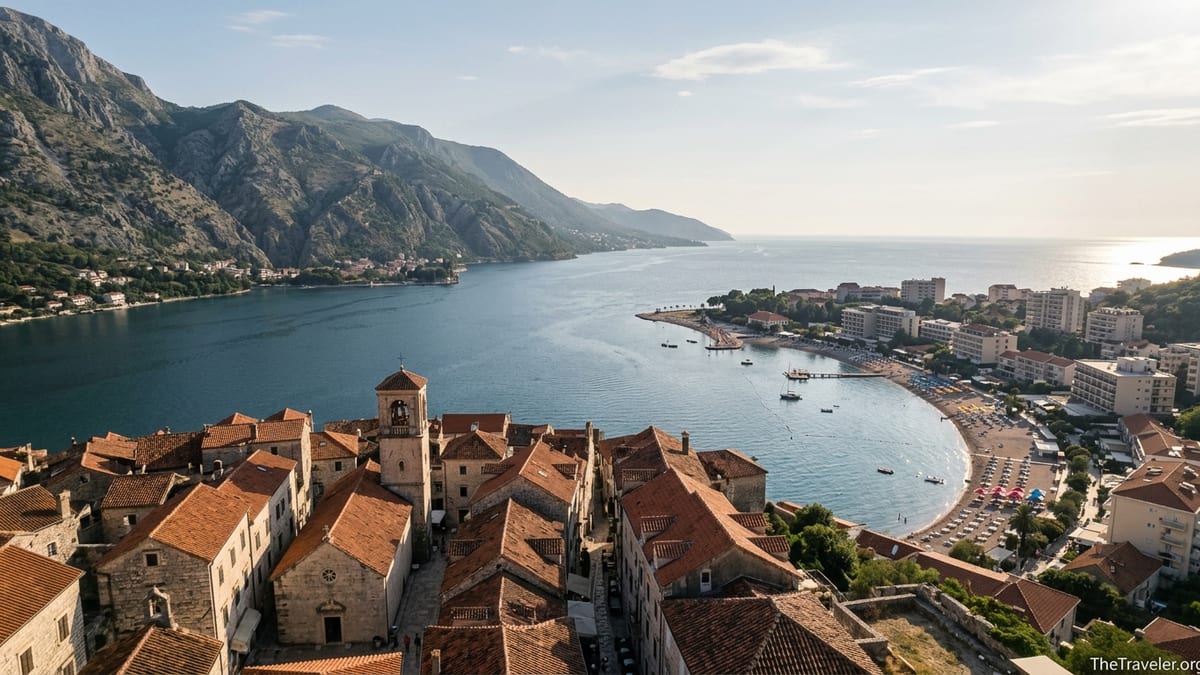
Overall vibe: Bay town vs beach resort
Kotor sits deep inside the Bay of Kotor, backed by steep mountains and fronted by calm, reflective water. The walled Old Town is compact and atmospheric, with lantern-lit squares, churches and stone alleys. Outside the walls you quickly reach the waterfront promenade through Dobrota, where low-rise guesthouses and stone houses line the shore. The feel is intimate and historic, more about strolling and sitting in cafés than promenading in big crowds.
Budva, by contrast, is Montenegro’s classic beach resort. The Old Town sits on a small peninsula, but most of Budva stretches along the open Adriatic with apartment blocks, hotels and a long seafront strip. In July and August it can feel like a mini Miami: music from beach bars, neon signs, ice cream stands and crowds in flip-flops moving between the promenade and shopping centers. If you imagine your evenings with sea views and a quiet glass of wine, Kotor fits more naturally. If your mental picture is sunset cocktails followed by a late bar or club, Budva is built for that.
For a concrete example, consider where you might be at 10 p.m. on a summer Saturday. In Kotor you are likely at a small restaurant in a stone square inside the walls, maybe listening to a local duo playing acoustic covers. In Budva you could be walking along Slovenska Plaža with music blasting from several open-air bars at once, deciding whether to head into a packed spot on the waterfront or take a taxi up to a hillside super-club.
This difference in atmosphere affects everything from noise levels at night to the sort of people you will meet. Kotor tends to attract couples, small groups of friends and cruise passengers interested in scenery. Budva pulls in younger travelers, regional tourists and families looking for a classic beach holiday with lots of activities.
Beaches and swimming: Budva’s clear win
If daily beach time and sea swimming are your main priorities, Budva is the stronger base. The Budva Riviera offers a chain of beaches within a short taxi or bus ride. Right in town you have Slovenska Plaža and the small pair of Mogren beaches backed by cliffs. A 10 to 15 minute taxi ride west brings you to Jaz Beach, a wide arc of pebbles and coarse sand that hosts summer festivals and has a mix of casual beach bars and quieter zones. Continue along the coast and you reach Bečići and Rafailovići, more resort-focused but ideal for long walks along the water and accessible sunbed rentals.
Along these beaches you will find sunbed and umbrella sets starting around 10 to 15 euros for two beds and an umbrella in shoulder season, rising closer to 20 to 25 euros in peak July and August in front-row spots. Simple beach bars sell espresso for about 1.50 to 2 euros, soft drinks around 3 euros and casual meals like grilled fish or cevapi plates in the 10 to 18 euro range, depending on location and view. The practical point is that you can step out of your Budva apartment in swimwear and be in the water within minutes, then stay on the sand until late evening if you want.
Kotor does have swimming, but the experience is very different. The Bay of Kotor’s shore is mostly stone jetties and narrow strips of pebbles rather than wide sandy bays. You will see locals laying towels on small concrete platforms between Dobrota and Ljuta, and guests at waterfront hotels using private jetties. The water is usually calm, and in late spring and early autumn you can find quiet spots, but in high summer the bay feels busier, with boats and ship tenders coming and going.
If you base in Kotor and want a “proper” beach day, you will probably take a day trip to the Adriatic side. Organized tours often bundle Budva or Jaz Beach with stops at viewpoints, or you can take the regular bus to Budva and walk or taxi onward to beaches like Mogren or Bečići. This is entirely feasible, but you trade spontaneous pre-breakfast swims for a more deliberate excursion. Travelers who want swimming every single day usually find it easier and more natural to stay in Budva or along the Budva Riviera and visit Kotor as a day or evening trip.
Old towns, scenery and views
On old-town charm and dramatic scenery, Kotor is the clear favorite. Its walled center is one of the most atmospheric in the Adriatic, with Venetian-era walls, small squares and a backdrop of steep grey mountains falling into the bay. The classic experience is to start early, before cruise passengers arrive, and wander through the alleys to find a quiet café for coffee and a burek. Later, you might climb the fortress path behind the town or take the newer cable car from near Kotor up to the Lovćen area for sweeping bay views and cool air on hot days.
Budva’s Stari Grad is smaller and more polished, with restored stone houses and plenty of boutiques and restaurants. It is undeniably attractive at sunset, when the walls glow and the lights come on along the marina. However, a few streets are dominated by bars and music in high season, and you are rarely unaware that you are in a busy resort town. The surrounding scenery is pretty, with forested hills and views along the coast, but it does not have the same fjord-like drama as Kotor’s enclosed bay.
From a practical standpoint, this matters for how you structure your days. In Kotor the views start the moment you open your accommodation shutters. Many bayfront rooms and hillside apartments look directly over the water to the opposite side of the bay. It is common to have breakfast on a small balcony watching kayakers and small boats move across flat water, with cruise ships anchored further out on some days. In Budva, views depend much more on the exact hotel or apartment. You might have a sea-view balcony over Mogren or the Old Town if you pay more, or you might look over neighboring buildings and only see the sea when you walk to the promenade.
If photography and hiking are priorities, Kotor works better as a base. From town you can walk up the fortress trail, take the cable car, or join tours into Lovćen National Park where you can hike around the mausoleum area and look back over the bay and inland mountains. Budva has some coastal walks, including paths over to Mogren and viewpoints above the Riviera, but for dramatic landscapes most travelers still end up joining tours that pass through or start near Kotor.
Nightlife, dining and noise levels
Budva has long been known as Montenegro’s nightlife capital. In high season, music spills from dozens of bars along Slovenska Plaža and in the Old Town, and large clubs operate into the early hours on the hills above town and along the beachfront. Expect open-air venues with Balkan pop, international hits and DJ sets, and a crowd that is a mix of local, regional and international visitors. On peak nights, a beer in a busy beach bar or club can cost from about 4 to 7 euros, with cocktails running from roughly 8 to 15 euros depending on the bar and brand.
Kotor does have nightlife but on a smaller, more low-key scale. Inside the Old Town you will find wine bars, small live-music spots and a few livelier bars that stay open until late, especially in July and August. The difference is that Kotor’s nighttime energy is centered on seated dining and drinks in stone squares rather than high-volume clubs. For many visitors this is a feature, not a bug: you can enjoy a nice dinner for 15 to 25 euros per main course in a mid-range restaurant, share a bottle of Montenegrin wine for 18 to 30 euros, and still sleep with relatively little street noise if you choose a quieter lane or stay outside the walls.
The flip side is that both towns can be noisy, just in different ways. In Budva, staying close to the waterfront or Old Town in July often means music until after midnight, especially on weekends. If you are sensitive to noise, you may want an apartment a few streets back or in nearby Bečići, using taxis to reach nightlife when you want it. In Kotor, the main noise issues are occasional bars on certain squares and late-night conversations in the narrow lanes, which can echo between stone walls, plus early-morning deliveries and suitcase wheels on cobbles.
Families and early-to-bed travelers usually find Kotor’s nighttime scene more comfortable, while younger groups and anyone planning multiple late nights often prefer Budva. A common compromise is to base in Kotor for most of the trip and spend one evening in Budva for dinner and drinks, returning by taxi or late bus.
Prices, value and practical costs
Montenegro is generally more affordable than nearby Croatia, but prices in both Kotor and Budva have risen in recent years as tourism has grown. Broadly, Budva can offer cheaper basic accommodation and food options away from the seafront, while Kotor’s Old Town and waterfront often command a premium for atmosphere and views. In peak summer, a simple private room or studio apartment in Budva a few blocks from the beach might range from about 50 to 80 euros per night, while similar options inside or right by Kotor’s Old Town might often be closer to 80 to 120 euros or more, depending on quality and booking date.
On the other hand, Kotor offers more small guesthouses and apartments along the bay in Dobrota and other nearby villages, where you might find good value if you are willing to stay a 20 to 30 minute bayside walk from the Old Town. These areas give you quieter surroundings and direct water access from small jetties, which many travelers find worth the slight separation.
Daily costs for meals and drinks are broadly similar. A takeaway burek or similar pastry will usually cost a couple of euros in both towns. Mid-range restaurant main courses tend to sit in the 12 to 22 euro range, with cheaper pizzerias and grill spots starting lower. Local beer on tap commonly costs between 2.50 and 4 euros depending on location, and coffee is usually around 1.50 to 2.50 euros. Ice cream stands in Budva and Kotor often charge 1.50 to 2.50 euros per scoop near popular promenades.
One area where you can feel a difference is entertainment spending. Budva’s nightlife and beach-club culture create more opportunities to spend on cover charges, cocktails and events. A large music festival or big-name DJ night at Jaz Beach, for example, might have day or weekend passes in the tens of euros, plus higher drink prices than normal. In Kotor, typical extra costs center on boat trips around the bay, Blue Cave tours and cable car tickets rather than nightly clubbing. This can work out better value if you prefer a few memorable activities over repeated bar nights.
Transport, day trips and cruise crowds
Both Kotor and Budva are linked by regular bus services, with the journey usually taking about 30 to 45 minutes depending on traffic. This makes it easy to base in one and visit the other on a half-day or full-day trip. Tickets on local buses are relatively inexpensive, and you can usually just buy at the station or from the driver, though in peak summer services can be crowded and subject to delays when coastal traffic is heavy.
Kotor has a distinct transport advantage for exploring the wider region. It lies closer to Perast and the inner bay, and many tours to Lovćen National Park, Njeguši village, Lake Skadar, or even day trips that combine multiple highlights depart from, or pass through, Kotor. If you are not renting a car, basing yourself in Kotor often means shorter pick-up times and more tour choice. For example, a typical full-day tour might combine Budva, the old royal capital of Cetinje, a scenic drive over the mountains and a boat trip on Skadar Lake, picking guests up from Kotor’s Old Town early in the morning.
Budva’s strength is its position on the open coast, which simplifies trips to nearby beach villages and resorts. From Budva you can easily reach Sveti Stefan, Petrovac and other smaller seaside spots by bus or taxi for a change of scene. If your Montenegro plan is essentially a string of beach days with occasional short excursions, this is convenient.
The single biggest factor that shapes the feel of Kotor, especially from April to October, is cruise traffic. On busy summer days, multiple ships can anchor in the bay, with tenders bringing several thousand passengers into the Old Town between late morning and mid-afternoon. During those hours, the lanes are noticeably more crowded and the fortress trail busier. The good news is that cruise schedules are published in advance, and you can often plan around them: explore the Old Town early, take a boat or bay excursion during peak ship hours, and then enjoy the quieter streets again after late afternoon when passengers return to the ships.
Budva is not a cruise port, so its crowds build in a different way. Peak season fills the beaches and promenade from late morning onwards as overnight guests, regional visitors and day trippers arrive. There are still busy periods, especially in July and August, but the intensity is more consistent rather than tied to a single ship’s tender schedule. If you strongly dislike navigating cruise groups with lanyards in narrow streets, Budva or one of the smaller bay towns near Kotor might feel more comfortable as a base.
Trip length: how many days in each, and smart combinations
For a very short visit of one or two nights, Kotor usually delivers more of Montenegro’s signature scenery in a compressed window. In a single full day based in Kotor you can walk the Old Town, climb part of the fortress trail or ride the cable car, take a short boat trip to Perast and Our Lady of the Rocks, and still have time for a slow dinner inside the walls. Budva as a day trip from Kotor works well in this scenario: morning in Kotor, afternoon swim and early evening stroll through Budva Old Town, then back to Kotor for the night.
For a stay of four to seven nights, a split base can make sense if you do not mind packing up once. A common pattern is three or four nights in Kotor for views, walking and day trips into the mountains or Lake Skadar, followed by two or three nights in Budva or along the Budva Riviera for beaches and nightlife. This way you experience both the bay and the open coast without having to rely daily on buses for beach access.
If you prefer to unpack once, the choice hinges on what you want your everyday routine to look like. In Kotor, a typical five-day stay might include a couple of bay boat trips, one or two mountain excursions, and several evenings strolling through the Old Town, choosing a different square for dinner each night. Swimming would be from jetties or on a dedicated beach day elsewhere. In Budva, a five-day stay might revolve around late breakfasts, walking to a different beach each day, sunset drinks at a beach bar, and perhaps one full-day trip that loops through Kotor and the bay.
For longer trips of a week or more, some travelers actually choose a third base, such as Ulcinj or the Lake Skadar area, to experience Montenegro’s southern coast or inland wetlands. In that case, Kotor is still usually the better anchor point for organizing inland transport, while Budva remains the more obvious choice if your energy is firmly on the sea and nightlife.
The Takeaway
The choice between Kotor and Budva as a base in Montenegro really comes down to what you want your days and nights to feel like. Kotor is about views, atmosphere, history and relatively calm evenings. You wake up to a quiet bay, wander through medieval lanes, and structure your time around scenic walks and excursions. Swimming is possible but requires more planning, and cruise crowds dictate when the Old Town feels busiest. It suits couples, solo travelers who prioritize scenery and culture, and anyone building a wider Montenegro itinerary with multiple day trips.
Budva is about beaches, energy and nightlife. You step out of your door and you are on the Riviera, with multiple beach options within easy reach and a long strip of bars, restaurants and shops to fill your evenings. It can be hectic and loud in high season, but for travelers who like that buzz, Budva delivers. It suits younger groups, friends on a beach holiday, and families who want straightforward access to sand, sea and kid-friendly promenades.
If you have the time, the ideal solution is to experience both. Base in Kotor if you lean even slightly towards scenery, old towns and varied day trips, adding a day or evening in Budva for swimming and nightlife. Base in Budva if daily beach time and late evenings are central to your trip, and visit Kotor for its views, fortress and bay. With only about half an hour between them, you can fine-tune the balance on the ground once you arrive, but choosing the right base from the start will shape the Montenegro you remember.
FAQ
Q1. Is Kotor or Budva better if I only have two days in Montenegro?
If you have just two days, Kotor is generally the better base because it packs scenery, an atmospheric old town and easy day trips into a small area. You can still visit Budva for an afternoon swim and early evening walk, but sleeping in Kotor gives you the bay views and quieter nights that many short-stay visitors value most.
Q2. Which town is cheaper to stay in, Kotor or Budva?
Basic accommodation a few streets back from the beach in Budva can be slightly cheaper than rooms inside or right next to Kotor’s Old Town, especially in July and August. However, Kotor offers good-value apartments along the bay in places like Dobrota if you do not mind a short walk. Day-to-day costs for food and drink are broadly similar, so your main savings come from the exact location and type of lodging you choose.
Q3. Is Budva safe for solo travelers at night?
Budva is generally safe for solo travelers, including solo women, but it is a busy nightlife town in high season so normal big-night-out cautions apply. Stick to well-lit main streets and established venues, keep an eye on drinks, and use registered taxis ordered through your accommodation when moving between areas late at night. Many solo travelers feel more comfortable basing in a quieter part of Budva or nearby Bečići and heading into the liveliest spots only when they want.
Q4. How bad are the cruise crowds in Kotor, really?
On days when large ships are in port between roughly late morning and mid-afternoon, Kotor’s Old Town and fortress path can feel very busy, with organized groups filling some lanes. The impact is real but manageable if you plan around it. Staying overnight means you can explore the town early in the morning and after late afternoon when most passengers are back on board, and use the middle of the day for boat trips, the cable car or a swim further along the bay.
Q5. Can I stay in one town and just day trip to the other?
Yes. Buses between Kotor and Budva are frequent in season and the ride is usually around 30 to 45 minutes, making day trips easy. Many travelers base in Kotor, visit Budva for a beach-and-old-town afternoon, then return in the evening. Others do the reverse, staying in Budva for beaches and heading to Kotor for a day of bay views and fortress hiking. If you dislike packing and unpacking, this one-base strategy works well.
Q6. Which base is better for hiking and outdoor activities?
Kotor is the stronger base for hiking and varied outdoor activities. From town you can tackle the fortress trail, ride the cable car, join tours into Lovćen National Park, or take boat trips around the bay and out towards the Blue Cave. Budva has some coastal walks and viewpoints, but most of the classic mountain hikes and scenic drives in Montenegro are easier to organize from Kotor.
Q7. Where should I stay with kids, Kotor or Budva?
Families who want simple daily beach access usually find Budva or nearby Bečići more convenient, because you can walk from many hotels straight to the sand or pebbles. There are also lots of casual restaurants and ice cream spots along the promenade. Kotor can still work with children, especially if they enjoy boats and exploring an old town, but swimming options are more limited and you will have to plan around cruise crowds and steps in the fortress area.
Q8. Do I need a car to enjoy Kotor or Budva?
You do not need a car to enjoy either town. Both Kotor and Budva are walkable in their central areas, and there are regular buses and organized tours that cover most popular day trips. A rental car can be useful if you want to explore more remote villages or combine multiple regions in a short time, but parking can be tricky and traffic heavy in peak season, so many visitors choose to rely on public transport and excursions.
Q9. Which base works better outside the July–August peak?
In late spring and early autumn, Kotor is often the more rewarding base because its appeal is less dependent on packed beaches and nightlife. The bay views, old town atmosphere and mountain excursions are enjoyable even when the water is cooler. Budva still has life in shoulder seasons, and beaches are more pleasant without extreme heat, but some beach bars and large clubs scale back their operations as you move further from peak summer.
Q10. If I want both quiet nights and some nightlife, what is the best strategy?
One good approach is to base in a quieter part of the busier town, or to split your stay. In Budva, that might mean choosing accommodation a few blocks back from the promenade or in Bečići, then walking or taking short taxis to nightlife when you feel like it. In Kotor, you might stay outside the Old Town in Dobrota for peaceful nights and stroll into the walls for dinner and drinks. Alternatively, spend most of your trip in Kotor and plan one or two dedicated nights out in Budva, returning by taxi.