


Landing at Mexico City International Airport and heading to Roma Norte is one of the most common routes for visitors. The neighborhood is central, walkable, full of boutique hotels and guesthouses, and well connected to public transport. Yet arriving with luggage after a long flight, you will want a reliable, low-stress way to get from the terminal doors to your hotel front desk. This guide walks through the main options from the airport to Roma Norte, with realistic travel times, typical costs, what to expect at the terminals, and practical advice for arriving smoothly, day or night.
Get the latest updates straight to your inbox!
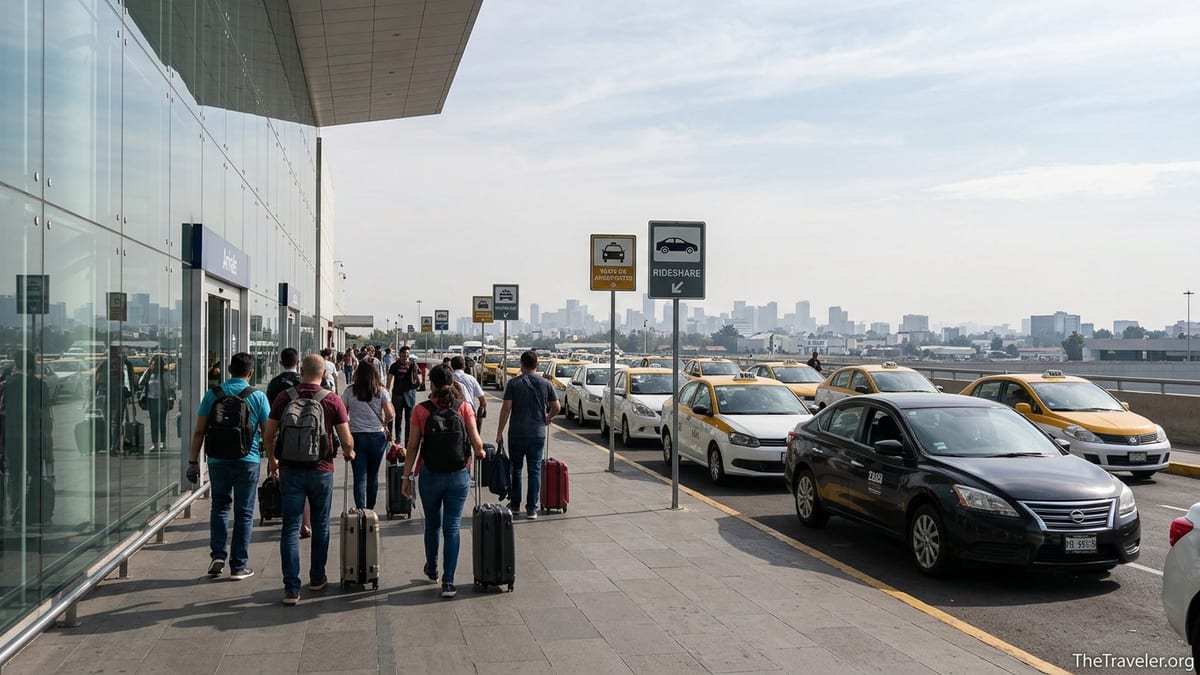
Understanding the Route from the Airport to Roma Norte
Mexico City International Airport, often called AICM or Benito Juárez, sits east of the city center. Roma Norte lies to the west, between Avenida Insurgentes and Avenida Cuauhtémoc. In normal daytime traffic the distance is usually covered in 25 to 45 minutes by car. In heavy rush hour or during big events, such as a Sunday race on Paseo de la Reforma or a major protest downtown, the same journey can stretch to an hour or more.
Most hotel guests in Roma Norte stay near landmarks such as Fuente de Cibeles, Plaza Río de Janeiro, or around the intersections of Álvaro Obregón and Orizaba or Medellín. From the airport, almost all road routes funnel through the elevated Viaducto Miguel Alemán or Circuito Interior before turning south toward Roma and Condesa. This means that whether you choose Uber, Didi, an official airport taxi, or a private transfer, you will usually follow a similar path and face similar traffic patterns.
Public transport options such as Metrobús Line 4 and the Metro offer cheaper connections that bring you within a short walk or short ride of Roma Norte. For example, many travelers ride Metrobús Line 4 from the airport to stations like Buenavista or Hidalgo, then connect to Metrobús Line 1 on Avenida de los Insurgentes and continue to Glorieta de Insurgentes or Álvaro Obregón, both bordering Roma Norte. This requires more steps and is best suited to travelers with lighter luggage and some comfort navigating busy urban systems.
Your ideal route will depend on what time you land, how much luggage you have, whether you are traveling alone or in a group, and your comfort with Spanish and local transit. A solo backpacker arriving at 11:00 in the morning will likely make a different choice than a family of four with two large suitcases landing at 23:30.
Taking Uber or Didi from Mexico City Airport
Ride-hailing services such as Uber and Didi are widely used across Mexico City and are very popular with visitors once they are in the city. Regulations around airport pickups have changed several times in recent years, and enforcement can vary by time of day. In practice, many recent travelers report successfully requesting Uber or Didi from both Terminal 1 and Terminal 2, though sometimes they need to walk a few minutes toward designated pickup areas or even slightly outside the terminal grounds.
Typical fares between the airport and Roma Norte with Uber or Didi for a standard car tend to fall somewhere around the equivalent of 200 to 350 Mexican pesos during daytime and early evening, depending on traffic, demand, and the exact hotel location. Some visitors have reported airport-to-Roma rides on Uber near 250 pesos in light traffic and Roma-to-airport rides around 200 to 300 pesos in the morning. For Uber Black or larger vehicles, expect higher pricing.
After collecting your bags, connect to the airport’s free Wi‑Fi or use your roaming data to request a ride. In Terminal 1, travelers often arrange pickup around doors 6 to 8 on the arrivals level or by walking along Capitán Carlos León toward the pedestrian access corridor that also leads to the Metro Terminal Aérea entrance. In Terminal 2, pickup is typically on the arrivals roadway outside doors near the domestic baggage exits. Because airport staff and security occasionally move ride-hailing cars along, you should message your driver inside the app and confirm both the door number and a clear landmark, such as a particular pillar or sign.
For a hotel arrival in Roma Norte, ride-hailing is especially convenient if you are staying on a smaller, tree-lined street such as Colima, Tonalá, or Chihuahua where official taxis might not recognize the exact boutique property. The driver will navigate via GPS directly to your hotel door. When you exit the car, keep your carry-on and valuables with you, double-check the trunk for checked bags, and avoid counting out cash on the sidewalk; payment by card in the app reduces fumbling with bills in a new environment.
Using Official Airport Taxis: Easiest for First-Time Visitors
Official airport taxis remain one of the most straightforward options, especially for first-time visitors arriving late at night, with significant luggage, or with family. These taxis are not hailed on the street. Instead, you purchase a ticket at one of several authorized taxi counters inside the terminal, immediately after exiting customs. Staff at the counter will ask for your destination neighborhood or approximate address, calculate a zone-based fare, and issue you a printed ticket that you hand to a driver at the official taxi line just outside.
Recent traveler reports suggest that an official airport taxi from the airport to Roma Norte often costs in the range of roughly 280 to 400 pesos for a standard sedan, depending on the taxi company, time of day, and the specific part of Roma. For a van or SUV capable of carrying four or more passengers plus large suitcases, the price is higher. These rates are typically fixed at the time of purchase and displayed per zone, so you are not negotiating on the curb.
The key advantages of official airport taxis are predictability and ease. You pay in advance, you do not need mobile data or an app, and the driver is accustomed to serving international visitors. If you are staying at a recognizable hotel such as Hotel Brick, Nima Local House, or one of the larger chains on the fringe of Roma and Condesa, it is usually enough to say “Hotel Brick in Roma” or show the printed reservation. For smaller guesthouses in residential buildings, having the exact street address ready, preferably written clearly or shown on your phone, will help avoid confusion.
From a hotel-arrival perspective, an airport taxi is also a good choice when you are concerned about local navigation after dark. The driver will normally pull up directly outside your building on the correct side of the street. If your hotel has a discreet entrance or shared doorway, you can ask the driver in simple Spanish to wait a moment while you confirm the door or ring the buzzer, before he departs.
Metrobús Line 4 and Connections to Roma Norte
For budget-conscious travelers or those avoiding road congestion, Metrobús Line 4 is the main public transport link from Mexico City Airport to the central city. This bus rapid transit line has dedicated lanes and stops directly at Terminal 1 and Terminal 2. The airport segment charges a higher fare than regular city Metrobús rides, but the overall cost remains low compared with a taxi or Uber. You will need a prepaid mobility card, which can be purchased and reloaded at machines in Metrobús stations.
From the airport, Metrobús Line 4 runs toward the Historic Center and on to areas near Buenavista or San Lázaro, depending on the particular service you board. To reach Roma Norte, many travelers ride Line 4 as far as a central transfer point such as Hidalgo or Buenavista. There, they switch to Metrobús Line 1 on Avenida de los Insurgentes, heading south toward stations including Glorieta de Insurgentes and Álvaro Obregón. Both stations are a short walk, typically 5 to 15 minutes, from many hotels and guesthouses in Roma Norte.
For example, if you are staying near Plaza Río de Janeiro, you might take Metrobús Line 1 to Álvaro Obregón station. From there, you would walk along Álvaro Obregón under the trees, then turn onto Orizaba or Tonalá to reach your hotel. If your lodging is closer to Fuente de Cibeles or the border with Condesa, you might use the Insurgentes or Sonora area as your walking endpoint instead.
Because Metrobús stations have platforms with level boarding and dedicated lanes, travel times can be predictable outside of emergencies. However, the public transit journey will almost always take longer door to door than a direct car ride, especially once walking and waiting are included. It is most attractive for solo travelers with light luggage arriving during daylight hours. With multiple heavy suitcases, kids, or after midnight, a taxi or ride-hailing service is usually the more comfortable choice.
Taking the Metro or Mixed Public Transport with Luggage
The city’s Metro system also connects close to the airport through Terminal Aérea station on Line 5, about a short walk from Terminal 1. With a couple of transfers, you can reach stations that border Roma and Condesa for a very low fare. For travelers on a tight budget or those interested in how locals commute, this can be an interesting option. However, it is important to recognize that the Metro can become extremely crowded at peak times, and navigating stairs and platforms with large luggage may be challenging.
One common route is to take Metro Line 5 from Terminal Aérea to Pantitlán, then transfer to Line 1 toward the west. After Line 1’s current modernization work, travelers often look for stations that offer an easy onward connection to Roma Norte, sometimes combining Metro with Metrobús or a short taxi ride. Another option is to ride to a central station such as Hidalgo or Balderas and then walk or switch to Metrobús Line 1 along Insurgentes, depending on your comfort level.
Realistically, the Metro and mixed public transport are best for travelers who can keep their luggage to a manageable backpack or one small rolling suitcase per person. It is not unusual to see locals riding with small suitcases to reach the airport. At the same time, you should keep valuables such as passports and phones secure and avoid standing near train doors with open bags during busy periods.
For hotel arrivals, a practical compromise is to use public transport for the bulk of the journey and finish with a short app-based ride. For instance, you might take Metrobús Line 4 from the airport to Buenavista, then request an Uber or Didi from the street outside the station to your hotel on a quiet Roma block. This keeps costs down while ensuring the last stretch with luggage is handled by car.
Traffic, Timing, and Choosing the Best Option for Your Arrival
Traffic patterns in Mexico City are highly variable and can influence which route makes the most sense. Morning rush hour typically builds from around 7:00 to 10:00, while evening rush hour tends to stretch from about 17:00 to 20:00 or later on Fridays. During those windows, a car from the airport to Roma Norte can spend significant time crawling along Viaducto or Circuito Interior. At quieter hours, such as late evening after 21:30 or on some weekend mornings, the same journey may feel surprisingly quick.
If you are landing midday on a weekday with only carry-on luggage, Metrobús Line 4 plus a connection to Metrobús Line 1 can be appealing. You will avoid much of the worst congestion and pay a fraction of a taxi fare. A realistic door-to-door time from baggage claim to a hotel near Fuente de Cibeles might be around 60 to 75 minutes, depending on waiting times and walking pace.
For evening arrivals between roughly 19:00 and midnight, official airport taxis and ride-hailing services become more attractive. The streets are usually still busy but not always gridlocked, and you benefit from being dropped directly in front of your accommodation. A typical journey might take 35 to 50 minutes in traffic, longer if there is heavy rain or a traffic incident.
For very late arrivals, such as flights landing between 00:00 and 04:00, public transport options are limited or paused. In those cases, official airport taxis are often the simplest and safest option, even if ride-hailing remains technically possible. When pre-booking a hotel in Roma Norte and anticipating a late arrival, it is worth emailing the front desk in advance to confirm 24-hour check-in and to ask whether they have a preferred taxi stand or private driver they recommend.
Hotel Arrival Tips in Roma Norte
Roma Norte is full of small, design-forward hotels, restored townhouses, and apartments converted to guest stays. Many are located on residential streets with limited signage. Before you land, save both the full address and the hotel’s name in Spanish in your phone notes, and take a screenshot of the location on a map in case your connection drops. When you get into a taxi or Uber at the airport, show the driver the address clearly. If your hotel is on a one-way street, the driver may need to circle the block to stop safely in front.
Upon arrival, do a quick visual check of the entrance before you step out with all your luggage. In Roma Norte, it is common for hotels to share a doorway with apartments or offices. Buildings near Plaza Río de Janeiro, for example, might have a street-level lobby that serves several units, with your hotel occupying upper floors. If you are unsure you are at the right door, you can ask the driver in simple Spanish, “Es aquí el hotel?” and compare the building number with your reservation.
If you are arriving very early or very late and the street is quiet, try to minimize the time your bags are on the sidewalk. Have your passport and booking confirmation in an easy-to-reach pocket so you do not need to open large suitcases outside the building. Many hotels in Roma Norte, including upscale options and smaller guesthouses, will store luggage if your room is not ready. Mention your arrival time in advance by email; some properties may arrange a simple airport pickup through a trusted driver at a fixed rate.
Finally, once you have checked in and dropped your bags, ask the front desk for their preferred taxi apps or taxi stands for your onward city travel. Some properties keep a card from an official radio-taxi company or advise guests to use only Uber, Didi, or Cabify rather than hailing street taxis. This local advice will help you navigate Roma Norte and beyond with more confidence during the rest of your stay.
The Takeaway
From Mexico City International Airport to Roma Norte, you have a spectrum of options that balance cost, comfort, and complexity. Official airport taxis and ride-hailing apps such as Uber and Didi deliver the simplest point-to-point experience, particularly for first-time visitors, families, or those arriving late at night with luggage. Metrobús Line 4 and Metro combinations offer a budget and environmentally friendly alternative for confident travelers with lighter bags and daytime arrivals.
Whichever route you choose, a little preparation goes a long way. Know your hotel’s exact address, save a map of Roma Norte offline, and have a rough idea of typical fares and travel times before you land. With these basics in place, the journey from the terminal doors to your hotel lobby becomes just the first, manageable step in exploring one of Mexico City’s most beloved neighborhoods.
FAQ
Q1. Can I reliably get an Uber or Didi from Mexico City Airport to Roma Norte?
In practice, many travelers continue to use Uber and Didi from both terminals, but local rules and enforcement can shift. At times you may be asked to meet your driver at a specific door or walk a short distance toward main roads. It is wise to have Uber or Didi as an option, but also know where the official taxi counters are in case app pickups are restricted when you land.
Q2. How much does a taxi or Uber from the airport to Roma Norte usually cost?
Costs vary with traffic and demand, but a typical ride-hailing fare in a standard car often falls somewhere around 200 to 350 pesos. Official airport taxis tend to be somewhat higher, often roughly 280 to 400 pesos for a standard sedan to Roma Norte, with larger vehicles costing more. Treat these as approximate ranges rather than guaranteed prices.
Q3. How long does the journey from Mexico City Airport to Roma Norte take?
With normal daytime traffic, a direct car ride usually takes about 25 to 45 minutes. During heavy rush hour, heavy rain, or major events, the journey can stretch to 60 minutes or more. Public transport options like Metrobús and Metro, including waiting and walking, often take around 60 to 90 minutes door to door.
Q4. Is Metrobús Line 4 a good option if I have luggage?
Metrobús Line 4 is manageable with light luggage such as a backpack or small rolling suitcase. The buses have level boarding, but they can become crowded at busy times, and you will likely need to make at least one connection to reach Roma Norte. With multiple large suitcases or traveling with children, most visitors find an official taxi or ride-hailing service more comfortable.
Q5. Is it safe to take public transport from the airport to Roma Norte during the day?
During daylight hours, many locals and some visitors use Metrobús or the Metro between the airport and central neighborhoods. As with any large city, you should stay alert, keep valuables secure, avoid displaying expensive items, and be prepared for crowded vehicles. If you prefer a lower-stress arrival, especially after a long flight, consider a taxi or app-based ride for your first journey and explore public transport later.
Q6. What is the best option for a very late-night arrival?
For flights landing between about midnight and early morning, official airport taxis are usually the simplest choice. Public transport services are limited or not running, and ride-hailing pickups can be less predictable. Buying a ticket at an authorized taxi booth inside the terminal and being driven directly to your hotel door in Roma Norte minimizes complications at a tired hour.
Q7. How should I give my hotel address to the driver?
Have your hotel’s full address written down or saved on your phone, ideally with the neighborhood name “Roma Norte” included. Showing the address on a map helps drivers locate smaller streets and boutique hotels. If the property is on a one-way street or near a plaza, you can also mention a nearby landmark, such as “cerca de Plaza Río de Janeiro” or “cerca de Fuente de Cibeles,” to give the driver additional context.
Q8. Are there any types of taxis I should avoid?
Visitors are generally advised to avoid hailing random street taxis outside the airport, especially immediately after arrival. Instead, use the official airport taxi stands inside the terminal or trusted ride-hailing apps such as Uber and Didi. In the city, ask your hotel which taxi companies they recommend or continue to use apps rather than stopping unmarked cabs on the street.
Q9. Can my Roma Norte hotel arrange a transfer from the airport?
Many midrange and higher-end hotels, as well as some guesthouses, can arrange a private transfer with a trusted driver at a fixed rate. This option often costs more than a standard taxi or Uber but may be worth it if you prefer a named driver holding a sign in the arrivals area. Contact your hotel in advance with your flight details to ask about availability and approximate pricing.
Q10. What if my flight is delayed and I arrive much later than planned?
If you have prearranged a transfer through your hotel or a private service, inform them of your new arrival time as soon as you have updated information. For official airport taxis and ride-hailing, delays are usually not a problem, as you will simply request your ride after landing. The main impact of a delay is that traffic patterns and available public transport may change, so be prepared to adjust from a public bus or Metro plan to a taxi or Uber if you end up landing very late.