


Naguabo is one of eastern Puerto Rico’s most relaxed coastal towns, a place where families can eat fresh seafood on the waterfront, look across the bay to El Yunque, and still be within a short drive of rivers, rainforest and mountain scenery. It is also a destination where parents need to make very deliberate choices about when to stick to the Malecón and when, or if, to venture into river canyons and natural pools with children. This guide focuses on real-world logistics and risk levels so you can build a family day in Naguabo that matches your kids’ ages, energy and comfort, without confusing picture-perfect social media scenes with safe conditions on the ground.
Get the latest updates straight to your inbox!
Understanding Naguabo With Kids: Waterfront First, Rivers Second
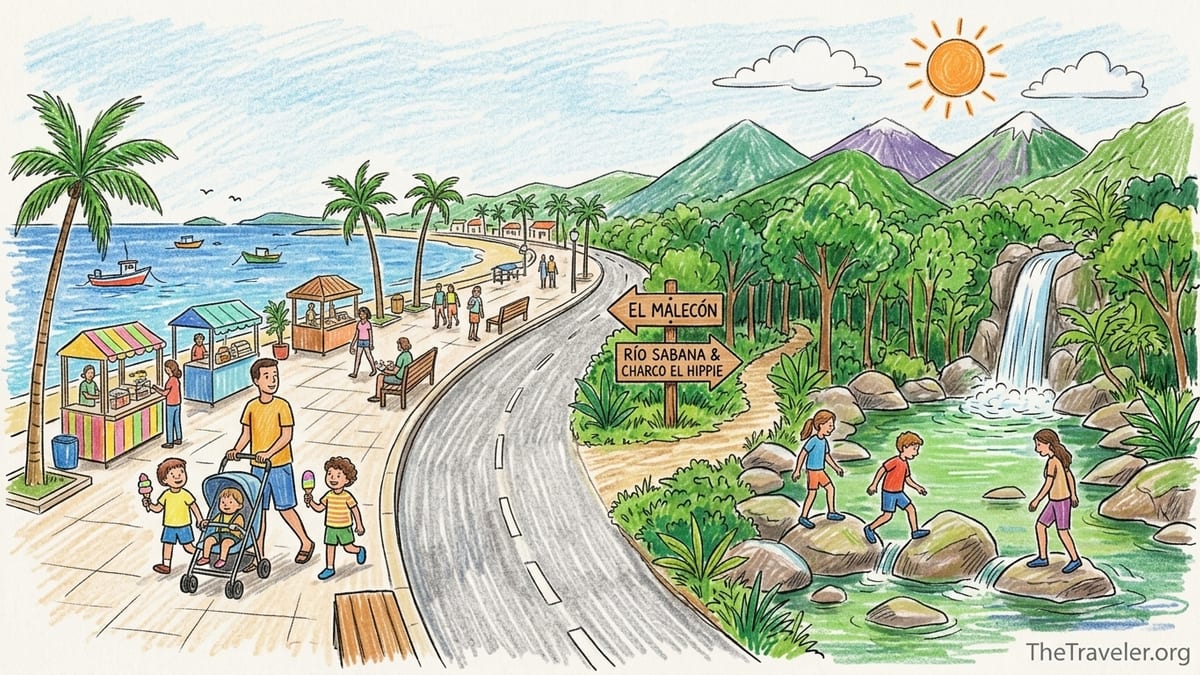
Naguabo sits on Puerto Rico’s southeast coast between Humacao and Fajardo, with its main visitor focus in the fishing village of Playa Húcares and the Malecón de Naguabo, a paved waterfront promenade lined with restaurants and food kiosks. The Malecón area is flat, stroller friendly, and popular with local families who come for seafood, ice cream and the breeze coming off the bay rather than for swimming. Families with toddlers and younger elementary-age kids will find this waterfront zone far easier to manage than the rocky river environments up in the hills.
Within a 30 to 40 minute drive inland, Naguabo’s mountains hide rivers like Río Blanco, Río Sabana and the Icacos River, along with attractions such as Charco El Hippie and the Río Sabana Recreation Area on PR-191 South. These spots can look idyllic in photos, with calm green pools, waterfalls and smooth rocks. In reality, access can involve muddy slopes, slick boulders, uneven steps and changing water levels, all of which demand more judgment, better footwear and closer supervision than a stroll along the Malecón. Families should think of the waterfront as the default low-effort option and treat river spots as higher-risk add-ons suitable only when conditions, ages and energy all line up.
The key safety difference is predictability. On the Malecón, parents mostly manage sun exposure, heat and normal urban concerns like traffic when crossing the main road. In the rivers, parents must read the water itself, think about upstream weather they cannot see, and accept that rescue services may be far away if something goes wrong. That does not mean you must avoid river environments altogether, but it does mean they should never be treated as casual playgrounds for very young children simply because the photos online look gentle and inviting.
El Malecón & Playa Húcares: Easy, Low-Effort Family Time
El Malecón de Naguabo runs along the bayside at Playa Húcares, framed by views of Vieques, Cayo Santiago and the silhouette of El Yunque on clear days. The promenade is lined with more than two dozen restaurants and kiosks serving seafood and Puerto Rican comfort food, with specialties like pastelillos de chapín, fried trunkfish turnovers that are a point of local pride. Families can park in the public lots or along the street, then move at kid pace between shaded benches, ice cream stands and the low seawall.
This is one of the easiest environments in Naguabo for caregivers with strollers, grandparents, or children who still nap in car seats. You can time your Malecón visit around your child’s sleep pattern, for example leaving Humacao or Palmas del Mar right after a nap, driving 30 to 40 minutes, then spending an hour just walking the waterfront and watching local anglers at the pier. Bathrooms are available inside restaurants, which is another reason to plan a sit-down meal rather than trying to do the Malecón as a snack-only stop, especially with potty-training toddlers.
Shade can be limited at midday, so plan for brimmed hats, lightweight long-sleeve sun shirts and sunscreen, particularly in the dry winter months when the sun angle still feels intense. Many families choose late afternoon or early evening, when the heat breaks, the sky colors up over the bay and live music sometimes drifts from the bars and kiosks. This timing also helps with long gaps between activities because you can spend your morning elsewhere and use the Malecón as a relaxed end-of-day reward rather than the main event.
Family Eating at Húcares: What Works With Kids
The Húcares waterfront is essentially a continuous strip of places to eat, from simple kiosks selling fritters and cold drinks to established seafood restaurants with full service and air conditioning. Local and visiting families most often mention spots like El Makito or other sit-down marisquerías for plates of whole fried fish, mofongo and tostones, alongside kid-friendly sides like white rice, beans and french fries. Prices vary by dish, but parents typically find that sharing two seafood platters plus extra sides can comfortably feed two adults and two elementary-age kids without over-ordering.
With toddlers and preschoolers, consider an early lunch when restaurants first open or a mid-afternoon meal between the local lunch rush and dinner. This gives you more flexibility to request a high chair, position your family near a bathroom, or sit by a window where kids can watch boats rather than feeling trapped at the table. Bringing a compact stroller or a lightweight travel booster seat can be helpful in smaller dining rooms whose high-chair inventory is limited.
For babies and young toddlers still in car seats, many parents in Puerto Rico keep children buckled during short gaps between food and sightseeing, using the drive as a contained rest period. If your family is driving from San Juan or the northeast resorts, aim for one substantial meal at the Malecón rather than multiple short food stops; Naguabo’s restaurants are designed for leisurely meals, and it is easier on everyone to settle in once for 60 to 90 minutes than to shuffle tired kids in and out of cars several times.
Charco El Hippie & River Spots: Why Caution Comes First
Charco El Hippie, inland from Naguabo along Camino La Planta off PR-31, is a well-known natural pool beneath a rock wall carved with graffiti. Tourism materials over the years have highlighted it as a scenic swimming hole, but both local rescuers and visitors have repeatedly described it as one of the more dangerous river spots on the island because of deaths and serious accidents linked to sudden changes in water level, strong currents near the falls and risky cliff-jumping behavior.
Discover Puerto Rico and other official channels emphasize that while people do swim at Charco El Hippie, families should not jump from high rocks or treat the walls above the pool as safe diving platforms. Access to the water involves walking over wet, algae-coated rock slabs and uneven terrain that can be extremely slippery, especially after recent rain. For children, even the approach to the water can be more hazardous than it looks in photos, which often frame only the calm center of the pool on a rare blue-sky day.
Local rescuers in Naguabo have warned that rivers like those feeding Charco El Hippie can produce what they call a golpe de agua, a sudden surge of water rushing down from the mountains when it rains upstream, even if the sun is shining over the pool itself. Parents should understand that this risk is inherent to mountain rivers and cannot be completely controlled. There may be no lifeguards, no warning sirens and no quick evacuation routes. For these reasons, Charco El Hippie is not an appropriate primary destination for families with toddlers or early elementary-age kids, and even with teenagers it is better framed as a scenic stop to view from a safe distance rather than as a cliff-jumping playground.
Other rivers in the Naguabo area, such as those near Cubuy and along the southern section of PR-191, may have more moderate pools and calmer currents on a given day, but the same underlying issues apply: rocks are slick when wet, currents can change quickly, and rescue services may be far. Treat any river visit as a “maybe” activity that you confirm on the day based on weather, and never as a promised centerpiece of a young family’s trip.
Río Sabana Recreation Area & PR-191 South: A Managed Rainforest Option
For families who still want a taste of rainforest and river scenery, the Río Sabana Recreation Area on PR-191 South is one of the more structured options in the Naguabo region. According to the U.S. Forest Service maps for this section of El Yunque National Forest, Río Sabana includes designated parking, picnic tables and restroom facilities, making it different from unmarked pullouts or informal river access points where there is no infrastructure at all.
The southern segment of PR-191 does not connect to the northern El Yunque corridor, so you access Río Sabana from the Naguabo side, typically via PR-31 and the signed junction with PR-191 near the Río Blanco area. The drive climbs into the foothills, where the road narrows and curves more tightly. This is an environment where children are better off secured in proper car seats rather than on laps, both for safety and because it helps manage potential motion sickness on winding mountain roads.
Conditions and operations at Río Sabana can change after storms or maintenance work, so it is important to check the status of facilities such as restrooms and picnic areas before you depart. When open, this site allows families with older children to enjoy short walks, picnic by the river and experience the forest canopy without needing to commit to long hikes or bushwhacking. Even here, though, riverside rocks can be slick, and parents should set clear boundaries for where children may approach the water and under whose supervision.
Because PR-191 South is more lightly visited than the main northern El Yunque corridor, services such as snack kiosks and souvenir shops are limited or nonexistent. Plan bathroom breaks carefully, carry enough water and simple food like fruit, crackers and sandwiches, and anticipate that there may be a long gap between leaving the Malecón and reaching a managed site with restrooms again.
Footwear, Weather & Age-Based Risk: How To Decide Where To Go
In Naguabo, footwear is often the clearest signal of whether a family understands the difference between the Malecón and the rivers. On the Malecón and around Playa Húcares, flat sandals, sneakers or even flip-flops can work, since you are mostly on pavement and boardwalk. Children can use standard closed-toe sneakers for walking between restaurants and for short photo stops along the waterfront.
At river sites such as Charco El Hippie or the Río Sabana area, children and adults need shoes with real grip and toe protection, such as closed-toe water shoes with rubber soles or lightweight hiking shoes that can handle getting wet. Bare feet, soft pool slides or fashion sandals easily slip on algae-covered rocks, and stubbed toes on submerged stones are a common and preventable injury. If a child does not have appropriate footwear, that is a sign to choose the Malecón or another low-risk activity that day instead of “making do” at the river.
Weather is the second non-negotiable factor. Before any river outing, check the day’s forecast not only for Naguabo town but also for the mountain interior feeding the river system. Even modest rainfall upstream can raise water levels, strengthen currents and increase the chance of a sudden surge. If radar or local reports show showers or storms in the mountains, pivot to a waterfront or town-based plan. A day that looks marginal for river play can still be ideal for seafood on the Malecón, an easy beach stop in nearby Humacao, or a slow drive through the countryside with short scenic pullouts.
Age and developmental stage should guide your choices just as strongly as weather. Toddlers who still trip easily on uneven ground, or who dislike holding hands near drops, are not good candidates for slippery river boulders, no matter how calm the water looks when you arrive. For this group, it is better to prioritize paved spaces, playgrounds, managed beaches with lifeguards elsewhere on the island, and very short roadside viewpoints. River environments in Naguabo are better suited to confident swimmers in later childhood and the teen years, and even then only with helmets and flotation gear if you plan more adventurous canyoning activities with licensed guides.
Sample Age & Risk Profiles: From Toddlers To Teens
For babies and toddlers up to about age 3, Naguabo works best as a waterfront and driving destination rather than a river playground. A realistic day might look like a morning drive from San Juan or Palmas del Mar timed to a car-seat nap, a long lunch at a Malecón restaurant with air conditioning, a gentle stroller walk along the boardwalk and an optional photo stop at a roadside bay overlook before heading back. Any plan that requires carrying a toddler over wet rocks or down steep, muddy banks should be reconsidered in favor of smooth, predictable ground.
For early elementary-age kids, roughly ages 4 to 7, you can expand slightly to include structured rainforest stops like Río Sabana when open, but still keep actual river immersion very limited. Let children walk on dry, flat sections of the riverbank in closed-toe shoes, throw leaves or small sticks into the current from a safe distance, and observe fish or tadpoles from the shore. Save full-body swimming in rivers for days when another adult can dedicate all attention to one child at a time, and only if upstream weather has been dry and local advice indicates calm conditions.
By late elementary and middle school, ages 8 to 12, confident swimmers might enjoy carefully chosen pools near the Río Sabana day-use area or other managed spots where the river widens and slows. Here, life vests for kids, clear rules about staying away from waterfalls or chutes, and time limits in the water can keep risk more manageable. Even at these ages, though, long, lazy days at a family-friendly beach elsewhere may still be safer and more satisfying than an uncertain drive to a remote river that might be swollen or murky when you arrive.
Teens and older adolescents who are strong swimmers and follow instructions can handle more adventurous river activities, but only with formal guides and equipment. Naguabo and neighboring municipalities sometimes have outfitters who lead canyoning or river trekking experiences that include helmets, flotation vests and route planning based on conditions. These are more advanced adventures, closer to sports than sightseeing, and they should be treated as such in your trip planning rather than as casual add-ons to a day with younger siblings.
Managing Long Gaps, Bathrooms, Shade & Bugs
One of the underappreciated challenges of exploring Naguabo with kids is the long gap that can appear between key stops. For example, if you leave a condo near Palmas del Mar, drive to the Malecón for lunch, then continue straight inland on PR-31 and PR-191 toward Río Sabana, you may spend several hours without easy access to public restrooms, shade structures or pharmacies. This is manageable with older kids but can cause meltdowns with toddlers who need frequent bathroom breaks or diaper changes.
When planning your day, build in explicit bathroom stops at known points like gas stations near PR-3 and PR-31, or before you leave the Malecón after your meal. Carry a basic kit in the car that includes wipes, a change of clothes for younger children, plastic bags for trash and, if you are comfortable with it, a small travel potty for emergencies in remote pullouts. Shade is another limiting factor. Along the Malecón, shade shifts throughout the day, and many restaurants offer covered outdoor seating or indoor rooms. In the mountains, trailheads and riverbanks can be quite exposed at midday, so wide-brimmed hats and lightweight long sleeves are more practical than relying on tree cover alone.
Insects are part of the Naguabo environment, particularly near rivers and in the forest. Mosquitoes can be active year-round, especially in the late afternoon and after rain. Families should bring insect repellent they already know their children tolerate, whether DEET-based or alternatives recommended by their pediatrician, and apply it before heading into wooded areas. At the Malecón, bugs are generally less of a nuisance thanks to the breeze, but standing water in nearby lots or mangrove areas can occasionally attract them at dusk. Combining insect protection with sun strategies like hats and UPF clothing reduces how often you need to apply lotions and sprays directly to kids’ skin.
Putting It Together: Easy, Moderate & Adventurous Family Days
An easy Naguabo day with kids might focus entirely on the Malecón and short coastal drives. For example, families based in Humacao could leave mid-morning, stop at a supermarket or panadería near PR-3 for snacks and diapers, then continue to Playa Húcares. After an early lunch at a seafood restaurant with indoor seating, you could spend an hour walking the Malecón, letting children watch boats at the pier and sharing ice cream from a kiosk. A slow return drive with one or two roadside photo stops along the bay or at a nearby viewpoint rounds out the day with minimal physical risk and plenty of bathroom access.
A moderate day might combine the Malecón with a short foray into the foothills without committing to river swimming. In this scenario, a family with upper-elementary kids could have lunch and bathroom time in Húcares, then drive inland on PR-31 and PR-191 to reach the Río Sabana Recreation Area if it is open. There, you could take a brief walk along a signed path, explore a picnic area, and let kids observe the river from a safe vantage point while keeping shoes dry. After an hour or two, you would return to the coast before dusk for a light dinner or snack on the Malecón, using car time between segments as built-in rest for children.
The adventurous version, suitable only for families with teens or very strong older swimmers, would treat Naguabo as a base for a guided river or canyoning experience in the mountains, combined with a recovery meal on the waterfront. In this plan, you would reserve a licensed guide well in advance, confirm equipment and age limits, and watch the forecast for several days before your outing. If conditions and guides align, you might spend the morning on a structured river route with helmets and life vests, return to your lodging for showers and rest, then head to Playa Húcares in the late afternoon for seafood and sunset. If at any point the weather looks unstable or a younger sibling is struggling with the plan, you default back to the easy or moderate version without apology.
Across all these options, the through-line is the same: match the day’s plan to your youngest child’s abilities, your driver’s energy, and the weather in both town and mountains. The Malecón is a reliable, low-effort anchor that can salvage a day when rivers are running high or kids are cranky. Rivers and rainforest are optional, high-reward but higher-risk extras that should be earned by stable conditions and realistic expectations, not forced just because a picture in your feed made them look simple.
The Takeaway
Naguabo offers families a compelling mix of waterfront flavor, mountain scenery and access to El Yunque’s southern flanks, but it rewards those who distinguish clearly between easy and demanding environments. The Malecón at Playa Húcares is firmly in the easy category, with flat pavement, plentiful food options, bathrooms inside restaurants and breezy views that grandparents and toddlers can enjoy together. River sites like Charco El Hippie and the reaches of Río Sabana, by contrast, belong in the demanding category, requiring specialized footwear, constant supervision and conservative decisions about weather and water levels.
For many families, especially those traveling with babies, toddlers or a mix of ages, the most successful Naguabo days will be those that keep the Malecón as the main act and treat rainforest or river segments as brief, carefully chosen add-ons rather than the centerpiece. Checking upstream weather, packing proper shoes, insisting on car seats on curvy mountain roads and being willing to pivot away from slippery terrain when it does not feel right are all part of traveling here as a responsible caregiver. Done thoughtfully, a Naguabo visit can give your children memories of pastelillos on the waterfront and the sound of rainforest rivers in the distance, without asking them to manage risks they are not yet ready to understand.
FAQ
Q1. Is Naguabo’s Malecón a good place to visit with toddlers?
Yes, the Malecón is one of the easiest areas in Naguabo for toddlers because it is mostly flat and paved, with nearby restaurants for shade, bathrooms and snacks. Parents still need to watch children near the seawall and the road, but the environment is far more predictable than river terrain.
Q2. Should I take my toddler to Charco El Hippie if the photos look calm?
No. Even if photos show calm water, access to Charco El Hippie involves wet, slippery rocks and uneven ground, and the river can rise quickly if it rains upstream. Toddlers are at higher risk of slipping or being knocked over by unexpected currents, so this spot is better reserved for older, strong swimmers, if at all.
Q3. What kind of shoes do children need for river areas around Naguabo?
Children should wear closed-toe water shoes or light hiking shoes with good grip and sturdy soles. Flip-flops, soft slides and barefoot walking are unsafe on algae-covered rocks and uneven riverbeds. If your child does not have appropriate footwear, it is safer to skip river access and stay on the Malecón or in town that day.
Q4. How do I check if it is safe to visit rivers like Charco El Hippie or Río Sabana?
Check the weather forecast for both Naguabo and the nearby mountains, paying close attention to recent and predicted rainfall. If there has been rain in the interior, water levels and currents can be stronger even when the sky is blue at the pool. You can also ask locals, guides or rangers about recent conditions, but if there is any doubt, choose a waterfront or town-based plan instead.
Q5. Is the Río Sabana Recreation Area suitable for young kids?
When open, Río Sabana offers parking, picnic areas and restrooms, which helps with logistics. It can be suitable for young kids if you keep them on maintained paths and treat the river as something to look at rather than to enter. Very young children should stay away from wet rocks and fast-moving water, even in this more structured setting.
Q6. Are there public bathrooms along the Malecón in Naguabo?
Most families rely on restaurant bathrooms along the Malecón. When you sit down for a meal, confirm restroom access and encourage children to use the facilities before you continue walking or driving inland, since there may not be public restrooms at every scenic stop.
Q7. What is a realistic Naguabo day with kids under 5?
A realistic day might include a late-morning drive timed to a car-seat nap, an early lunch at a Malecón restaurant with high chairs, a short stroller walk along the waterfront with ice cream or a snack, and then a leisurely return drive with one or two brief photo stops. River swimming is not necessary to have a satisfying day with this age group.
Q8. How should we plan for sun and insects in Naguabo?
Use brimmed hats, lightweight long sleeves and child-safe sunscreen for sun protection, especially at midday along the waterfront and on mountain roads with little shade. For insects, particularly mosquitoes near rivers and in forested areas, bring repellent recommended by your pediatrician and apply it before entering wooded zones or lingering near standing water.
Q9. Is driving to PR-191 South and Río Sabana difficult with kids?
The road to PR-191 South includes curves and elevation changes, which can bother children who are prone to motion sickness. Make sure every child has an appropriate car seat or booster, plan extra time for slow, cautious driving, and consider bringing motion-sickness remedies or snacks if recommended by your doctor.
Q10. How do I balance different ages and risk levels in one family group?
Plan each day around the youngest or least confident child. Use the Malecón and town stops as the shared anchor activity, and treat any river or rainforest segments as optional side trips that only some family members do if conditions and energy allow. It is better to have everyone comfortable on the waterfront than to push younger kids into terrain they are not ready to handle.