


Landing at Nairobi’s Jomo Kenyatta International Airport and heading straight to Karen is one of the most popular ways to start or end a Kenya trip. The suburb is home to the Giraffe Centre, the Karen Blixen Museum and a growing cluster of boutique hotels and guesthouses, all within easy reach of the airport. This guide explains how to get from Jomo Kenyatta International Airport to Karen, which transfer options work best, what to expect from traffic and luggage handling, and whether it is worth pre booking a taxi or private driver.
Get the latest updates straight to your inbox!
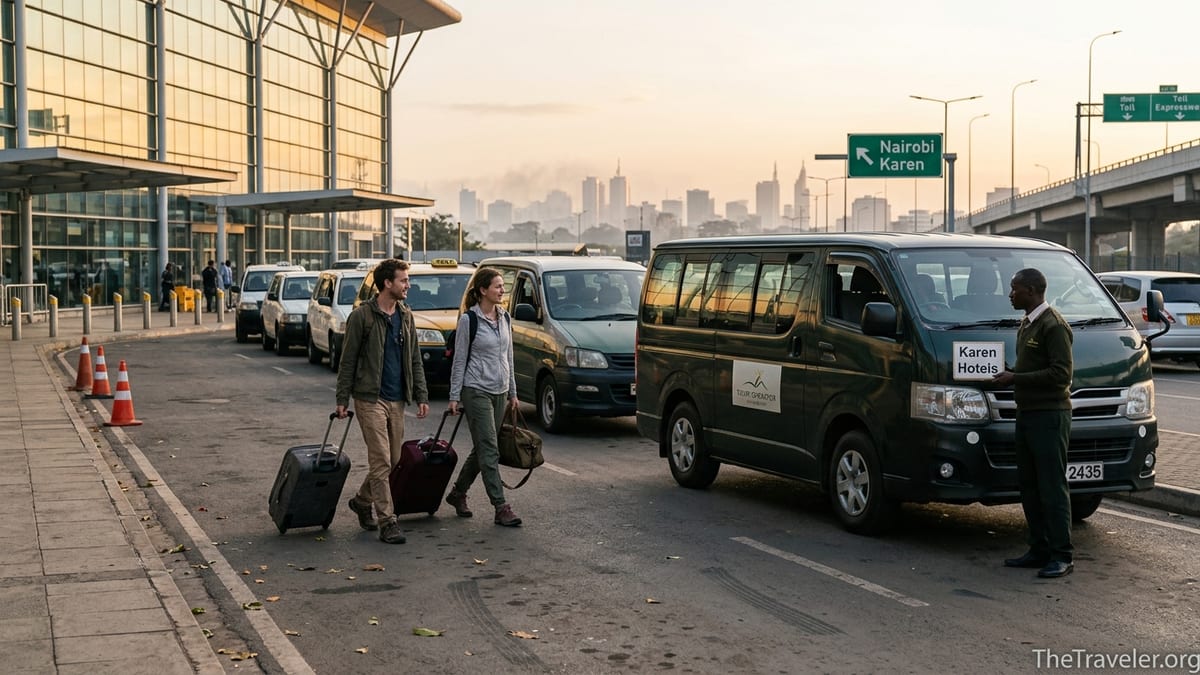
Understanding the Route from Jomo Kenyatta Airport to Karen
The journey from Jomo Kenyatta International Airport, usually abbreviated as JKIA, to Karen is roughly 25 to 35 kilometres depending on the exact hotel location. Most routes follow the Nairobi Expressway or Mombasa Road toward the city, then continue out toward Langata and Karen. In light traffic the drive can take about 35 to 45 minutes, but at peak times it can easily stretch to 60 to 90 minutes.
Karen itself is a leafy, upscale suburb southwest of central Nairobi. The Giraffe Centre sits in the Karen and Langata area, about 15 to 20 kilometres from downtown, while the Karen Blixen Museum is roughly 10 kilometres from the central business district and just a short drive from many Karen hotels. This compact geography makes it practical to combine airport transfers with sightseeing, especially if you arrive in the morning and want to visit the Giraffe Centre or the museum before checking in.
Most visitors staying at well known properties such as Hemingways Nairobi, Giraffe Manor, Karen Blixen Coffee Garden, or mid range guesthouses off Karen Road will follow similar access roads. Once you leave the main highway, expect narrower tree lined streets with several security gates. Build a small buffer into your timing for security checks when entering hotel compounds or gated roads.
The quality of roads along the route is generally good, especially on the newer expressway sections, though there can be potholes on smaller Karen access roads after heavy rain. A standard sedan or small SUV is usually fine, and four wheel drive is not required for typical hotel and attraction transfers in normal weather.
Taxi, Ride Hail and Hotel Transfer Options
On arrival at JKIA, you will see three main categories of transport to Karen: official airport taxis, app based ride hailing services and pre arranged hotel or tour operator transfers. Each works, but they deliver very different experiences in terms of predictability, comfort and price.
Airport taxis are easy to find in the official taxi rank outside the arrivals area of each terminal. Vehicles are usually white or light coloured sedans or small SUVs, often with company markings. Drivers will quote a fixed fare to Karen, typically in Kenyan shillings. As of mid 2026, many travellers report airport taxi quotes in the region of the equivalent of 30 to 60 US dollars for the one way trip to Karen, depending on time of day, bargaining and vehicle type. You pay the driver directly at the end of the ride in cash or, increasingly, via mobile money if you have a Kenyan SIM.
Ride hailing apps such as Uber and Bolt operate widely in Nairobi and are popular with residents for trips to Karen. To use them from JKIA, you need mobile data and a working account. Fares fluctuate with demand, but can be noticeably cheaper than walking up to the taxi rank, with many visitors reporting rides in the broad range of 15 to 30 US dollars equivalent for standard cars. Pickup points for ride hail services are usually in designated areas just outside arrivals, and there may be messages in the app indicating exactly where to meet your driver.
Many Karen hotels and lodges, from luxury brands to smaller bed and breakfasts, offer private airport transfers. For example, an upscale property might quote around 70 to 100 US dollars per vehicle for a private transfer to or from the airport, while more modest guesthouses may arrange a reliable local driver for 30 to 50 US dollars. The main advantages are that the driver will meet you inside the terminal with a sign, assist with luggage, and already know your hotel and route, which is especially helpful after a long flight or at night.
Should You Pre Book Your Transfer to Karen
For many travellers, especially first timers to Nairobi, pre booking a transfer from JKIA to Karen is worth the extra cost. Booking through your hotel or a reputable safari company means your driver will monitor your flight arrival time, wait if you are delayed, and be ready even if you clear immigration late. This can be reassuring on evening flights, which are common on routes from Europe and the Middle East.
As an example, a couple arriving on a 21:00 international flight and staying near the Giraffe Centre might ask their guesthouse to organise a driver. They might pay the equivalent of about 40 to 60 US dollars, slightly above the cheapest app based options, but in exchange they avoid negotiating at the taxi rank, sorting out mobile data for ride hailing, or worrying about finding the right gate in the dark. For families with children or older travellers, this convenience often matters more than saving a small amount.
On the other hand, experienced urban travellers who are comfortable with ride hailing apps, have roaming data and are arriving during daylight hours may be perfectly happy to request an Uber or Bolt on arrival. In that case, there is less need to pre arrange, though it is still sensible to have your hotel’s phone number and the full address saved in the app so your driver can navigate correctly to Karen.
If you land during very busy conference periods or around major events, pre booking can also help you avoid long queues at the taxi rank. Nairobi’s airport has been working on better taxi management, including electronic systems, but periods of high demand still happen. Pre arranging a driver means you simply walk out, meet your named contact and leave while others wait to negotiate prices.
Combining Airport Transfers with Giraffe Centre and Karen Blixen Museum
The Giraffe Centre in Karen is open daily from mid morning to late afternoon, with typical hours around 9:00 to 17:00. Entry for non resident adults is usually around the equivalent of 15 US dollars, while Kenyan citizens and East African residents pay significantly less. A visit of about 1.5 to 2 hours is enough for most people, including time to feed the Rothschild giraffes from the raised platform and perhaps walk a short section of the nature trail.
The Karen Blixen Museum, set in the author’s former farmhouse at the foot of the Ngong Hills, is generally open every day from around 8:30 to 17:30. Entry fees for non resident adults are typically in the region of 10 to 15 US dollars equivalent, based on the official museum tariff in Kenyan shillings, and guided tours of the house and grounds are normally included. Budget around one hour for the house tour, plus extra time if you want to linger in the gardens or visit the small shop.
Because the Giraffe Centre, Karen Blixen Museum and many Karen hotels lie within a few kilometres of each other, it is common to combine them in a single loop. For instance, a family arriving on an early morning flight might pre arrange a driver to collect them at JKIA, drive straight to the Giraffe Centre for opening time, spend 90 minutes there, then continue to the museum and finally finish at their hotel by mid afternoon. The driver would wait with the vehicle at each stop, watching the luggage while the family visits the attractions.
Another example is a late departure day. Guests staying in Karen may check out late morning, place their bags in the vehicle, and spend the early afternoon at the Giraffe Centre, a nearby café and the museum before heading to JKIA in time for an evening flight. In these cases, arranging a private driver through your hotel or safari operator is more practical than using separate taxis at each stop, because your belongings remain safely locked in the same car.
Dealing with Traffic, Timing and Safety on the Route
Nairobi’s traffic is highly variable. Morning rush hour typically peaks roughly between 7:00 and 9:00, while evening congestion is heaviest between about 16:30 and 19:30. The roads connecting JKIA to the city and out toward Karen can be particularly slow during those windows, especially if there are accidents or heavy rain. Using the newer expressway can speed things up, but drivers pay tolls, and some cheaper taxis may choose the older roads to avoid those fees.
As a rule of thumb, visitors leaving Karen for JKIA should allow at least 1.5 to 2 hours door to door at peak periods, and a minimum of one hour during lighter traffic, before adding the time recommended by airlines for check in and security. For example, if you have a 22:00 international departure on a weekday, a sensible plan is to leave your Karen hotel between 18:30 and 19:00, which builds in extra time for potential delays.
Daylight also matters. While many travellers do perfectly safe transfers after dark, some prefer to arrive and move around in daylight, particularly on their first visit to Nairobi. If your flight lands late at night, lean toward a pre booked hotel transfer or a driver recommended by your tour company. Stick to marked taxis or reputable apps and avoid getting into unlicensed cars approaching you aggressively inside the terminal building.
Inside the vehicle, wear your seat belt, even for short hops. Like many large cities, Nairobi has a mix of cautious and aggressive drivers, and minor collisions are not rare. If traffic is heavy, accept that your arrival time may slip and avoid pressuring the driver to take risky shortcuts. Most locals accept that a journey that takes 40 minutes one day may take well over an hour on another, and planning a modest buffer is part of travel here.
Luggage, Vehicle Types and Traveling with Kids
Standard airport taxis and ride hail cars in Nairobi are often compact sedans, and boot space can be limited. If you are traveling with bulky safari duffels, camera gear or several hard suitcases, it is worth asking your hotel or operator to book a larger vehicle such as a minivan, Toyota Noah or similar. These cost slightly more than a basic taxi but provide far more room for luggage and passengers, which makes a difference after a long haul flight.
Private transfer companies and safari outfitters routinely use larger 4x4s or safari vans for airport pickups when clients will later continue to the bush. For example, a small group of four friends heading to the Maasai Mara might be collected at JKIA in a safari van, with their luggage stacked behind the rear row. The same vehicle then stays with them during their stay in Karen and onward into the park, simplifying logistics.
For families with young children, ask in advance about child seats. While they are increasingly available through higher end transfer providers and some hotels, they are not universal in standard taxis or ride hail vehicles. If correct restraints are important to you, consider bringing a travel friendly booster or compact child seat, and verify whether your chosen driver or company can install it.
When combining airport transfers with stops at the Giraffe Centre or Karen Blixen Museum, confirm exactly what will happen to your luggage. A reputable driver should remain with the locked vehicle while you visit. Some visitors arriving very early also arrange a brief stop at a Karen café to freshen up and change clothes from long flights before heading to their hotel or onward to the attractions.
Costs and How to Pay for Your Transfers and Visits
Prices in Nairobi change with fuel costs, demand and exchange rates, so any figures should be treated as broad indications rather than fixed quotes. As of 2026, many independent travellers report paying somewhere in the loose range of 20 to 40 US dollars equivalent for app based or negotiated taxis between JKIA and Karen in a standard car. Larger vehicles, late night pickups or professional transfer companies can cost more, often reaching 50 to 100 US dollars per vehicle for a private, pre arranged service from luxury hotels.
Payment methods also vary. At the Giraffe Centre, visitors typically pay the entry fee in Kenyan shillings and common international cards are generally accepted through electronic terminals. At the Karen Blixen Museum, tickets are normally paid in local currency at the official museum desk, again often with the option of using a card. For taxis and private drivers, cash in Kenyan shillings is widely preferred, although drivers increasingly accept mobile money payments from travellers who obtain a local SIM on arrival.
Because you may be paying several small amounts on your first day in Kenya, from an airport coffee to museum entries and tips, it is useful to withdraw or exchange a modest amount of Kenyan shillings at the airport or from a reputable ATM soon after arrival. Carry small denominations, as taxi drivers do not always have change for large notes. For pre booked hotel transfers, charges are sometimes added directly to your room bill, allowing you to settle everything by card at checkout.
Tipping is appreciated but not mandatory. Many visitors round up taxi fares by a small margin and offer a modest cash tip to drivers who handle heavy luggage or wait patiently during sightseeing stops. At attractions, guides at the Karen Blixen Museum sometimes receive small tips for particularly engaging tours, though this is entirely at your discretion.
The Takeaway
Travel between Jomo Kenyatta International Airport and Karen is straightforward once you understand the route options, typical journey times and realistic costs. Whether you opt for an official airport taxi, an app based ride or a pre booked hotel transfer, the key ingredients are allowing enough time for traffic, confirming where your driver will meet you and clarifying the fare and payment method before you set off.
If your first priorities in Nairobi are feeding giraffes at the Giraffe Centre and stepping into the world of Out of Africa at the Karen Blixen Museum, a simple plan is to base yourself in Karen and use a trusted driver to link the airport, your hotel and these nearby sights. With a bit of advance planning, you can turn a potentially stressful arrival or departure day into a relaxed introduction to Nairobi’s greenest suburb.
FAQ
Q1. How long does it take to get from Jomo Kenyatta Airport to Karen?
The drive usually takes about 35 to 45 minutes in light traffic, but during peak rush hours it can stretch to 60 to 90 minutes, so build in extra time.
Q2. Is it better to pre book a transfer or take a taxi on arrival?
First time visitors, late night arrivals and families usually find a pre booked hotel or driver service more comfortable, while confident travellers with mobile data may be fine using airport taxis or ride hail apps.
Q3. How much should I expect to pay for a taxi from JKIA to Karen?
Prices vary, but many travellers report paying roughly the equivalent of 20 to 40 US dollars for standard taxis or ride hail cars, with higher rates for larger vehicles or premium hotel transfers.
Q4. Can I visit the Giraffe Centre directly from the airport before going to my hotel?
Yes, many visitors arrange to go straight from JKIA to the Giraffe Centre, spend about 1.5 to 2 hours there, then continue on to their Karen hotel with the same driver watching their luggage.
Q5. What are the typical opening hours for the Giraffe Centre and Karen Blixen Museum?
The Giraffe Centre generally opens around 9:00 and closes around 17:00, while the Karen Blixen Museum typically opens about 8:30 and closes around 17:30, including most public holidays.
Q6. Is it safe to travel between Nairobi airport and Karen at night?
Many people do, but if you arrive late it is wise to use a pre arranged transfer from your hotel or tour operator, stick to recognised taxis or apps and avoid unlicensed drivers inside the terminal.
Q7. Do drivers provide child seats for the transfer to Karen?
Some higher end transfer companies and hotels can supply child seats if requested in advance, but they are not standard in ordinary taxis, so families may prefer to bring a travel friendly seat.
Q8. Can I combine the Giraffe Centre and Karen Blixen Museum in one day from the airport?
Yes, the two attractions are only a few kilometres apart and close to many Karen hotels, so it is easy to visit both on an arrival or departure day with a private driver.
Q9. What is the best way to pay for taxis and entry tickets in Karen?
Carry some Kenyan shillings for taxis, small purchases and tips, while many formal attractions and hotels accept major cards; larger hotels may add transfer costs to your room bill.
Q10. Do I need a four wheel drive vehicle for the airport to Karen route?
No, a standard sedan or small SUV is usually sufficient, as the main roads are paved; four wheel drive is more relevant for certain safari destinations than for normal transfers to Karen.