


More news on this day
A new 30-day travel warning affecting multiple cruise regions is drawing renewed attention to which identification documents passengers must carry, and how quickly itinerary changes or security alerts could alter the rules for getting on and off a ship.
Get the latest news straight to your inbox!
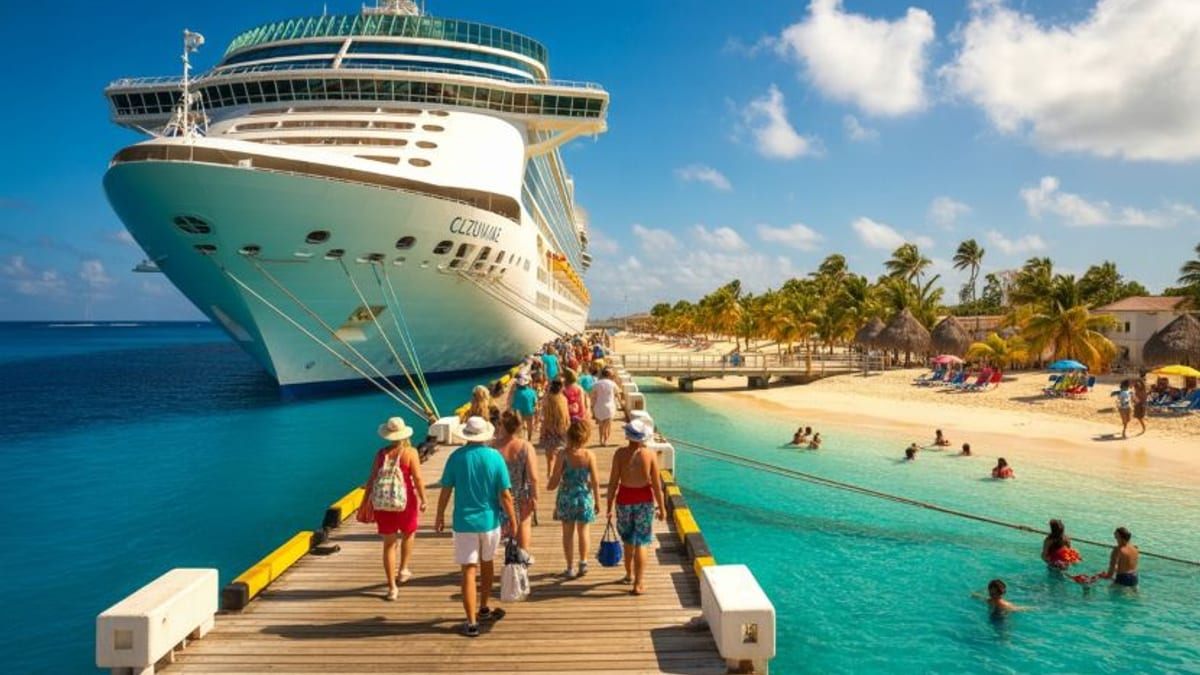
Advisory Tightens Focus on Cruise Hotspots
The latest 30-day warning window is linked to upgraded security advisories in several cruise-dependent regions, including areas of the Middle East and North Africa, as well as specific ports regularly featured on repositioning and world cruises. Public advisories for parts of these regions are currently listed at Level 3 or Level 4, signaling recommendations to reconsider or avoid travel, which can influence cruise routing decisions and documentation checks.
According to published information from major cruise lines, heightened risk levels along certain routes can lead to last-minute itinerary changes, such as dropping a port, substituting a different country, or extending time at sea. When that happens within a 30-day advisory period, passengers who boarded with minimal identification may find that the documentation originally accepted at embarkation is suddenly inadequate if the ship must call at a port with stricter entry rules.
Industry notices reviewed alongside the new advisory emphasize that government travel warnings do not automatically cancel cruises, but they can trigger closer examination of passenger lists and travel documents. In practice, that means travelers relying only on birth certificates and driver licenses could experience more questions at check-in or during immigration inspections if the security posture in a region changes shortly before sailing.
Travel insurers also reference government advisories when defining covered reasons for cancellation or trip interruption. The 30-day window around an elevated warning can therefore affect not only whether a cruise operates as planned, but also how claims are assessed if a passenger decides not to travel, or if the line modifies the itinerary due to security considerations.
Closed-Loop Loophole: How Cruise ID Rules Work Today
For U.S. citizens cruising from domestic ports, current federal rules are still anchored in the Western Hemisphere Travel Initiative. Public guidance from the Department of Homeland Security and U.S. Customs and Border Protection states that travelers on closed-loop cruises that begin and end at the same U.S. port, and stay within the Western Hemisphere, may reenter the United States with a government-issued photo ID plus proof of citizenship, such as an original or certified copy of a birth certificate, a consular report of birth abroad, or a naturalization certificate.
Cruise line documentation pages reviewed for major brands including Royal Caribbean, Norwegian and MSC echo this framework for many Caribbean, Bahamas, Mexico, Bermuda, Alaska, Hawaii and Canada and New England sailings. These pages indicate that a valid passport is strongly recommended, but that a birth certificate and government-issued photo ID are still acceptable for many closed-loop itineraries, subject to specific port requirements and immigration rules in each country visited.
Open-loop itineraries, where a ship begins in one U.S. port and ends in another, or where it finishes in a foreign port, generally require a passport book for U.S. guests. Publicly available FAQs from at least one major cruise brand specify that U.S. citizens boarding at a domestic port, traveling only within the Western Hemisphere, and returning to a different U.S. port on the same ship must carry a valid passport or an equivalent high-security document rather than only a birth certificate and state ID.
While these distinctions have been in place for years, the new 30-day travel warning highlights how fragile the closed-loop assumption can be. If geopolitical developments or security concerns prompt a change that breaks the closed-loop pattern or adds a port with stricter entry rules, passengers who boarded without passports may face more complicated options if they need to disembark unexpectedly.
Proposed Federal Rule Signals Tougher Passport Expectations
Beyond the immediate advisory, longer-term policy signals are also emerging. A regulatory notice listed in the federal government’s public agenda outlines a joint proposal from the Department of Homeland Security and the Department of Justice to require passports for most cruise passengers, including those traveling exclusively within the Western Hemisphere. The abstract for that rulemaking explains that certain sea travelers are currently exempt from passport requirements and may enter the United States using alternative documents, but suggests that this flexibility may be narrowed.
The proposal, which remains in the planning stages and is not yet implemented, positions a passport book or card as the primary credential for sea arrivals, rather than allowing widespread reliance on birth certificates plus a driver license. If formally introduced and adopted, such a rule would significantly reduce the number of U.S. citizens able to board a cruise without a passport and would align sea travel more closely with air travel documentation standards.
Recent updates on the U.S. State Department’s cruise safety page also stress that a passport is the most reliable document if a traveler must unexpectedly leave a ship and fly home from a foreign country. Public guidance from the State Department notes that travelers who miss a ship departure, require medical evacuation, or disembark due to illness or emergency often need a valid passport to board international flights back to the United States, even if the original cruise technically allowed travel without one.
Against this backdrop, the new 30-day warning is prompting travel advisers and online forums to reinforce a familiar message: existing law still permits limited non-passport options for many cruises, but regulatory momentum and real-world disruptions increasingly favor carrying a full-validity passport for any itinerary that crosses a border.
Real ID, Birth Certificates and On-the-Ground Confusion
The current rules leave substantial room for confusion, especially around state-issued driver licenses and the Real ID program. Transportation Security Administration guidance indicates that starting in May 2025, U.S. air travelers aged 18 and older must present a Real ID-compliant driver license, an enhanced driver license, a passport or another acceptable document for domestic flights, though recent updates describe a period of flexible enforcement leading up to May 2027.
Separate public resources from DHS on the Western Hemisphere Travel Initiative explain that some enhanced driver licenses issued by select states can be used in place of a passport for certain land and sea crossings within the Americas. However, a standard Real ID driver license alone is not sufficient proof of citizenship for reentering the United States by sea after visiting foreign ports. Travelers still need a document that proves nationality, such as a birth certificate, naturalization certificate or passport, to pair with that ID on many cruises.
Documentation pages for multiple large cruise lines warn that birth records must meet specific standards, including being state-certified and free of certain outdated formats that are no longer accepted. Companies also emphasize that it is the traveler’s responsibility to verify that identification and citizenship documents comply with both U.S. reentry rules and the entry requirements of each destination country on the itinerary.
Anecdotal accounts shared publicly on cruise-focused message boards reflect the gray areas created by these overlapping rules. Some travelers report boarding recent Caribbean closed-loop cruises successfully with a certified birth certificate and standard driver license, while others describe last-minute scrambles when an older birth record or non-compliant ID was rejected at check-in. The new 30-day travel warning, layered on top of evolving Real ID enforcement timelines, is feeding fresh concern that what worked on one sailing might not work on the next.
What Travelers Can Realistically Do in a 30-Day Window
The immediate question raised by the new advisory is how much a traveler can change within a 30-day window if they discover they lack optimal documents. Processing time estimates from official passport channels fluctuate based on demand, but publicly available information shows that routine passport service can take several weeks. Expedited options exist at additional cost, and some regional agencies may accept urgent appointments for imminent travel involving life-or-death emergencies or proof of immediate international departure.
Travel planners note that thirty days is often too short to rely on standard passport processing, especially during peak seasons, yet long enough that some travelers can still secure an expedited passport or obtain a certified copy of a birth certificate from state or county vital records offices. The feasibility depends heavily on where the traveler lives, existing backlogs and whether in-person collection is possible.
Published advice from travel companies and government sites converges on several practical steps for anyone booked on a cruise in the affected period. The first is to recheck the exact itinerary and documentation requirements on both the cruise line’s website and relevant government advisories, paying particular attention to any ports that require passports regardless of closed-loop status. The second is to verify that any driver license or state ID is current and, where possible, Real ID compliant so it remains valid for onward air travel if plans change.
The emerging regulatory proposals and the current 30-day travel warning both point in the same direction: cruise travelers who invest in obtaining and maintaining a passport are likely to face fewer uncertainties when itineraries shift or security conditions change close to departure. While non-passport options remain legally available on many routes today, the scrutiny triggered by fresh advisories is signaling that those workarounds may be harder to rely on in the years ahead.