


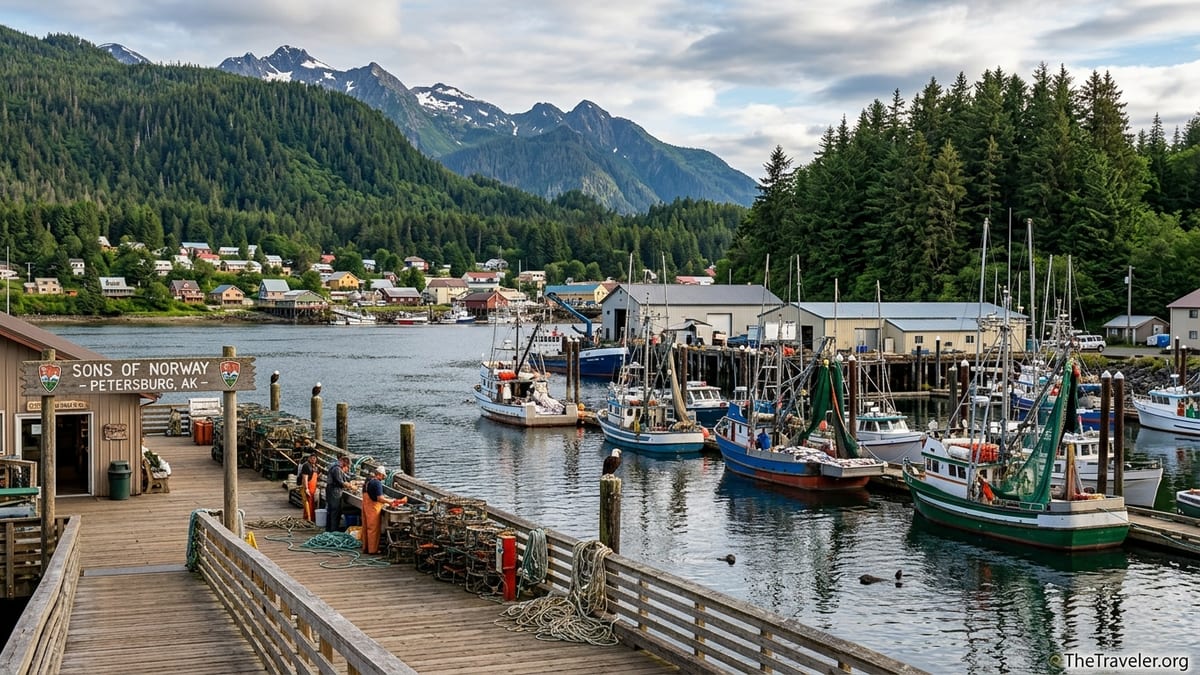
Petersburg, Alaska, is a compact working fishing town on Mitkof Island in Southeast Alaska, at the north end of the Wrangell Narrows. Often called “Little Norway” for its strong Norwegian heritage, this is not a big-ship cruise port but a year-round community surrounded by Tongass National Forest, rich marine life, and quiet forest trails. Petersburg suits independent travelers and small-ship cruisers looking for authentic small-town Alaska, wildlife viewing, hiking, fishing, and low-key evenings rather than nightlife and shopping arcs.
Get the latest updates straight to your inbox!
Orientation: Little Norway in the Tongass
Petersburg sits roughly halfway between Ketchikan and Juneau in the Inside Passage, on the northern tip of Mitkof Island where the Wrangell Narrows opens into Frederick Sound. Founded by Norwegian immigrant Peter Buschmann and still home to a large commercial fishing fleet, the town has a lived-in feel: working harbor, fish processing plants, modest wooden houses, and a compact walkable center with essential services rather than resort-style development. Visitors immediately notice the mix of harbor bustle and quiet residential streets backed by dense temperate rainforest.
Downtown Petersburg is small enough to cover on foot in 10 to 15 minutes. Nordic Drive and Main Street hold most shops, galleries, cafes, and the Clausen Memorial Museum, with the harbor and marina just a short walk away. The working waterfront is central to the town’s identity, and even a simple stroll along the docks reveals seiners and gillnetters coming and going with the tides, plus views across Wrangell Narrows to forested Kupreanof Island.
Beyond downtown, the main road becomes Mitkof Highway and then Sandy Beach Road as it curves along the north shore. Along this corridor you find residential areas, small parks, and a series of viewpoints out over Wrangell Narrows and Frederick Sound. Key features include the Narrows Viewing Platform near town, Outlook Park and Sandy Beach farther along the road, and, farther south along Mitkof Highway, the Blind River Rapids boardwalk and muskeg trails. All sit within the broader Tongass National Forest, the largest national forest in the United States, which wraps the community in old-growth spruce and hemlock.
The overall character is very different from more touristy Southeast Alaska ports that host multiple large cruise ships per day. Petersburg sees small expedition ships and independent travelers arriving by ferry or regional flights, but most people on the street are locals and seasonal fishery workers. Services keep regular, not cruise-driven, hours, and many businesses close on Sundays or shoulder seasons. This makes the town feel more like a real-life community than a stage set, which is exactly what draws many repeat visitors.
Things To Do: Wildlife, Trails, Culture, and Festivals
Marine wildlife viewing is one of Petersburg’s biggest draws. Frederick Sound, just north of town, is known as one of the world’s richest summer feeding areas for humpback whales, and small-boat tour operators based in Petersburg typically run whale-watching and glacier day trips from roughly May through early September, with peak humpback activity often in mid-summer depending on food availability. Guided trips also commonly encounter harbor seals, Steller sea lions, Dall’s porpoises, and occasionally orcas. Because operators and schedules change, travelers should confirm which companies are currently licensed and running trips, what months they operate in a given year, and whether advance reservations are recommended, which in high summer they usually are.
You do not have to leave land to enjoy bird and marine mammal viewing. The Narrows Viewing Platform on the edge of town offers elevated views along Wrangell Narrows, where bald eagles perch in shoreline trees and feed in the current during spring and early summer. Outlook Park, about two miles out along Sandy Beach Road, overlooks Frederick Sound and offers good chances to spot whales, sea lions, and seabirds from shore, particularly in late spring through early fall. These sites are free, open year-round, and accessible by road; visitors simply need to dress for wind and rain and bring binoculars.
Hiking opportunities near Petersburg focus on easy to moderate trails and elevated boardwalks through muskeg and forest. A classic outing is the Blind River Rapids boardwalk, around mile 14 of Mitkof Highway, where a largely level wooden walkway leads through open muskeg to rapids on the Blind River. This is a popular salmon-viewing and eagle-spotting site in late summer when salmon runs are active. Additional short trails and muskeg boardwalks exist in the Ohmer Creek area and other sites in Tongass National Forest around Mitkof Island. Because trail conditions, maintenance, and access points evolve, visitors should check the latest information from the Tongass National Forest office or current visitor guide for updated maps, difficulty ratings, and any closures before hiking.
The surrounding Tongass National Forest offers public use cabins and informal camping options that appeal to independent travelers comfortable with remote conditions. Cabins near Petersburg, such as Petersburg Lake Cabin and North Beach Cabin, are reservable through the federal recreation reservation system, with basic amenities like bunks, a stove, and an outhouse but no electricity, bedding, or running water. Access may be by boat, floatplane, or trail, and rules on maximum stay, fees, and required reservations can change. Travelers must read the latest Forest Service listing carefully, note whether a skiff or flotation devices are required, and pack sleeping gear, cook equipment, food, and safety supplies accordingly. Summer and fall weekends can book up months ahead.
Fishing is central to life in Petersburg and a popular visitor activity. Shore-accessible spots exist along Mitkof Highway, at sites like Blind River and various roadside pullouts where regulations allow. However, runs and rules differ by species and time of year, and visitors must hold a valid Alaska sport fishing license, purchased online or from local vendors, and follow current regional regulations for Southeast Alaska. Many travelers opt for guided fishing charters operating from Petersburg’s harbor, targeting salmon, halibut, or rockfish from late spring through early fall. Typical guided day trips are priced in the mid hundreds of dollars per person, depending on species and length, and should be pre-booked in peak summer, particularly if you intend to ship fish home or rely on a specific target species.
In town, the Clausen Memorial Museum interprets Petersburg’s Norwegian roots, Tlingit history, commercial fishing, and natural environment through rotating exhibits and a small gift shop. With modest admission fees and seasonal hours that generally run through the main visitor season, it is a good first stop to understand the community in context. Travelers should confirm opening days and times close to their trip, especially in early spring or late autumn when shoulder-season schedules may apply. Walking the streets around the Sons of Norway Hall, viewing murals, and stopping into local bakeries and coffee shops rounds out the cultural picture.
Petersburg’s signature cultural event is the Little Norway Festival, held in May around Norwegian Constitution Day. Recent schedules show multi-day celebrations in mid May, featuring parades, traditional costumes, Scandinavian foods, music, and vendor stalls. Annual dates, daily event lineups, and any changes to the format are published by local organizers each year, so prospective visitors should verify the current year’s festival dates and details, and book accommodation and ferry or flight tickets well in advance if planning to attend. The town also marks Independence Day with a community celebration, though on a smaller visitor scale than the May festival.
Getting There and Getting Around
Petersburg is not connected to the North American road network, so visitors arrive by sea or air. The Alaska Marine Highway System’s mainline ferries have historically linked Bellingham, Washington, and Southeast Alaska communities including Ketchikan, Wrangell, Petersburg, and Juneau. Current schedules still include Petersburg on core Inside Passage routes, but sailings are less frequent than in past decades and vary markedly by season. Travelers should consult the latest Alaska Marine Highway timetable or booking site for up-to-date routes, as well as separate winter and summer schedules, and should note that some historical routes, such as service to Prince Rupert, are not currently operating.
Because vehicle space is limited on ferries, travelers planning to bring a car or camper should reserve several months ahead for peak season, especially June through August. Foot passengers often have more flexibility but may still find that popular dates sell out. Weather-related delays or schedule adjustments are possible, particularly in autumn and winter when storms and staffing constraints can disrupt service. Building at least one buffer day into your itinerary can reduce stress if your sailing is moved or late.
Regional flights offer a quicker, though sometimes weather-dependent, way to reach Petersburg. The town’s airport sits just outside downtown, and flights typically connect via hubs such as Juneau, Wrangell, or Ketchikan on regional carriers and, in some seasons, larger airlines. Fishing travelers often travel with rods, reels, and coolers; baggage policies vary by airline, and oversize or overweight fees can apply, so checking limitations and costs before travel is essential. As with ferries, low ceilings, fog, and storms can cause delays or cancellations, particularly in late fall through early spring, and flexible onward plans are wise.
Once in Petersburg, most visitors find downtown easily walkable, with the harbor, museum, grocery stores, and basic services within a short radius. To visit more distant sites, such as Outlook Park, Sandy Beach, Blind River Rapids, and outlying trailheads, some form of road transport is helpful. In recent years, options have included local taxi services, vehicle rentals, and RV parks with nearby cabins and campsites, though availability can shift by season and operator. Before committing to plans that rely on road access, check what rental cars, taxis, or community shuttles will actually be available during your travel dates, and reserve ahead if you are visiting in peak summer or during a festival.
Where To Stay: Town Lodging, Lodges, and Cabins
Petersburg offers a modest but diverse mix of accommodations, from in-town inns and small hotels to bed-and-breakfasts, fishing lodges, vacation rentals, RV parks, and forest cabins. In the compact town center you will find small hotels and inns within walking distance of the harbor, museum, and restaurants. These properties tend to be straightforward and functional rather than luxurious, suiting travelers who value location and convenience over amenities like spas or on-site entertainment. Many operate year-round but may reduce services outside the main visitor season, so checking shoulder- and winter-season availability is important.
Bed-and-breakfasts and guesthouses scattered in residential neighborhoods offer a more home-like stay, often with breakfast and local advice included. These work well for couples or solo travelers who appreciate a quieter environment and personal connection with hosts. Some B&Bs open primarily in summer, closing or reducing capacity in late fall and winter; always confirm current operating status and minimum-stay requirements before booking.
For anglers, several fishing-focused lodges operate in the greater Petersburg area, including options on nearby islands such as Kupreanof. These lodges typically bundle accommodations with guided or self-guided fishing, boats, meals, and fish processing, with stays of several nights or a week. They are ideal for dedicated fishing parties and often book out long in advance for prime salmon and halibut weeks between roughly June and August. Because individual lodges may change ownership, rebrand, or pause operations, travelers should only book properties they can verify as currently operating and bookable through up-to-date listings or direct contact.
Public use cabins in the surrounding Tongass National Forest provide simple, atmospheric shelters for self-sufficient travelers. Examples like Petersburg Lake Cabin and North Beach Cabin are reached by boat or floatplane and offer wooden bunks, a heating stove, and an outhouse. Reservations are required through the federal reservation system, and maximum stay limits, fees, and access notes are detailed in each cabin’s listing. Conditions and fees can change, so planning should always start with the latest Forest Service information rather than older guidebooks. Visitors typically bring sleeping bags and pads, cooking gear and fuel, food, water purification equipment, and safety gear, and must be prepared for self-rescue if weather or tides delay pickup. These cabins are rewarding for experienced backcountry travelers but are not a substitute for a serviced lodge.
When To Go and How Long To Stay
Petersburg’s maritime climate is cool, wet, and relatively mild compared with Alaska’s interior, with average summer highs often in the mid 50s to low 60s Fahrenheit and frequent rain. Climate normals show relatively small temperature swings through the year, but winter brings darker days, more storms, and occasional snow, while summer offers long daylight and milder conditions. For many visitors, May through early September is the most appealing time, combining accessible trails, more reliable marine excursions, and higher wildlife activity, albeit with more visitors and higher prices.
Small cruise ships and expedition vessels, typically carrying up to around 250 passengers, usually pass through the Inside Passage between May and September, with a concentration in June, July, and August. These months coincide with prime humpback whale feeding periods in Frederick Sound and strong salmon runs in local rivers and coastal waters. Birders will find spring and early summer particularly productive, with migrating seabirds and concentrated bald eagle activity around fish runs, while berry pickers might prefer later summer into early fall when blueberries and other wild berries ripen along roadsides and low-elevation trails.
Shoulder seasons in April and late September into October can appeal to travelers seeking quieter streets and lower accommodation costs, though some tour operators and seasonal businesses may not be running at full capacity. Weather is more changeable, ferry and flight schedules may be reduced, and daylight hours shrink quickly in late autumn. Winter visits, while possible and atmospheric for those who enjoy storms and solitude, demand realistic expectations about limited activities, potential travel disruptions, and reduced services such as tours and museum hours.
For independent travelers building a Southeast Alaska itinerary, Petersburg fits comfortably as a two to three night stop, especially when combined with other Inside Passage towns. This allows time for a day on the water for whale-watching or fishing, a half-day exploring nearby trails such as Blind River Rapids or local muskeg boardwalks, and a day enjoying town walks and cultural sites. Anglers staying at fishing lodges often book stays of four to seven nights to allow for weather contingencies and varied fishing days, while small-ship cruise passengers typically spend a single long day in port with organized guided outings.
Costs and Practicalities
Travel costs in Petersburg are broadly in line with other small Alaska communities accessible only by sea or air. In high summer, standard in-town hotels and inns commonly charge in the mid to upper hundreds of dollars per night for a double room, with some variation by property, festival dates, and how far in advance you book. Shoulder-season and winter rates can drop noticeably as demand falls, though some properties may close or limit hours rather than discount heavily. Fishing lodges often charge package rates for multi-day stays including guiding and meals, usually amounting to several thousand dollars per person for a week in peak season.
Guided day trips for wildlife viewing or glacier cruising by small boat typically run in the low to mid hundreds of dollars per person, depending on duration, itinerary, and group size. Private charters cost more but offer custom routes and photography flexibility. Sportfishing charters, which include specialized gear and expertise, tend to be at least as expensive and sometimes more, particularly in the height of salmon and halibut seasons. Ferry fares vary with distance and whether you travel as a foot passenger or with a vehicle; bringing a standard car from ports like Bellingham or Ketchikan can add a substantial sum to the base fare, with peak-season sailings the most expensive. Regional flights usually cost more than ferries on a per-mile basis but save substantial time, especially on short itineraries. Because fares and fuel surcharges change frequently, travelers should check prices close to their planning date and note the month and year of quoted rates.
In a small town like Petersburg, food options are straightforward but sufficient. Expect a handful of cafes, a bakery or two, casual restaurants with seafood and standard American dishes, and at least one grocery store where you can stock up if staying in a cabin or vacation rental. Opening hours may be shorter than in larger cities, and some venues close on certain days or off-season, so keeping a flexible approach to dining is wise. Self-catering for at least some meals can be cost-effective, especially for families or fishing groups bringing back their own catch to cook where regulations and facilities allow.
Weather is a central practical consideration. Rain is common, sometimes heavy, and temperatures, even in summer, can feel cool on the water. Travelers should bring layered clothing including a waterproof shell, insulating mid-layer, quick-drying base layers, and hats and gloves suitable for wind on boat decks. Footwear with good grip is important for wet docks and forest trails. Safety basics in this environment include awareness of black bears and possibly brown bears on or near trails, proper food storage at campsites and cabins, and making noise in dense vegetation. Tide awareness is also vital when beachcombing or launching small boats, as large tidal swings can leave skiffs stranded or expose slippery intertidal rocks.
Health and safety guidance from Alaska authorities emphasizes carrying appropriate navigation tools and telling someone your route, especially when hiking remote trails or using public use cabins accessible only by boat or floatplane. Cell coverage may be limited or absent outside town, so satellite communication devices are useful for backcountry and marine excursions. Even in summer, water temperatures are cold enough that falling overboard without a life jacket can quickly become life-threatening; reputable tour operators will brief guests on flotation devices, but independent paddlers and boaters must plan their own safety gear.
Sample Itineraries and Who Petersburg Is For
For a wildlife-focused two or three day visit, consider arriving by ferry or regional flight on day one and spending the afternoon exploring downtown and the harbor, followed by a sunset visit to the Narrows Viewing Platform or Outlook Park. On day two, join a full-day small-boat tour into Frederick Sound for whale-watching and, if offered, views of nearby glaciers, returning to town for an early dinner and evening walk. A third day can be used for additional shore-based wildlife viewing, a shorter guided trip, or simply lingering in cafes and along the waterfront before your onward connection.
A hiking- and nature-oriented trip can center on short trail systems and viewpoints. After an initial day in town and at nearby shoreline parks along Sandy Beach Road, devote a full day to driving or shuttling south along Mitkof Highway to Blind River Rapids and other forest and muskeg boardwalks. Intermix easy walks with roadside photography stops and berry picking in late summer where permitted. If you have the experience and equipment, a two-night stay in a Tongass public use cabin adds an immersive wilderness element, though it requires substantial planning, reservations, and backcountry skills.
Small-ship cruise passengers usually experience Petersburg as a one-day port stop. Many ships offer guided options such as whale-watching excursions, fishing trips, or town and cultural tours highlighting the community’s Norwegian heritage. Even independent-minded cruise travelers should be prepared for variable weather and bring layers for both ship decks and small-boat excursions. If your cruise allows, simply walking through the residential streets, visiting the Clausen Memorial Museum, and spending time at the harbor provides a richer understanding of life in a working fishing town than in ports dominated by jewelry shops and tour kiosks.
Petersburg is worth including in an Inside Passage itinerary if you value authenticity, working waterfront scenes, and time on trails and small boats more than nightlife or a long list of attractions you can tick off rapidly. It suits photographers, wildlife enthusiasts, anglers, and travelers who enjoy chatting with locals in cafes as much as checking sights off a map. It may feel less ideal for those who prefer big-ship amenities, extensive shopping, or guaranteed blue-sky days. For independent travelers willing to embrace Southeast Alaska’s rain, slow rhythms, and changing schedules, though, Petersburg delivers a memorable and genuinely local slice of the Inside Passage.