


Prince Albert National Park protects a beautiful transition zone between aspen parkland and boreal forest in central northern Saskatchewan, known for its clear lakes, forest trails and abundant wildlife. Centered on Waskesiu Lake and the small resort townsite of Waskesiu, the park offers a classic Canadian mix of beach time, canoe routes, day hikes and backcountry adventures within a few hours’ drive of the province’s main cities.
Get the latest updates straight to your inbox!
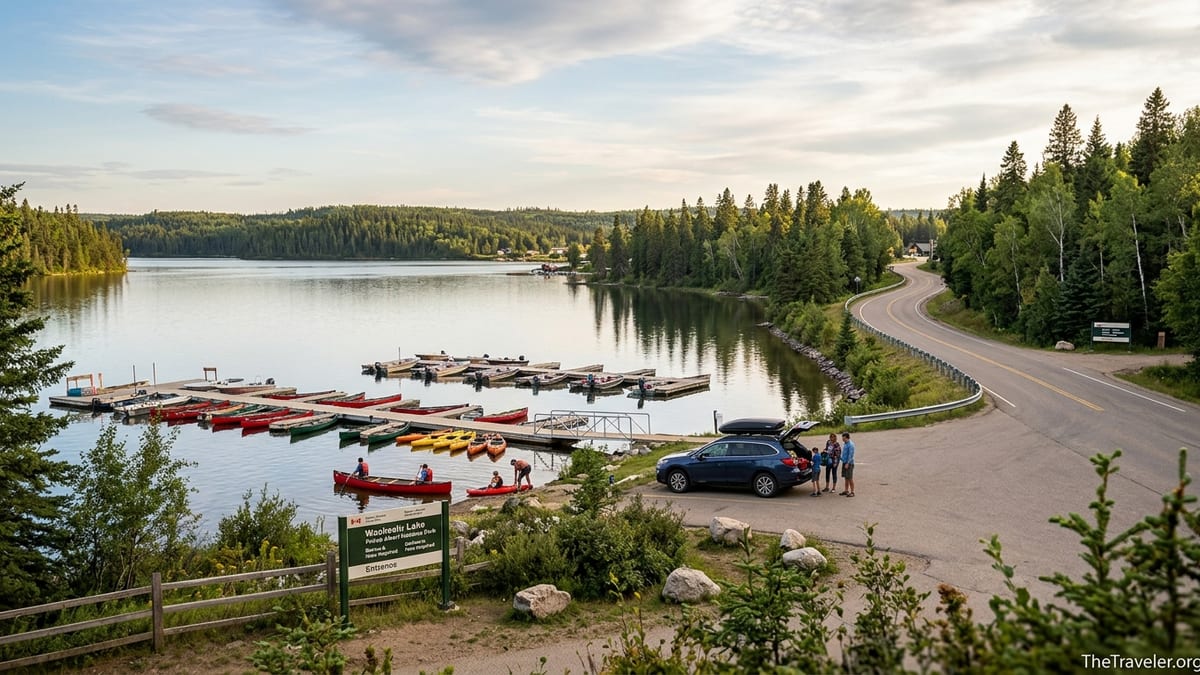
Location, access and driving times
Prince Albert National Park sits in central northern Saskatchewan, roughly in the middle of the province’s boreal forest belt. Waskesiu Lake and the townsite of Waskesiu occupy a central position within the park and serve as the main visitor hub, with roads and trails radiating out to campgrounds, lakes and viewpoints.
Parks Canada notes that the park is accessed via Highways 2 and 264, or the scenic Highway 263, all of which are paved and maintained year round. The main south entrance lies about 90 kilometres north of the city of Prince Albert. Under normal summer conditions, the drive from Prince Albert to Waskesiu typically takes around one hour. From Saskatoon, most visitors follow Highway 11 to Prince Albert and then Highway 2 north, a total distance of roughly 220 to 230 kilometres that generally takes about three hours of driving, not including stops. Actual travel times can vary considerably with construction, traffic, wildlife on the road and weather, so it is important to check current highway conditions before departure.
Once inside the park, Waskesiu is the practical base for most visitors. Here you find the Parks Canada Visitor Centre, restaurants, small grocery stores, fuel in the main season, accommodations and marinas. From town, paved and gravel park roads reach popular day use areas and trailheads, while backcountry routes and canoe circuits extend deeper into the lakes and forests.
How to get there and seasonal driving considerations
For most travellers, driving is the simplest way to reach Prince Albert National Park. Approaching from the south, you drive to Prince Albert then continue north on Highway 2 toward the park entrance, following signs for Waskesiu. At the junction with Highway 264 you turn west toward the park gate and Waskesiu, or detour via Highway 263 for a more scenic route that loops through rolling forest before reaching the townsite. All main access roads are paved, but services become sparse once you leave the larger communities, so begin the journey with a full fuel tank and basic supplies.
As of late 2026, there is no widely advertised scheduled shuttle or public bus service directly into Waskesiu or the park. Some tour companies based in Saskatchewan offer seasonal guided trips or charter transport, but availability, routes and schedules change frequently and must be checked directly with current operators. Travellers without a car should verify options well in advance, often combining intercity bus or air travel to Prince Albert or Saskatoon with private transfers.
Winter driving demands additional caution. Parks Canada emphasizes that roads can be snowy or icy and that conditions may change quickly. Visitors are advised to consult the Saskatchewan Highway Hotline and local weather forecasts before traveling, to carry emergency supplies and to drive to conditions, slowing down or pulling over if visibility or traction deteriorates. In winter there is no gas station operating in Waskesiu; the nearest fuel is usually available at LT’s Food & Fuel at the junction of Highways 2 and 264 outside the park, so topping up there on the way in is essential during the cold season.
How long to stay and choosing your style of visit
The right length of stay in Prince Albert National Park depends on how deeply you want to explore. For a first look focused on lakeside strolling, short hikes and relaxed beach time around Waskesiu, a two or three night stay is often enough to sample several trails, enjoy a day on the water and have flexibility for weather changes.
Travellers keen to explore multiple corners of the park or to include cycling, wildlife viewing and time at quieter lakes frequently allocate three to five days. This allows for a mix of frontcountry experiences around Waskesiu, drives to scenic day use areas and at least one longer day hike. It also gives time to adjust plans according to wind, rain or smoke that might affect lake conditions or air quality.
Backcountry hikers and paddlers will want more time. Classic routes such as the trip to Grey Owl’s cabin at Ajawaan Lake or multi-day canoe circuits usually require a minimum of two or three days, and often benefit from four or more when you add travel days and weather buffer. If you plan to combine frontcountry camping near Waskesiu with a multi-day trip, consider a four to six day overall visit, structured to allow a night in or near town both before and after your backcountry segment for packing, showers and contingency.
When to go: seasons, activities and park programming
Summer remains the busiest season in Prince Albert National Park, typically from late June through August. During this period, all frontcountry campgrounds are normally open, lake temperatures are at their warmest and most visitor services in Waskesiu are operating. This is the ideal time for swimming, paddling, boat rentals and family-friendly cycling. It is also when beaches, popular trails and campgrounds are at their most crowded, and when mosquitoes can be most noticeable, especially in the evenings and in wooded or wet areas.
Spring and autumn shoulder seasons appeal to hikers and road trippers who prefer quieter trails and cooler temperatures. From mid May to late June, and again in September and early October, most campgrounds and facilities are still available, although some marinas, restaurants and rental operations may operate on reduced hours or close earlier in fall. Trail conditions can be muddy early in the season or after rain, and some services or programs might not start until the main summer period. Checking current hours of operation, trail conditions and advisories on the Parks Canada site before arrival is important because exact dates change year to year.
Winter transforms the park into a quieter, snow covered landscape that rewards visitors prepared for cold temperatures and shorter days. Parks Canada promotes cross country skiing, snowshoeing, winter walking and fat biking on signed routes when conditions permit. Groomed ski trails and packed multi use trails usually operate through the core of the winter, but exact opening dates, grooming frequency and trail availability vary depending on snowfall and staffing. Winter visitors should consult the latest winter activities information, pay particular attention to ice safety warnings on lakes and come self sufficient for food and fuel, as only limited businesses remain open in Waskesiu.
Trails, lakes and core frontcountry experiences
Near Waskesiu, a network of short walking and cycling routes makes it easy to experience the lakeshore and surrounding forest without long drives. Lakeside trails connect the main beach, marinas and viewpoints, with options for accessible strolls and family bike rides. The Height of Land and Spruce River Highlands lookout towers, reachable by road from Waskesiu, provide elevated views over the forest and lakes and are popular half day outings.
Beyond town, numerous signed day hikes range from easy interpretive loops to moderate forest and lakeshore walks. The park’s official trail guide and activity map, updated for recent seasons, lists distances, approximate hiking times and trail difficulty for each route. Because windfalls, wildlife activity or wet conditions can affect specific trails, travellers should confirm current status with Parks Canada on arrival, paying attention to posted closures or cautions at trailheads and at the Visitor Centre.
Water based activities are a major draw. Waskesiu Lake and nearby bodies of water support canoeing, kayaking, paddleboarding and motorboating in designated zones. Boat and paddlecraft rentals, along with guided excursions, are offered seasonally through marinas such as the Waskesiu Marina Adventure Centre, generally from around the May long weekend to Labour Day, although exact operating dates and services vary by year and provider. Anglers can pursue species such as northern pike and walleye in selected lakes, but must follow national park fishing regulations and seasonal openings.
Fishing in Prince Albert National Park requires a specific national park fishing permit, not a provincial license. These permits are available at the Visitor Centre, entry gates, campground kiosks and marinas during the operating season. Regulations for catch limits, gear and open waters are set by Parks Canada and may differ from nearby provincial lakes, so anglers need to consult the current park fishing regulations booklet or information provided with the permit before heading out.
Backcountry highlights and who they suit
The park’s best known backcountry destination is Grey Owl’s cabin on Ajawaan Lake, associated with the early 20th century conservationist who lived and wrote here. Reaching the cabin typically involves a combination of paddling and portaging along a chain of lakes, or a long hike along established trails. Exact distances, recommended approaches, required permits and current conditions are detailed in Parks Canada’s backcountry information, which should be consulted in advance because routes, signage and camping areas can change over time due to environmental conditions or management decisions.
Backcountry travel in Prince Albert National Park usually requires registration with Parks Canada, and designated backcountry campsites are subject to quotas and reservation procedures. Permits may be limited during peak periods to protect sensitive shorelines and maintain a quality wilderness experience. Before committing to a multi day route, visitors should confirm which campsites are open, whether reservations are required, what fees apply and what food storage systems are in place for bear safety, such as cables or lockers at camps.
These longer routes are best suited to experienced hikers and paddlers comfortable with navigation, self supported travel and wildlife awareness in remote settings. Distances between camps can be significant, weather on larger lakes may produce challenging wind and waves and services are minimal once you leave road accessible areas. Parties should carry appropriate maps, communication devices where possible, a first aid kit and bear deterrent such as bear spray, and should have the skills to manage food storage, water treatment and low impact camping.
Visitors new to backcountry travel can still get a taste of wilder areas through shorter portage linked paddle trips or one night excursions on easier segments, ideally after discussing options with Parks Canada staff. They can help you match itineraries to your abilities and current conditions, and highlight any recent wildlife activity or closures affecting specific lakes or trails.
Lodging, camping and roofed accommodation
Parks Canada operates several frontcountry campgrounds in and around Waskesiu, typically open from mid May to mid or late October, with opening and closing dates adjusted slightly each year. Red Deer and Beaver Glen campgrounds are closest to the townsite and are well suited to visitors who want easy access to beaches and services. Sites in these campgrounds offer a mix of unserviced and serviced options for tents, trailers and RVs, with washroom and shower buildings and potable water available.
Further from town, campgrounds such as Namekus Lake, Sandy Lake and the Narrows provide a more forested, quieter setting while still offering vehicle access and basic facilities. Operating seasons for these campgrounds vary, with some closing earlier in September and others remaining open into late October, weather permitting. Some campgrounds and specific loops operate on a reservation system through the Parks Canada reservation service, while a portion of sites may be available on a first come, first served basis in shoulder seasons. Because allocations and reservation rules change over time, travellers should check current details and consider booking well ahead for summer weekends and holidays.
In addition to traditional campsites, Prince Albert National Park offers various forms of roofed accommodation in partnership with operators. In recent years, oTENTik style units or similar ready to camp structures have been available in some national parks; availability, locations and booking procedures for these or any other roofed units within Prince Albert National Park should be confirmed on the official Parks Canada site, as offerings can be added, relocated or retired.
Within the Waskesiu townsite, a range of private hotels, inns, cabins and rental condos operate under lease within park boundaries. These provide an alternative for visitors who prefer beds and private bathrooms to camping and are well placed for walking access to the beach, restaurants and marinas. Outside the park, additional motels, cabins and campgrounds line the corridor along Highway 2 and around nearby lakes. When booking, pay close attention to whether a property is inside the national park, which can affect access to services, evening quiet hours and the need to purchase a Parks Canada entry pass for your stay.
Fees, services and connectivity
All visitors to Prince Albert National Park are required to purchase a valid Parks Canada entry pass. Fees differ by age group, length of stay and whether you hold a national Discovery Pass. Exact rates change periodically and are published on Parks Canada’s official fee schedules, so travellers should verify current daily and annual prices for individuals, families and commercial groups before arrival. Additional fees apply for camping, backcountry permits and some special activities.
Waskesiu offers an unusually complete set of services for a relatively small lakeside community. Within town you can expect seasonal grocery stores with a decent selection of fresh and packaged foods, restaurants and cafés, gift shops, a laundromat, bank machines, recreational rentals and a gas station in the main summer season. The Parks Canada Visitor Centre provides trip planning help, trail condition updates, entry passes, fishing permits and backcountry registration. Operating hours for individual businesses vary by season, and many close or significantly reduce hours outside the main summer months.
Connectivity in the park is limited compared to urban areas. Parks Canada notes that the agency itself does not provide Wi Fi, although some local businesses in Waskesiu offer wireless internet for customers. Cellular coverage is generally available in and near the townsite, but can be patchy or absent in more remote parts of the park, especially along backroads and in low lying forest and lake areas. Travellers should not rely on mobile data or voice coverage for navigation or emergency contact in backcountry zones and are encouraged to download maps for offline use or carry paper maps.
Wildlife, safety and environmental considerations
Prince Albert National Park lies in black bear country and is home to other large mammals including elk, moose and a free ranging plains bison herd in the park’s southwest. Parks Canada provides detailed guidance on how to behave in bear country, including making noise while hiking, keeping dogs on leash and never approaching or feeding wildlife. Visitors should carry bear spray on many trails, know how to use it and store food, garbage and scented items securely at both frontcountry and backcountry campsites.
Water safety is another key consideration. Lakes such as Waskesiu can develop strong winds and significant waves, which pose risks to small paddlecraft and swimmers. Beaches are unsupervised, and swimming is always at your own risk. Boaters must follow national park boating regulations, respect speed limits, stay out of buoyed swimming areas and ensure that every person on board has a properly sized personal flotation device. In winter, ice thickness and strength vary widely; Parks Canada advises visitors to check ice conditions locally and to be alert for signs of weak ice such as visible water, cracks or unusual sounds.
Fire management policies in the park evolve over time. As of recent updates, free firewood is no longer provided at many campgrounds and day use areas, and visitors must purchase bundled firewood from participating businesses or bring their own clean firewood where permitted. Fire bans or restrictions may be implemented during dry periods to reduce wildfire risk, and travellers must respect posted notices and use only designated fire pits. Mosquitoes and other biting insects are common in warmer months, especially near wetlands and at dusk, so packing appropriate clothing and repellent improves comfort on trails and at campsites.
Finally, visitors are encouraged to minimize their environmental footprint by staying on established trails, packing out all waste and observing Leave No Trace principles. The park was created to protect a representative slice of the aspen parkland to boreal forest transition, including sensitive shorelines and wetlands, and thoughtful visitor behaviour helps ensure that wildlife and future travellers can continue to enjoy this landscape.
Suggested time allocations and trip styles
For a short introduction, a weekend visit works well. Arriving Friday evening or Saturday morning, you might base in Waskesiu, combine lakeside walks with one or two easy forest hikes, enjoy a half day of paddling or a scenic drive to viewpoints, and leave time for relaxed hours on the beach or at a café. This style of trip suits families with younger children, travellers on a broader prairie road journey and anyone wanting a taste of boreal lakes without committing to backcountry travel.
With four or five days, you can explore more widely. Many visitors dedicate one or two days to short and moderate hikes near Waskesiu and along main park roads, one full day to water based activities such as a rental canoe or pontoon outing, and at least one quieter day at a less visited lake or campground. This schedule allows space for a change of plan if weather turns wet or windy, and is a comfortable timeframe for those driving as part of a larger Western Canada itinerary.
Travellers with a full week or more, and appropriate skills, can weave in a two or three night backcountry hike or canoe trip, using Waskesiu as a staging point. In this case, think of your visit as two experiences: a frontcountry phase of sightseeing, restaurant meals and serviced camping or hotel nights, and a backcountry phase of self supported travel and simple campsites. Building in at least one buffer day before and after the backcountry segment helps manage for wind on lakes, trail issues or fatigue.
Whatever length of stay you choose, the key planning steps remain consistent. Confirm current park access and hours, decide which mix of lakes, trails and wildlife experiences suit your interests and abilities, secure necessary reservations for camping or lodging and understand the specific rules for fishing, fires and wildlife safety. With those details in hand, Prince Albert National Park can be a rewarding centrepiece for a Saskatchewan vacation or a memorable northern stop on a broader Western Canada road trip.