


Landing at Queen Beatrix International Airport is many travelers’ first taste of Aruba’s "One Happy Island". For first-time visitors, though, the small but busy airport can trigger a rush of questions: How do I clear arrivals smoothly, get cash or a SIM card, and reach a Palm Beach or Eagle Beach resort without overpaying or getting lost? This guide walks you through the experience step by step, from touchdown to hotel check-in, with concrete examples so you know exactly what to expect.
Get the latest updates straight to your inbox!
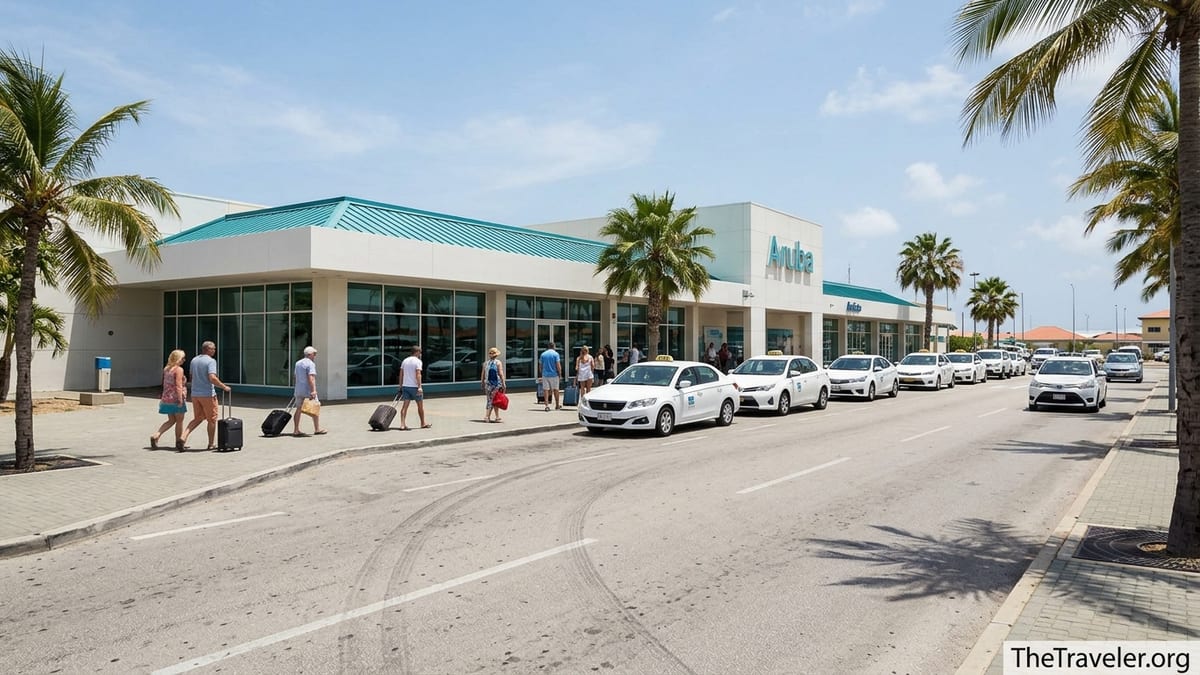
Arriving at Queen Beatrix International Airport (AUA)
Queen Beatrix International Airport sits just southeast of Oranjestad, Aruba’s capital, and handles most flights from North America and Europe. After your plane parks at a jet bridge, you follow signs for Immigration. If you are arriving from the United States, you will clear Aruban immigration here; if you are connecting from another Caribbean island, you may use the transit channels. Lines fluctuate with banked arrivals in the early afternoon, but the terminal is compact and most visitors are through in roughly 20 to 45 minutes in normal conditions.
Once you pass passport control, you collect your luggage from a single baggage hall. Baggage belts are clearly numbered by flight, and overhead boards show airline and city names, for example "American Airlines – Miami" or "KLM – Amsterdam". Porters with trolleys are usually available for a tip if you have bulky bags. Before exiting customs, you will see restrooms, a small duty free shop for last-minute liquor or perfume, and basic seating areas if you need to repack.
Customs screening is typically straightforward. You hand an officer your customs form if required, place bags on a belt for scanning when directed, and continue to the arrivals hall. Unlike some large Caribbean hubs, there are no confusing multiple levels: you exit arrivals at ground level straight into a single public hall where you will find taxi stands, tour desks, car rental counters, money services and the exits to the parking lot and bus stop.
Two other details matter for planning. First, Aruba operates US preclearance for departing US-bound passengers, meaning that on your return journey you clear US immigration and customs at AUA instead of when you land back home. Second, AUA is relatively small, so if you are used to sprawling airports like Miami or JFK, you will find distances shorter but crowding more noticeable during peak bank times. Comfortable clothing and a bit of patience go a long way.
Taxis, Private Transfers and Resort Shuttles
When you step into the public arrivals area and walk outside, the official taxi rank is directly in front of the terminal. Aruba’s taxis are regulated, with government-set fares posted on laminated boards that drivers carry and that are often displayed at the curb. For example, as a ballpark figure, a licensed taxi from the airport to the high-rise hotel area at Palm Beach is typically in the range of 30 to 35 US dollars per cab, not per person, in normal daytime conditions, with a small surcharge in the late evening or on Sundays and public holidays.
Taxi fares are zone-based rather than metered. Drivers use fixed price tables for key areas like Oranjestad, Eagle Beach (low-rise area), Palm Beach (high-rise area) and Noord. If you are heading to a specific property such as the Hilton Aruba Caribbean Resort or the RIU Palace on Palm Beach, just give the hotel name; locals and drivers know them by heart. Taxis are generally comfortable sedans or minivans with air conditioning, and most drivers accept both US dollars and Aruban florins, with change given in florins if you pay cash.
Many package tour operators and some larger hotels arrange prebooked transfers that meet you with a sign in the arrivals hall. These might be shared coaches, small buses or private SUVs. For instance, a typical tour operator shuttle from the airport to a Palm Beach resort might cost around 15 to 20 US dollars per person round-trip if bundled with your vacation package. Private car services, often booked online before you fly, run more, perhaps 45 to 60 US dollars per vehicle to the main resort strip, in exchange for a dedicated driver waiting even if your flight is delayed.
There is currently no local equivalent of Uber or Lyft operating as app-based ride-hailing in Aruba. Some companies market themselves online as "Aruba taxi apps" but in practice you are reserving a traditional taxi or car service rather than summoning a nearby driver. For most first-time visitors, the simplest and most reliable option is to walk to the official taxi queue outside arrivals and take the next licensed cab, especially if you are tired after a long flight.
Public Buses and Budget-Friendly Transport
Aruba’s public bus system, operated by Arubus, connects the airport with Oranjestad and other parts of the island. Just outside the terminal access road, near the roundabout, there is a bus stop where airport-serving routes pick up. The most useful connection for visitors is typically to ride from the airport into the main Oranjestad bus terminal, then transfer to a coastal route like L10 that runs along the hotel strip by Eagle Beach and Palm Beach. This approach is slower than a taxi but significantly cheaper if you are traveling on a tight budget or solo.
As of mid-2026, a single-ride bus fare is usually just a few US dollars or the equivalent in Aruban florins, payable in cash directly to the driver. The buses are simple but air-conditioned, and many are clearly marked with route numbers and key destinations on the front. A common itinerary for a budget traveler staying at a Palm Beach property might be: Airport to Oranjestad terminal, then transfer to an L10 bus toward the high-rise hotel zone, getting off near the Marriott, Holiday Inn or RIU, depending on your stop.
The main trade-offs with taking the bus from the airport are time and luggage handling. Buses run on a published schedule but can experience gaps, particularly on weekends or evenings, and you will need to manage your own bags on and off the bus without large luggage racks. This tends to work best for backpackers or light packers comfortable with a modest walk from the bus stop to their hotel. If you are arriving late at night with children and multiple suitcases, the modest savings may not outweigh the convenience of a taxi.
Some visitors mix and match options. For example, a couple might take a taxi on arrival for a quick and easy start to their vacation, then rely on buses and the free downtown trolley in Oranjestad during their stay. If you expect to ride buses frequently between town and the hotel zone, you can ask at the Arubus office in the Oranjestad terminal about day passes or multi-ride options that can save money over paying cash for each single trip.
Car Rental, Driving and Resort Area Routes
For travelers who want maximum freedom to explore beyond the resort strip, renting a car at Queen Beatrix International Airport is straightforward. Most major international brands, along with respected local companies, have desks in or just outside the arrivals hall. Vehicles are usually parked within a short walk of the terminal, so you can be on the main road toward Oranjestad within minutes of signing your rental agreement. Compact cars and small SUVs are popular choices, especially for couples or families planning day trips to Arikok National Park, Baby Beach or the northern lighthouse.
Rental rates vary by season but you will often see small economy cars advertised in the broad range of 40 to 60 US dollars per day before insurance in high season, with weekly rates somewhat lower per day. Many agencies offer basic collision coverage and deductibles similar to what you may have seen in other Caribbean destinations. Before you confirm, compare whether your credit card includes primary or secondary rental coverage abroad, and clarify fuel policy and any mileage limits. It is also wise to ask explicitly about deposits, as some companies hold several hundred dollars on your card.
Driving from the airport to popular resort areas is easier than the map might suggest. When you exit the airport road, you quickly join the main coastal route that curves around Oranjestad. From there, you follow signs toward "Hotel Area", "Eagle Beach" or "Palm Beach". For example, to reach Eagle Beach and its low-rise resorts such as Amsterdam Manor or Bucuti & Tara, you drive north past downtown and stay close to the coast. To continue to the high-rise strip at Palm Beach, where you find hotels like the Hilton, Hyatt Regency and Marriott, you simply remain on the same general coastal route a few minutes further.
Parking in the hotel zone is generally manageable. Many resorts include guest parking, and there are public bays and on-street options near the beach, though you should always check for local signage indicating parking rules or paid zones. In downtown Oranjestad, newer parking meters and controlled zones exist, especially near the shopping streets and cruise terminal. A practical routine for a first-time visitor might be to drive into town early in the day when parking is easier, explore on foot, and then return to the hotel or head to a beach or viewpoint for sunset.
SIM Cards, Mobile Data and Staying Connected
Right after you exit customs into the arrivals hall, you will see small kiosks from Aruba’s main mobile providers, typically Setar and Digicel. These desks cater specifically to arriving visitors and sell prepaid SIM cards and tourist data packages. As of 2026, many travelers report that these kiosks offer convenient bundles tailored for one or two weeks, often including generous data and local calling minutes. Prices fluctuate, but you might commonly see a one-week tourist package priced somewhere around 30 to 50 US dollars, with options for more data at higher cost.
If your phone is unlocked and supports eSIM, Digicel has offered eSIM activation at the airport, which can be faster than swapping physical cards. Setar has focused more on physical SIMs, sometimes with promotions like free SIMs when you purchase a specific tourist data bundle. The main advantage of buying at the airport is that staff can help you on the spot with activation and APN settings, so you walk out with working data for maps and messaging before you even reach your hotel.
Some visitors prefer to skip local SIMs and use their home carrier’s international roaming options. Major US carriers such as Verizon and AT&T periodically offer day passes that, for a fixed daily fee charged only on days you use data, allow you to use your domestic plan in Aruba. This can be economical for short trips of three or four days, but for a full week or longer, a local SIM or eSIM often works out cheaper, with better local speeds for navigation apps and social media.
If you choose not to buy any mobile package at all, you can still stay connected via hotel and cafe Wi-Fi. Most mid-range and upscale resorts along Eagle Beach and Palm Beach include free Wi-Fi in rooms and public areas. However, relying solely on Wi-Fi makes it harder to use ride services arranged by phone, check real-time bus information, or explore off-the-beaten-path beaches where connectivity is sparse. For first-time visitors planning to drive or use public transport, having at least modest mobile data is highly recommended.
Money, ATMs and Paying for Everyday Expenses
Aruba’s official currency is the Aruban florin, but US dollars are widely accepted almost everywhere visitors go, from taxis and beach bars to supermarkets and activity desks. At Queen Beatrix International Airport, you will find ATMs in the arrivals area and sometimes near the check-in hall. These machines typically dispense florins and sometimes US dollars, depending on the bank. Major local banks such as RBC Royal Bank and others operate ATMs on the island, and many machines accept international cards bearing Visa, Mastercard or Plus and Cirrus logos.
There are currency exchange counters in or near the arrivals and departures areas, but the exchange rates and fees are often less favorable than withdrawing cash from an ATM or using a card directly in shops and restaurants. Because the florin is loosely pegged to the US dollar, many prices are quoted in both currencies. A common practical approach for new arrivals is to withdraw a modest amount of florins at an ATM at the airport or in town, then pay larger expenses like hotel bills, car rentals and restaurant dinners with credit cards.
For small purchases like bus fares, local snacks or tips for porters and housekeeping, carrying some florin notes and coins is handy. For example, if your bus fare from Oranjestad to the hotel zone is a few florins, drivers will appreciate exact or close-to-exact change. Taxis typically accept US cash readily, and if you pay in dollars you might receive your change in florins, which you can then use for smaller expenses. Always count your change and keep smaller bills on hand, as very large US notes can be more difficult to break.
Card acceptance is strong at most established businesses, particularly in the resort zones and major supermarkets. However, small independent kiosks, farmers’ markets or beach vendors sometimes operate strictly in cash. When planning a day trip, it is sensible to bring a mix of payment options: one or two cards from different networks, plus a cushion of 50 to 100 US dollars or the equivalent in florins in case a terminal is offline or your bank flags an overseas transaction for verification.
Finding Your Way to Aruba’s Beach Resorts
From the airport, most first-time visitors are heading either to the low-rise resort area along Eagle Beach or to the high-rise hotel strip at Palm Beach. Both zones lie to the northwest of Oranjestad along Aruba’s western coast, facing calm Caribbean waters and sunsets. If you take a taxi, the driver will follow the coastal route around the harbor and through or around the downtown area, then continue north until the skyline shifts from pastel houses and shops to mid-rise and high-rise hotels.
Eagle Beach is known for its wider, quieter stretch of sand and a mix of boutique and moderate-scale properties. Imagine arriving at Amsterdam Manor Beach Resort, with its Dutch-inspired facade and easy walk across the road to the sand, or checking into a romantic retreat like Bucuti & Tara Beach Resort, with its focus on couples and serene atmosphere. Getting here from the airport by taxi typically takes around 15 to 20 minutes, depending on traffic in Oranjestad and any cruise-ship crowds.
Palm Beach, the high-rise zone a bit further north, is busier and more vertical, lined with big-name brands like the Hilton Aruba Caribbean Resort & Casino, Hyatt Regency Aruba and Marriott’s cluster of resorts near the northern end. Travel time by taxi from the airport to Palm Beach is usually closer to 20 to 25 minutes. If you arrive during late afternoon rush around downtown or when a cruise ship has just docked, the drive can be slightly slower, but you are rarely more than half an hour from stepping onto the sand.
For travelers using the bus, Eagle Beach and Palm Beach are well served by coastal routes. After transferring at the Oranjestad bus terminal, you ride north, watching for familiar hotel landmarks visible from the windows. Since bus stop names can be less familiar than hotel names, many visitors ask the driver to call out the stop for their property. Because the coastal hotel zone is compact, even if you overshoot by a stop or two, the correction is usually no more than a five- or ten-minute walk along the main road or beachfront path.
First-Time Aruba Tips: From Arrivals to Island Etiquette
Beyond logistics, a few local habits and expectations can help your arrival and first days in Aruba feel smoother. Aruba is bilingual to an impressive degree, with locals often speaking Papiamento, Dutch, English and Spanish. At the airport and in the resort areas, you can comfortably use English, and signage is generally bilingual. A simple "danki" for "thank you" in Papiamento is always appreciated and can be a fun way to break the ice with taxi drivers or hotel staff.
The tropical sun is strong, even shortly after you land. If you step out of the terminal into the midday heat and direct sun while waiting for a taxi or shuttle, you will feel it quickly. Packing sunscreen and a light hat in your carry-on, rather than checked luggage, lets you apply protection as soon as you arrive. Travelers planning to walk from bus stops or explore Oranjestad soon after landing should also carry a refillable water bottle; tap water in Aruba is generally considered safe to drink, a point of pride for the island.
Aruba’s general vibe is relaxed and hospitable, but time expectations differ from some North American and European cities. A taxi may wait a few extra minutes to fill with luggage, or a bus may run slightly behind schedule compared with the posted times. Building small buffers into your plans, especially when connecting to tours or dinner reservations on your first evening, keeps you from feeling rushed. On the other hand, for your departing flight, you should still follow your airline’s recommendation to arrive well in advance, particularly for US-bound departures with preclearance formalities.
Finally, keep basic travel security habits in mind. The airport is relatively safe and orderly, but as in any crowded transport hub, keep your passport, phone and wallet secured while you queue for taxis or exchange cash. Use official taxi stands and licensed operators rather than accepting unsolicited offers from individuals inside or outside the terminal. With a small amount of preparation along these lines, your transition from the cabin of your arriving flight to the comfort of your beach resort is likely to be one of the smoothest of any Caribbean island.
FAQ
Q1. How long does it usually take to get from the plane to a taxi at Queen Beatrix Airport?
In typical conditions with no unusual delays, many travelers move from landing to the taxi stand in about 30 to 60 minutes, including immigration, baggage claim and customs.
Q2. Is it better to take a taxi or the bus from the airport to Palm Beach?
A taxi is faster and more convenient, especially with luggage or kids, and costs roughly 30 to 35 US dollars per cab, while the bus is much cheaper but slower and involves at least one transfer in Oranjestad.
Q3. Can I pay for a taxi from the airport with a credit card?
Some taxis accept cards, but many operate primarily on cash. It is safest to assume you need cash and withdraw or carry US dollars or Aruban florins before you get in the cab.
Q4. Where exactly can I buy a local SIM card at Queen Beatrix Airport?
After you exit customs into the public arrivals hall, look for the small Setar and Digicel kiosks or desks near the exit; staff there sell and activate prepaid SIMs and tourist plans.
Q5. Do I need Aruban florins, or can I just use US dollars in Aruba?
US dollars are widely accepted for taxis, restaurants and shops in Aruba, but carrying some florins from an ATM is useful for bus fares, small purchases and making exact change.
Q6. How long is the drive from the airport to Eagle Beach and Palm Beach?
In normal traffic, expect around 15 to 20 minutes to Eagle Beach and about 20 to 25 minutes to Palm Beach when traveling by taxi or rental car from the airport.
Q7. Is it safe and easy to drive in Aruba as a first-time visitor?
Yes, most visitors find driving manageable, with good main roads and familiar traffic signs, though you should watch for roundabouts, obey limits and avoid off-road driving in rental sedans.
Q8. Are there any ride-hailing apps like Uber at Queen Beatrix Airport?
No, Uber and similar app-based ride services do not operate on Aruba as of 2026, so you will rely on regular taxis, prebooked transfers or rental cars.
Q9. Can I rely only on hotel Wi-Fi, or is a local SIM strongly recommended?
You can rely on hotel Wi-Fi if you stay mostly on property, but a local SIM or eSIM is recommended if you plan to drive, use buses or explore less touristy parts of the island.
Q10. What is one simple tip that makes arrival at Queen Beatrix Airport smoother?
Keep essentials like passports, a printed hotel address, sunscreen, a small amount of cash and a phone charging cable in your carry-on so you can move through arrivals and reach your resort without digging through checked bags.