


More news on this day
Luxury and premium cruise brands are rolling out longer world and grand voyages through 2026 and 2027, and new deployment details show Rome among the standout gateways as lines from Azamara to MSC Cruises, Princess and Oceania expand globe-spanning itineraries.
Get the latest news straight to your inbox!
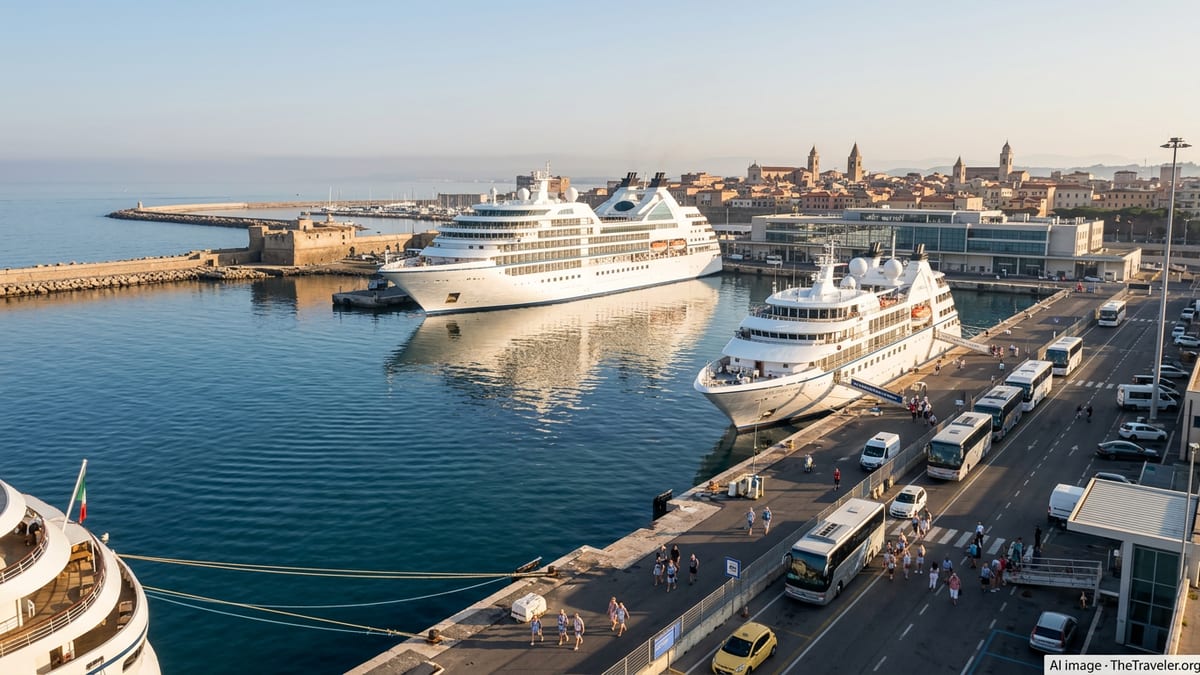
Azamara Builds Out Grand and World Voyages With Extended Routes
Azamara is sharpening its focus on destination-intensive sailings and longer combinations, reflected in a growing portfolio of world and grand voyages that link multiple regions into single extended journeys. Public itineraries for 2026 and 2027 highlight a mix of classic world cruise circuits and multi‑segment routes that can stretch to more than 100 nights, often combining the Mediterranean with the Americas, Asia or Oceania.
According to published Azamara voyage flyers for 2026 and 2027, the line is promoting grand voyages such as a 114‑night Canada to Australia itinerary in late 2026, as well as long combinations that join seasonal deployments across continents into a single booking. These offerings sit alongside a dedicated 2026 world cruise and a 2027 world cruise aboard Azamara Quest, underscoring how the brand is leaning into extended, port‑rich travel rather than short, repeat loops.
Trade documentation and guest brochures for Azamara’s 2026 summer Europe program also indicate a strong presence in Italy, with Rome listed as an embarkation port for a series of Mediterranean sailings. These can be combined into longer back‑to‑back itineraries for travelers seeking extended time at sea, positioning Rome as a flexible gateway into the line’s broader global network of voyages.
Industry observers note that Azamara’s strategy mirrors a wider premium‑sector move toward smaller‑ship, longer‑stay cruising. Late departures, more overnights and segmentable grand voyages are increasingly marketed as alternatives to traditional, single‑route world cruises, appealing to travelers who want more time in fewer places but still prefer itineraries measured in weeks or months.
Rome’s Civitavecchia Port Gains Profile as a World Cruise Turnaround
While Rome has long been a core Mediterranean embarkation point, several lines are now specifically highlighting Civitavecchia as a starting option for full or partial world cruises. MSC Cruises’ 2026 World Cruise route, for example, opens bookings with four European embarkation ports, including Civitavecchia for Rome, alongside Genoa, Marseille and Barcelona. The 119‑day itinerary aboard MSC Magnifica covers 47 destinations in 32 countries, with seven overnight stays and full days scheduled at other calls.
MSC’s published description of the 2026 itinerary shows the voyage beginning with calls in Italy, France, Spain and Portugal before crossing the Atlantic to the Caribbean and Central America, then continuing across the Pacific and Indian oceans and returning via Africa and the Mediterranean. Framing Civitavecchia as one of the principal gateways gives travelers from Italy and beyond a convenient way to join the full circumnavigation or book key segments linking the Mediterranean to transoceanic legs.
Other brands are similarly using Rome as an anchor for longer routes, even when they are not marketed as full world cruises. Deployment materials from Princess Cruises for 2026 list longer voyages and grand adventures that either end or begin in Civitavecchia as part of broader multi‑region itineraries. These can connect South America, the Atlantic islands and the Western Mediterranean in journeys of several weeks, demonstrating Rome’s role as a logical hinge between hemispheres.
For travelers, the increased prominence of Rome as a world‑voyage turnaround can streamline pre‑ and post‑cruise planning. Civitavecchia’s proximity to Rome’s air links and rail connections facilitates added stays in the Italian capital, and many cruise brochures now emphasize the ability to extend trips on land before or after a long sailing, reinforcing Rome’s status as both a cultural destination and a practical embarkation hub.
Premium and Luxury Lines Respond to Demand for Longer Journeys
Beyond Azamara and MSC, other premium and luxury operators are highlighting longer voyages in recent deployment announcements, citing rising demand for in‑depth travel without multiple long‑haul flights. Oceania Cruises has placed particular emphasis on extended journeys, including around‑the‑world routes and multi‑segment itineraries that run well past 60 days. Its newly promoted portfolio features a 180‑day "Around the World" sailing in 2029, along with extended combinations across Asia, the South Pacific, Europe and the Americas.
Oceania’s published materials characterize these longer voyages as a blend of deep discovery and convenience, with itineraries that connect marquee cities and lesser‑known ports in a single continuous journey. Some of the line’s grand voyages either call at Rome or use it as an endpoint, linking the Mediterranean’s historic centers with transatlantic or transcontinental routes. This positioning complements world cruise offerings by offering flexibility for guests who want a months‑long trip but not a full half‑year at sea.
Luxury brand Silversea is likewise broadening its slate of extended itineraries for 2026 and 2027. New collection details for its ocean fleet include longer Mediterranean segments that either depart from or arrive in Civitavecchia, such as itineraries connecting Rome with Lisbon and other Western European ports. These sailings can function as standalone journeys or as components within larger, multi‑segment paths that form de facto grand voyages across several regions.
The common theme among these operators is an emphasis on port immersion and flexible length. Rather than solely marketing a single, fixed world cruise departure each year, lines are increasingly building inventories of extended itineraries that can be sold as pieces of a global journey, tapping into the same appetite for slow, continuous travel across continents.
European Ports Beyond Rome Compete as Long‑Voyage Gateways
Rome is far from alone in drawing longer itineraries. MSC’s 2026 world cruise offers embarkation from Genoa and Marseille in addition to Civitavecchia and Barcelona, illustrating how multiple Mediterranean homeports are being woven into the same globe‑spanning route. This multi‑gateway model allows guests to board closer to home while still accessing a complete circumnavigation or major segments of it.
Other lines use a similar approach in Europe. Norwegian Cruise Line’s 2026 spring and summer deployment in the region highlights port‑immersive itineraries across the Western Mediterranean and Greek Isles, with open‑jaw cruises that begin or end in Rome, Barcelona, Venice (Ravenna) and Istanbul. While these are not marketed as world cruises, the structure allows travelers to string together multiple sailings into longer sequences spanning several weeks and multiple seas.
Royal Caribbean, Princess and other large brands also publish Europe deployment brochures that showcase Rome as one of several hubs for longer sailings, including repositioning voyages and grand adventures that cross between the Mediterranean and Northern Europe or the Canary Islands. In many cases, these cruises are positioned as an accessible alternative to traditional world voyages, offering extensive time at sea and varied ports without requiring a commitment of three or four months.
This broader network of embarkation ports reflects a more flexible vision of long‑form cruising. Instead of a single gateway dictating the start of a world cruise, travelers can now choose from multiple European cities, with Rome prominent among them, to tap into extended routes that may continue across oceans or connect to other long segments.
Travelers Seek Port‑Rich, Slow Travel at Sea
Underlying these deployment shifts is a clear trend toward port‑rich, slow travel experiences. Cruise lines report growing interest in itineraries that linger longer in destination, whether through overnight calls, late departures or multiple days at key ports. World cruises and grand voyages for 2026 and 2027 frequently highlight extended time in cities such as Sydney, Cape Town, Rio de Janeiro and various Asian hubs, aligning with a preference for deeper exploration over quick, highlight‑reel calls.
The long itineraries departing from or calling at Rome often mirror this philosophy, pairing classic Mediterranean stops with less familiar ports and offering extended shore time. Marketing materials emphasize the ability to unpack once and settle into shipboard life while the itinerary spans several continents, a proposition that particularly appeals to retirees, remote workers and travelers planning milestone trips.
As cruise lines continue to publish deployment details through the end of the decade, industry watchers expect Rome and other key European ports to retain or even grow their role as gateways for long voyages. With demand high for months‑long, port‑intensive itineraries, the current wave of world and grand cruise announcements suggests that Rome’s Civitavecchia terminal will remain a focal point for travelers eager to see more of the world in a single, extended journey at sea.
Azamara world and grand voyage news
MSC Cruises 2026 World Cruise details