


More news on this day
A Russian drone incursion into Moldovan airspace this week briefly shut down flights from Chișinău International Airport and delayed a plane carrying Ukrainian President Volodymyr Zelensky to Norway, adding a new layer of aviation risk to a region already strained by Russia’s ongoing war in Ukraine.
Get the latest news straight to your inbox!
Brief Airspace Closure Holds Presidential Flight on the Ground
Publicly available information indicates that Moldova temporarily closed its airspace on the afternoon of September 8 after radar detected a Russian drone entering from the direction of Ukraine. The airspace restrictions affected several commercial movements and left Zelensky’s aircraft waiting on the tarmac at Chișinău International Airport as he prepared to travel to Oslo for the funeral of Norway’s King Harald V.
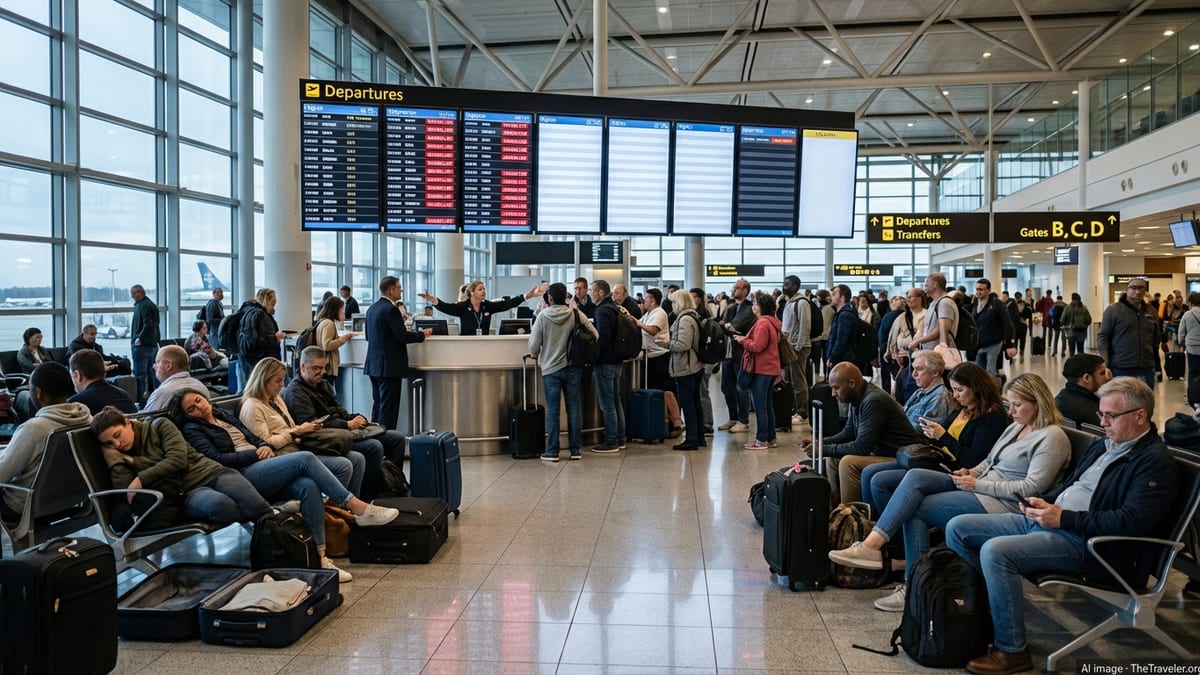
Reports from international and local outlets describe a short but consequential disruption. Moldova’s government spokesperson, cited in multiple summaries of the incident, said three departures were delayed while the airspace was closed, including the flight scheduled to carry Zelensky to Norway. Additional arrivals were also forced to wait until authorities confirmed the sky was clear and safe for traffic again.
Coverage from regional broadcasters and global agencies notes that Zelensky and his wife Olena were already on board when the delay began. The aircraft ultimately departed after around an hour, once confirmation emerged that the unmanned aircraft had come down far from the capital and no immediate threat remained to civil or state aviation operating from Chișinău.
Accounts compiled by international media stress that the Ukrainian president’s onward schedule in Oslo went ahead as planned once he arrived, underscoring that the disruption affected timing rather than the overall diplomatic program.
Drone Path Ends in Rural Moldova, Far From Chișinău Airport
Investigative updates from Moldovan police and regional news reports state that the drone crossed Moldovan airspace before crashing near the village of Mihăileni Vechi in the Rîșcani district, roughly 160 kilometers from Chișinău International Airport. Local authorities reported multiple fires in surrounding sunflower fields but no injuries.
Police and defense specialists cited in published coverage have described debris consistent with a Geran-type system, the class of loitering munitions Russia has repeatedly used against targets in Ukraine. Forensic teams are examining the propulsion system and explosive remnants to confirm the model and payload, while national agencies document the incident as part of a broader pattern of cross-border drone activity linked to the war.
International reporting adds that the drone’s route took it across northeastern Moldova, with tracking later suggesting segments over neighboring Romania before it returned and detonated on Moldovan territory. Romania, a NATO member, has faced its own series of suspected Russian drone incursions over the past two years, prompting repeated diplomatic protests and air defense alerts along the alliance’s eastern flank.
Despite dramatic language in some early headlines, subsequent analysis by regional outlets has emphasized that the detonation point lay well outside the immediate vicinity of Chișinău’s air corridor. The main effect on Zelensky’s flight, those reports indicate, came from the precautionary airspace lockdown rather than from any confirmed near-collision.
Heightened Security Climate for Regional Air Travel
The episode underscores how Russia’s long-range drone campaign against Ukraine is influencing aviation far beyond the front line. Since the full-scale invasion began in 2022, both Moldova and Romania have recorded multiple incidents involving drones believed to be launched by Russian forces, sometimes crashing in fields or border communities hundreds of kilometers from primary Ukrainian targets.
Air safety specialists quoted across recent coverage note that even when drones fall far from runways, uncoordinated military traffic in contested airspace can compel civilian aviation authorities to act quickly. Temporary closures, diversion of routes, and holds on approaching or departing flights are increasingly part of standard risk management near the conflict zone.
Moldova, which is not a NATO member but cooperates closely with the European Union on security matters, has been particularly exposed. The country sits between western Ukraine and Romania’s northeastern border, creating a narrow corridor where stray or misdirected unmanned systems can easily breach sovereign airspace.
The Zelensky flight delay illustrates how these dynamics now extend to high-profile state travel. While such journeys typically involve enhanced security protocols and pre-coordinated air defense arrangements, even carefully controlled movements remain vulnerable to last-minute disruptions when uncrewed aircraft penetrate civilian corridors.
Diplomatic Itinerary Continues in Norway and Beyond
Despite the delay in Chișinău, publicly available information from Norway and Canada shows that Zelensky’s broader diplomatic schedule proceeded. After landing in Oslo later on September 8, the Ukrainian leader joined other international guests at ceremonies honoring King Harald V and held meetings focused on further air defense cooperation and support for Ukraine’s security needs.
From Norway, Zelensky continued on to Canada, arriving in Calgary the following day. Canadian and international reports note that the visit centered on securing additional military assistance and sustaining political backing as Russia’s war approaches its third winter. The brief interruption in Moldova did not alter these plans, but it did feature prominently in international coverage of the trip.
Commentary pieces in European and North American outlets have pointed to the incident as another example of how front-line military activities in Ukraine ripple outward across borders. Even when there is no direct attack on a head-of-state aircraft, the presence of hostile drones in shared airspace can reshape routes, schedules, and security calculations for leaders traveling through the region.
For Moldova, the scrutiny has renewed attention on its capacity to monitor and respond to aerial incursions. Officials there have repeatedly warned that debris and wayward drones from the war pose ongoing risks to rural communities and national infrastructure, reinforcing the country’s calls for greater international support to modernize its air surveillance and civil protection systems.
Spillover Risks Shape Future Travel and Tourism
While the Zelensky incident involved a state aircraft on a high-level mission, the disruption resonates with commercial travel across Eastern Europe. Airlines serving Moldova and neighboring countries have already adapted routes and contingency plans because of the war, often adding fuel margins, adjusting altitudes, or rerouting to avoid areas of possible military activity.
Travel industry observers following the episode suggest that short, precautionary airspace closures are likely to remain part of the operating environment for carriers in the region. For passengers, this may translate into occasional delays or diversions rather than outright cancellations, as authorities balance safety with the need to keep essential connections open.
Tourism boards in Moldova and Romania have for months stressed that most visitor itineraries remain far from areas experiencing debris or cross-border incidents. However, the drone incursion and resulting delay to such a high-profile flight are expected to prompt renewed questions from travelers and tour operators about risk levels, even in capitals like Chișinău that lie at some distance from the fighting.
Analysts cited in regional commentary underline that the primary impact is psychological as much as operational. As long as Russia’s drone campaign continues to spill over into neighboring airspace, travel plans across this corner of Europe will be shaped not only by timetables and fares but also by evolving security assessments well beyond passengers’ direct view.
Russian drone incursion delays Zelensky flight