


Set along a sweeping bend of the South Saskatchewan River, Saskatoon is a mid-sized prairie city with a big reputation for riverbank trails, a quietly ambitious food scene, and a summer calendar packed with festivals. For first-time visitors, it works both as an easy long weekend city break and as a hub for exploring the wider prairie landscape. This guide focuses on helping you decide whether Saskatoon fits your style, how long to stay, where to base yourself, and how to make the most of your time on the river.
Get the latest updates straight to your inbox!
Is Saskatoon Worth a Trip for You?
Saskatoon appeals most to travelers who value atmosphere over blockbuster sights. There is no single must-see landmark that defines the city. Instead, the draw is a mix of river views, walkable neighborhoods, Indigenous culture, and relaxed prairie hospitality. If you enjoy wandering riverside paths, browsing independent shops, lingering over good coffee or craft beer, and punctuating your days with one or two standout museums or cultural stops, Saskatoon is likely to feel very rewarding.
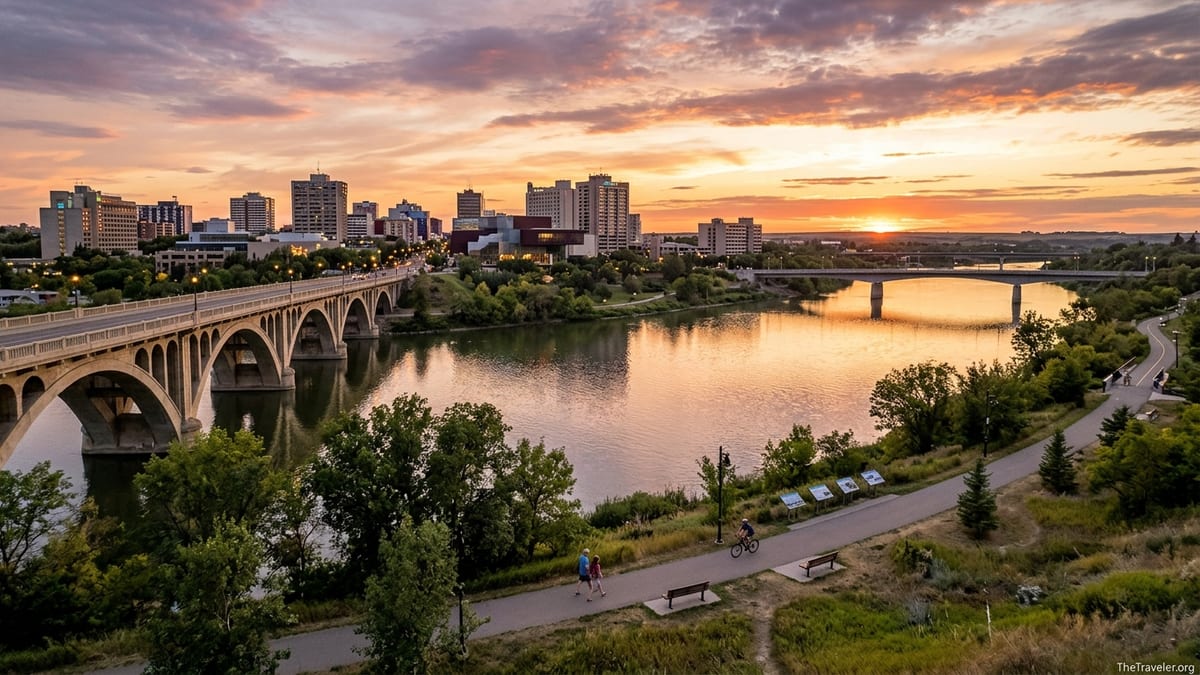
The river is the city’s calling card. The Meewasin Trail system traces more than dozens of kilometers of paths along both banks of the South Saskatchewan, connecting parks, neighborhoods, and viewpoints. In summer, the long evenings and big skies make simple activities such as walking, cycling, or sitting on a riverside patio feel like the main event. Even in cooler months, locals bundle up and head for the trails, so you can still experience the landscape that shapes Saskatoon’s identity.
Cultural travelers will find more depth than the city’s size suggests. Wanuskewin Heritage Park, just outside town, tells stories of the Northern Plains Indigenous peoples and protects an important archaeological landscape. In the city center, Remai Modern brings an international-caliber contemporary art experience, while the Western Development Museum’s recreated "Boomtown" street explores Saskatchewan’s settler-era urban history. Layer in a busy summer festival season and regular live music, theatre, and community events, and a weekend can easily feel full.
On the other hand, if you are looking for high-energy nightlife every night, extensive luxury shopping, or big-city density, Saskatoon may feel quiet. It suits travelers who are happy with a slower pace, time outdoors, and evenings that lean toward dinners, bars, and performances rather than late-night clubs. It also pairs well with a broader Saskatchewan road trip that includes national or provincial parks, prairie drives, or lake country.
Orientation: Saskatoon’s River, Bridges and Core Districts
The South Saskatchewan River runs roughly north to south through Saskatoon and functions as the city’s compass. Multiple road and rail bridges cross the water, and you will likely use at least one of them daily. Many visitors quickly learn to navigate by bridge names such as Broadway Bridge, University Bridge, or Senator Sid Buckwold Bridge, which link specific neighborhoods on each bank.
Most first-time visitors spend their time in four central areas. Downtown is the commercial heart, on the east bank just north of the Senator Sid Buckwold Bridge. It has office towers, riverfront hotels, the main cluster of city-center restaurants and bars, and access to the Meewasin Trail. At its southern edge lies River Landing, a redeveloped waterfront district with plazas, public art, and the Remai Modern museum overlooking the river.
Just across Broadway Bridge from downtown, the Broadway district feels more intimate and bohemian. A short, walkable main street is lined with independent restaurants, cafes, bars, and small shops, and the surrounding streets hold character homes and several guesthouses. Broadway connects easily back to the river paths and into adjacent neighborhoods, making it one of the most pleasant bases if you want a slightly more local-feeling stay.
To the west of downtown across the river sits Riversdale, a historic district that has evolved into one of Saskatoon’s most interesting food and drink areas. Here you will find coffee roasters, bakeries, restaurants, and a growing number of small businesses, along with access to River Landing from the west side. North of downtown on the east bank, the University of Saskatchewan area combines campus architecture, museums, and more stretches of riverside trail. All of these districts are close together; part of Saskatoon’s appeal is how little time you spend crossing the city once you understand its river-shaped layout.
Getting to Saskatoon and Getting Around
Saskatoon John G. Diefenbaker International Airport sits just northwest of downtown, typically a 15 to 20 minute drive in normal traffic. There is an airport bus route operated by Saskatoon Transit that connects the terminal with the city center, along with taxis and ride-hail services that can be met outside arrivals. Direct flights and routes tend to change frequently, so it is essential to check current options when you book rather than relying on older route lists.
If you are driving, the main highway approaches are straightforward. Highway 16 forms part of the Yellowhead route across the prairies and approaches Saskatoon from the northwest and southeast. Highway 11 links the city with Regina to the south and Prince Albert to the north. These roads are generally well maintained and make Saskatoon an easy stop as part of a wider Saskatchewan itinerary. In winter, however, conditions can change rapidly, with snow, ice, and reduced visibility, so you should always check current road reports, weather forecasts, and travel advisories before setting out.
Within the city, Saskatoon Transit operates a network of bus routes that link key visitor areas, including the airport route, downtown, the university, and several suburban commercial districts. Service frequency is higher on weekdays and during peak hours, so if you are relying on transit it is worth using the official trip-planning tools or online schedules to map specific journeys in advance. For visitors with mobility needs, the city runs Access Transit, a paratransit service that provides on-demand transport for those unable to use regular fixed routes, although advance registration and booking are required.
Taxis and ride-hail services operate across Saskatoon and are easy to use for point-to-point trips, especially in the evening or in winter when waiting outdoors is less appealing. In warmer months, bike and e-scooter share schemes typically appear along the river and around central neighborhoods, but operators and regulations can change from season to season. Before relying on micromobility, check current city information or app listings to see which services are licensed and where they can be ridden and parked.
Many visitors still choose to rent a car, especially if they plan to visit Wanuskewin Heritage Park, regional parks, or conservation areas outside the city. Driving within Saskatoon is relatively simple by North American standards, with wide streets and predictable traffic, but winter driving can be challenging due to snowpack, ice, and early darkness. If you are not comfortable with winter conditions, consider timing your visit for late spring, summer, or early autumn, or building your trip around transit, taxis, and walking in the central districts.
Things to Do: River Trails, Culture and Classic Attractions
Start with the river. The Meewasin Trail network follows both shores of the South Saskatchewan and is one of Saskatoon’s signature experiences. Sections run through manicured parks close to downtown and River Landing, while others stretch north and south into wilder-feeling corridor, with viewpoints, interpretive signs, and access to natural areas. Surfaces range from paved paths suitable for strollers to packed gravel and dirt. You can easily tailor your outing from a short sunset stroll to a half-day walk or cycle ride.
Just outside the city, Wanuskewin Heritage Park offers a deeper look at the Northern Plains landscape and the cultures that have called it home for thousands of years. Trails cross coulees and grasslands where archaeological work has uncovered bison jumps and camp sites. A bison herd has been reintroduced, and an interpretive center hosts exhibitions, performances, and cultural programming developed in partnership with Indigenous communities. Some guided programs, experiences, or group visits may require advance booking, so it is wise to check current schedules and any reservation requirements before you go.
Back in town, River Landing anchors the cultural waterfront. Remai Modern, a striking modern art museum at the water’s edge, holds a notable collection that includes a large group of Picasso linocuts alongside rotating exhibitions of contemporary art. With its airy public spaces, river views, and on-site dining, it is as much a place to linger as to look. Nearby plazas and walkways at River Landing connect directly into downtown, across the river to Riversdale, and onto the Meewasin Trail.
For a different slice of prairie history, the Western Development Museum’s Saskatoon location is home to "Boomtown," an indoor recreation of a Saskatchewan main street circa 1910. Visitors can walk along the wooden sidewalks, peek into period storefronts, and explore displays on transport, agriculture, and everyday life during the province’s early urbanization. It is especially appealing for families and for travelers who enjoy tangible, immersive history rather than purely text-based exhibits.
In warmer months, river cruises offer another way to experience Saskatoon’s skyline and bridges. The Prairie Lily riverboat typically operates sightseeing, dining, and special event cruises along the South Saskatchewan between spring and early autumn, with exact dates and frequency tied to water levels and the sailing season. Schedules, themes, and ticketing can change year to year, so it is important to check current information and consider booking ahead for popular weekend or evening sailings.
Festivals, Events and Seasonal Energy
Saskatoon’s mood changes noticeably with the seasons, and festivals play a big role in that shift. Summer brings a cluster of major events, including the SaskTel Saskatchewan Jazz Festival, Shakespeare on the Saskatchewan, and the Saskatoon Fringe Festival. These are cornerstone happenings on the city’s cultural calendar and often bring pop-up venues, outdoor stages, food stalls, and a wider crowd along the riverbanks and in central neighborhoods.
The jazz festival generally takes place around late June or early July, presenting a mix of ticketed and free performances that range from marquee artists to local acts, often in parks and downtown spaces. Shakespeare on the Saskatchewan stages outdoor productions in a tented riverside setting, pairing classic plays with big-sky evenings. The Saskatoon Fringe Festival fills streets near Broadway with theatre, buskers, and food vendors, turning the district into a lively pedestrian zone.
Beyond these headline events, Saskatoon hosts food-focused celebrations such as Taste of Saskatchewan, multicultural gatherings like Folkfest, wintertime happenings including ice and light festivals, and smaller music and arts series throughout the year. Exact dates, venues, and line-ups change annually, so if festivals are important to your trip, build your plans around the current-year events calendar from the city or tourism office. Booking accommodation early for peak festival weeks can help secure better options and prices.
Even outside major festivals, you will find regular live music in bars and cafes, gallery openings, farmers’ markets, and university-connected events during the academic year. The city is large enough to sustain a steady cultural rhythm but small enough that visitors can quickly feel part of the scene, particularly if you stay near Broadway, Riversdale, or downtown and explore on foot in the evenings.
Eating, Drinking and Neighborhood Flavor
Saskatoon’s food and drink scene is compact but distinctive, grounded in prairie ingredients and shaped by independent operators rather than big chains. Instead of chasing long, outdated lists, it is best to pick a handful of current, well-reviewed spots in a few key neighborhoods and verify that they are still operating close to your travel dates.
Broadway is the most obvious place to start. Its short strip offers a concentration of restaurants that cover everything from casual pub fare to more polished dining, along with lively bars and a couple of long-running neighborhood institutions. It works well for evening grazing, as you can move easily between dinner, dessert, and drinks on foot. Daytime brings strong coffee, bakeries, and small shops that reward slow browsing.
Riversdale has emerged as another hub for eating and drinking, especially on and around its main commercial streets near the river. Here you will find specialty coffee roasters, inventive kitchens, and a growing number of breweries and taprooms. The area’s gradual revitalization has attracted creative businesses, so menus often showcase local produce, prairie grains, and seasonal ingredients. When researching specific spots, look for up-to-date reviews and opening hours rather than relying on pre-2020 roundups.
Downtown, especially close to the river and around major hotels, offers a mix of business-oriented restaurants, lounges, and more casual options suited to lunch or after-work drinks. This area is convenient if you are staying in a central hotel and prefer not to stray far in the evening. Across the river, the university area and nearby residential neighborhoods host a scattering of student-friendly eateries, coffee shops, and budget-conscious options that can be useful for daytime exploring.
Where to Stay: Best Areas for First-Time Visitors
Where you stay in Saskatoon shapes how much you walk, how often you use transit, and how connected you feel to the river. For first-time visitors, the most common choice is a hotel in or near downtown. This area places you within a short walk of the Meewasin Trail, River Landing, many restaurants, and key bus routes. Parking is usually available for those with cars, though you may pay extra at some properties. Downtown hotels also work well for short business-and-leisure stays or festival weekends.
Broadway offers a different experience, typically through smaller hotels, inns, or guesthouses rather than big towers. Staying here gives you a lively main street on your doorstep, with quick access to dining, nightlife, and independent shops. You are also only a short walk across Broadway Bridge from downtown and River Landing. For travelers who prefer a neighborhood feel and are happy with a slightly smaller property, Broadway can be one of the most enjoyable bases. Transit access is good along the main corridors, and walking is easy on the flat grid of surrounding streets.
The university area, including neighborhoods on the east bank north of downtown, can suit visitors with ties to the campus or those looking for quieter, residential surroundings. Accommodation here ranges from campus-related options in certain seasons to hotels on nearby arterial roads. You will be close to university museums, more stretches of Meewasin Trail, and bus routes into downtown. However, evening dining and nightlife options immediately on your doorstep may be more limited than in Broadway or Riversdale, so you might travel for dinner.
Finally, highway-strip hotels on the approaches to the city often provide practical, car-friendly bases, especially for road trippers or families seeking straightforward access and on-site parking. These areas trade walkability and river proximity for convenience and, in some cases, more competitive room rates. If you choose a highway location, it is worth checking transit connections into downtown and planning for taxi or ride-hail costs if you intend to enjoy drinks or stay late at events in the central districts. For all areas, mid-range and budget price bands can fluctuate with seasons and major events, so use recent data at the time of booking rather than expecting year-round consistency.
When to Go and How Long to Stay
Saskatoon is a true four-season city, and your experience will differ greatly depending on when you visit. Summer, from roughly June through August, is the most popular period for leisure trips. Temperatures are generally warm, daylight hours are long, and major festivals cluster in this window. The riverbank parks are at their busiest, patios are open, and the city has a festive, outward-facing feel. This is the best time for long Meewasin walks, Prairie Lily cruises, and evenings spent outdoors.
Spring and autumn are shoulder seasons with their own appeal. May and September can bring comfortable temperatures, fewer crowds, and more value-oriented hotel rates. Early fall often delivers clear days and colorful foliage along the river, making it an excellent time for photography and quieter trail outings. Shoulder seasons also suit travelers who prefer cultural attractions and dining over big festivals but still want some outdoor time without deep winter cold.
Winters in Saskatoon are cold and snowy, with temperatures commonly dropping well below freezing. For many visitors, this is a specialty season rather than a first choice, best for those who are prepared with proper clothing and who are curious about winter festivals, skating, or simply experiencing the prairie climate. Short daylight hours and the need to move between heated indoor spaces can change how you plan your days, and some attractions or river-based activities will operate on reduced schedules or pause entirely. If you visit in winter, build in extra time for transit, weather disruptions, and warming-up breaks.
For a first visit focused on the city itself, two to three full days is usually enough to experience the highlights without rushing. This allows time for river walks, at least one major museum or gallery, a half-day at Wanuskewin, and a couple of leisurely meals or nights out. If you plan to use Saskatoon as a base for regional parks, lakes, or extended drives, you may want to add extra days to account for travel time and variable weather, particularly in shoulder or winter seasons.
Sample Stay Patterns and Next Steps
For a two-day city-focused stay in summer, you might arrive in Saskatoon around midday and check into a downtown or Broadway hotel. Spend your first afternoon walking the Meewasin Trail between River Landing and the university area, crossing at least one of the central bridges to experience both banks. In the evening, head to Broadway or Riversdale for dinner and drinks, timing your walk to enjoy sunset over the river.
On day two, devote the morning and early afternoon to Wanuskewin Heritage Park, allowing time for both indoor exhibits and at least one loop on the trails. Return to the city for a late lunch or coffee near River Landing, then explore Remai Modern or the Western Development Museum depending on your interests. If a Prairie Lily cruise appeals and is operating during your visit, consider an evening sailing to see the bridges and skyline from the water. For shoulder-season or winter trips, you can follow a similar structure but place more emphasis on indoor attractions and shorter, well-timed outdoor walks.
Travelers with a third day might add slow exploration of the university campus and its small museums, a deeper dive into neighborhood cafes and breweries, or a short drive to nearby conservation areas or river viewpoints outside the city. Throughout, stay flexible and check current information on museum hours, guided programs at Wanuskewin, river cruise schedules, and event listings, as these can change with seasons and from year to year.
Saskatoon also works well as a node in a broader Saskatchewan itinerary. From here, you can strike out toward provincial and national parks, lake regions, or prairie drives that showcase the wider landscape beyond the city. If you are planning such a trip, consult a Saskatchewan-wide hub guide for ideas on linking Saskatoon with other destinations, keeping in mind driving distances, seasonal road conditions, and how much time you prefer to spend in the city versus out on the open prairie.