


More news on this day
The Federal Aviation Administration is warning travelers to expect significant flight delays and some cancellations across the United States over the 2026 Thanksgiving period, as a series of fast-moving storm systems coincides with what aviation officials say is the busiest holiday air travel week since before the financial crisis, with daily flight volumes topping 52,000 departures nationwide.
Get the latest news straight to your inbox!
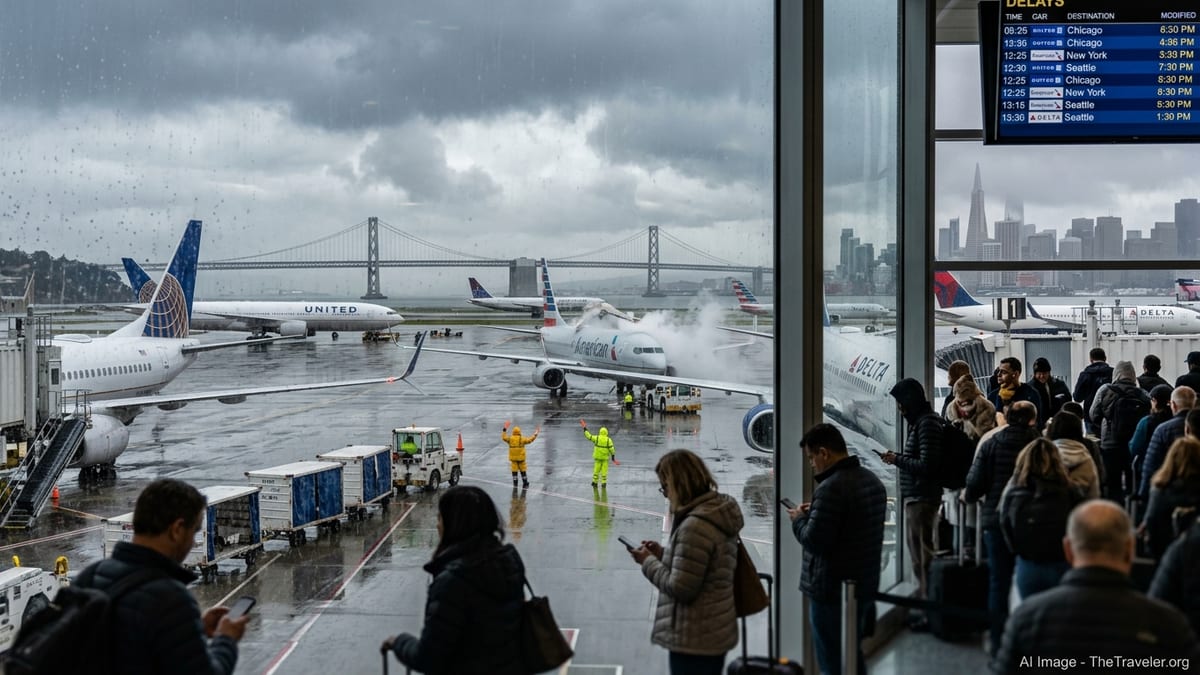
Storm Systems Target Multiple Major Hubs Through Sunday
Instead of a single disruptive storm, forecasters are tracking several low-pressure systems crossing the country between Tuesday 24 November and Sunday 29 November 2026, each affecting different sets of hubs at peak travel times. On the West Coast, frontal systems coming in from the Pacific are bringing periods of heavy rain, low ceilings and gusty winds to Northern California and the Pacific Northwest, which can reduce runway arrival rates and trigger flow restrictions. San Francisco International, in particular, is vulnerable to low clouds that require increased aircraft spacing, while Seattle and Portland are dealing with wet, occasionally windy conditions that slow operations during already crowded morning and evening banks.
Farther south and east, a separate storm track is sending lines of thunderstorms across parts of Texas and the Gulf Coast, affecting airports in Houston and New Orleans and then pushing into Florida. Brief but intense cells and embedded lightning can pause arrivals and departures around major leisure and connecting hubs such as Miami, Orlando and Tampa, just as outbound holiday traffic peaks. As the system continues northeast, it is expected to influence arrival rates into Atlanta, the country’s largest hub by passenger volume, during one of the busiest pre-Thanksgiving travel windows of the year.
As the holiday period progresses, the focus of disruption is forecast to shift to the Midwest and Northeast, particularly for the post-Thanksgiving return rush. Forecasters expect periods of rain and low visibility around Chicago, New York City, Boston and Philadelphia near Thanksgiving Day itself, followed by colder air, gusty crosswinds and localized lake-effect snow showers over the weekend. Those conditions can prompt de-icing operations and further reduce capacity at time-sensitive airports such as Chicago O’Hare, while higher elevations around Denver may see passing mountain snow that requires additional runway checks and equipment deployment during turnarounds.
How FAA Traffic Management Spreads Delays To Clear-Skies Airports
The FAA is emphasizing that the impact of these storms will not be limited to airports directly under the worst weather. During high-demand periods such as Thanksgiving week, the agency often implements Ground Delay Programs and airspace flow programs when storms, low clouds or reduced visibility force a major hub to slow the rate of arriving aircraft. These tools limit the number of flights that can depart toward an affected airport within a certain time window, which helps maintain safety but also pushes scheduled departure times back at origin airports across the country.
That means passengers can face significant delays at airports with blue skies, such as Dallas or Phoenix, if their aircraft or crew is coming from a constrained hub like San Francisco, Atlanta or Chicago earlier in the day. When operations are this tight and aircraft are flying with very high load factors, a delay affecting a single morning rotation can ripple to several subsequent legs. With many flights operating close to 100 percent capacity across the core days of the Thanksgiving period, missed connections are especially difficult to resolve and can leave travelers waiting for rebookings into the next day if seats are scarce.
The FAA and airlines are using a mix of traffic management initiatives, schedule thinning and equipment swaps to try to preserve as much capacity as possible while accommodating the weather. Some carriers have issued flexible travel policies allowing Thanksgiving-week passengers to move itineraries a day earlier or later, or to reroute through alternative hubs, without additional change fees or fare differences on certain dates and routes. Travelers who are able to depart early in the holiday week, or to return on off-peak days like Friday instead of Sunday, may be better positioned to avoid the worst of the rolling constraints.
Record Passenger Volumes Collide With Tight Schedules
The weather challenges are arriving during what government and industry data indicate is one of the heaviest Thanksgiving air travel periods in more than a decade. TSA checkpoint statistics in the run-up to the holiday have shown multiple days exceeding 2.7 million passengers screened nationwide, with projections for peak days above 3 million. Airlines scheduled more than 52,000 flights on the busiest days of the Thanksgiving window, a level of activity that leaves limited slack in the system when storms reduce usable airspace or runway capacity.
High passenger volumes also affect the experience in terminals and on the ground, particularly around security, baggage and airport access. TSA is reminding passengers that common Thanksgiving foods can significantly slow screening if they are not packed correctly. Its long-standing rule is that any food that can be spilled, spread, sprayed, pumped or poured is treated as a liquid or gel subject to the 3.4-ounce carry-on limit. Solid foods such as baked pies, cakes, breads, cooked meats and casseroles are typically permitted in carry-on bags, but items like cranberry sauce, gravy, jams, syrups and creamy dips must either meet liquid limits in carry-on luggage or be placed in checked baggage.
With more travelers than usual carrying homemade dishes and leftovers, officers are seeing an uptick in bags pulled aside for secondary screening when prohibited amounts of liquids or semi-liquids are discovered. Each additional manual inspection can add several minutes and slows the overall lane. TSA recommends that passengers verify current food rules in advance, arrive at the airport earlier than they might for a standard weekend trip, and consider using services such as TSA PreCheck or reservation-based security programs where available to reduce the risk of missing flights during weather-related ground holds.
International Holiday Trips Still Depend On U.S. Hub Reliability
Many travelers are using the Thanksgiving period for international vacations to beach destinations such as Cancun, Los Cabos or Punta Cana, but those trips are also exposed to disruptions within the U.S. domestic system. Most southbound flights to Mexico and the Caribbean are operated by aircraft that start the day on domestic routes or that pass through major U.S. hubs on earlier legs. If storms slow the morning operation in cities such as Chicago, New York or Atlanta, the equipment needed for later departures to international leisure destinations can arrive late or be reassigned, resulting in delays or tight connection times at intermediate hubs.
Return journeys can be especially challenging on the Saturday and Sunday after Thanksgiving, when large numbers of U.S. citizens and residents arrive back at the same time. Airport operators and Customs and Border Protection have been preparing for elevated crowds at immigration halls, with some facilities adjusting staffing and queuing layouts. Travelers without Global Entry are being encouraged to download and enroll in the free Mobile Passport Control app before departure, which allows eligible U.S. and Canadian citizens to submit passport and customs information digitally and use designated express lanes at participating airports on arrival.
International passengers are also being urged to double-check entry rules, customs limits and digital form requirements for their destinations before leaving home. While many countries have simplified health-related entry conditions compared with earlier in the decade, electronic travel authorization systems, digital customs declarations and baggage restrictions remain in force in various jurisdictions. Confirming these details in advance can reduce the risk of delays at departure counters, where airlines are required to verify that passengers meet all entry conditions before boarding.
Practical Steps For Travelers As The Holiday Week Continues
With storms and heavy demand expected to affect operations across much of the country through the end of the Thanksgiving 2026 travel period, aviation authorities and airlines are offering a series of practical recommendations. One of the most widely endorsed steps is to monitor the status of the aircraft assigned to a flight, using the “where is my plane coming from” function now offered in many airline apps. Checking the inbound aircraft four hours before departure can give travelers an early indication of possible knock-on delays if the plane is still on the ground at a weather-affected hub.
Another key strategy during peak disruption is to use digital tools to rebook as soon as a cancellation or misconnection occurs. Airlines generally open alternative flight options in their apps and websites at about the same time that airport gate and service agents receive them. Passengers who attempt to change their itineraries via the app while they are still walking to the customer service desk may secure scarce seats on the next available departure more quickly than those who wait solely in physical lines. When given the choice, early-morning flights using aircraft that parked overnight are often more reliable than mid-afternoon or evening services, which are more exposed to the cumulative effects of daylong weather and traffic restrictions.
Airport officials also stress the importance of allowing extra time for every part of the journey during this particular holiday week. Parking facilities at major hubs are nearing capacity on several peak days, and shuttle transfers from off-site lots can be slowed by heavy road traffic. Check-in counters, baggage drops and security checkpoints can all see intermittent surges, especially during the early and mid-morning departure banks through Monday. Building an additional 45 to 60 minutes into normal arrival routines, and having a clear plan for alternate parking or drop-off options, can reduce stress if delays begin before travelers even reach the terminal.
Looking beyond the immediate holiday period, the FAA and airport operators are expected to review performance data from this Thanksgiving week to assess how current infrastructure, staffing and traffic management tools handled the combination of record demand and challenging weather. For now, officials say the most effective steps individual travelers can take are to stay informed via official airline and airport channels, make use of any flexible travel waivers offered, pack in line with security and customs rules, and build additional time and flexibility into their plans for the remainder of the 2026 Thanksgiving travel rush.