


Touching down at Seychelles International Airport on Mahé is the real beginning of a Seychelles trip: palm-fringed hills on one side, the Indian Ocean on the other, and a compact island airport where things still work at a slower, island pace. For first-time visitors, understanding how arrivals, transport, SIM cards, money exchange and island connections work at SEZ can make the difference between a smooth start and a stressful one. This guide walks you step by step through what to expect from the moment you land to the moment you reach your hotel or onward island.
Get the latest updates straight to your inbox!
Arriving at Seychelles International Airport: What to Expect
Seychelles International Airport (IATA: SEZ) sits on the east coast of Mahé, about 10 kilometres south of the capital Victoria. It has one main international terminal and a smaller domestic terminal a short walk away. Most long-haul visitors arrive on overnight flights from hubs such as Dubai, Doha or Addis Ababa in the morning, though there are also regional flights from cities like Johannesburg, Mumbai and Mauritius. Immigration is usually straightforward for leisure travellers with confirmed accommodation and onward or return tickets, but it can still take 20 to 40 minutes at peak times when several wide-body aircraft arrive close together.
After immigration you collect luggage in a single baggage hall that serves most flights. Baggage delivery times vary; when a wide-body arrives it can take 20 to 30 minutes for all bags to appear. Luggage trolleys are available and free to use. Customs checks are usually quick for visitors carrying only personal items, but Seychelles does enforce limits on bringing in alcohol, tobacco and large amounts of currency, so keep duty-free purchases within typical international allowances.
Once you exit customs you step into a compact arrivals hall. This is where most of the practical services you will need in your first hour in Seychelles are concentrated: bank counters and ATMs, a small number of currency exchange windows, two main mobile network counters, tour operator and hotel desks, and car rental desks. The hall gets busy whenever an international flight arrives, so if you know you need to exchange money or buy a SIM card, it is worth heading directly to those counters before browsing the small duty-free and souvenir shops.
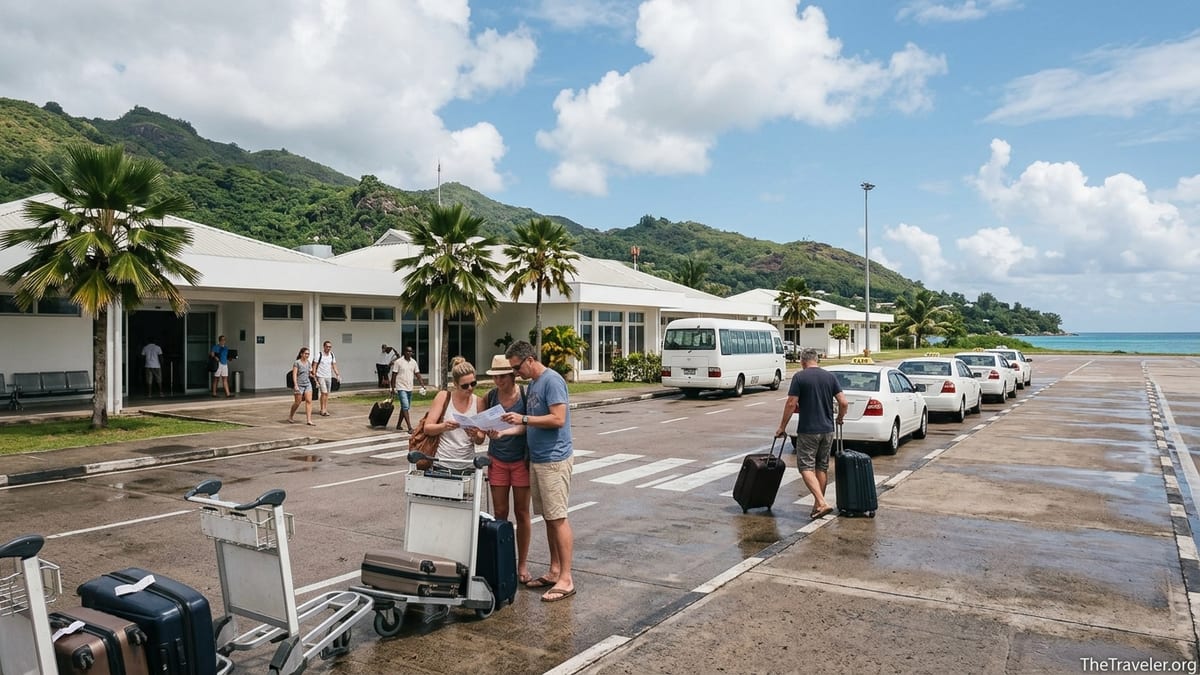
Outside the sliding doors of arrivals you will find a taxi rank, some hotel shuttle representatives holding name boards, and short-stay parking. The public bus stop is further out on the main road, not directly in front of the terminal, so new arrivals usually choose a taxi, hotel transfer, or rental car for the first leg of their journey.
Money, ATMs and Paying in Seychelles Rupees
The currency of Seychelles is the Seychellois Rupee, commonly abbreviated as SCR. For everyday spending on buses, small grocery shops, food trucks and some taxis, you will need cash in rupees. In the arrivals area you will usually find at least one bank counter offering currency exchange and several ATMs linked to major card networks such as Visa and Mastercard. Travellers frequently report that rates at the airport counters are competitive with those in Victoria, so exchanging a modest amount on arrival for immediate expenses is a sensible approach.
For a typical week-long stay, many visitors withdraw the equivalent of a few hundred euros in rupees on day one and then top up with additional ATM withdrawals as needed. While many hotels, larger restaurants and car rental firms accept card payments in foreign currency, smaller businesses often prefer cash and may not accept cards at all. Taxis are a good example: a few drivers now take card payments, but most expect cash in rupees and may offer a less favourable rate if you insist on paying in euros or dollars.
It is technically possible to pay for some services in euros, especially at resorts, tour desks and for certain transfers, but you will usually receive change in rupees and the informal exchange rate used by individual businesses may be worse than the bank rate. For example, a taxi from the airport to Beau Vallon might be quoted as 40 euros when the official taxi rate card in rupees would convert closer to 35 euros at the day’s bank rate. Having rupees on hand keeps costs predictable and makes it easier to use public transport and buy snacks and water without overpaying.
One practical tip is to withdraw or exchange a mix of smaller denominations, such as 25 and 50 rupee notes, as these are useful for bus fares, tips and small purchases. ATMs can occasionally run short of cash on weekends or evenings in more remote areas, so avoid waiting until you are almost out of money before you look for the next machine, particularly if you are heading to smaller islands like La Digue where banking services are more limited.
Getting Connected: Airport SIM Cards and Mobile Data
At SEZ arrivals you will typically see counters for the two main mobile operators in Seychelles: Airtel and Cable & Wireless. Both sell prepaid tourist SIMs that include data and a small amount of local call credit. Prices change over time, but recent travellers have reported packages such as around 10 to 15 GB of data plus some minutes for the equivalent of 50 to 70 US dollars. Plans are usually valid for 7, 10 or 30 days, which covers most holiday stays.
Buying at the airport is straightforward. Staff will ask to see your passport, register your SIM and install it on the spot. They can help you configure APN settings if needed, and you walk out with data working immediately. This is especially useful if you plan to use online maps to navigate Mahé’s winding coastal and mountain roads, or if you want to confirm hotel transfers by messaging as soon as you land. Speeds on 4G are generally good around Mahé and Praslin, though coverage can be patchy in certain valleys or at sea.
If you already have an international roaming plan from your home provider, compare the effective price per gigabyte before deciding. Some travellers from Europe and India find that a roaming add-on from their provider offers enough data for messaging and navigation at a similar or slightly higher cost than a local SIM, with the advantage of keeping their main number active. Others prefer the reliability and larger data allowance of a Seychelles SIM, particularly when staying at guesthouses where Wi-Fi can be slow or limited.
For couples and families, a common strategy is to buy one local SIM in an unlocked phone and then share the connection by hotspot. That way, everyone can connect when needed without buying multiple SIMs. Just keep an eye on data usage if you are frequently uploading photos or streaming video, as top-up data can be more expensive than the base bundle.
From SEZ to Your Hotel: Taxis, Buses and Car Rental
For most first-time visitors, the simplest way to leave Seychelles International Airport is by taxi. The taxi rank is just outside the arrivals hall, and there is usually a line of white taxis waiting when international flights land, including in the evening. Taxi fares follow a government-guided rate card by zone rather than strict metering, so it is standard practice to confirm the approximate fare before setting off. As of 2026, many visitors report paying the equivalent of 20 to 30 euros in rupees for the 20 to 30 minute ride from the airport to the ferry jetty in Victoria, and a similar amount to popular beach areas like Beau Vallon, depending on time of day and number of passengers.
Public buses operated by Seychelles Public Transport Corporation run along the east coast road that passes near the airport, and they remain the absolute cheapest way to reach Victoria, often costing only a small handful of rupees for the journey. However, the nearest bus stop requires a short walk with luggage to the main road, buses can be crowded at commuting times, and they are not designed for travellers with large suitcases. On top of that, most routes now use a reloadable card instead of cash, which is not always easy for newly arrived passengers to obtain immediately. For these reasons, buses are more practical for day trips once you are settled at your accommodation than for the initial airport transfer.
Car rental is a popular option for Mahé and Praslin, and several well-known international brands such as Avis and Europcar, as well as local companies, have desks in the arrivals area or just outside the terminal. Rental cars typically start at around the equivalent of 40 to 60 euros per day for a small hatchback on a multi-day booking, with automatic transmission often costing slightly more than manual. Driving is on the left, roads are narrow and winding in places, and parking can be tight around central Victoria and at some smaller beaches. That said, having your own car gives you maximum flexibility to explore beaches like Anse Intendance or Port Launay at your own pace.
When hiring a car, bring your national driving licence and be aware that some companies prefer drivers to have at least one year of experience and be over a certain age, often 21 or 23. Check the car carefully for existing scratches, especially on bumpers and mirrors, and take photos on pick-up and drop-off. On arrival day, having a pre-booked rental waiting for you in the airport car park is particularly convenient if you plan to drive directly to a villa or guesthouse on the opposite side of Mahé.
Domestic Flights and Island Hops: Mahe, Praslin and Beyond
Most visitors split their Seychelles time between Mahé, Praslin and the smaller island of La Digue. The domestic terminal at SEZ sits a short walk from the main international building, and this is where you catch the frequent 15-minute flights to Praslin operated by Air Seychelles. During busier seasons the airline often schedules departures to roughly match incoming international flights, making it possible to land in Mahé and be in Praslin less than an hour later, provided your connection is on a single ticket or you have left enough time between flights.
If you are booking separate tickets, aim for at least two hours between scheduled arrival and domestic departure to allow for immigration, baggage collection and possible delays. Domestic flights use smaller turboprop aircraft with limited baggage capacity, so pay attention to weight limits, particularly if you are carrying dive gear or camera equipment. When connections are tight or your inbound flight is late, it is generally easier to rebook a domestic flight on the spot than a missed ferry departure from Victoria, as long as there are seats available.
Beyond Praslin, other islands such as Bird Island or Denis Island are usually reached on charter or scheduled flights booked together with accommodation. These flights may depart from the same domestic terminal but have stricter luggage rules and specific check-in times. If you are heading directly to a private island resort on arrival day, your hotel or tour operator will normally meet you in the arrivals hall and escort you through the process, sometimes including access to a small lounge while waiting for the connection.
A good rule of thumb is not to schedule your last inter-island flight or ferry too close to your departing international flight. Many visitors finish their trip with a last night on Mahé near Beau Vallon or near the airport itself, to avoid worrying about morning seas or weather-related delays on the day of departure.
Ferries and Land Transfers to the Islands
For travellers who prefer to stay on the water, high-speed catamaran ferries run between Mahé, Praslin and La Digue. The main operator on the Mahé–Praslin–La Digue routes uses a modern, enclosed catamaran that usually takes about one hour from Mahé to Praslin, with onward connections of around 15 minutes between Praslin and La Digue. The ferry terminal is located at the Inter-Island Quay near Victoria, roughly 20 to 30 minutes by taxi from SEZ depending on traffic.
If your plan is to go straight from the airport to Praslin or La Digue by sea, check the afternoon schedules carefully when you book flights. Ferries do not run late into the night; last sailings are typically in the late afternoon or early evening. A traveller landing at 15:00 on Mahé, for example, might just be able to catch a 16:30 or 17:00 ferry if immigration and baggage are quick and traffic is light, but any delay could mean spending the first night on Mahé instead. Some ferry booking platforms and tour companies sell combined packages that include an airport–jetty shuttle bus, which can save time and stress compared with arranging a taxi on arrival.
Sea conditions vary with the season. The crossing between Mahé and Praslin can be choppy, especially during the southeast trade wind season, and those prone to seasickness may prefer the domestic flight even if it costs more. On board, luggage is usually checked in separately and stored in designated racks, while passengers sit in air-conditioned cabins. If you have onward accommodation on Praslin or La Digue, many guesthouses and hotels can arrange a taxi to meet you at the jetty, but you will also find local taxis waiting outside the terminal on arrival.
Ticket prices for ferries are higher than local buses but generally cheaper than domestic flights, and there are sometimes different classes with more spacious seating or outdoor decks at a premium. Booking ahead is strongly recommended in peak travel months such as July, August, December and early January, as some departures do sell out, particularly around weekends and public holidays.
Staying Near the Airport: Hotels and First-Night Strategy
While many visitors head straight to resort areas like Beau Vallon or onward islands, staying near the airport for the first or last night can be practical, especially if you have an early flight or arrive in the late evening. The closest accommodation options are small guesthouses and boutique hotels on Mahé’s east coast, within a 5 to 15 minute drive of SEZ. These properties typically arrange paid transfers and are used to late check-ins after evening arrivals from the Middle East and Europe.
For example, some travellers choose a night in the Anse aux Pins or Pointe Larue areas just south of the airport before continuing by ferry or domestic flight the following morning. This approach reduces the stress of trying to make a tight same-day connection and gives you time to change money, buy a SIM card, and recover from overnight travel before tackling inter-island transfers. On your last day, staying near the airport can also allow a relaxed morning swim and breakfast before a mid-day or afternoon international flight.
If you prefer more facilities and restaurants within walking distance, basing yourself at Beau Vallon on your first nights is a popular strategy. It is about a 30 to 40 minute taxi ride from SEZ depending on traffic, but once there you have beachside dining, small supermarkets and a good choice of hotels from large international chains to small self-catering apartments. Many first-time visitors split their stay between Beau Vallon and another island such as Praslin, using SEZ as the entry and exit point rather than as a place to linger.
Regardless of location, note that some smaller guesthouses on Mahé do not operate a 24-hour front desk. If your flight lands late or is delayed, inform your host in advance and confirm how you will access the property if you arrive after their usual check-in time. Sharing your flight details allows them to coordinate with taxi drivers or wait up for your arrival.
Practical Tips for First-Time Seychelles Travelers
First-time visitors are often surprised by how compact yet hilly Mahé is, and how travel times can stretch during rush hours along the main east coast road between the airport and Victoria. Build in buffer time whenever a flight or ferry is involved. For instance, if you have a late-afternoon ferry from Mahé to Praslin and are spending the day at Beau Vallon, leaving at least an hour for the taxi ride back to the jetty is sensible even though the distance is short.
Day-to-day costs can be higher than in many other beach destinations, particularly for imported food and drink, so using local services where possible helps. Taking the SPTC bus for a beach-hopping day on Mahé, eating at takeaway “snack” shops and food trucks, and staying at self-catering apartments for part of your stay can all reduce expenses while giving a more local feel. The airport itself has basic cafes and a few shops, but most people prefer to buy snacks and drinks at supermarkets once they reach their accommodation, where prices are lower and the selection wider.
Safety levels are generally good by regional standards, especially compared with larger African or Indian Ocean hubs, but standard travel precautions still apply. Keep valuables in hotel safes when not needed, avoid leaving bags unattended on beaches, and be cautious when withdrawing cash at ATMs. In taxis, it is common and acceptable to ask for the expected fare before getting in, particularly at the airport, and to clarify whether the price is per ride or per person, especially for groups.
Finally, remember that Seychelles operates largely without big-name ride-hailing apps, and many arrangements are still made directly with hotels, guesthouses and individual drivers. It can be worth saving the number of a reliable taxi driver you like on your first ride from SEZ, so you can arrange transfers later in your trip by messaging or calling them directly.
FAQ
Q1. How long does it usually take to get through Seychelles International Airport on arrival?
Most travellers clear immigration, collect bags and exit customs in 45 to 60 minutes, though it can be quicker on quiet days and longer when multiple wide-body flights arrive close together.
Q2. What is the easiest way to get from the airport to Victoria or the ferry jetty?
The most convenient option is a taxi from the stand outside arrivals, which typically takes 20 to 30 minutes to reach Victoria or the Inter-Island Quay, depending on traffic.
Q3. Are there public buses directly from SEZ into town?
Public buses run along the main road near the airport, but there is no dedicated stop at the terminal doors, and buses can be crowded and less practical with large luggage.
Q4. Should I change money at the airport or wait until Victoria?
Exchanging a modest amount or using an ATM at the airport is sensible for immediate expenses like taxis and snacks, then you can compare rates at banks or exchange bureaus in Victoria later.
Q5. Is it worth buying a local SIM card at the airport?
Yes, for most visitors a local Airtel or Cable & Wireless SIM bought at arrivals offers reliable data for maps and messaging, and is often better value than roaming without a special plan.
Q6. How do I get from Mahé to Praslin on the same day I land?
You can either take a 15-minute domestic flight from the nearby terminal or a high-speed ferry from Victoria; in both cases allow at least two hours between flights and onward connections.
Q7. Are taxis at Seychelles International Airport metered?
Many taxis still use zone-based fares rather than strict meters, so it is normal to ask the driver for an approximate price to your destination before getting in and to pay in rupees.
Q8. Can I rent a car directly on arrival at SEZ?
Yes, several international and local companies have desks at or near arrivals, but in busy seasons it is safer to pre-book so that a suitable car is waiting for you when you land.
Q9. Is it better to go straight to Praslin or stay on Mahé the first night?
If your international flight arrives early and connections align, going straight to Praslin works well; for afternoon or evening arrivals, many travellers prefer to spend the first night on Mahé near the airport or at Beau Vallon.
Q10. How early should I arrive at SEZ before my departing international flight?
Arriving around two to three hours before departure is usually sufficient for check-in, security and exit formalities, with extra time if you are returning a rental car or travelling in peak holiday periods.