


On most days at Bryce Canyon National Park, the crowds cluster around the busy overlooks of Sunset and Sunrise Points. Yet just a little farther north, the Fairyland Loop Trail drops into a quieter world of cream, pink, and orange hoodoos where you can walk for long stretches in near solitude. This strenuous 8 mile loop is one of the park’s best hikes for travelers who want classic Bryce scenery with far fewer people underfoot, as long as you know how to time it, prepare for the elevation, and navigate the logistics.
Get the latest updates straight to your inbox!
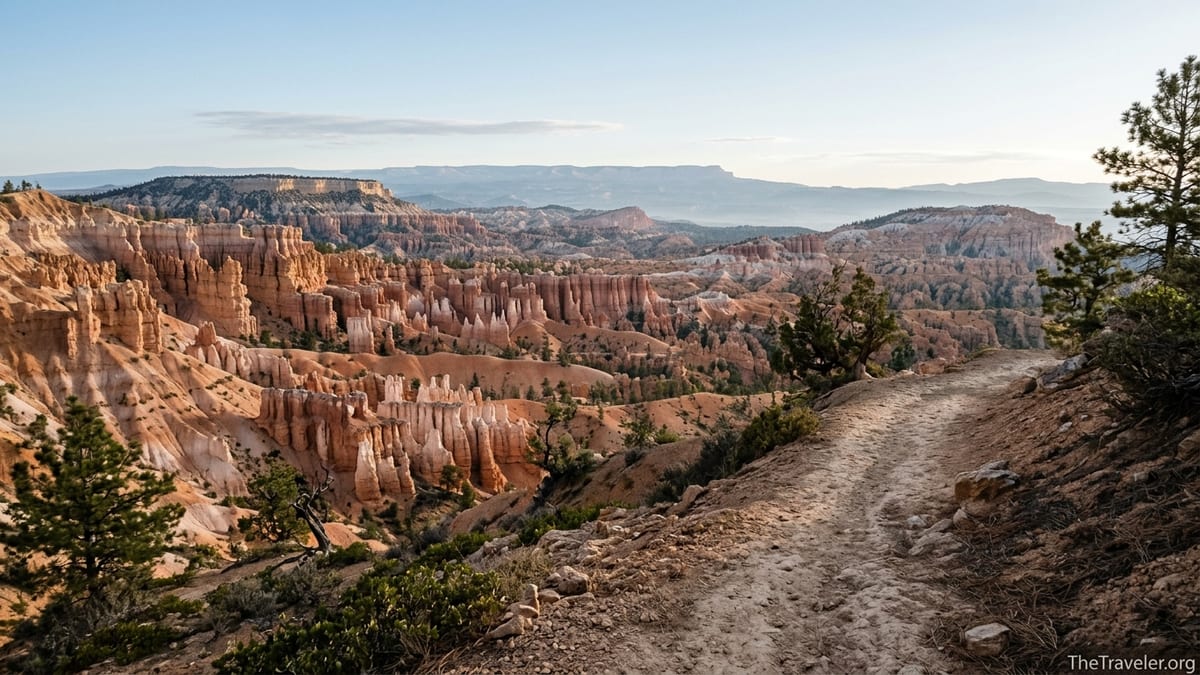
Understanding the Fairyland Loop: Distance, Elevation and Difficulty
The Fairyland Loop is an approximately 8 mile (about 13 kilometer) circuit on the northern edge of Bryce Canyon National Park. Official National Park Service information lists the trail as 8.0 miles with roughly 1,700 to 1,900 feet of total elevation gain, depending on where you start and which guide you consult. The loop combines segments below the rim in Fairyland and Campbell Canyons with a portion of the Rim Trail along the top of the plateau, circling the flat-topped feature known as Boat Mesa.
The hike is rated strenuous by the National Park Service because of its length at high elevation and the sustained climb back to the rim. Bryce Canyon’s rim sits around 8,000 feet above sea level, which means many visitors arriving from lower elevations feel the effects of thinner air. The climb out of the canyon at the end of the loop is particularly taxing, especially in the sun, even for people who regularly hike moderate trails closer to sea level.
Most reasonably fit hikers take around 4 to 5 hours to complete the loop at a steady, not rushed pace. Trail runners or strong hikers may move faster, while those who stop frequently for photos or breaks can easily turn it into a 6 hour outing. If you know that 8 miles of continuous hiking is near your upper limit, plan on the higher end of those estimates and treat the loop as your main activity for the day rather than tacking on more big hikes.
Because of its combination of distance, elevation and exposure, Fairyland Loop is generally better suited to hikers who already have some trail experience. First-time hikers to Bryce who want something shorter often start with the Queen’s Garden and Navajo Loop combination, then graduate to Fairyland Loop on a second visit. If you are comfortable with 7 to 10 mile day hikes elsewhere, Fairyland is an excellent next step and one of the best ways to see Bryce’s geology up close without the shoulder-to-shoulder feel of the main amphitheater trails.
Where to Start and How to Avoid the Crowds
You can start the Fairyland Loop from two main access points: Fairyland Point or the Tower Bridge trailhead on the Rim Trail just north of Sunrise Point. The National Park Service notes that there is no shuttle service to Fairyland Point, so you must drive your own vehicle there or hike to it from the amphitheater area. In contrast, Sunrise Point is on the main shuttle route in season, which can make logistics easier if you prefer not to move your car once you are inside the park.
Fairyland Point has a small parking lot at the northern end of the park road. In the high season from roughly late May through September, this lot can fill in the mid-morning, but it is usually less hectic than the famously crowded lots at Sunset or Bryce Points. Travelers who arrive around sunrise often find only a handful of cars there, with other hikers quietly gearing up or snapping early light photos before descending the trail. Starting at Fairyland Point and hiking counterclockwise allows you to drop into Fairyland Canyon first, walk through the hoodoos, and then return to the rim near Sunrise Point before following the Rim Trail back to your car.
If you begin at Sunrise Point, you can leave your car at the large parking area or arrive using the Bryce Canyon shuttle from Bryce Canyon City or the Visitor Center when the shuttle is running. A common strategy in peak season is to park at the shuttle station in Bryce Canyon City, ride in early, and start at Sunrise Point to avoid circling for a parking space inside the park. From Sunrise, you hike the Rim Trail north toward Fairyland Point, descend into the canyon, then eventually climb back up to the rim near your starting point.
To experience Fairyland Loop with fewer people, timing is more important than your starting trailhead. Early mornings from sunrise through mid-morning are typically the quietest, especially on weekdays outside holiday periods. Hikers who begin before 8 a.m. often report long stretches where they see only a few other groups, in contrast to the heavy traffic on the Queen’s Garden and Navajo Trails at the same hour. Late afternoon hikes can also feel peaceful, but in summer you must be more mindful of thunderstorms and the trail’s length so you are not finishing in the dark.
Route Overview: What You Will See Along the Loop
Whether you start at Fairyland Point or Sunrise Point, the loop offers a consistent mix of close-up hoodoo views, sweeping canyon vistas and quiet sections of high forest. If you hike counterclockwise from Fairyland Point, the trail begins with a steady descent into Fairyland Canyon. This early segment passes formations that are slightly younger and more eroded than the famous hoodoos near Sunset Point, giving a sense of wandering through a forest of pale spires and fin walls. The trail alternates between open slopes and short stretches of shade where scattered ponderosa pines cling to the slopes.
As you continue, you skirt the base of Boat Mesa, a broad, flat-topped plateau that anchors the center of the loop. The path rolls gently up and down through side drainages, revealing different angles on the hoodoo gardens in both Fairyland and Campbell Canyons. Many hikers find this middle portion of the loop to be the most photogenic. Because you are farther from the main overlooks, it is common to find yourself alone between trail junctions, with only the sound of wind in the pines and the crunch of the sandy path under your boots.
Near the halfway point, a well-signed spur trail leads to the Tower Bridge formation, a natural rock arch flanked by tall spires. Some visitors who do not want to hike the full loop make Tower Bridge their turnaround point on a shorter out-and-back hike from Sunrise Point. If you are doing the entire Fairyland Loop, it is worth the brief detour to stand beneath the formation and appreciate its scale before returning to the main trail. Expect a bit more company here, since Tower Bridge attracts day hikers from the amphitheater area.
From the canyon floor, the route trends gradually upward as you approach the ascent back to the rim. The final climb, usually tackled in the last 1 to 1.5 miles, is a long, steady grade with numerous switchbacks. It can feel significantly hotter than the rest of the hike on sunny days, since there are long exposed stretches and the reflected light off the pale rocks can intensify the heat. When you reach the rim, the character of the hike changes again as you follow a relatively level section of the Rim Trail through open forest and scattered viewpoints until you close the loop at either Sunrise Point or Fairyland Point.
Best Seasons, Weather and Daily Timing
Bryce Canyon’s high elevation means that weather is generally cooler and more variable than in nearby parks such as Zion. Summer daytime highs on the rim are often in the 70s to low 80s Fahrenheit, while nights can drop into the 40s and 50s, and from roughly October through May overnight temperatures frequently fall below freezing. Snow is common in winter, and snowpack can linger on north-facing slopes into spring. For Fairyland Loop, this translates into a hiking season that is at its most comfortable from roughly late May through September, with shoulder-season opportunities in late spring and early fall depending on conditions.
In winter and early spring, sections of the trail can be icy or snow-covered, and the Park Service notes that the route may be inaccessible during periods when snow depths range from a couple of feet to several meters in shaded areas. During these months, traction devices such as microspikes and trekking poles become essential if the trail is open at all. Park staff sometimes close parts of the trail for safety when conditions deteriorate, so it is important to check current information at the Visitor Center or on official bulletins before committing to the loop.
In summer, the main weather hazards are sun exposure and afternoon thunderstorms. The open sections of the loop provide very little shade, so mid-day temperatures can feel more intense than the air temperature suggests. UV exposure is high at Bryce’s elevation, and many hikers underestimate how quickly they can burn. From roughly July through early September, monsoon patterns can bring fast-moving storms in the afternoon, often with lightning and brief heavy rain. A practical strategy is to start the loop early, between sunrise and 8 a.m., so that you are climbing out of the canyon before the hottest hours and are off exposed ridges by the time storms are most likely.
Daily timing also influences your experience of crowds and photography. Early mornings bring soft side light on the hoodoos, cooler temperatures, and quieter trails. Evening hikes can offer warm, dramatic light as the sun lowers, but you must carry a headlamp and be prepared for rapidly cooling temperatures if you are still above the rim after sunset. Because the loop typically takes 4 to 5 hours, a 3 p.m. start in summer is workable for strong hikers with light packs and reliable navigation, but it is risky for slower parties or those unfamiliar with the route.
Gear, Water and Safety on a Strenuous High-Elevation Loop
Despite its proximity to paved overlooks, Fairyland Loop requires the same preparation as other strenuous high-desert hikes. The National Park Service does not provide water along the trail, and there are no toilets at Fairyland Point. Seasonal water bottle refill stations and restrooms are available near Sunrise Point at the General Store and visitor facilities, but once you step onto the loop, you are on your own for supplies. A conservative rule of thumb for summer is to carry at least 2 to 3 liters of water per person, more if you are hiking in the middle of the day or are not acclimated to dry, high-altitude conditions.
Footwear with good traction is important because parts of the trail are sandy, loose, or rutted by runoff. Many hikers wear lightweight hiking shoes or trail runners with grippy soles rather than heavy boots. Trekking poles can make the long descent and final climb easier on your knees, particularly when you are fatigued near the end. A wide-brimmed hat, sunglasses, and high-SPF sunscreen are almost non-negotiable in summer; reflected light off the pale rock can quickly burn the backs of legs and necks that are left uncovered.
Because the hike starts and ends at high elevation, some visitors feel mild altitude-related symptoms such as shortness of breath, faster heart rate, or fatigue, especially on the climb out of the canyon. If you are arriving from near sea level, consider spending a day doing shorter walks along the rim and a moderate trail before attempting Fairyland. When you are on the loop, pace yourself, take short breaks in whatever shade you can find, and drink regularly rather than waiting until you feel thirsty.
Basic safety practices go a long way on this trail. Check the weather forecast and any trail condition updates at the Visitor Center that morning. Carry a printed map or a downloaded offline map on your phone, along with a small external battery if you like to take many photos. While the route is generally well-signed, snow or a sudden storm can make junctions less obvious. Finally, be realistic about your group’s fitness. If someone is struggling significantly in the first couple of miles, it may be wiser to turn around near the Tower Bridge junction than to push through the full loop and risk a difficult exit in heat or failing light.
Logistics: Getting to the Trailhead and Managing Your Day
Reaching Fairyland Loop starts with entering Bryce Canyon National Park via Utah Scenic Byway 12 and the park entrance road. Many travelers stay the night before in Bryce Canyon City, where there are several hotels, motels and campgrounds, along with the main shuttle station in season. From there, it is a short drive to the park entrance booth. If you hold an America the Beautiful annual pass, have it ready to show; otherwise, expect to pay the standard per-vehicle entrance fee, which is typically valid for seven consecutive days.
Once inside the park, you have a choice: drive directly to Fairyland Point, or park near the Visitor Center or Bryce Canyon Lodge and rely on the shuttle to reach Sunrise Point during shuttle season. Fairyland Point is just a short spur road off the main park road before you reach the more crowded amphitheater viewpoints. The small lot there usually accommodates standard passenger vehicles; it is not generally serviced by the shuttle, and in winter it may be closed to vehicles altogether, leaving the point accessible only by walking or skiing on the Rim Trail.
If you use the shuttle, your day might look like this in practice: park your car at the shuttle station around 7 a.m., ride the first or second shuttle into the park, get off at Sunrise Point, use the restrooms and refill water at the General Store, and start your hike by 8 a.m. After finishing the loop back at Sunrise in early afternoon, you can reward yourself with a meal in Bryce Canyon City or a quieter sunset stroll along the Rim Trail between Sunset and Inspiration Points. This approach avoids the stress of competing for parking near the amphitheater and lets you travel light on the loop itself.
Plan your food and clothing with the full duration of the hike in mind. Many hikers pack a simple trail lunch such as sandwiches, nuts, and fruit, along with high-calorie snacks they can eat on the move. A light insulating layer and a windproof shell can make rest breaks more comfortable, even in summer, since Bryce’s high plateau can feel cool and breezy when you stop moving. If you are visiting in early spring or late fall, consider packing gloves and a warm hat as well; morning start temperatures can be near freezing, even when the afternoon forecast is mild.
Comparing Fairyland Loop to Bryce’s Other Classic Trails
Part of what makes Fairyland Loop so appealing is how different it feels from the park’s busier routes, even though it shares the same underlying geology. The Queen’s Garden and Navajo Loop combination is shorter and more immediately dramatic, with steep switchbacks that drop from the rim into the heart of the Bryce Amphitheater. It is also the trail most first-time visitors do, which means you are rarely alone there during the main season. Peekaboo Loop, another strenuous favorite, offers excellent hoodoo views but begins from the amphitheater area as well and can feel crowded at peak hours.
In contrast, the Fairyland Loop sits slightly apart from the main cluster of viewpoints, on the quieter northern edge of the park. While you still see other hikers, particularly near the Tower Bridge spur and along the Rim Trail between Sunrise and Fairyland Point, you are unlikely to experience the dense lines of people that sometimes clog the switchbacks of the Navajo Trail. Travelers who have hiked both often describe Fairyland as feeling more remote, even though it is technically front-country and never far from the rim.
If you have only one full day in Bryce and are reasonably fit, one common strategy is to prioritize Fairyland Loop early in the day for a crowd-light experience, then spend the late afternoon visiting drive-up viewpoints like Bryce Point, Inspiration Point and Sunset Point. This approach lets you enjoy both the quiet immersion of a long hike and the famous amphitheater vistas without stacking multiple strenuous trails back-to-back. Those with two or more days can pair Fairyland on one day and the Figure 8 combination of Queen’s Garden, Navajo and Peekaboo on another.
Travelers who are unsure whether Fairyland is appropriate for their party can use their experience on shorter trails as a gauge. If a 3 mile round-trip walk to Tower Bridge from Sunrise Point leaves you tired but satisfied, you may be ready to attempt the full loop with an early start, proper hydration and ample daylight. On the other hand, if even the paved, mostly flat section of the Rim Trail between Sunrise and Sunset Points feels challenging, it may be wiser to save Fairyland Loop for a future trip when your fitness has improved.
The Takeaway
The Fairyland Loop Trail distills much of what makes Bryce Canyon special into a single, demanding but rewarding day hike. You descend among sculpted hoodoos, circle the base of Boat Mesa, visit the elegant Tower Bridge formation, and finish with long views from the rim, often with only a fraction of the foot traffic found on the park’s main amphitheater routes. For hikers who value a sense of space and silence as much as headline views, it is one of the best choices in the park.
Success on this trail hinges on preparation and timing rather than technical skill. An early start, realistic assessment of your fitness, sufficient water and sun protection, and close attention to weather and trail conditions will dramatically improve your experience. Build your day around the loop rather than squeezing it in between scenic drives, and you will have time to savor the changing light on the hoodoos, linger at quiet viewpoints, and take unhurried breaks in the canyon.
Whether you are road-tripping the Utah national parks or focusing your time on Bryce alone, consider carving out half a day for the Fairyland Loop. With thoughtful planning, it offers exactly what many travelers seek but rarely find at busy parks: world-class scenery, the sound of wind in the pines, and stretches of trail where you can look out over a landscape of stone castles and feel, for a moment, that you have it all to yourself.
FAQ
Q1. How long does it take to hike the Fairyland Loop Trail?
Most hikers complete the approximately 8 mile loop in about 4 to 5 hours, depending on fitness, pace, breaks for photos, and trail conditions.
Q2. Is the Fairyland Loop suitable for beginners?
Because of its length, elevation gain and high altitude, the loop is better for hikers with some prior experience on 7 to 10 mile trails rather than true beginners.
Q3. Which direction is best to hike the Fairyland Loop, clockwise or counterclockwise?
Many hikers prefer counterclockwise so they descend more of the steeper sections early and finish with a steadier climb, but both directions are feasible and signed.
Q4. Do I need a shuttle to hike the Fairyland Loop?
No. You can drive directly to Fairyland Point or park near Sunrise Point. The Bryce Canyon shuttle serves Sunrise Point in season but does not go to Fairyland Point.
Q5. How much water should I carry on the Fairyland Loop?
In warm weather, plan for at least 2 to 3 liters of water per person, since there are no water sources on the trail and only seasonal refills near Sunrise Point.
Q6. When is the best time of year to hike the Fairyland Loop?
Late spring through early fall is usually best. Summer offers snow-free trails but can be hot, while shoulder seasons require checking for snow, ice and possible closures.
Q7. Can I hike the Fairyland Loop in winter?
Sometimes, but conditions vary. Snow and ice may make the trail hazardous or lead to temporary closures, and traction devices are often necessary when it is open.
Q8. Are pets allowed on the Fairyland Loop Trail?
No, pets are not permitted on this trail. Service animals, as defined by federal regulations, are allowed in national parks, including on designated trails.
Q9. Is the Fairyland Loop less crowded than Queen’s Garden and Navajo Loop?
Yes. Although not empty, Fairyland Loop usually has noticeably fewer hikers than the popular Queen’s Garden and Navajo combination in the main amphitheater.
Q10. What should I do if I get too tired partway through the loop?
If someone in your group is struggling early on, consider turning around near the Tower Bridge area instead of committing to the full loop, and always prioritize safety and daylight.