


Singapore Changi Airport is famous for butterfly gardens and rooftop pools, but what really matters when you land or take off is how smoothly you get through security, immigration, and customs. The good news is that Changi is one of the most efficient airports in the world. With a bit of preparation and a clear understanding of each step, most travelers can breeze from plane door to city center in under an hour, or make tight connections without stress. This guide breaks down exactly what to expect at every checkpoint, with concrete examples tailored to first-time visitors, returning travelers, and transit passengers.
Get the latest updates straight to your inbox!
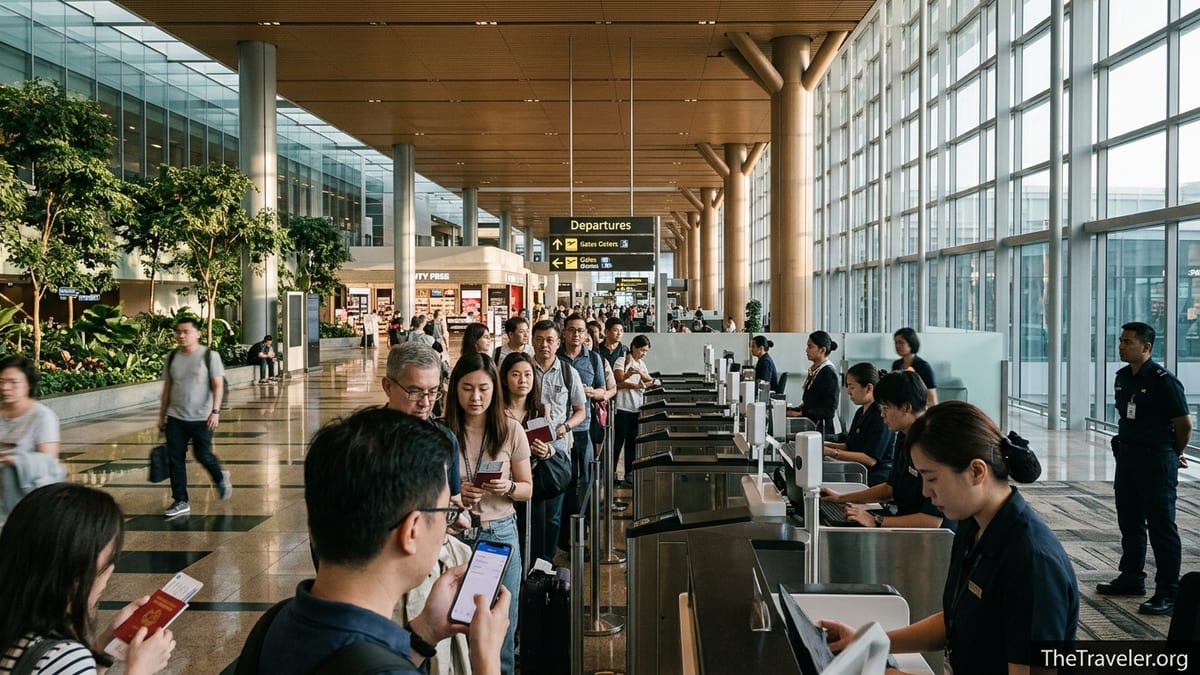
How Changi Is Organised: Security, Immigration, and Customs in Context
Changi’s layout is different from many large airports in Europe and North America. Instead of one big central security checkpoint before you reach the gates, most security screening happens right at individual boarding gates. You will typically clear immigration first, then wander freely in the airside transit area, and only pass through security when boarding begins at your specific gate. This often surprises travelers who are used to removing laptops and liquids immediately after passport control.
On arrival, the sequence reverses. You will disembark the aircraft, walk through the airside corridors, then clear immigration, collect your bags, and pass customs when exiting into the public arrivals hall. Customs officers monitor all exits and may direct some passengers to have their luggage screened or inspected, particularly if they are carrying many shopping bags, boxed electronics, or musical instruments. These spot checks are normal and do not necessarily mean you have done anything wrong.
Three main agencies are involved. The Immigration and Checkpoints Authority handles immigration control and the SG Arrival Card system. The Airport Police Division and aviation security contractors oversee access control and passenger screening. Singapore Customs focuses on dutiable, prohibited, or restricted goods, along with taxes such as Goods and Services Tax on expensive purchases. Understanding which agency is responsible helps you know who is likely to ask what, and why.
For most visitors, the practical takeaway is simple. At departure, plan time for check in, immigration, then security at the gate. On arrival, make sure your arrival card is submitted, your passport is valid and your visa (if needed) is sorted, and your baggage and shopping comply with customs and tax rules. The airport is designed to make each step predictable, as long as you know the order.
Before You Fly: Documents, SG Arrival Card, and Eligibility
Well before your plane touches down, make sure your paperwork is in order. All travelers, including tourists, are required to submit an electronic SG Arrival Card, except those just transiting through Singapore without clearing immigration. You can complete this free form online or via the official mobile app within the three days before arrival, including the day of arrival. For example, if you land on 15 July, you can submit anytime from 13 July onward. Many airlines now remind passengers about this during online check in.
The SG Arrival Card asks for basic details such as your passport information, flight number, and address in Singapore. It also includes a short health declaration. Once submitted, you will receive a confirmation email. You do not usually need to print this; immigration officers and automated gates can see your submission in their system, but it is wise to keep a screenshot or email handy on your phone in case of questions. Be cautious of third party websites that charge a fee to submit on your behalf, as the official form is free.
Visa requirements depend on your nationality and purpose of visit. Many passport holders from Europe, North America, Australia, New Zealand, Japan, and much of Southeast Asia enjoy visa free entry for short stays, often around 30 days, sometimes longer. Others must obtain a visa in advance from a Singapore mission or through an authorized agent. If you are traveling on a one way ticket or staying for an extended period, immigration officers may ask to see proof of onward travel or accommodation bookings. Having your hotel confirmation or return ticket ready on your phone makes this a simple conversation instead of a stressful search at the counter.
Your passport should normally be valid for at least six months from the date of entry, which is a common threshold in the region. While some travelers have been admitted with less, relying on that would be risky. Airlines may refuse boarding if they think you will be turned away on arrival. To avoid problems, renew your passport early if needed, especially if you also plan to visit neighboring countries on the same trip.
Departure from Changi: Check In, Immigration, and Gate Security
On departure, your first task is check in and bag drop, either at traditional counters or at the self service kiosks and automated bag drops found in all main terminals. Many airlines open check in three hours before departure, and some allow even earlier bag drop for long haul flights. For a typical regional flight on a low cost carrier, arriving about two hours before departure is usually sufficient. For a morning peak long haul flight to Europe or the United States, aim for about three hours to allow for queues and potential document checks.
Once you have a boarding pass and have checked any luggage, you proceed to departure immigration. At Terminals 1, 2, and 3, you can normally choose any of the departure immigration zones, regardless of which airline you are flying. Automated lanes are widespread. Eligible travelers insert their passport, look at the camera for facial recognition, and pass through without speaking to an officer. Others will use the manned counters, where officers may ask routine questions such as how long you were in Singapore or whether you are returning home.
After immigration you enter the airside transit area. This is the world that makes Changi famous: butterfly garden in Terminal 3, sunflower garden in Terminal 2, rooftop pool and bar, free movie theaters, and sleeping areas. Crucially, at this point you have not yet passed security for your specific flight, so you do not need to remove laptops or liquids to enter this area. You can still buy full size bottles of water or carry a takeaway coffee as you explore. Only when you head to your gate will the standard liquid and electronics rules apply.
Security screening at Changi happens at or very near each boarding gate. When boarding time approaches, a queue forms at the gate entrance where security staff check your boarding pass, screen your carry on luggage, and ask you to place laptops and large electronics in trays. The standard 100 milliliter liquid rule applies. If you forgot and picked up a 600 milliliter bottle of iced tea in the terminal, you will usually have to discard it here. After you pass security, there are few shops, so do not count on grabbing a drink between security and the aircraft door. Plan to arrive at the gate with enough time for this final step.
Arrival and Immigration: From Aircraft Door to Baggage Claim
On arrival in Singapore, the first formal checkpoint is immigration. After disembarking, follow the signs to “Arrival” and then “Immigration.” If you have pre submitted your SG Arrival Card, you can proceed to the automated lanes when eligible. Many visitors and residents can now use these e gates, which scan your passport and capture a facial image. Families with young children or travelers whose passports are not yet enrolled in the system will head to the manned counters instead.
The officer may ask short questions such as how long you plan to stay, where you will be staying, and whether you have visited Singapore before. These are routine and usually last less than a minute. If you are entering on a work pass, student pass, or long term visit pass, carry your approval letters or cards in your hand luggage. Having them in your checked suitcase risks a long delay at immigration if your bags are delayed.
If you realize at this point that you forgot to submit the SG Arrival Card, do not panic, but expect a delay. You will be directed to a small area near immigration counters where you can complete the form on a kiosk or your phone using airport Wi Fi. This can add 10 to 20 minutes, which matters if you are coordinating with friends arriving on another flight or trying to catch a pre booked airport shuttle at a specific time.
Once you clear immigration, follow signs to the baggage claim hall. Changi’s carousels are grouped by airline and flight, and large displays show the carousel number. Many flights deliver bags within 10 to 20 minutes of arrival, especially during off peak hours. Free baggage trolleys are plentiful and can be taken all the way out past customs into the public area. If your bag does not arrive, head to the airline’s baggage services counter next to the carousels before you exit through customs.
Customs on Arrival: Red and Green Channels in Practice
After baggage claim you will see clear signs for customs, usually with two main options: a Green Channel marked for “Nothing to Declare” and a Red Channel for “Goods to Declare.” Singapore takes customs very seriously. Choosing the green exit is a declaration that you are not carrying goods over your duty free allowances and are not bringing in prohibited or restricted items. If that turns out to be false, penalties can be high, including fines or even prosecution in serious cases.
Customs officers use both observation and random checks. Travelers pushing trolleys stacked with new boxed electronics or multiple cases of alcohol are more likely to be directed to X ray machines or manual checks. For example, if you are returning from a shopping trip in Tokyo with a new laptop in its box, an expensive camera, and several luxury brand paper bags, you might be asked to go through the Red Channel to assess if Goods and Services Tax is payable. In contrast, a backpacker with one well worn rucksack and no visible purchases is less likely to be stopped, though random checks can still occur.
Singapore’s import duties focus on a few categories such as alcohol, tobacco, motor vehicles, and certain petroleum products. In practice, most air passengers need to understand three key ideas: there is a limited duty free alcohol allowance, there is no duty free allowance for cigarettes or other tobacco products brought in by travelers, and Goods and Services Tax may apply if the total value of new goods you are bringing in exceeds a certain threshold, which is commonly around several hundred Singapore dollars depending on how long you were abroad. For instance, a visitor who has spent four days in Bali and returns with a new laptop worth the equivalent of 1,800 Singapore dollars may exceed the tax relief and be required to pay GST on the excess portion.
If you are unsure, it is safer to go through the Red Channel and ask. Officers will examine receipts, calculate any duty or GST owed, and allow you to pay on the spot using cash or card. Many travelers overestimate how complicated this will be. In reality, officers are generally efficient and matter of fact. A common example is a business traveler returning from Europe with three bottles of wine, one bottle of whisky, and a carton of cigarettes. They may be allowed to bring in a certain quantity of alcohol duty free but will have to pay duty and tax on the rest and on the tobacco. Leaving through the Green Channel with that amount of goods would be risky.
What You Can and Cannot Bring: Everyday Examples
Singapore’s list of prohibited and controlled items is strict compared with many destinations, and enforcement is serious. Hard drugs and controlled substances can attract the harshest penalties. Even prescription medicines should be carried in original packaging with a copy of the prescription, especially if they contain strong painkillers, sedatives, or stimulants. Travellers bringing in large quantities of traditional medicines or supplements may be asked about their contents, so keeping receipts or information leaflets is wise.
Tobacco is heavily regulated. There is no duty free allowance for cigarettes, cigars, or loose tobacco carried by passengers. Every stick of cigarette brought into Singapore is technically dutiable. In practice, some travelers choose to leave an open pack with only a few sticks inside, which is unlikely to draw attention, but bringing in multiple sealed cartons bought at a foreign duty free shop and walking through the Green Channel is a common mistake that can lead to substantial fines if detected. Electronic cigarettes and vaping devices are prohibited, regardless of whether they contain nicotine, and can be confiscated with penalties for import or possession.
Chewing gum has long been associated with Singapore’s strict rules. Ordinary chewing gum for personal use is generally restricted rather than outright banned, and commercial import is tightly controlled. A single pack in your pocket is extremely unlikely to be an issue, but turning up with a suitcase half full of chewing gum to share with friends would definitely attract attention and could be treated as an unauthorized import. Similarly, realistic toy guns, airsoft replicas, and certain knives may be treated as controlled items, requiring permits or being disallowed entirely.
On the more positive side, most typical tourist shopping is uncomplicated. A suitcase full of clothes from Bangkok markets, a few boxes of packaged snacks from Tokyo, or a couple of books and souvenirs from Europe rarely cause any problems, as long as their total value stays within reasonable limits. Sealed food items such as chocolates, instant noodles, or vacuum packed coffee are common in Changi’s baggage hall and usually pass through customs without issue when intended for personal consumption. Fresh fruit, meat, or dairy products are more sensitive, so check the latest guidance if you plan to bring in anything perishable.
Transit Passengers: Staying Airside or Visiting the City
Changi is a major transit hub, and many travelers never step outside the airport. If your bags are checked through and you have a boarding pass for your next flight, you can remain in the transit area between flights without clearing immigration. You can move freely between Terminals 1, 2, and 3 via airside connectors and Skytrain services, enjoying facilities like lounges, rest areas, and showers. In this case you do not submit an SG Arrival Card, and you will not see customs or the public arrivals hall.
Some transit passengers choose to enter Singapore during a longer layover. For example, a traveler flying from Sydney to London with a 10 hour daytime layover may decide to visit Jewel Changi Airport’s indoor waterfall or even take the metro into the city for a few hours. To do this, you must meet normal entry requirements, including any visa rules for your nationality, and submit the SG Arrival Card. You then clear immigration like any arriving passenger, explore the city, and later re enter the departure area through immigration and security with your onward boarding pass.
If you plan to leave the airport, allow generous time on your return. While Changi can be very fast, you still need to check in for your onward flight if you did not already receive both boarding passes at your origin, drop any checked luggage, clear departure immigration, and pass security at the gate. As a rough guide, try to be back at the airport at least three hours before your onward long haul flight and at least two hours before a regional departure, adjusting for your airline’s check in policies.
Transit passengers sometimes worry about whether they can re enter the transit area more than a fixed number of hours before departure after a quick trip into town. In practice, if you have a valid boarding pass, have completed check in, and meet immigration rules, re entering the airside area many hours before your flight is usually possible. However, check with your airline if you intend to check bags again, as bag drop counters have specific opening times.
Staying Out of Trouble: Practical Tips for a Smooth Experience
Although Singapore’s rules can appear intimidating on paper, most visitors experience Changi as calm and efficient. Simple habits go a long way. Submit your SG Arrival Card within the allowed three day window before landing, keep your passport and travel documents in your hand luggage, and photograph important pages and approval letters in case you misplace the originals. At departure, keep an eye on your gate number, which may change, and remember that you will pass through security there, not immediately after immigration.
When packing, think practically about what customs officers might see. If you bought a lot of high value goods, retain receipts and keep them together. If you are carrying anything unusual, such as professional camera gear, medical devices, or specialist tools, be ready to explain their purpose calmly. Declaring goods voluntarily in the Red Channel is not an admission of wrongdoing. It is simply a way to ensure you comply with tax and duty rules and avoid penalties later.
Be cautious with liquids when boarding from Changi. Because many travelers wander the terminal with full bottles of water or large takeaway drinks, it is easy to forget that standard aviation liquid rules kick in at the gate. An easy workaround is to carry an empty reusable bottle through security at the gate and refill it at water fountains nearby, or buy sealed drinks in smaller, travel friendly sizes if available. For early morning or late night flights, some shops and cafes close earlier than the posted gate closing time, so stock up before you join the security queue.
Finally, remember that officers at immigration, security, and customs are used to dealing with international visitors of all experience levels. If something is unclear, it is better to ask politely than to guess. Travelers who cooperate and answer questions honestly usually find that even secondary checks are resolved quickly. The travelers who run into real problems are usually those who conceal items, ignore instructions, or treat rules as optional. With a bit of preparation and a respectful attitude, your passage through Changi’s formalities should be uneventful, leaving you free to enjoy everything else the airport and city offer.
FAQ
Q1. Do I really need to submit the SG Arrival Card before landing at Changi?
Yes. All travelers entering Singapore, including tourists, must submit the SG Arrival Card online or via the official app within the three days before arrival, except those who remain in transit and do not clear immigration.
Q2. How early should I arrive at Changi Airport before my flight?
For most regional flights, arriving about two hours before departure is usually enough. For long haul flights or during peak holiday seasons, aim for around three hours to allow time for check in, immigration, and gate security.
Q3. Where does security screening happen at Changi Airport?
At Changi, security screening usually takes place at the individual boarding gates, after you have cleared departure immigration and spent time in the airside transit area. Be prepared to follow the usual liquids and electronics rules at that point.
Q4. Can I bring duty free alcohol and cigarettes into Singapore?
Singapore allows a limited duty free alcohol concession for eligible travelers, usually only if you were outside Singapore for a minimum period and not arriving from certain neighboring countries. There is no duty free allowance for cigarettes or other tobacco products brought in by passengers, and every stick is dutiable.
Q5. Will customs check my bags when I arrive at Changi?
All passengers pass through customs after baggage claim. Many simply walk through the Green Channel, but officers may direct some travelers to X ray or manual checks, especially if they are carrying many shopping bags, boxed electronics, or large amounts of alcohol or tobacco.
Q6. Can I leave the airport during a long layover and then come back?
Yes, if you meet Singapore’s entry requirements and have any required visa, you can clear immigration, visit the city or Jewel Changi, and then re enter the departure area later, allowing enough time for check in, immigration, and security before your next flight.
Q7. What items are completely prohibited from being brought into Singapore?
Singapore strictly prohibits drugs and certain controlled substances, and also bans or tightly controls items such as electronic cigarettes, some weapons or realistic replicas, and specific types of fireworks. When in doubt, leave questionable items at home or check the latest official guidance.
Q8. Do I need to keep my boarding pass and baggage tag after landing?
Yes. Keep your boarding pass and baggage tag until you have collected your luggage and fully exited customs. They are useful if you need to report missing bags or clarify which carousel your luggage should be on.
Q9. Can I use the automated immigration gates as a first time visitor?
Many first time visitors can use automated gates if their passports are eligible and they have submitted the SG Arrival Card. If the system cannot verify your details, or if you are traveling with young children, you may be directed to a manned counter instead.
Q10. What happens if I accidentally bring in goods above the duty free or tax free limits?
If you declare them at the Red Channel, officers will usually calculate any duty or tax and allow you to pay on the spot. If you attempt to walk through the Green Channel without declaring and are later found to be over the limits, you may face fines or more serious penalties.