


More news on this day
Holidaymakers heading to Spain in late summer and autumn are being urged to prepare for disruption as a wave of industrial action affecting airports and rail services continues with no confirmed end date, raising the risk of delays, baggage problems and altered travel plans.
Get the latest news straight to your inbox!
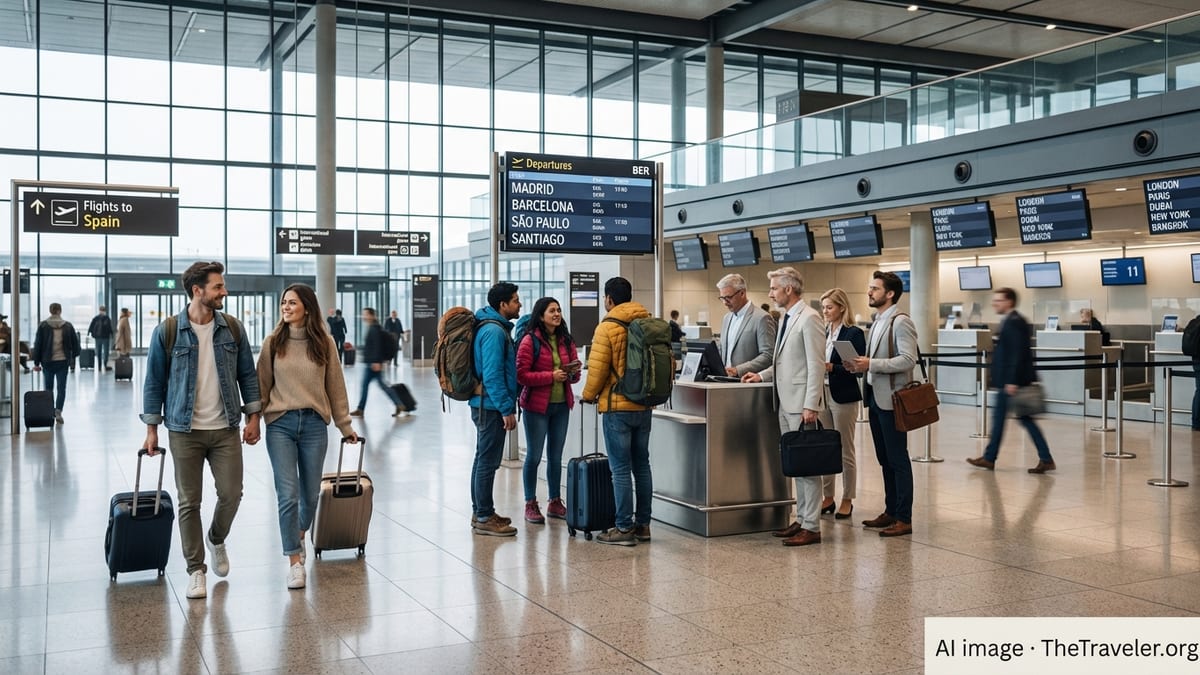
Indefinite strikes add fresh uncertainty for Spain trips
Recent industrial action affecting key parts of Spain’s transport network is creating renewed uncertainty for visitors at the height of the holiday season. Published coverage highlights indefinite walkouts by ground-handling staff at Barcelona El Prat Airport, a major Mediterranean hub for European and long-haul flights, with unions warning that action will continue until agreements are reached. Reports from recent travelers describe disrupted baggage handling and concerns that the dispute may extend into September without a clear timeline for resolution.
In parallel, information circulated by the European Consumer Centre in Spain in connection with earlier airline and airport strikes underlines that stoppages by airline and handling staff can significantly affect check-in, loading of luggage and turnaround times for flights across multiple carriers. That guidance, issued around other Spanish airport disputes, stressed that strike-related disruption can continue for days even when minimum service levels are imposed, particularly at large, high-traffic airports.
The combination of open-ended local disputes and the usual summer congestion is prompting renewed warnings for those with upcoming holidays. Travel industry monitoring sites and consumer forums point to Spain’s status as one of Europe’s busiest tourism markets, meaning even targeted walkouts at one major airport can have knock-on effects on connecting flights and regional services.
For now, there is no single national strike shutting down Spain’s transport system, but overlapping actions with no fixed end date are enough to complicate plans, especially for travelers with tight connections or significant checked luggage.
Barcelona El Prat industrial action disrupts airport operations
Attention is currently focused on Barcelona El Prat, where media and traveler reports indicate an indefinite strike by Groundforce handling staff began in early August and is affecting a long list of international airlines. Accounts shared by recent passengers describe long waits at baggage carousels, missing or misrouted luggage and warnings from airlines about potential delays linked to reduced staffing on the ground.
Coverage collating airline advisories suggests that the dispute primarily affects check-in, loading and unloading of baggage, and certain ramp operations rather than air traffic control or security screening. However, because Barcelona functions as both a gateway to Catalonia and a transfer point for flights across Europe and beyond, even limited disruption can create queues and schedule changes, particularly at peak times.
Travel discussion forums and consumer news sites emphasize that there is currently no fixed end date for the Barcelona action, with unions describing it as indefinite pending progress in negotiations. As a result, passengers scheduled to fly through the airport in the coming weeks are advised to monitor their airline’s alerts closely, allow additional time at the airport and consider packing key items in carry-on luggage where airline policies permit.
Publicly available information from Spain’s national airport operator shows that El Prat continues to operate, with mandatory minimum services in place. Nevertheless, the combination of industrial action and high summer volumes means that even small operational slowdowns can translate into longer waits at check-in desks and baggage belts.
Rail strikes and wider industrial tension add to travel risks
Spain’s aviation sector is not the only transport area experiencing disruption. Earlier in 2026, a general strike by train drivers led the European Consumer Centre in Spain to issue a reminder about rail passengers’ rights, including reimbursement, alternative transport and, in some circumstances, compensation where services are heavily delayed or cancelled. That guidance remains relevant as unions in the rail sector continue to signal potential further action if negotiations over working conditions and scheduling stall.
While not all announced or threatened strikes translate into widespread cancellations, the pattern of recurring disputes across airlines, airports and rail operators highlights a year of heightened industrial tension. For visitors, this means that the risk of encountering some form of disruption, whether on a domestic train link to a resort area or on an airport transfer, is higher than in more settled years.
Consumer protection bodies in Spain consistently advise passengers to keep tickets and receipts if they are forced to buy food, accommodation or alternative transport because of transport strikes. Under European and Spanish regulations, travelers may be entitled to refunds or support when services are cancelled or significantly delayed for reasons within a carrier’s control, including many forms of industrial action by its own staff.
For holidaymakers, the practical impact is that flexibility and preparation have become more important, especially when planning tight same-day rail and air connections or long-distance journeys involving multiple operators.
Official travel advice highlights need for flexibility
Updated foreign travel advice for Spain continues to underline that no trip can be guaranteed risk-free and recommends that visitors allow extra time when using busy international airports and major rail hubs. The UK’s current travel advisory for Spain, refreshed on 25 August 2026, notes the importance of checking local conditions and any industrial action affecting transport before departure, and advises travelers transiting through neighboring countries such as France to monitor their separate travel advisories as well.
Spanish government briefings on summer travel operations indicate that authorities expect more than 100 million road journeys over the main holiday period, alongside high demand for rail and air services. This backdrop of intense seasonal mobility means that even localized strikes can have an outsized impact if they coincide with busy changeover weekends or major events.
Public information from Spain’s traffic and transport agencies also points to a broader emphasis on advance planning, encouraging drivers and public transport users to consult real-time information channels and to consider alternative routes or schedules when disruption occurs. For international visitors unfamiliar with Spain’s geography or language, relying on airline apps, rail operator notifications and alerts from tour operators can be key to navigating last-minute changes.
In practical terms, travelers heading to or within Spain over the coming weeks are being encouraged by public travel advice and consumer organizations to treat itineraries as provisional, especially where they depend on a single critical flight, train or connection.
How travelers can protect bookings and minimise disruption
Consumer bodies and travel experts recommend several steps for those worried about the impact of open-ended strikes on their Spanish holidays. First, travelers are urged to verify that their contact details are correctly registered with airlines, rail operators and booking platforms so that any schedule changes or cancellations triggered by industrial action can be communicated promptly.
Second, guidance issued by the European Consumer Centre in Spain in previous strike situations stresses the importance of understanding contractual rights before travel. For flights departing from or arriving in the EU and operated by an EU carrier, European air passenger rules can provide compensation or assistance in many strike-related scenarios, especially when the industrial action involves the airline or its contracted staff rather than external factors.
Third, travel insurance policies should be reviewed carefully, as coverage for strikes can vary. Some policies include disruption caused by announced industrial action, while others exclude foreseeable events or require that the policy be purchased before a strike is made public. Travelers are advised to check wording around “industrial action” or “travel delay” and to keep documentation in case a claim is needed.
Finally, experienced travelers to Spain increasingly recommend allowing greater margins between connections, travelling with essential items in hand luggage where permitted, and having a contingency plan for the first night in case of significant delays. With several key disputes currently described as indefinite and no confirmed end dates, building flexibility into plans can reduce stress and financial risk if disruptions occur at short notice.
UK Foreign Travel Advice: Spain
European Consumer Centre Spain: Rail passengers’ rights
Coverage of Groundforce indefinite strike at Barcelona El Prat