


More news on this day
Thunderstorms moving across the Houston area prompted a weather-related ground stop for flights bound for George Bush Intercontinental Airport on Wednesday afternoon, disrupting arrivals and triggering delays for travelers across the country.
Get the latest news straight to your inbox!
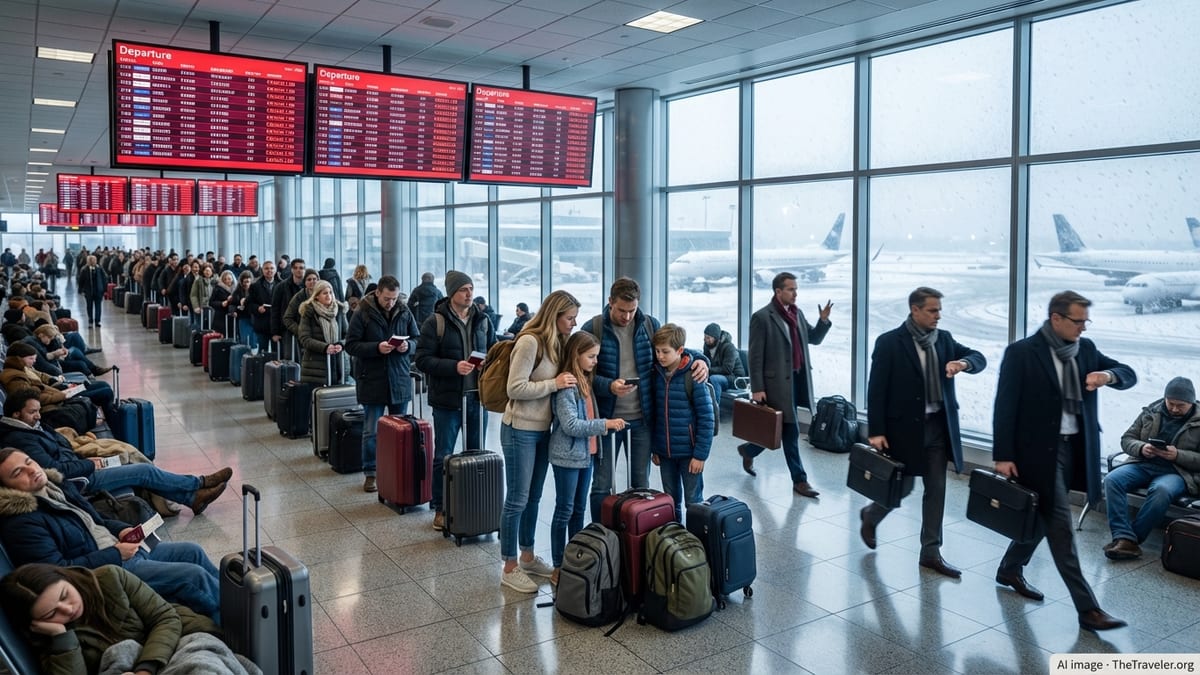
Weather system stalls flights bound for Houston
According to publicly available information from the Federal Aviation Administration, a traffic management program temporarily halted flights destined for Bush Intercontinental Airport on the afternoon of July 8. Reports indicate that aircraft scheduled to arrive in Houston were held at their departure airports while storms passed directly over the northern side of the city.
Local broadcast coverage in Houston described a line of strong thunderstorms with lightning, gusty winds and heavy rain moving through the region at the same time the ground stop was in effect. Radar imagery shared by local outlets showed cells building near and over the airport complex, reducing visibility and creating unsafe conditions for ramp operations and some arrivals.
The FAA’s airport status information for Houston noted weather concerns and the potential for extended delays, while aviation tracking services showed arriving flights circling, diverting or remaining at their origin during the height of the storms. The combination of low ceilings, active lightning and saturated taxiways can limit how many aircraft can safely land, depart and move on the ground.
Once the most intense storms began to clear the immediate airspace, the formal ground stop was lifted and some arrivals were allowed to resume. However, operational data indicated that residual delays and congestion persisted into the evening as airlines worked through a backlog of flights.
Travelers face rolling delays and diversions
The ripple effects of the weather-related ground stop were felt by passengers both in Houston and at airports across the United States. Flight boards at Bush Intercontinental showed clusters of delayed arrivals and departures as the afternoon progressed, while some connections were missed when inbound aircraft remained on the ground hundreds of miles away.
Public flight-tracking dashboards documented aircraft bound for Houston holding in the air or diverting to alternate airports when arrival slots temporarily disappeared. Other flights never left the gate at their origin while the ground stop remained in place, leaving travelers waiting for updated departure times as conditions evolved.
Airlines serving Bush Intercontinental adjusted schedules throughout the evening, in some cases combining flights or rebooking passengers on later departures to reduce congestion. Because Bush functions as a major domestic and international hub, disruption at the airport can quickly affect itineraries across multiple regions, particularly for travelers relying on tight connection windows.
In addition to airborne delays, ground operations in Houston also moved more slowly as ramp workers navigated wet pavement, intermittent lightning concerns and the need to reposition aircraft that arrived out of sequence. Baggage delivery and aircraft turn times typically lengthen under such conditions, adding to wait times even after flights have landed.
How FAA ground stops work during severe weather
Ground stops are among the most restrictive tools used in United States air traffic management to maintain safety when conditions at an airport or in surrounding airspace deteriorate. Under such a program, flights that have not yet departed for the affected airport are instructed to remain at their origin until a specified time, with the possibility of extension as weather evolves.
Federal aviation planning advisories describe weather, particularly thunderstorms, as a frequent trigger for these initiatives at busy hubs. When storms move directly over an airport, arrival capacity can fall sharply, and ground movement may be curtailed while lightning is in the vicinity of exposed work areas such as ramps and taxiways.
In recent weeks, FAA operational summaries and industry reporting have highlighted several similar weather-driven slowdowns and ground stops at major airports across the country as summer storm activity increases. These events often start with a short, time-limited halt like the one seen in Houston, followed by a gradual transition into standard delays as conditions improve but congestion remains.
For passengers, a ground stop typically appears not as a single clear notice but as a cascade of changing departure times, gate holds and revised arrival estimates. Because flights already in the air may still be permitted to land when safe, on-the-ground travelers can see some aircraft arriving at an airport that is technically under a traffic management restriction.
Recent pattern of storm-related disruptions at Bush
Weather-related ground delays have affected Bush Intercontinental several times in recent weeks as summer thunderstorm patterns set up over southeast Texas. Local news coverage has pointed to multiple days when storms have produced temporary slowdowns or ground stops at both Bush Intercontinental and nearby William P. Hobby Airport.
FAA advisories indicate that similar traffic management measures have been used at other large hubs during convective weather, illustrating how quickly storm cells can constrain the national airspace system. For Houston, repeated afternoon storms have aligned with peak departure and arrival banks, amplifying the impact on passengers and airline operations.
The airport itself remains in the midst of ongoing infrastructure programs intended to modernize facilities and improve resilience, but such projects cannot fully insulate operations from the constraints imposed by lightning, low clouds and intense rainfall. Even as new gates and upgraded systems come online, severe weather continues to be one of the most significant external factors shaping on-time performance.
With the heart of the summer travel season underway, the pattern suggests that travelers passing through Houston should remain alert to short-notice schedule changes on stormy days. Airlines and aviation agencies continue to emphasize that safety considerations take priority, which can mean holding flights on the ground until weather moves a safe distance from runways and ramp areas.
What passengers can expect in the coming days
Forecasts for the Houston region indicate the potential for additional rounds of scattered thunderstorms in the short term, a typical pattern for early July. While not every storm cell leads to a ground stop, similar setups can prompt slower operations, arrival metering and gate holds even without a formal halt to inbound flights.
Based on recent events, passengers traveling to or from Bush Intercontinental during the afternoon and early evening hours may experience continued weather-related delays when storms develop near the airport. Publicly available guidance from airlines and aviation planners encourages travelers to monitor flight status frequently, make use of mobile notifications and allow extra connection time where possible.
Industry data show that once a weather system clears and a ground stop is lifted, it can still take several hours for schedules to normalize fully. Crews and aircraft may be out of position, and subsequent flights can inherit earlier delays, especially on busy travel days with limited spare capacity.
For now, operations at Bush Intercontinental have resumed, but the latest storm-related ground stop underscores how quickly conditions can change at a major hub. Travelers heading through Houston are likely to see a continued emphasis on caution whenever thunderstorms threaten, with safety margins guiding decisions about when flights can depart for or arrive at the airport.