


More news on this day
Sydney Airport has entered 2026 with record-breaking international traffic and steady domestic growth, positioning Australia’s busiest gateway at the centre of a broader rebound in national aviation activity during the first half of the year.
Get the latest news straight to your inbox!
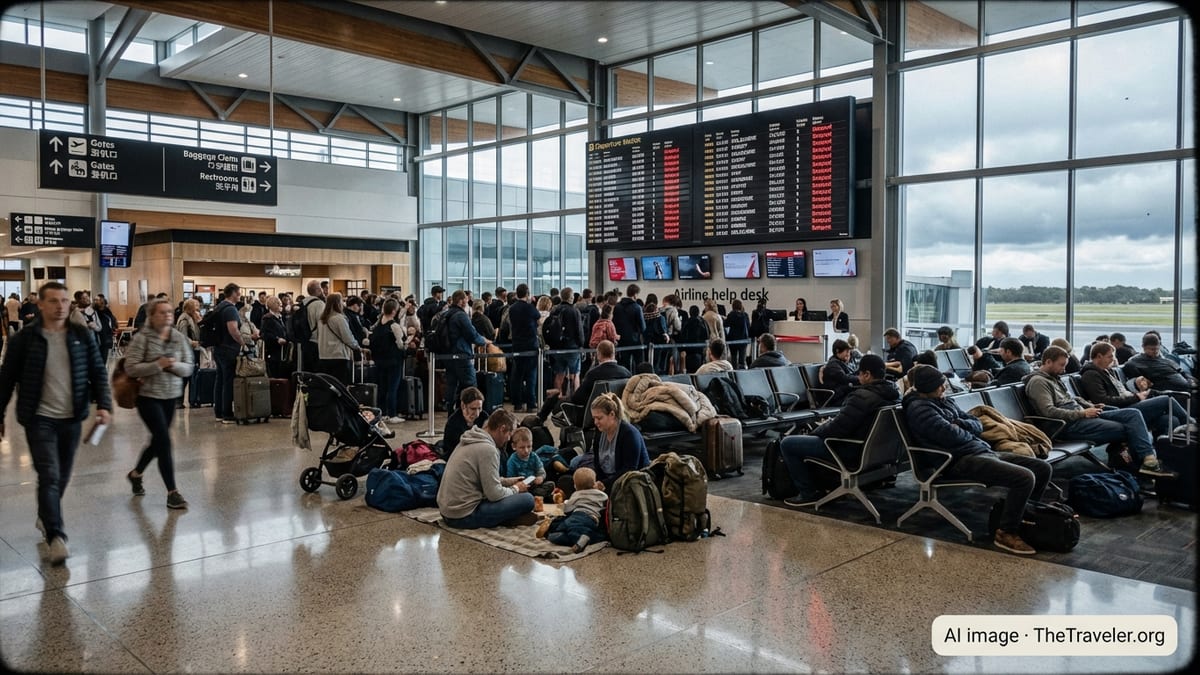
Record-breaking start to 2026 at Australia’s busiest hub
Publicly available data for the March quarter of 2026 shows Sydney Airport delivered its strongest first quarter for international travel on record, handling 4.57 million international passengers. This represented growth of 5.8 percent compared with the same period in 2025, underlining how quickly long-haul and regional demand has recovered.
Total passenger volumes through the airport reached 10.78 million in the first three months of 2026, a 3.6 percent year-on-year increase. The uplift was driven primarily by overseas travellers, while domestic and regional traffic also edged higher, adding momentum to an already strong recovery from the pandemic era.
International demand has been resilient despite ongoing geopolitical tensions affecting some Middle East routings. Reports indicate that airlines serving Sydney have largely adopted tactical schedule and routing adjustments while maintaining overall capacity, helping to keep passenger flows robust in the opening months of 2026.
The record first quarter builds on a series of strong results through 2024 and 2025, when Sydney consolidated its position as Australia’s busiest airport by total passenger traffic. Industry statistics for the 2024–25 financial year already placed Sydney at the top of the national rankings, and the latest quarterly figures suggest that lead is widening.
Domestic recovery spreads across Australia’s major routes
While international growth has captured attention, domestic and regional travel through Sydney has also strengthened. In Q1 2026, 6.20 million passengers used Terminals 2 and 3, an increase of just over 2 percent compared with the previous year’s quarter, according to airport traffic reports.
The busiest routes remain Sydney’s high-frequency connections to Melbourne, Brisbane and the Gold Coast, with network data from government agencies indicating healthy competition and improving seat supply across these trunk corridors. Other key domestic links, including services to Adelaide, Perth and Hobart, continue to support business and leisure flows between Australia’s state capitals.
Broader Australian aviation statistics for the year to March 2026 highlight a similar pattern of recovery. National passenger numbers across major airports rose strongly over the 12-month period, reflecting rising consumer confidence, the return of international visitors and the resumption of more regular corporate travel activity.
Air traffic management updates from Airservices Australia for March 2026 point to a network that is busy but more resilient. Instances of ground delay affecting Sydney were largely confined to short, weather-related disruptions, a sign that airlines and airports are working to streamline schedules and reduce knock-on impacts for travellers.
Asia-Pacific routes power international surge
The surge in international passengers at Sydney in Q1 2026 has been underpinned by strong demand across the Asia-Pacific region. Airport traffic data shows double-digit growth on services to and from New Zealand and mainland China, as well as particularly strong increases to hubs such as Guangzhou and Hong Kong.
Connections into broader North Asian markets, including Seoul and Shanghai, also recorded solid gains. These routes are increasingly important not only as point-to-point links into Australia but also as connecting gateways into Europe and North America, especially while some Middle East networks adjust to geopolitical developments.
Beyond North Asia, growth in Southeast Asian markets such as Kuala Lumpur is contributing additional capacity and choice for travellers. Low-cost and full-service carriers alike are rebuilding networks, adding frequencies and upgauging aircraft on high-demand city pairs that touch Sydney.
The breadth of this regional growth is significant for Australia’s wider tourism and trade sectors. With Sydney acting as the primary international gateway for the country, higher passenger volumes on Asian routes translate into more inbound visitors, expanded export opportunities via bellyhold freight and a broader platform for airlines to base aircraft and crews in the Australian market.
Operational upgrades support higher volumes
The record levels of passenger traffic have coincided with a program of infrastructure and technology upgrades across Sydney Airport. Reports indicate that new CT-enabled security lanes are now operational in Terminal 2, allowing passengers to leave laptops and liquids inside their hand luggage and helping to speed up screening during peak periods.
Additional self-service BagTag kiosks and automatic bag drops have also been rolled out in Terminal 2, while Terminal 3 has seen the installation of two dozen new automatic bag drops. These investments are designed to shorten queues and reduce the time from kerb to gate, a key focus as passenger numbers climb.
Operational performance metrics for Q1 2026 show that almost all domestic passengers, and the vast majority of international travellers, cleared security within 10 minutes. Immigration processing times also improved compared with the previous year, even as volumes reached new highs.
Outside the terminals, kerbside traffic remains an area of ongoing work. Drop-off performance at domestic terminals continues to be relatively strong, but congestion at the international precinct is still above pre-pandemic benchmarks, prompting further reviews of access and traffic management options.
Implications for Australia’s aviation outlook in 2026
The early 2026 surge at Sydney International Airport carries broader implications for aviation across Australia. As the country’s primary international gateway and busiest domestic hub, Sydney’s performance provides a bellwether for sector-wide recovery and capacity planning.
Regulatory and competition reports published in mid-2026 describe a domestic market that is rebuilding, with major carriers restoring capacity and newer entrants adding selective frequencies on competitive routes. Continued growth at Sydney is likely to shape decisions on aircraft deployment, route launches and airport investment across the national network.
Slot management data for the six months from late March 2026 points to rising airline appetite to expand at Sydney, with requested take-off and landing slots for international services significantly higher than the historical baseline. That level of demand suggests airlines expect the current momentum in international travel to continue into the second half of the year.
For travellers, the combination of record volumes and ongoing upgrades is creating both opportunities and challenges. Increased competition on key routes is improving choice and, in some cases, pricing, while higher passenger numbers test terminal capacity and surface access. How effectively Sydney Airport and its airline partners manage this balancing act through Q2 and beyond will be closely watched across the Australian aviation landscape.