


More news on this day
Thailand has urged its citizens across the Middle East to heighten vigilance, review emergency plans and be ready to leave high‑risk areas as the regional security climate deteriorates and governments worldwide reassess their travel guidance.
Get the latest news straight to your inbox!
Escalating regional crisis triggers fresh Thai advisory
According to published coverage of the ongoing Iran war and wider Middle East crisis, a series of airstrikes, missile attacks and military deployments has pushed regional tensions to their highest level in years. Governments around the world have responded with updated alerts for their nationals, highlighting the risk of sudden escalation, airspace disruptions and localized unrest.
Reports focused on Thailand indicate that Bangkok has been closely tracking developments as a significant number of Thai nationals live and work in Gulf states and in conflict‑adjacent countries. Publicly available information shows that Thai authorities have activated crisis‑response mechanisms, building on experience gained from earlier evacuations in the region.
Regional travel advisories produced by international risk consultancies in March and April 2026 describe an environment in which embassies are preparing evacuation options, while commercial airlines continuously adjust routes and schedules. These assessments underline the possibility that threats can shift quickly from one urban center or transport hub to another.
Coverage of the 2026 Iran war and related evacuations notes that foreign nationals have repeatedly faced short‑notice airport closures and airspace suspensions, even in countries not directly involved in the fighting. Thailand’s new warning to citizens in the Middle East is being interpreted in that context, as a move to ensure its nationals are not caught off guard by similar disruptions.
Focus on Thai workers and families in Gulf states
Thailand has long relied on overseas jobs in the Middle East as a key source of remittances, particularly in sectors such as construction, hospitality and domestic work in the Gulf. Public data and earlier labor‑ministry statements suggest that tens of thousands of Thai workers are currently based in countries including Saudi Arabia, the United Arab Emirates and Qatar.
Recent media reporting on the reactions to the Iran conflict highlights concerns about the safety of these workers should tensions spill over or lead to wider regional confrontation. Thai coverage has drawn attention to cases in which nationals in Iran and neighboring states have already requested assistance to return home, prompting Bangkok to refine contingency planning.
Published accounts of government deliberations describe an emphasis on keeping worker recruitment agencies, employers and Thai communities abroad informed about potential risks. The latest warning urges citizens to register with consular services where available, follow local developments through trusted news outlets and maintain updated contact details so they can be reached quickly if circumstances deteriorate.
Analysts following Thai policy note that the government has been balancing economic considerations with security imperatives. While large‑scale, immediate evacuations from most Gulf states are not being reported, the new guidance signals that Thai nationals should weigh the benefits of remaining in place against the possibility of sudden constraints on movement, including delayed or cancelled flights.
Travel routes, aviation risks and Thailand as a transit hub
The Middle East crisis has also affected global aviation networks, with repercussions for Thailand’s role as both a tourist destination and a connecting hub between Europe, the Middle East and Asia. Industry digests on the travel and hospitality impact of the conflict describe a pattern of temporary airspace closures, rerouted flights and higher operating costs tied to the fuel market shock.
Thailand, which imports a majority of its crude oil from the Middle East, has already faced knock‑on effects from the 2026 fuel crisis linked to the Iran war. Publicly available information in economic reports shows Thai authorities adjusting domestic fuel policies to cushion consumers and businesses from price spikes, a step that indirectly supports the travel and tourism sector.
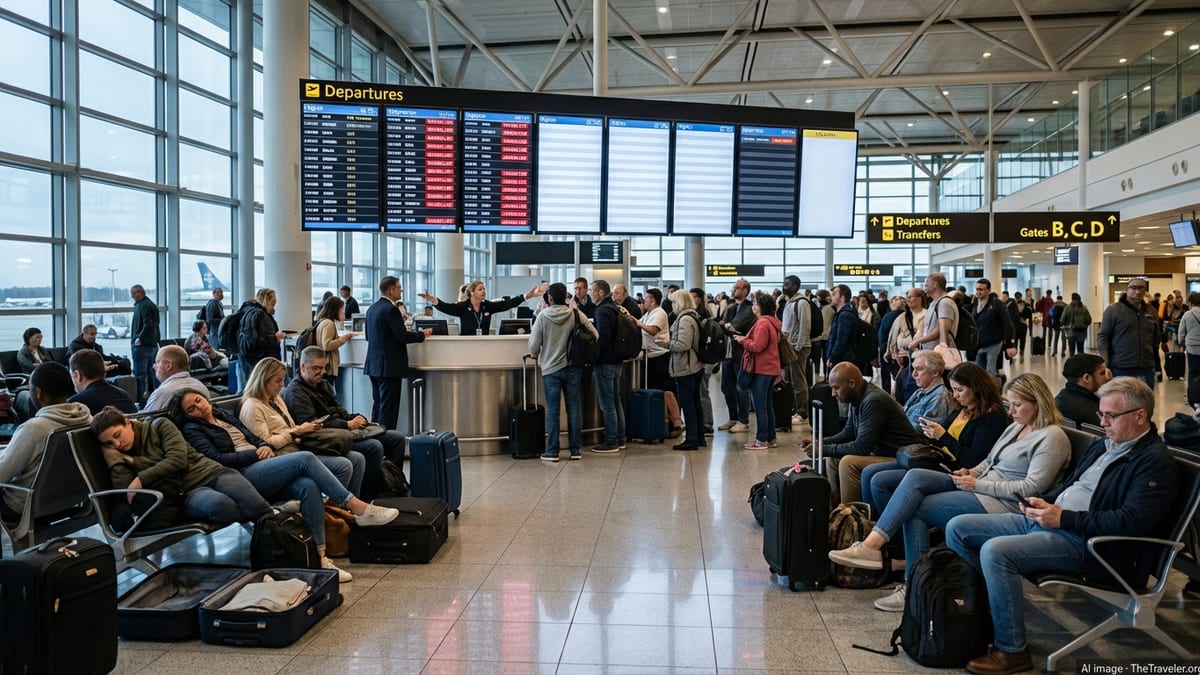
For Thai nationals currently in the Middle East, the latest warning underscores that transit options can change at short notice. Past episodes during the conflict have seen passengers stranded after airlines halted services or shifted routes away from certain hubs. Travelers are being encouraged, through official advisories and media coverage, to monitor their itineraries closely, keep alternative routing in mind and allow additional time for last‑minute schedule changes.
Thailand’s own tourist appeal remains strong, but inbound visitors from Europe and other regions have reported higher fares and limited availability on routes that would normally include Middle Eastern connections. Travel commentary suggests that many are now favoring direct flights or routings that bypass high‑risk airspace, a trend that could reshape traffic patterns through Bangkok and other Southeast Asian gateways in the coming months.
Consular support and contingency planning for Thai nationals
Regional security assessments compiled in early 2026 outline how multiple governments have created emergency task forces and so‑called war rooms to coordinate monitoring, evacuation planning and citizen support in the Middle East. Information carried by international media indicates that Thailand has adopted a similar posture, with foreign‑affairs, defense and transport officials pooling data to map out potential evacuation corridors.
Publicly accessible advisories stress the importance of Thai citizens knowing where their nearest embassy or consulate is located, and understanding what support can realistically be provided in a fast‑moving crisis. Consular services in some countries have reportedly conducted drills and updated contact protocols to streamline communication if a rapid drawdown of nationals becomes necessary.
Thai nationals in higher‑risk locations are being urged, through official channels and local community networks, to prepare basic contingency plans. These generally include keeping travel documents valid and accessible, identifying safe meeting points for families, and setting aside funds that can be used for urgent travel. While such steps are standard for many expatriates in volatile regions, the renewed warning underlines their relevance in the current environment.
Analysts specializing in citizen evacuations during the Iran war have pointed out that governments able to act quickly were those whose nationals were already registered and contactable. Thailand’s latest messaging appears designed to avoid the logistical challenges that occur when large numbers of people request assistance simultaneously without prior engagement with consular systems.
Implications for Thai and international travelers
While the warning is directed at Thai citizens in the Middle East, it carries broader implications for regional and long‑haul travel. Tour operators and airlines serving Thailand are factoring Middle Eastern volatility into their risk calculations, with route planners assessing not only direct threats but also secondary effects such as fuel costs and insurance requirements.
Coverage from travel industry analysts suggests that itineraries involving multiple transits through sensitive airspace may face closer scrutiny, and that additional security measures at some airports could lengthen connection times. Travelers of all nationalities who use Middle Eastern hubs on their way to or from Thailand are therefore advised in public guidance to stay informed about evolving restrictions and flexible booking options.
At the same time, tourism boards in Thailand and neighboring destinations are highlighting the relative stability of Southeast Asia compared with conflict‑affected regions. Marketing campaigns and official statements emphasize the availability of direct links from Europe and East Asia, presenting Thailand as a reliable long‑haul choice despite wider geopolitical uncertainty.
As the Middle East crisis continues to unfold, the Thai government’s warning to its citizens fits into a larger pattern of global caution. For travelers, the message is clear: heightened awareness, flexible planning and close attention to official advisories are increasingly essential components of any journey that intersects with this volatile region.