


More news on this day
Millions of Americans heading out for Thanksgiving 2026 are contending with a fragile aviation IT landscape and an unsettled weather pattern, as the holiday travel period begins just days after a rare nationwide Federal Aviation Administration ground stop and a series of airline computer outages, while multiple storms line up to bring rain and snow to key travel corridors on both coasts.
Get the latest news straight to your inbox!
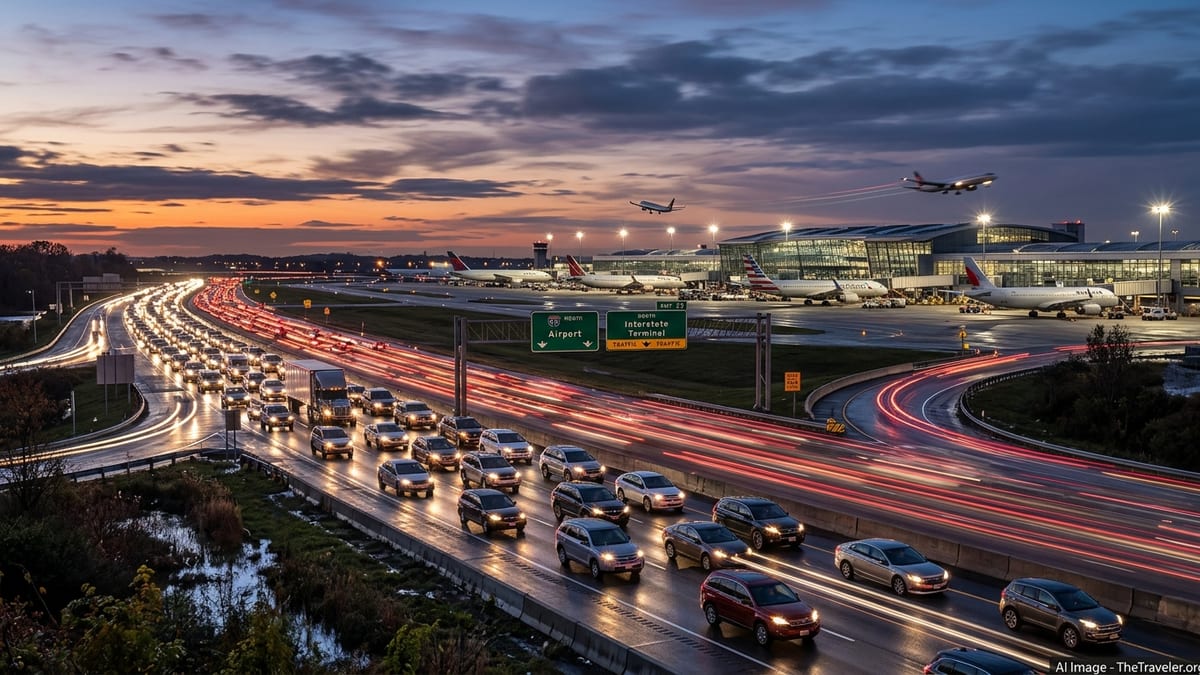
Holiday travel volume stays near record levels despite slight dip
Although this year’s holiday season follows a week of high-profile system failures, overall Thanksgiving travel demand remains close to last year’s record levels. AAA projects that 81.5 million Americans will travel at least 50 miles from home between Tuesday, November 24 and Monday, November 30, 2026. That represents a decline of about 0.1 percent, or roughly 121,000 travelers, compared with 2025, ending a three-year streak of record Thanksgiving volumes but still keeping activity at historically high levels.
Most of those travelers are expected to drive. AAA’s forecast calls for about 72.9 million people to travel by car during the seven-day period, a slight drop from the 73.1 million drivers estimated last year. Air travel is expected to remain broadly stable, with only a marginal shift in passenger numbers compared with 2025. The projections suggest that even a small number of operational disruptions, whether from weather or technology, could again have outsized effects on busy hubs, simply because there is limited slack in the system.
Regional forecasts echo the national picture. In Wisconsin, for example, AAA expects about 1.6 million residents to travel for Thanksgiving, while Arizona is projected to see a modest year‑on‑year increase in holiday trips even as the national total edges down. These state‑level estimates underscore that while cost pressures, including fuel and airfares, may be discouraging some travelers, many others are still choosing to fly or drive, keeping demand strong across major airports and interstate corridors.
FAA outage and airline glitches highlight system vulnerabilities
This year’s Thanksgiving rush comes less than two weeks after one of the most disruptive aviation technology failures in decades. On Friday, November 13, 2026, a malfunction in the FAA’s air traffic control network led to a nationwide ground stop, temporarily halting departures across the United States. According to subsequent analyses, including congressional briefing material, the event was tied to ongoing modernization work on communications and data infrastructure, which has upgraded a majority of sites but has not yet been completed nationwide.
While localized ground stops due to weather or equipment failures occur relatively frequently, nationwide restrictions remain rare. The November 13 ground stop was widely described by officials as the most significant such event since after September 11, 2001. Flights gradually resumed over the weekend of November 14–16, but the initial shutdown and the knock‑on effects stranded passengers, scattered crews and aircraft around the network and forced airlines to waive rebooking fees or offer travel credits in many cases. Some airports, including major hubs, were still working through backlogs at the start of the following workweek.
Compounding concerns about system resilience, several large U.S. carriers experienced their own technology issues in the days that followed. United Airlines reported a widespread outage that delayed departing flights for around 90 minutes, describing the incident as a systems problem but saying there was no evidence of a cybersecurity breach. Delta Air Lines then saw a disruption on Sunday, November 22, when an automated system that calculates aircraft weight and balance malfunctioned, contributing to more than 1,000 delayed flights before operations stabilized on Monday. These events, along with unrelated outages affecting banks and digital communication platforms this month, have sharpened public and political scrutiny of how much U.S. transportation now depends on complex, tightly coupled IT systems.
Storms on both coasts threaten to slow key travel days
At the same time, travelers face an active weather pattern across much of the country during the core Thanksgiving period. Forecasts from major meteorological services on Monday, November 23 indicate that multiple storms will track across the United States this week, bringing heavy rain, strong winds and areas of snow to several of the busiest travel regions. While confidence in the exact timing and intensity of each system varies by region, forecasters broadly expect impacts on both road and air travel.
On the East Coast, a storm system is projected to organize and move northward ahead of Thanksgiving, drawing in tropical moisture and producing periods of heavy rain and gusty winds along parts of the Interstate 95 corridor. AccuWeather’s outlook suggests that downpours and low cloud ceilings could lead to delays at major hubs including Atlanta and Charlotte on Wednesday, one of the busiest pre‑holiday days, with potential for further disruption at airports from Washington to Boston depending on how the system evolves. In the Northeast, forecasters also highlight the possibility that wind could approach thresholds of concern for high‑profile events and for airport operations, although current guidance indicates that the heaviest rain in New York City may hold off until after the Thanksgiving Day parade.
In the West, separate Pacific storm systems are forecast to bring rounds of rain to coastal areas and snow to higher elevations from the Cascades and Sierra Nevada into parts of the northern and central Rockies. The Weather Channel and other outlets note that one storm is expected to tap into an atmospheric river, increasing moisture available to produce heavy precipitation. That raises the likelihood of slick roads and reduced visibility on key mountain passes as well as potential delays at airports in cities such as Seattle, Portland and San Francisco, especially during Wednesday and through the holiday weekend. A further system may organize late in the week or over the weekend after Thanksgiving, but details on its track and intensity remain less certain.
What recent performance data suggest for this holiday week
While the combination of recent outages and stormy forecasts has raised anxiety among some travelers, data from last year’s holiday season offers a more grounded picture of what disruptions might look like. An analysis of more than one million flights by the Bureau of Transportation Statistics, covering November and December 2025, found that nearly one in four U.S. flights arrived at least 15 minutes late during that period. Those delays reflected a mix of causes, including weather, airspace congestion and various operational constraints, rather than a single dominant factor.
One feature of the system that stands out in the federal data is how easily delays can cascade. A localized issue at a single hub can ripple outward as late‑arriving aircraft and crews affect subsequent flights, even in regions with relatively calm weather. Aviation analysts often point out that this effect is amplified around major holidays, when schedules are tighter and there are fewer spare aircraft or crew members available to absorb disruptions. This year’s mix of a recent nationwide ground stop, airline‑specific system failures and renewed weather hazards on both coasts could again create pockets of significant delay, even if most flights operate close to schedule.
Airports and airlines are taking visible steps to prepare. Large hubs such as Dallas–Fort Worth and Houston’s George Bush Intercontinental expect well over a million passengers each over the holiday period and are highlighting recent infrastructure and procedural changes aimed at improving passenger flow. These include new terminal facilities, adjusted boarding systems and revised parking and check‑in arrangements. Carriers affected by last week’s outages, including Delta and United, report that operations have returned to normal and that the specific technical problems involved have been resolved. However, regulators and lawmakers are continuing to examine the root causes of both the FAA’s ground stop and the airline glitches, and broader system‑level changes, particularly within air traffic control modernization programs, will take years rather than days to complete.
How travelers can navigate an unsettled week
For travelers, the most immediate implications of this backdrop are practical rather than abstract. AAA and transportation agencies emphasize that the timing of departure can significantly affect the likelihood and impact of delays. Traffic data compiled for previous years indicate that the Tuesday and Wednesday before Thanksgiving, as well as the Sunday and Monday after the holiday, consistently see the heaviest road congestion, particularly in and around large metropolitan areas. Leaving early in the morning or outside traditional peak commuting windows can reduce exposure to the worst bottlenecks.
Given the recent history of system outages, aviation and cybersecurity specialists advise that passengers treat real‑time status information as essential. Major airlines and airports maintain online dashboards and mobile applications that display whether flight operations or specific check‑in and baggage systems are functioning normally. In the event of a new disruption, these channels, along with official notices from the FAA and the National Weather Service, are likely to provide more reliable early information than informal social media reports. Because companies themselves are sometimes still diagnosing the root cause in the first hours of a breakdown, travelers may see initial explanations revised as investigations proceed.
Weather‑related planning remains equally important this week. Forecasters recommend that drivers check both route‑specific weather and traffic before departure, paying particular attention to areas of heavy rain, potential flooding and mountain snow. Air passengers with connections through hubs in the Southeast, Northeast or along the West Coast may want to build in longer layovers where possible, especially on Wednesday and over the weekend, when storms are most likely to interact with peak demand. Those traveling with tight time constraints, such as for cruises, international departures or major events, may wish to confirm backup options in advance, including the feasibility of alternative airports or ground transportation.
Looking beyond this week, the cluster of outages and the disruptive November 13 ground stop are likely to feature in policy debates about investment in air traffic control and transportation infrastructure. For now, though, the central questions for travelers are more immediate: whether their particular flight or highway will be affected by the next line of storms and whether the complex technological web that underpins modern travel will hold steady through one of the busiest weeks of the year. With high volumes forecast, a modest reduction in overall traveler numbers, and a mix of unsettled weather and recently exposed IT vulnerabilities, Thanksgiving 2026 is shaping up as another test of the resilience of the U.S. travel system.