


More news on this day
Severe Thanksgiving storms sweeping across the United States are disrupting one of the busiest travel days of the year, with hundreds of flights canceled, thousands delayed and major airlines issuing weather waivers as heavy rain, strong winds and coastal flooding batter key hubs from Miami to Boston.
Get the latest news straight to your inbox!
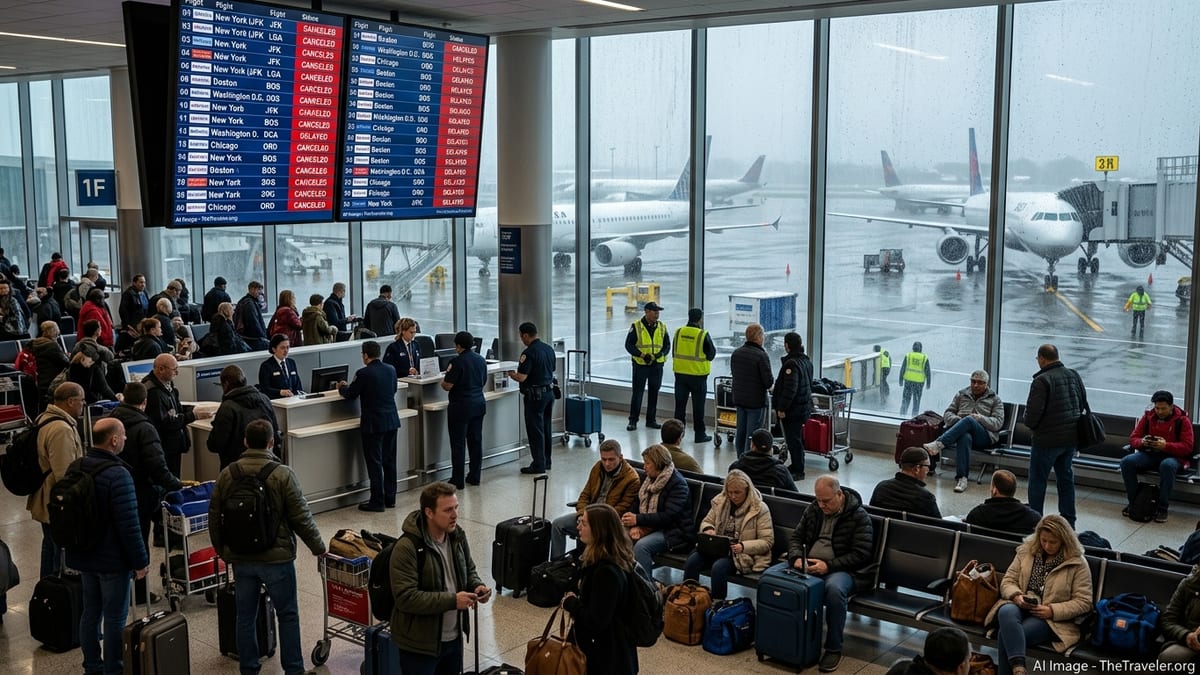
Storm system batters key hubs on Thanksgiving Day
On Thursday 26 November 2026, a powerful storm system affected large swaths of the country, particularly the East Coast and parts of the Midwest, just as Thanksgiving travelers were attempting to complete last‑minute journeys. The National Weather Service warned of heavy rain, strong winds, coastal flooding and localized snow, conditions that reduce visibility and increase turbulence and icing risk for aircraft. Airports along the I‑95 corridor from Washington to Boston, as well as major hubs in the Southeast and Great Lakes, reported weather‑related operational challenges during the morning and early afternoon.
By late morning on Thanksgiving Day, flight tracking data showed that more than 330 flights within, into or out of the United States had been canceled, with several thousand more delayed as airlines adjusted their schedules in response to deteriorating weather. Those numbers continued to change through the day as conditions evolved and carriers modified operations. While disruptions were concentrated at major hubs on the East Coast, knock‑on delays appeared at inland airports as aircraft and crews were held or rerouted.
The storm’s impacts came on top of an already heavy holiday travel period. Federal and industry forecasts had anticipated one of the busiest Thanksgiving travel weeks in recent years, with tens of millions of Americans expected to travel by air and road. Although Thanksgiving Day itself is often less crowded than the days immediately before and after, Thursday’s weather meant that passengers who chose to travel on the holiday faced a higher‑than‑usual risk of delays and schedule changes.
Airlines activate weather waivers and adjust operations
Major U.S. carriers, including American Airlines, Delta Air Lines, United Airlines and Southwest Airlines, introduced flexible rebooking policies ahead of the storm’s arrival. Travel waivers allowed eligible passengers scheduled to fly through affected airports on Thursday 26 November to change their flights once without paying standard change fees, provided they rebooked within specified date ranges and kept the same origin and destination. Some waivers also waived differences in fare for limited rebooking windows, although policies varied by airline and route.
In the Northeast, waivers generally covered a chain of airports from Washington‑area facilities through New York City and up to Boston, recognizing the potential for a coastal storm to affect multiple hubs simultaneously. Separate waivers applied earlier in the week to South Florida, including Miami, where heavy rain contributed to operational challenges. American Airlines, among others, advised customers traveling via Miami on Wednesday 25 November to check their flight status and consider rebooking as thunderstorms and a runway incident temporarily constrained capacity.
Operationally, airlines attempted to minimize cancellations by using ground delay programs, swapping aircraft types and rerouting flights to avoid the most intense parts of the storm. However, strong crosswinds, low cloud ceilings and air traffic control flow restrictions at certain airports inevitably led to longer taxi times, holding patterns and, in some instances, preemptive cancellations of flights that were most exposed to adverse weather or tight turn‑around times. Because large carriers operate hub‑and‑spoke networks, schedule changes at a single constrained hub such as New York or Atlanta had visible ripple effects elsewhere in the system.
Airports face constrained capacity and localized incidents
Airports along the East Coast and in parts of the Midwest operated through the storm but with reduced capacity due to safety‑driven air traffic control restrictions. When low visibility or strong winds limit the number of aircraft that can safely take off and land per hour, controllers implement ground delay or ground stop programs that slow the rate at which flights depart for affected airports. This can lead to long outbound delays even at departure airports where the weather remains relatively calm, complicating travel across the national network.
In Miami, Thanksgiving week disruptions began even before Thursday’s main storm impacts on the East Coast. On the evening of Wednesday 25 November, a FedEx cargo aircraft overran a runway at Miami International Airport following a landing incident. The aircraft came to a stop off the paved surface and there were no injuries, but the event forced the temporary closure of all but one of the airport’s runways while crews worked to secure the aircraft and inspect the runway. While passenger flights continued to operate, the reduced runway capacity added pressure to an already busy pre‑holiday evening and contributed to delays for some departures and arrivals until additional runways reopened.
Further north, airports from the mid‑Atlantic through New England faced a combination of heavy rain, gusty winds and coastal flooding. In New York City, conditions were serious enough that the traditional Macy’s Thanksgiving Day Parade was postponed, an unusual step that underscored the severity of the weather system affecting the region. High winds and saturated ground conditions can affect airport operations by increasing braking distances on runways, requiring greater spacing between arriving aircraft and limiting the use of certain runways, particularly when crosswinds exceed aircraft limits.
Impacts for travelers on one of the busiest weeks of the year
For individual travelers, the most immediate effect of Thursday’s weather was uncertainty over whether flights would depart on time, be significantly delayed or be canceled outright. Airlines generally sought to notify passengers of schedule changes through mobile apps, text messages and email, but rapid operational adjustments meant that some travelers did not receive final information until close to departure. Passengers whose flights were canceled were typically offered rebooking on the next available services, although seat availability was limited on certain routes given high load factors over the holiday period.
Travelers also encountered longer wait times at customer service desks and on airline call centers as the number of disrupted itineraries increased. While U.S. regulations do not require airlines to provide hotel or meal vouchers when weather is the primary cause of a delay or cancellation, some carriers provided goodwill accommodations to affected passengers where possible, particularly at hub airports. However, assistance policies varied by airline and by specific disruption, so travelers could not assume a standard level of compensation or support in weather‑related cases.
In addition to flight disruptions, the storm affected broader Thanksgiving plans. Heavy rain and localized flooding complicated road travel to and from airports, coastal flooding impacted some public transit links, and power outages in parts of the Northeast and Mid‑Atlantic disrupted rail services and airport terminal operations in limited instances. Authorities and travel providers repeatedly advised passengers to allow extra time to reach airports, verify the status of parking facilities and public transport, and prepare for potentially crowded terminals as delayed passengers overlapped with on‑time departures.
What travelers should check next as the storm system moves on
Forecasters expect the storm system that disrupted Thanksgiving Day flights to continue affecting parts of the Northeast and Atlantic Canada into Friday 27 November, with lingering rain, gusty winds and some higher‑elevation snow. While conditions are likely to improve across much of the interior United States as the system moves offshore, elevated winds and residual air traffic control programs could continue to affect flights at some airports into Friday morning. The busiest post‑holiday travel days, particularly the Sunday after Thanksgiving, are still to come, and operational data from recent years suggest that delays often peak on those days even in more benign weather conditions.
Passengers with flights scheduled from Thanksgiving evening through the weekend are being encouraged by airlines and authorities to monitor their itineraries regularly via airline apps or official websites. Travelers whose flights touch airports in the Northeast or Pacific Northwest, where unsettled weather may persist, should pay close attention to updated forecasts and any extensions of travel waivers. If a waiver is in place, rebooking before a flight is formally canceled can sometimes provide better options than waiting until after a schedule change is processed.
Given the combination of heavy demand and weather‑related disruption, travelers may wish to verify several practical details before heading to the airport. These include confirming flight departure times and terminals on the day of travel, checking for any gate changes after clearing security, and ensuring that contact details in airline reservations are up to date so that alerts are received promptly. For those with tight connections at major hubs, considering earlier departures where space is still available could reduce the risk of missed onward flights. As the Thanksgiving holiday period continues, conditions and airline schedules remain subject to change, and the most reliable information for individual journeys will come from airlines, airports and official weather updates in the hours immediately before departure.