


More news on this day
As the European Union’s new Entry/Exit System reshapes border checks for non-EU travelers, airports across Spain, Portugal, France and Italy are emerging as some of the most challenging hotspots for delays and congestion.
Get the latest news straight to your inbox!
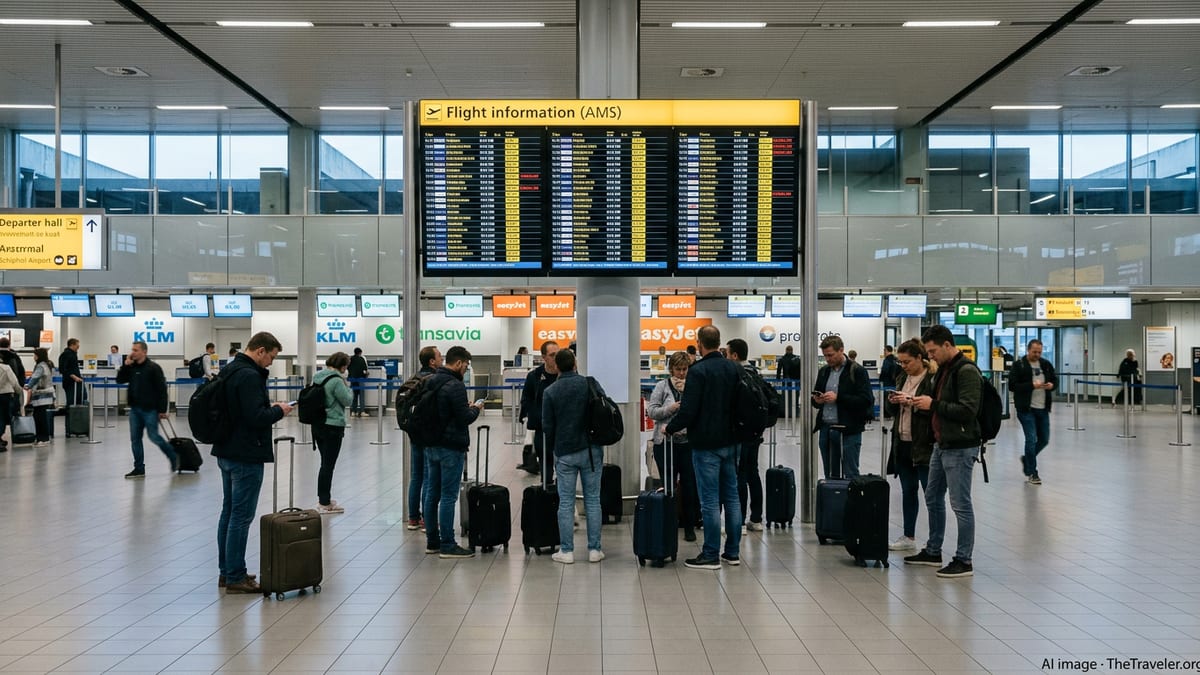
What the EES Rollout Means for Travelers
The EU’s Entry/Exit System, gradually introduced from October 2025 and moving toward full operation in 2026, replaces manual passport stamping with biometric registration for most non-EU visitors. The system captures fingerprints and facial images at the first Schengen border crossing and records every entry and exit electronically.
While the goal is to improve security and automate overstay monitoring, the early stages of implementation have exposed weak points in staffing, infrastructure and passenger information. Airports that already handled dense peak-time traffic have in some cases seen queues stretch to two or three hours as travelers navigate new kiosks and unfamiliar procedures.
Industry bodies and European institutions have acknowledged that airports in France, Germany, Greece, Iceland, Italy, Portugal and Spain have been particularly affected, especially where a high share of passengers are third-country nationals arriving from the United Kingdom, North America and other long-haul markets.
Within this broader picture, a handful of hubs in Spain, Portugal, France and Italy stand out as recurrent trouble spots for EES-related delays, based on recent media coverage, government notices and traveler reports.
Portugal: Lisbon at the Epicenter of Border Congestion
Portugal has emerged as one of the countries where EES pressure is most visible, with Lisbon’s Humberto Delgado Airport consistently cited as a primary bottleneck. Reports from late 2025 and mid-2026 describe “chaos” at the border area, with queues for non-EU arrivals and departures stretching across the terminal at peak times.
Publicly available information indicates that biometric registration points at Lisbon were overwhelmed during the first phases of the rollout, in part because of high passenger volumes and in part because of limited advance communication to travelers unfamiliar with the need to register on arrival. In some cases, passengers have reported waiting several hours to clear border control when multiple long-haul flights landed close together.
Portuguese authorities have responded with contingency plans, including redeploying staff from other functions and adding more equipment at border control positions. Official communications highlight efforts to stabilize operations at Lisbon first, followed by reinforcement at Porto, Faro, Funchal and Ponta Delgada as passenger numbers grow.
Despite these measures, recent coverage suggests that Lisbon remains one of the most challenging airports on the Iberian Peninsula for EES processing, particularly for peak-season travelers from the United Kingdom, Brazil, the United States and Canada.
Spain: Pressure Points at Madrid and Barcelona
Spain, one of Europe’s busiest tourism markets, has also felt the strain of integrating EES into already crowded hubs. Madrid-Barajas and Barcelona-El Prat handle some of the highest volumes of intercontinental traffic in southern Europe, and both have seen mixed experiences during the rollout.
Passenger accounts from spring and early summer 2026 describe long queues at EES checkpoints in Madrid on some days, contrasted with relatively smooth processing on others as staffing levels and the number of active kiosks fluctuated. For travelers connecting from non-Schengen to Schengen flights, misdirected flows and uncertainty about when EES registration is required have sometimes added to the congestion.
Barcelona, another major entry point for visitors from the United Kingdom and North America, has reported similar patterns. When multiple wide-body arrivals are processed at the same time, queues for first-time EES registration can build quickly, particularly at peak holiday times and during large events. On off-peak days, the same infrastructure appears to handle flows more comfortably, highlighting how sensitive the system is to scheduling peaks.
Regional and EU-level assessments of border management in 2025 and 2026 underline Spain’s importance in the overall Schengen network and note that additional human resources and better passenger information will be essential to keep delays at Madrid and Barcelona from becoming systemic.
France: Paris Hubs Brace for Biometric Bottlenecks
France’s two main international gateways, Paris-Charles de Gaulle (CDG) and Paris-Orly, were already facing scrutiny over delays before EES became a factor, due to a separate episode of air traffic control system disruption and congestion. The addition of biometric checks for non-EU passengers has added a new source of pressure at border control.
French government documents and airport performance plans track punctuality and service quality at CDG, Orly and major regional airports such as Nice, Marseille and Lyon. These materials, combined with traveler reports, suggest that EES-related queues have become most acute when large numbers of long-haul arrivals converge in narrow time windows, particularly at CDG’s non-Schengen terminals.
Trade and airport industry groups have highlighted France among the countries where EES implementation has had a marked impact on operations, emphasizing that high volumes of third-country nationals arriving from the United Kingdom, the United States, Canada and Asia make the Paris hubs especially sensitive to registration delays.
Authorities and airport operators have outlined plans to add more self-service kiosks, increase staffing at manual booths and improve signage in English and other non-EU languages. Even with these measures, summer peaks in 2026 are expected to remain challenging at CDG and Orly, placing them among the European airports travelers most frequently associate with EES-related waiting times.
Italy: Rome and Milan Struggle With First-Time Registrations
Italy’s largest international gateways, Rome Fiumicino and Milan Malpensa, have also appeared repeatedly in reports about EES-induced congestion. These airports combine heavy long-haul leisure traffic with significant flows of cruise passengers and tour groups, many of whom are first-time or infrequent visitors to the Schengen area.
Travelers passing through Fiumicino during early 2026 describe long, slow-moving queues at exit passport control and inconsistent use of EES kiosks, with some machines out of service or temporarily closed. This has led to scenes where passengers expecting to use self-service options instead join a single long line for manual processing, lengthening waiting times at busy departure banks.
Milan Malpensa, a major hub for transatlantic and Middle Eastern services, has reported comparable issues at certain times of day. While the airport has invested heavily in security and screening technology, integrating EES into the existing flows has required ongoing adjustments to queue layouts and staffing rosters.
Official Italian information on EES emphasizes that the system is now active at external borders and that travelers should expect to provide biometrics on their first entry. However, limited awareness among occasional visitors and uneven kiosk availability mean that Rome and Milan remain among the Italian airports where EES delays are most likely to be felt during peak travel periods.
Why These Airports Are Struggling the Most
Across Spain, Portugal, France and Italy, several common factors help explain why certain airports have become EES delay hotspots. High volumes of third-country nationals, dense peak-hour scheduling and terminal layouts that make it difficult to expand border control areas all contribute to congestion.
Industry analyses highlight that staffing levels at border posts have not always kept pace with the additional time required to collect biometric data, particularly from passengers who are unfamiliar with the process or who encounter language barriers at self-service kiosks. Where airports relied heavily on manual booths during the early stages of the rollout, the effects on queues were especially visible.
Another recurring theme is information. Many travelers still arrive without clear guidance on EES requirements, leading to confusion about whether they must register on arrival, how to use kiosks and what documents are needed. This slows individual processing and compounds bottlenecks when several flights arrive at once.
As the system matures, European institutions, national authorities and airport operators are moving to refine procedures and add capacity. For now, however, Lisbon, Madrid, Barcelona, Paris-CDG, Paris-Orly, Rome Fiumicino and Milan Malpensa stand out as some of the most challenging airports in southern Europe for EES-related border delays, particularly at the height of the summer season.