


More news on this day
Central Japan Railway is introducing platform screen doors on the Tokaido Shinkansen platforms at Shizuoka and Toyohashi stations, marking another step in a network-wide effort to improve passenger safety and reduce accidents on Japan’s busiest high-speed rail corridor.
Get the latest news straight to your inbox!
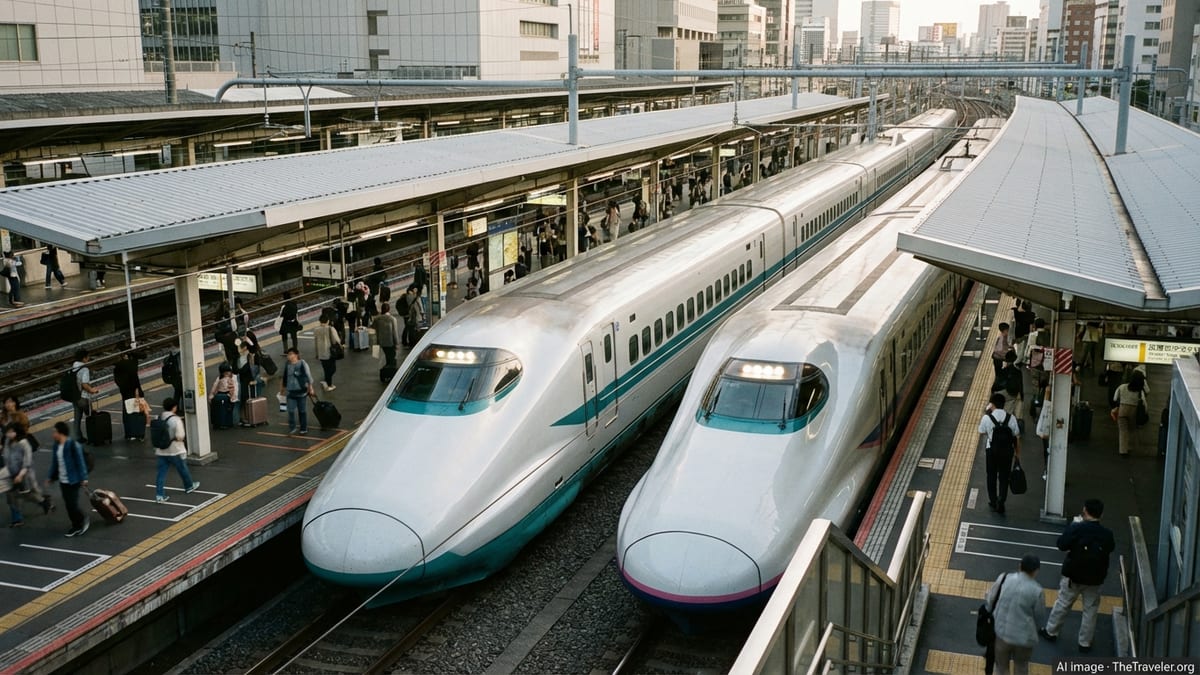
New safety equipment for busy regional hubs
The Tokaido Shinkansen links Tokyo with Osaka through a string of major regional cities, and both Shizuoka and Toyohashi function as important intermediate stops where trains arrive and depart frequently throughout the day. Publicly available information from Central Japan Railway’s station guides and investment plans shows that both stations handle a high volume of Shinkansen passengers relative to their size, with a mix of local travelers, long-distance business passengers and tourists using the services.
Platform screen doors are designed to create a physical barrier between passengers and the tracks until a train has come to a complete stop and its doors are correctly aligned. At Shizuoka and Toyohashi, the new equipment is being installed on the Shinkansen platforms that serve trains running between Tokyo and Shin-Osaka, helping to prevent accidental falls, intentional intrusions and items being dropped onto the line.
Industry reports indicate that the installation at Shizuoka and Toyohashi is part of a multi-year safety upgrade program across JR Central’s network. In recent years, the company has already introduced similar fencing or door systems at other high-traffic sites, including sections of the Shinkansen platforms at major hubs, as it responds to national expectations for improved barrier-free design and platform safety.
By targeting Shizuoka and Toyohashi, the operator is focusing on stations where a variety of train patterns pass through, including services that stop and services that overtake at speed on the central tracks. These operating conditions make platform management more complex and increase the value of additional physical safeguards.
Reducing incidents on Japan’s busiest high-speed line
Reports on railway safety in Japan have long highlighted the risk of people entering the track area, whether through missteps, overcrowding at peak times or incidents involving passengers in distress. While such cases are relatively rare on the Shinkansen compared with urban commuter lines, the high speeds involved mean that even a single incident can have serious consequences and cause significant disruption across the route.
Platform screen doors directly address these concerns by keeping passengers away from the edge until trains are ready for boarding. For the Tokaido Shinkansen, which carries hundreds of thousands of passengers per day across all services, preventing even a small number of platform-related incidents can improve both safety and punctuality. Publicly available operational documents from JR Central emphasize the importance of minimizing service interruptions on the corridor between Tokyo, Nagoya and Osaka.
The installation at Shizuoka and Toyohashi also aligns with the broader push in Japan’s rail sector to make stations more accessible and easier to navigate for passengers with mobility challenges, families traveling with small children and visitors unfamiliar with the system. Barrier-style doors and fences provide a clearer visual guide to where to stand and wait, especially for travelers who are boarding the Shinkansen for the first time.
In addition, platform doors can assist staff with crowd control during peak periods such as major holidays, when demand on the Tokaido Shinkansen is known to surge. By channeling boarding and alighting through defined door areas, staff can more easily monitor passenger movement and respond quickly if issues arise.
Technical and operational considerations for installation
Installing platform screen doors on a high-speed line is more complex than on a metro or commuter railway, as the system must integrate with a variety of train types, stopping patterns and door configurations. For the Tokaido Shinkansen, the new equipment at Shizuoka and Toyohashi must align precisely with the doors of the N700-series train sets currently in service, while also allowing for future rolling stock updates.
Specialized door systems for mainline high-speed rail typically rely on accurate stopping control, signaling interfaces and safety interlocks that prevent trains from departing if the doors are not fully closed. Reports on recent Japanese railway projects suggest that operators often phase in the equipment platform by platform, conducting overnight testing to avoid major disruptions to daytime timetables.
At Shizuoka and Toyohashi, the work is being coordinated around existing passenger flows, which include both stopping services and non-stop trains passing through on central tracks. As a result, the platform areas remain in use while installation progresses, with fencing segments, wiring and control equipment gradually added and brought into service.
Railway industry analyses point out that, beyond the visible doors themselves, these projects include upgrades to surveillance, emergency stop systems and signage. The overall aim is to create an integrated safety environment in which potential hazards are mitigated through a combination of physical barriers, clear information and rapid response capability.
Implications for travelers using Shizuoka and Toyohashi
For passengers, the most noticeable change at Shizuoka and Toyohashi will be the presence of full-height or waist-high barriers along the edges of the Shinkansen platforms, with openings that line up with the train doors. Travelers will need to board and alight through these designated sections, which may slightly adjust where they wait along the platform compared with previous practice.
Published guidance on Shinkansen travel generally recommends that passengers arrive a bit earlier than departure time to find their car and seat, and the new doors reinforce this advice. With the barriers in place, car numbers and door locations are expected to be clearly marked, allowing travelers to queue in orderly lines before the train arrives.
The addition of platform screen doors can also improve comfort on the platform itself by reducing the effect of air turbulence when trains pass at speed on the central tracks. This is particularly relevant at intermediate stations where many services simply run through without stopping, creating noticeable gusts of air that may be unsettling for some passengers.
Overall, the safety improvements are likely to be welcomed by both regular commuters and visitors. For international tourists passing through Shizuoka and Toyohashi on their way to destinations such as Tokyo, Nagoya, Kyoto or Osaka, the presence of modern barrier systems reinforces the perception of the Shinkansen as a carefully managed and secure mode of transport.
Part of a broader modernization of the Tokaido corridor
The installation of platform screen doors at Shizuoka and Toyohashi forms one element of a wide-ranging modernization program on the Tokaido corridor. Public company materials show that JR Central has been investing in new rolling stock, upgraded signaling, enhanced accessibility facilities and digital reservation services to support future demand.
Alongside major projects such as the development of the Chuo Shinkansen maglev line, incremental improvements on existing stations remain important for day-to-day users. Barrier-free pathways, elevators, baby-care rooms and clearer station maps have been introduced or expanded at many Tokaido Shinkansen stops, including Shizuoka and Toyohashi, in response to evolving passenger needs.
Safety-focused investments such as platform doors also reflect demographic changes, with Japan’s aging population prompting operators to consider how to reduce risks for older travelers and those with limited mobility. By combining physical infrastructure upgrades with staff training and informational campaigns, railway companies aim to keep the network both safe and easy to use.
As work progresses at Shizuoka and Toyohashi, observers expect that similar equipment will continue to appear at other key points on the Tokaido Shinkansen. For passengers planning high-speed journeys along Japan’s main east–west axis, the presence of platform screen doors is likely to become an increasingly standard feature of the travel experience.