


More news on this day
Border adviser Tom Homan is defending ongoing deportation flights to Haiti, advancing the Trump administration’s enforcement agenda even as the United States and other governments warn their own citizens to avoid travel to the Caribbean nation amid rampant violence and state collapse.
Get the latest news straight to your inbox!
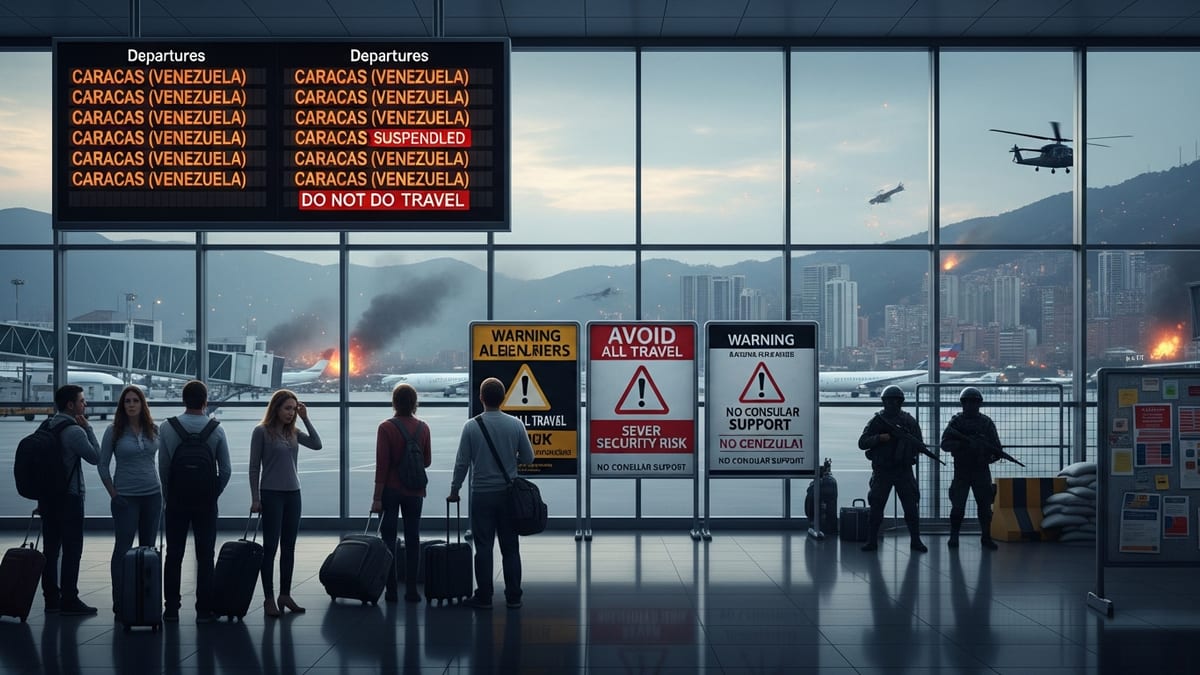
Deportations Proceed as Haiti Faces Level 4 Travel Warning
Publicly available information shows that deportation flights to Haiti have continued following the Trump administration’s decision to revoke Temporary Protected Status for tens of thousands of Haitians who had lived legally in the United States for years. Coverage of Homan’s recent television appearances indicates that removal operations are ramping up just as security and humanitarian conditions in Haiti reach some of their worst levels in decades.
The U.S. State Department currently assigns Haiti its highest advisory level, a Level 4 “Do Not Travel” warning that urges Americans to avoid the country because of widespread gang violence, kidnappings, civil unrest and severe limits on health care and basic services. That same advisory notes that the U.S. government has “extremely limited ability” to provide emergency assistance to its own citizens there, highlighting the scale of the collapse in public order.
Reports from international organizations and human rights groups describe a capital city fractured by heavily armed gangs, frequent roadblocks, mass internal displacement and recurrent shutdowns of airports and seaports. These assessments contrast sharply with the continued transfer of deportees back into Haiti, many of whom may not have set foot in the country for years and may lack secure housing or family networks on arrival.
Homan Frames Flights as Legal Obligation, Not Policy Choice
In high-profile interviews summarized by multiple outlets, Homan has argued that immigration agents are “just enforcing the law” and carrying out final removal orders issued by immigration courts. From his perspective, halting deportations to Haiti would amount to ignoring statutory mandates, and would undermine the administration’s broader promise to escalate interior enforcement and border removals.
Commentary on his remarks notes that Homan has long been associated with a more aggressive enforcement posture, including support for fast-tracked deportations and expanded detention. His return to government as the Trump administration’s “border czar” was widely interpreted by analysts as a signal that large-scale removals, including to unstable countries, would be a central feature of the current immigration strategy.
Legal experts quoted in recent explainers point out that U.S. immigration law does provide some discretion to pause removals in cases where conditions in a receiving country deteriorate significantly, including through the use of humanitarian parole or broader policy directives. However, they also note that courts generally grant the executive branch wide latitude over how and when to exercise that discretion, leaving room for sharply different approaches from one administration to the next.
Travel Warnings Highlight a Policy Contradiction
Analysts following Haiti and U.S. travel policy emphasize what they describe as a stark contradiction between the message sent to American travelers and the one sent to Haitian deportees. While the State Department urges U.S. nationals to stay away “for any reason,” deportation flights are dispatching hundreds of people into the same environment, including families with children and former TPS holders who had been living and working in the United States.
Human rights organizations and migrant advocacy groups have circulated reports warning that individuals returned to Haiti may face immediate risks on arrival, ranging from kidnapping and extortion at or near the airport to difficulties accessing medical care, food and shelter. Some organizations argue that this risk landscape closely mirrors the scenarios described in the Level 4 advisory, raising questions about whether the duty of care articulated for tourists should also apply to people being sent back under federal custody.
Travel industry observers note that the Level 4 designation has already devastated Haiti’s once-growing tourism sector, which had been slowly rebounding before the latest surge of violence. Commercial air links have been reduced or suspended at various points, and major hotel brands have curtailed operations. Against that backdrop, flights operated for deportations stand out as some of the only regular air traffic connecting the country with the United States.
Implications for Travelers, Diaspora and Regional Mobility
The clash between enforcement flights and travel warnings is resonating far beyond the immediate realm of immigration courts and border operations. For Haitian diaspora communities in North America and Europe, the Level 4 advisory and ongoing deportations complicate decisions about family visits, humanitarian travel and investment in local tourism or small business ventures.
Travel risk consultancies and insurance providers have responded to the State Department’s advisory by designating Haiti as a high or extreme risk destination, often excluding it from standard coverage and recommending only essential travel with specialized security arrangements. Those assessments, which shape how airlines, tour operators and nongovernmental organizations plan itineraries, stand in tension with the continuing use of the same airports and air corridors to return deportees.
Regional mobility is also affected. Caribbean neighbors and transit hubs have tightened visa rules for Haitian nationals in recent years, citing irregular migration pressures and security concerns. As deportation flights continue, observers warn of a growing likelihood that some returnees will attempt risky onward journeys by sea or through irregular overland routes, further complicating humanitarian and consular responses in the wider region.
Escalating Debate Over Risk, Responsibility and Reform
The debate sparked by Homan’s comments feeds into a broader argument over how governments should balance immigration enforcement with evolving security assessments and travel guidance. Critics of the current policy insist that if an environment is considered too dangerous for tourists, it should at minimum trigger a review of deportations, particularly for individuals who have established deep ties in the United States under programs such as TPS.
Supporters of a strict enforcement line counter that suspending removals in response to conditions abroad can create strong incentives for further irregular migration and undermine confidence in the immigration system. They argue that humanitarian concerns should be addressed primarily through narrowly tailored protections and refugee resettlement mechanisms, rather than through blanket pauses on deportations.
Policy analysts tracking the situation suggest that Haiti may become a test case for how far a government is willing to separate its travel-risk messaging from its deportation practices. They highlight ongoing calls from members of Congress, human rights advocates and segments of the travel sector for clearer standards that would link travel advisories, humanitarian designations and removal decisions in a more transparent way, particularly when state collapse and widespread violence blur the line between ordinary instability and conditions approaching armed conflict.