


More news on this day
Passengers flying to and from the UAE on Monday, July 27, 2026, are being urged to monitor flight status closely as Emirates, flydubai and Air Arabia adjust parts of their regional schedules amid ongoing airspace restrictions and security tensions in the wider Gulf.
Get the latest news straight to your inbox!
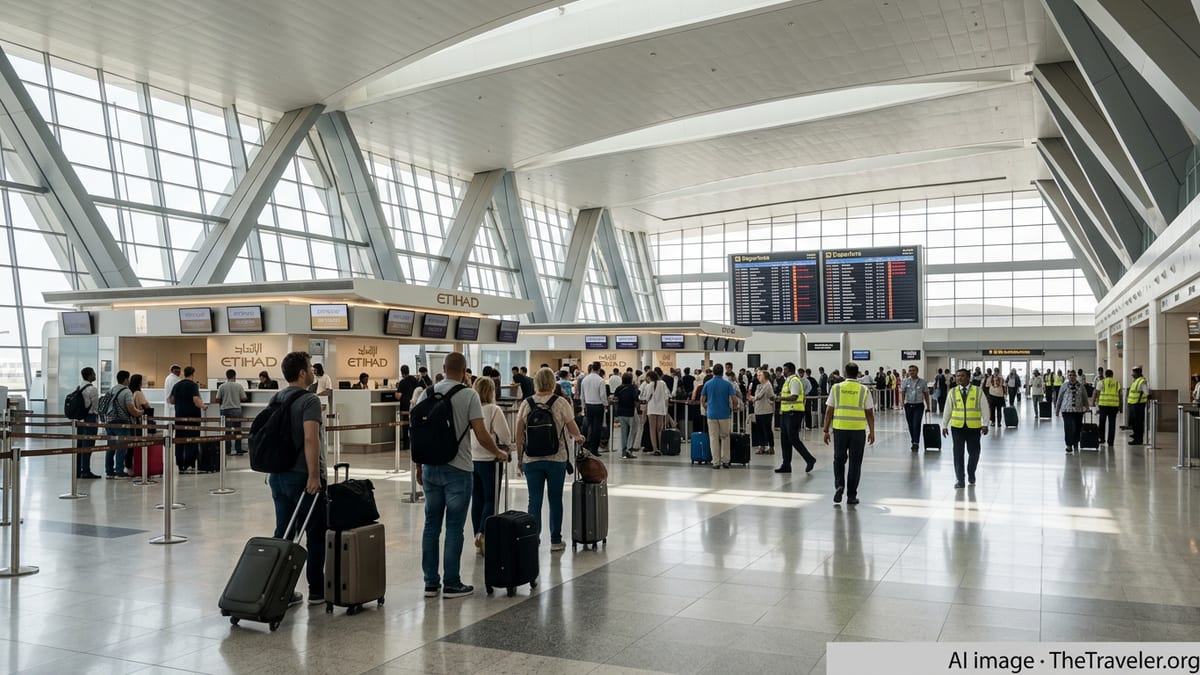
Targeted cancellations continue on Kuwait and Bahrain services
Publicly available information from airline advisories and local media shows that the most significant disruptions today remain concentrated on short haul services between the UAE and neighboring Gulf states, particularly Kuwait and Bahrain. These routes have been repeatedly adjusted in recent weeks following security incidents and airspace measures affecting parts of the region.
Recent coverage indicates that Emirates has kept some Dubai to Bahrain frequencies off the schedule after earlier waves of cancellations on flights such as EK835, EK837 and EK839, while maintaining other Bahrain services and most of its broader regional network. Flight status tools and airport departure boards suggest that these changes are now largely pre-planned, rather than last minute mass suspensions.
Sharjah based low cost carrier Air Arabia and Dubai based flydubai have also continued to trim selected rotations to Kuwait and Bahrain. Reports from regional outlets point to isolated cancellations and retimings across today and the coming days, as airlines match capacity to restricted airspace availability and evolving demand.
Despite the ongoing adjustments, the bulk of UAE to Gulf flights are operating, with airlines emphasizing through public channels that passengers should rely on official flight status pages and mobile apps to confirm whether their specific service is affected before travelling to the airport.
Dubai operations largely stable, with isolated regional tweaks
At Dubai International Airport, the main hub for Emirates and flydubai, schedules today reflect a broadly stable operation compared with the severe disruption seen earlier this year when regional airspace closures temporarily halted many services. Current timetables and third party trackers show wide body long haul departures and arrivals running close to plan, with only a small number of cancellations concentrated on select regional routes.
Flydubai’s network, which spans the Middle East, Central Asia, Africa and parts of Europe, appears to be operating the majority of its planned services, including key leisure and transit markets. Data from flight tracking services for individual flights, such as Dubai to Istanbul, points to on time or near on time departures, underscoring that today’s disruption is localised rather than system wide.
Emirates, which has already restored a substantial portion of its pre conflict schedule according to earlier published reports, is continuing to focus on keeping trunk routes operating while making tactical cuts where airspace constraints or security guidance make certain routings less reliable. The carrier’s flight status tools, as well as airport screens at Dubai, remain the primary reference for real time confirmation.
Passengers connecting through Dubai from affected regional points are being advised in public travel notices and media coverage to allow extra time, ensure contact details are updated in their bookings and to be prepared for potential reaccommodation on alternative flights if their original service is among those cancelled.
Sharjah and Abu Dhabi see knock on effects from regional tensions
In Sharjah, Air Arabia’s hub continues to experience a smaller but noticeable level of disruption linked to the same regional tensions. Reports indicate that the airline has cancelled or retimed certain Kuwait and Bahrain services over the past week, with some of those schedule changes extending into today’s operations.
Abu Dhabi’s Zayed International Airport is seeing similar targeted adjustments, particularly on services to Kuwait. Etihad Airways, which has previously extended cancellations on specific Abu Dhabi to Kuwait flights for operational and security related reasons, remains a reference point for how airlines across the UAE are reshaping short haul Gulf flying in response to partial airspace restrictions.
Public information from the UAE’s aviation authorities highlights that recent safety measures, including temporary and partial airspace closures earlier in the year, were introduced as precautionary steps amid heightened regional risks. While most of the country’s airspace is open and main corridors remain available today, residual constraints and risk assessments continue to influence which routes carriers operate and at what frequency.
These dynamics mean that travellers using Sharjah and Abu Dhabi, as well as Dubai, are experiencing a patchwork of normal operations on most routes alongside occasional cancellations or longer routings on a handful of services close to conflict affected areas.
Travel advisories urge flexibility and direct checks with airlines
International travel advisories, including recent guidance from the United States, continue to caution passengers heading to or transiting through the Middle East that short notice changes remain possible. The advisories recommend preparing for potential flight cancellations and diversions, as well as verifying any onward connections, particularly on days when tensions in the region flare.
Regional newspapers and broadcasters likewise stress that travellers should avoid relying on outdated screenshots or third party summaries of schedules. Instead, passengers are encouraged to check live flight status on the websites or apps of Emirates, flydubai and Air Arabia, or through airport information channels, shortly before leaving for the airport.
Industry analysts quoted in recent aviation coverage note that carriers have become more adept at dealing with rolling security uncertainties, often shifting departure times, rerouting flights around temporary no fly zones or consolidating frequencies rather than suspending entire city pairs for extended periods. This approach helps maintain connectivity while managing risk, but it also means that individual flights may disappear from schedules or change timings with relatively little lead time.
For travellers, that translates into a need for flexibility in planning, a willingness to accept rerouting through alternative hubs if offered, and close attention to any notifications pushed by airlines as departure approaches.
What today’s changes mean for passengers planning upcoming trips
For those due to fly to or from the UAE in the coming days, today’s pattern of limited but ongoing cancellations on specific Gulf routes is an indicator that airlines are still operating under elevated regional risk conditions, even as the majority of services run as normal. Long haul flights to Europe, Asia, Africa and the Americas are for the most part operating close to schedule, supported by the reopening of key airspace corridors earlier this year.
However, travellers booked on flights touching Kuwait, Bahrain and other nearby destinations should expect a higher chance of schedule changes. Publicly available flight timetables suggest that some carriers have proactively trimmed frequencies or adjusted departure times through the rest of the week, which could affect both point to point passengers and those connecting onwards from these cities via Dubai, Sharjah or Abu Dhabi.
Travel experts cited in regional reporting advise that passengers consider building longer connection windows into itineraries that involve multiple Gulf airports, and that they keep accommodation and ground transport plans flexible in case a late cancellation requires an unplanned overnight stay. Purchasing travel insurance products that explicitly cover disruption from airspace closures or security events may also be worth considering for journeys scheduled in the near term.
Overall, while today’s snapshot points to a largely functional aviation system across the UAE, the continuing need for selective cancellations by Emirates, flydubai and Air Arabia underscores that conditions remain fluid. Passengers are therefore encouraged to treat real time status checks as a standard part of their pre departure routine for any trip involving the region.