


More news on this day
The United States has renewed its warning for Americans in Iran to leave immediately, while urging U.S. travelers across the wider Middle East to prepare for sudden flight cancellations, periodic airspace closures, and other fast-moving disruptions that can strand passengers with little notice.
Get the latest news straight to your inbox!
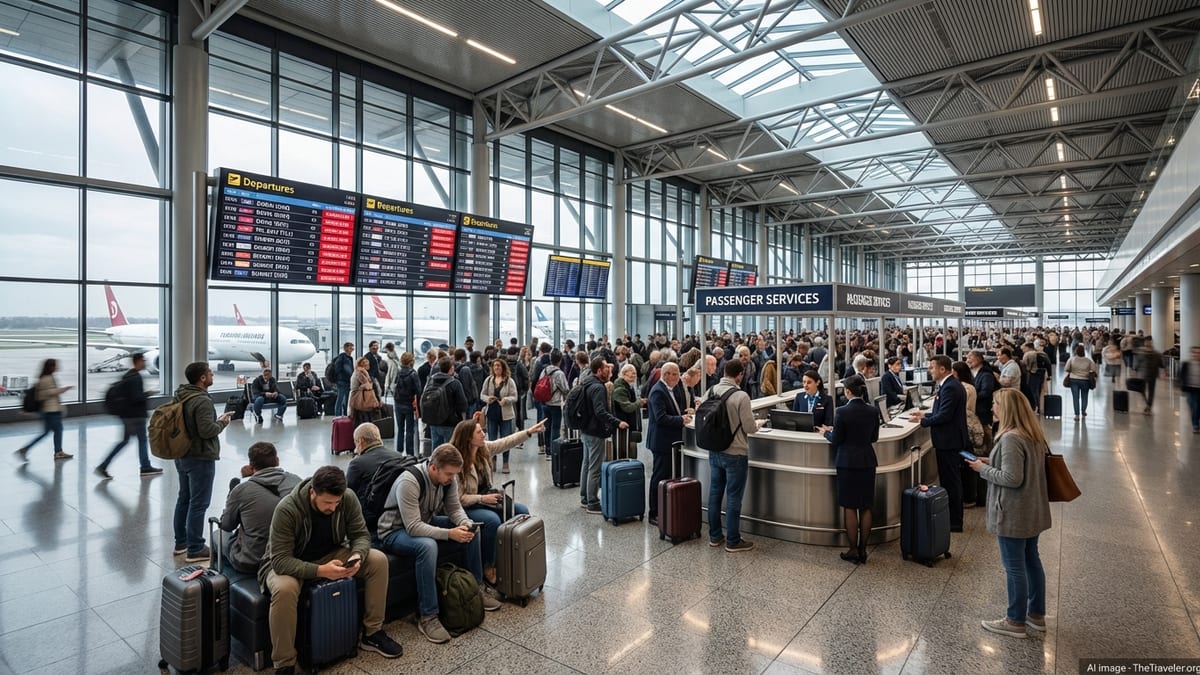
What the updated US warning says, and why it matters for travelers
Published coverage from Hindustan Times described a refreshed message framed around urgency, with “leave now” language and a focus on how quickly commercial travel options can change when regional security conditions deteriorate. The alert also emphasized tracking airport operations, airline service updates, and land-border conditions, reflecting how travelers may need to pivot from air to overland routes in a short timeframe.
On the official U.S. travel-advisory system, Iran remains listed at Level 4, “Do not travel,” with an advisory date of December 5, 2025 shown in the State Department’s advisory index. That advisory includes repeated cautions that the U.S. government does not maintain diplomatic or consular relations with Iran, and that U.S. citizens should not expect U.S. government help to leave Iran during an emergency.
The advisory environment is not limited to Iran itself. The State Department’s Iraq travel advisory, updated September 10, 2026, also references serious security risks and notes aviation restrictions and notices affecting flight operations in the region, highlighting the interconnected nature of airspace management across neighboring flight information regions.
Airspace restrictions and why cancellations can happen suddenly
For aviation, the issue is not only whether airlines choose to operate, but whether routes remain available and insurable. U.S. aviation safety restrictions related to Iranian airspace have been formalized for years through FAA notices, including FDC NOTAM 7/8072 addressing U.S. flight operations in Iranian airspace and reiterating the absence of U.S. diplomatic or consular relations with Iran.
When conflict risk increases, airlines often re-route around restricted flight information regions, which can lengthen flight times, reduce aircraft availability, and trigger knock-on delays. European aviation network analysis from EUROCONTROL has described how Middle East airspace and airport disruptions can cascade across international schedules, with rerouting and closures affecting large numbers of flights daily during periods of heightened hostilities.
In parallel, the European Union Aviation Safety Agency maintains conflict-zone information for operators, and has issued Middle East airspace bulletins covering multiple countries in and around the Gulf region. While these documents are written primarily for airlines and flight departments, they often translate into the same passenger-facing outcome: last-minute cancellations, schedule changes, and rebookings that may depend on shifting routings and government restrictions.
Practical implications for Americans currently in Iran
Publicly available U.S. guidance has long encouraged Americans in Iran to maintain an independent exit plan that does not rely on U.S. government assistance. It also highlights that Switzerland acts as the protecting power for U.S. interests in Iran, a point that frequently becomes relevant when travelers need documentation guidance or must navigate unexpected complications during departure.
Operationally, the biggest near-term risk for travelers is not only security conditions on the ground, but the possibility that the “next available flight” becomes unavailable after a single schedule revision, airspace change, or carrier suspension. In that context, “leave now” advisories tend to be interpreted by travel professionals as a prompt to depart while commercial options still exist, even if those options are indirect or more expensive than usual.
For travelers unable to depart immediately, the most actionable steps are typically administrative and logistical: keep passports valid and accessible; retain proof of onward travel; preserve multiple payment methods; and monitor airline notifications closely. Travelers can also consider signing up for State Department alerts via STEP to receive location-based updates, particularly if they expect to transit nearby hubs or land borders.
Regional spillover: neighboring advisories and the risk of wider disruption
The U.S. has also maintained region-wide messaging for Americans in the Middle East, advising heightened awareness and close monitoring of local embassy guidance. Separate travel advisories for nearby countries, including Iraq, underline that disruptions may not be confined to one national airspace and can spread to adjacent corridors that carriers rely on for transcontinental flights.
The United Kingdom’s Foreign, Commonwealth and Development Office updated its Iran travel-advice pages on September 21, 2026. That update included language warning British nationals in the Middle East to be prepared for possible flight cancellations, periodic airspace closures, and broader travel disruption. Even for U.S. travelers, these parallel advisories can be a useful signal of how multiple governments are characterizing the risk environment for civilian travel.
Aviation-sector guidance has also urged passengers to verify flight status with airlines before heading to the airport, reflecting the reality that airport displays and third-party apps may lag behind rapid operational changes. When airspace restrictions intensify, carriers sometimes consolidate schedules or prioritize certain routes, which can make rebooking more difficult as seats fill quickly.
What to watch next: airline operations, transit hubs, and rerouting pressure
For travelers planning trips that involve the Gulf region, the practical watchlist centers on airline advisories, airport operations, and the availability of safe routings between major hubs. When airlines avoid certain corridors, traffic concentrates in remaining pathways, increasing congestion risk and raising the likelihood of delays and missed connections.
Some carriers in the region have already posted temporary operational changes tied to airspace restrictions. For example, SalamAir has published a notice indicating flights to and from Iran are suspended until further notice, underscoring how individual airline decisions can reduce options even when some airports remain open.
For passengers holding tickets in or near the region, the most important near-term action is to check directly with the operating airline for same-day status and rebooking rules, then reassess connections that could become fragile if routes are lengthened by reroutes. Travelers may also want to revisit travel insurance terms for conflict-related disruptions, since coverage can vary widely on cancellation, interruption, and alternative transportation costs.