


More news on this day
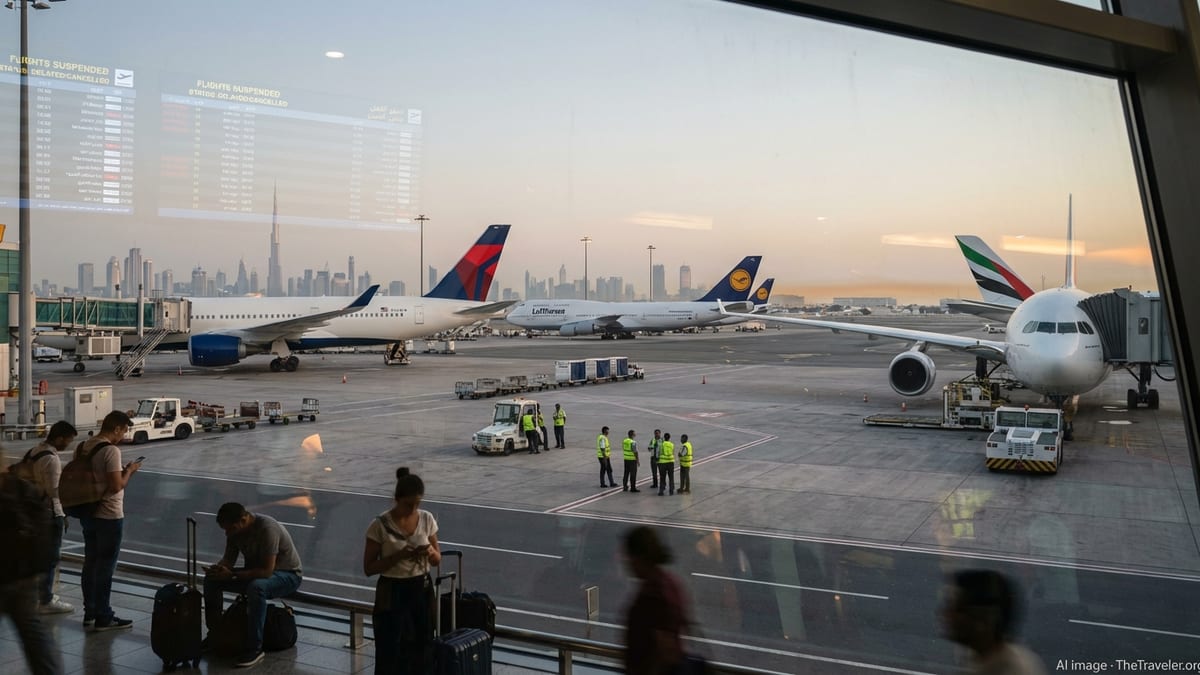
The U.S. government has renewed its call for American citizens in Iran to leave immediately, while also warning travelers across the wider Middle East to plan for flight cancellations, periodic airspace closures, and other sudden disruptions to regional travel.
Get the latest news straight to your inbox!
What the latest U.S. guidance says
Publicly available State Department travel guidance continues to classify Iran at Level 4, meaning Americans are advised not to travel there. The Iran advisory also repeats a direct message for those already in the country: U.S. citizens in Iran should leave immediately.
The updated language arrives against a backdrop of heightened tension across the Middle East. A separate State Department “Worldwide Caution” notice, last updated July 22, 2026, highlights the possibility of unforeseen escalation and specifically flags the aviation impacts travelers have been seeing in the region, including cancellations and delayed route resumptions.
The State Department’s Middle East consular information page also points travelers to country-specific security alerts and reiterates contact options for Americans seeking assistance from the department while abroad, reflecting a travel environment in which routine plans can change quickly.
Why travelers are being warned about disruptions
Published coverage on September 21, 2026 described a rapidly shifting regional security picture, including warnings issued by Iran’s Revolutionary Guard about potential escalation and reports of incidents affecting maritime traffic near the Strait of Hormuz, a corridor with outsized importance for global shipping and regional stability.
For travelers, that kind of volatility often shows up first as aviation uncertainty. The State Department’s worldwide caution language explicitly advises travelers to be prepared for periodic airspace closures and to check with air carriers before departing for airports, noting that some airlines have postponed full schedule resumptions while others have canceled select routes.
Even when airports remain open, disruptions can cascade across airline networks, forcing reroutes around restricted airspace and reducing available seats. That can translate into longer travel times, missed connections, and last-minute itinerary changes for passengers connecting through Middle Eastern hubs or flying near Iranian airspace.
Limited U.S. consular support inside Iran
A major practical complication for Americans in Iran is that the United States has no embassy or consulate in the country. The State Department’s Iran travel advisory stresses that the U.S. government is generally unable to provide routine or emergency consular services to U.S. citizens in Iran.
The advisory states that Switzerland provides emergency consular services for the United States in Iran. It also notes that the Swiss Embassy’s Foreign Interests Section in Tehran has been temporarily closed due to the security situation, reinforcing how constrained formal assistance can be during a crisis.
The same State Department material warns that Iran does not recognize dual nationality in the way many travelers expect. For dual U.S.-Iranian citizens, the advisory notes that U.S. citizenship may not be acknowledged by Iranian authorities, affecting consular access and complicating potential detention or exit-ban situations.
What risks the advisory highlights for Americans in Iran
The State Department’s Iran travel advisory outlines a range of risks that go beyond ordinary travel hazards. It states that Americans are at serious risk of wrongful detention, and it warns that having a U.S. passport or connections to the United States can be enough to trigger detention by Iranian authorities.
The advisory also highlights the possibility of exit bans that can prevent travelers from leaving Iran, as well as unpredictable unrest, including demonstrations that can turn violent. For travelers evaluating whether to remain, the advisory urges having a plan to depart that does not depend on U.S. government assistance.
In a reminder aimed at travelers who may be in Iran for specialized reasons, the advisory includes warnings about assisted reproductive technology and surrogacy tourism, saying some providers misrepresent the security situation and that citizenship and documentation issues can prevent newborns from obtaining U.S. passports to depart.
Practical travel steps as disruptions spread beyond Iran
For Americans elsewhere in the region, the State Department’s worldwide caution message emphasizes trip management basics that become critical when airports and airspace can change with little notice: confirm flights directly with carriers, monitor airline operational updates, and track local security alerts for the specific country you are transiting or visiting.
Travelers should also plan for the possibility that a workable route one day may not be available the next. That means building extra time into itineraries, considering flexible tickets where available, and having a backup plan for onward travel if connecting flights are canceled or rerouted.
For those in Iran who are preparing to leave, the State Department advisory’s overarching message is urgency paired with realism: Americans are urged to depart immediately, while recognizing that the U.S. has limited ability to help on the ground and that disruption to normal travel infrastructure can accelerate quickly.