


More news on this day
The United States is urging Americans to take extra caution when planning travel in parts of the Middle East, as renewed Houthi-linked attacks and broader regional tensions raise risks for travelers, aviation, and commercial shipping routes near the Red Sea and Gulf waters.
Get the latest news straight to your inbox!
What the new U.S. advisories say
Recent State Department updates reinforce that security conditions can change quickly across the region, with travel guidance emphasizing the potential for missile and drone threats, terrorism-related risks, and disruptions to transportation. Travelers are being pushed toward destination-specific planning rather than treating the Middle East as a single risk category.
Saudi Arabia’s travel advisory was updated on September 15, 2026, at Level 3, Reconsider travel. The advisory language highlights the possibility of attacks and notes that Iran-backed Houthi forces have threatened Saudi Arabia, referencing the use of missiles and drones and the ongoing maritime risks in the Red Sea dating back to October 2023.
Yemen remains Level 4, Do not travel, reflecting the long-running conflict and the limited ability for U.S. consular assistance inside the country. Separate guidance also points to heightened maritime risks in nearby waters, including the potential for damage to ships from missiles, projectiles, or waterborne explosive devices.
How Houthi activity affects travelers beyond Yemen
Houthi activity has increasingly mattered to travelers who never intend to enter Yemen. Published coverage in September 2026 has described a deterioration in security tied to attacks on shipping and energy infrastructure, along with strikes or attempted strikes on Saudi locations. That spillover risk has been central to why travel warnings now emphasize situational awareness and transport planning.
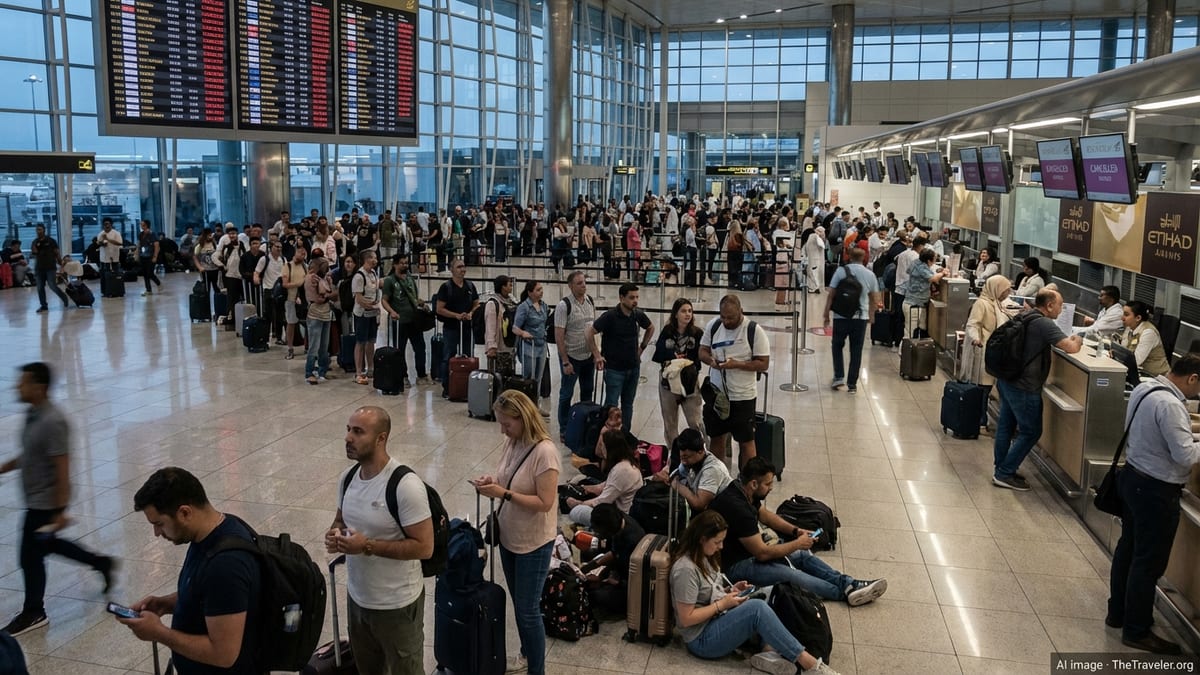
For aviation, the concern is not only a direct strike on an airport but also airspace restrictions, diversions, or sudden cancellations if regional militaries raise alert levels. In the Gulf, multiple State Department advisories have flagged the threat of drone and missile attacks from Iran and noted disruptions to commercial flights following the onset of hostilities between the United States and Iran on February 28, 2026.
For cruise passengers and independent travelers, the Red Sea and nearby chokepoints can influence itineraries even when a trip is marketed as a Mediterranean, Arabian Gulf, or East Africa voyage. Reroutings can affect port calls, sea days, and in some cases flight schedules if ships reposition to different embarkation ports.
Red Sea routes, Bab el-Mandeb, and maritime spillover
U.S. government maritime guidance has continued to treat the Red Sea, Bab el-Mandeb Strait, Gulf of Aden, and adjacent waters as a high-risk operating environment for commercial vessels. A March 26, 2026 U.S. Maritime Administration advisory described an ongoing threat to U.S. assets in the region and has been listed as active through September 22, 2026.
While the advisory focuses on shipping, the downstream effects can reach ordinary travelers through supply-chain disruptions, fuel-market volatility, and schedule changes for sea freight-dependent destinations. In September 2026, published coverage has linked attacks and threats around key sea lanes to market jitters and heightened regional security posture.
International maritime bodies have also continued tracking the security situation in the Red Sea area, including reporting around attacks on merchant and commercial vessels and ongoing attention at the United Nations level. The practical takeaway for travelers is that maritime risk in the region remains a live operational issue, not a resolved story.
What travelers should do before flights, tours, or religious travel
Americans traveling to Saudi Arabia for business, tourism, or religious pilgrimage should check the most recent advisory text before booking and again shortly before departure, since risk levels and the affected areas can shift. The UK’s government travel advice has also described missile and drone launches targeting multiple Saudi cities and infrastructure locations since mid-July 2026, underscoring that the threat picture is not confined to one border region.
Travelers connecting through Gulf hubs should factor in the possibility of sudden flight disruptions. Recent U.S. advisories for places such as the United Arab Emirates have explicitly referenced ongoing risk to civil aviation operating within or near the Persian Gulf and Gulf of Oman region, alongside the broader missile and drone threat environment.
For travelers who do go, the State Department continues to point Americans toward basic risk-reduction steps, including enrolling in the Smart Traveler Enrollment Program to receive local embassy updates, reading destination-specific security information, and building a communications plan for family members. The practical focus is on staying informed and keeping itineraries flexible rather than relying on static assumptions about routes, connections, or regional stability.
Why this warning is landing now
The timing reflects a combination of factors: heightened regional tension tied to the U.S.-Iran conflict that began February 28, 2026, renewed Houthi pressure and attacks affecting Saudi-linked targets and shipping lanes, and ongoing international concern about freedom of navigation through one of the world’s most important maritime corridors.
In the last week, published reporting has described fast-moving developments including Houthi advances along Yemen’s Red Sea coast, attempted missile attacks toward Saudi locations, and widening diplomatic and military posture in response. Even when individual events are geographically distant from major tourist districts, the broader security environment can influence airport operations, air routes, insurance and operating decisions, and the availability of ground transportation.
For travelers, the immediate implication is planning discipline: monitor advisory updates by date, confirm airline policies before final payment, and understand that the most meaningful risks may show up as disruptions and reroutings rather than issues at a hotel front desk. The U.S. government’s current messaging is less about a single incident and more about elevated uncertainty across multiple travel modes in and around the Red Sea and Gulf region.