


Ask ten Marriott Vacation Club owners why they bought in and you will usually hear the same answer: consistent, condo-style vacations in places they actually want to visit. Yet for anyone considering ownership, the single biggest question is simple. Where exactly can Marriott Vacation Club take you, and what types of resorts can you realistically access with your points or weeks? This guide breaks down the real-world destinations and resort styles available today, so you can picture the vacations behind the glossy brochures.
Get the latest updates straight to your inbox!
Understanding the Marriott Vacation Club Network
Marriott Vacation Club sits inside a broader portfolio known as The Marriott Vacation Clubs, which also includes Sheraton Vacation Club and Westin Vacation Club. Through the Abound by Marriott Vacations exchange program, owners can access more than 90 villa resorts and city properties directly, from classic beach escapes in Hawaii and Florida to ski resorts in Colorado and alpine villages in Europe.
In practical terms, most U.S. buyers today purchase a points-based product rather than a fixed week. Those Club Points can then be used like a currency against a published chart to book specific resorts, dates and unit types. For example, a family with a mid-range annual allotment might use a large chunk of points for a spring-break week in a two-bedroom villa in Hawaii one year, then stretch the same points into multiple shorter getaways in Orlando, Hilton Head and Park City the next.
Beyond the core Marriott-branded properties, membership opens doors to Sheraton and Westin villa resorts through Abound, and to thousands of additional timeshare properties worldwide through the Interval International exchange network. That means your home resort might be on Hilton Head Island, but your ownership can still get you into mountain lodges in the French Alps or beachfront retreats in Phuket if you plan ahead and use exchanges strategically.
The key takeaway is that Marriott Vacation Club is less about being locked into one single resort and more about having a private portfolio of condo-style stays you can draw from year after year. Understanding how those options cluster by region helps you see whether the network matches your travel style.
North America: Beaches, Theme Parks and Mountains
For many owners based in the United States, North America is where their points work hardest. Marriott Vacation Club has a dense collection of properties in Florida, California, South Carolina, Utah, Nevada and the Hawaiian Islands, along with urban outposts in major cities.
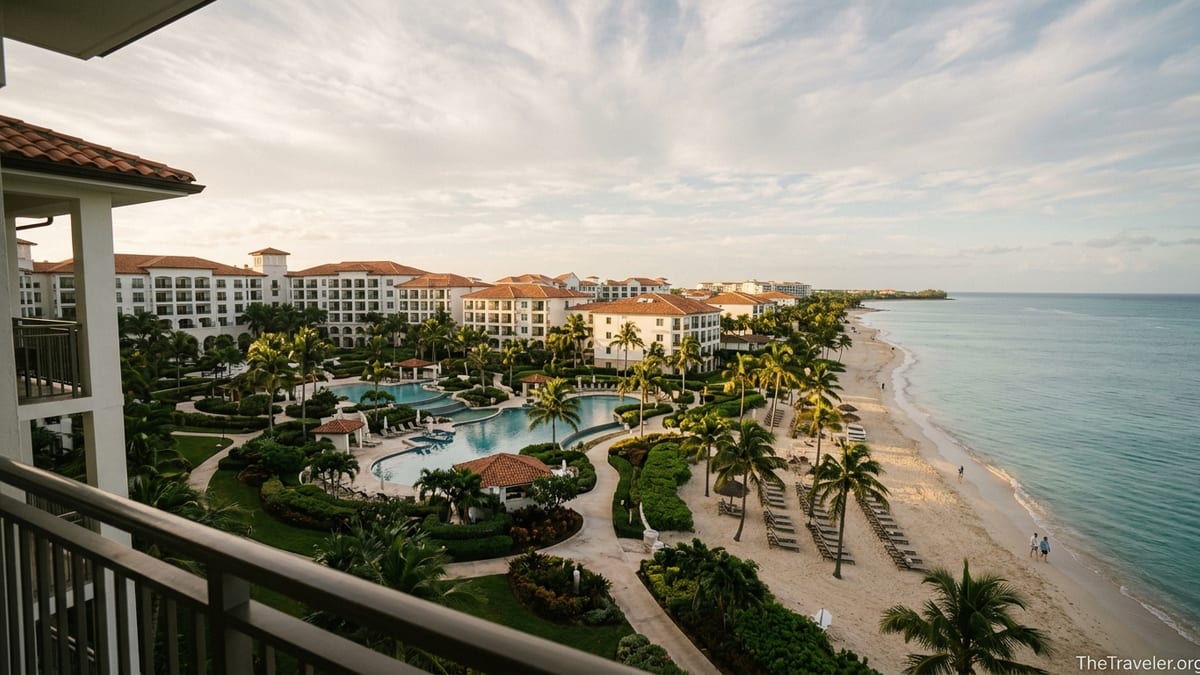
In Florida, you find a clear split between the theme-park hub of Orlando and Atlantic or Gulf Coast beach towns. Orlando alone has multiple resorts clustered near the major parks, such as villas near Walt Disney World and Universal Orlando, where families can book one-, two- or three-bedroom units with full kitchens and laundry. On the coast, resorts on Singer Island near West Palm Beach offer oceanfront towers with pools overlooking the sand, while others in the greater Fort Lauderdale and Miami area appeal to those who want nightlife and dining as much as beach time.
On the Pacific side, California options stretch from Palm Desert golf villas to coastal favorites like Newport Coast. A typical Newport Coast villa offers two bedrooms, a full kitchen and a balcony overlooking the hills and Pacific, and is popular for multigenerational trips that combine pool days with drives into Laguna Beach, Disneyland or coastal wineries. Further inland, desert resorts around Palm Springs and Rancho Mirage pair fairway views with easy access to hiking in the San Jacinto Mountains.
In the mountains, Park City in Utah has become a prime winter destination in the network, with ski-in or ski-adjacent villas a short walk from lifts and Main Street. Las Vegas is covered with a high-rise villa resort just off the Strip, ideal for those who want condo conveniences but easy access to shows and restaurants. Then there are long-time favorites on Hilton Head Island and the Myrtle Beach area, where villa-style accommodations allow you to bike to the beach or tee off at nearby golf courses without sacrificing space or privacy.
Hawaii, the Caribbean and Sun-Soaked Island Escapes
Marriott Vacation Club’s island portfolio is one of its strongest draws, particularly for travelers who would otherwise pay peak cash rates for oceanfront suites. In Hawaii, the network includes resorts on Oahu, Maui, Kauai and the Big Island, often set directly on or near the beach. For example, on Kauai you can choose between a classic beachfront property with a sweeping central pool and gardens, or a more intimate cliffside resort where many villas face the Pacific and guests spend evenings watching the sun sink into the ocean from their lanai.
On Oahu, villa-style accommodations near Ko Olina’s man-made lagoons allow families to enjoy calm swimming areas, kids’ pools and easy day trips into Honolulu without staying in the crowded high-rise zone of Waikiki. Maui and the Big Island properties, meanwhile, cater to travelers who want a blend of snorkeling, whale watching in season, and relaxed days by multi-tiered pools framed by lava rock and palms.
In the Caribbean, Aruba and St. Thomas stand out as marquee destinations in the portfolio. In Aruba, side-by-side resorts on Palm Beach combine expansive pools, beach palapas, casual bars and easy access to the island’s restaurants and casinos. An owner might use a high-point week here in January to escape winter, booking a two-bedroom ocean-view villa months in advance. In St. Thomas, hillside villas look out over turquoise bays, with ferries to neighboring islands making day trips to St. John or the British Virgin Islands straightforward.
Beyond those headline names, the club’s reach into Mexico and Central America has expanded in recent years, including a beachfront property in Cancun’s hotel zone and resorts along the Pacific coast. While these locations are not all-inclusive in the traditional sense, they position owners within easy reach of excursions such as cenote swimming, Mayan ruins, or whale-watching cruises, while retaining the condo-style comfort of having a kitchen and separate bedrooms.
Europe: Historic Cities and Seaside Villages
Marriott Vacation Club’s European portfolio is smaller than its North American one but offers a high concentration of desirable destinations. Spain is particularly well represented, with several resorts spread along the Costa del Sol. Here, villas often sit steps from the Mediterranean with shared pools, on-site restaurants and kids’ clubs, and easy day trips to places like Marbella, Malaga or Gibraltar. A typical owner itinerary might involve a week in a two-bedroom villa, renting a car to explore white-washed hill towns by day and returning for sunset drinks on the balcony.
In France, the signature destination is a resort near Disneyland Paris. Families can book townhouse-style villas with separate bedrooms and living areas, cook breakfast before heading into the parks, then retreat to quieter surroundings each evening. The combination of theme-park proximity and European countryside feel makes it a popular choice for owners with children or grandchildren.
Italy and the United Kingdom are represented through a handful of upscale resorts and city bases, often with limited inventory but strong appeal. In London, Marriott Vacation Club has historically offered city-center apartments that feel more like serviced residences than traditional timeshare villas, putting owners within walking distance of landmarks, theaters and restaurants. In the Italian countryside and on the coast, villa-style properties sit amid vineyards or near historic seaside towns, appealing to travelers who want to pair cultural sightseeing with relaxed downtime.
Crucially, Europe is also where the Interval International exchange network becomes especially valuable. Even if you cannot secure a Marriott-branded villa on your preferred dates, you may be able to exchange your week or points into affiliated resorts across Portugal’s Algarve, the Greek Islands or the Austrian Alps. Availability fluctuates, but for owners flexible on travel dates, Europe can deliver excellent value.
Asia Pacific, Australia and Emerging Destinations
In the Asia Pacific region, Marriott Vacation Club has been adding resorts to meet growing demand from both regional and long-haul travelers. In Thailand, for instance, there is a beachfront resort in Khao Lak that offers spacious apartments wrapped around a lagoon-style pool, with direct access to a quiet stretch of sand on the Andaman Sea. Another Bangkok property offers condo-style units within a high-end residential tower, ideal for city breaks that mix rooftop bars, temples and street food.
In addition, the broader Marriott Vacation Club Asia Pacific program links owners to resorts in destinations such as Phuket, Bali and the Gold Coast. While program structures can differ slightly for Asia Pacific purchasers, owners who participate in the global exchange options can connect their points to both Asian beach resorts and major cities like Singapore and Kuala Lumpur.
Australia features in the network through select beach and city locations. A typical trip might see an owner using points for a week-long stay in a coastal apartment near the Gold Coast’s surf beaches, then booking a few nights in a Marriott-branded city hotel in Sydney or Melbourne using Marriott Bonvoy points obtained by converting some of their vacation club usage. This blend of villa time and hotel stays is one of the strengths of the ecosystem for long-haul travelers.
Further afield, Interval International adds significant depth in Asia and the South Pacific, with affiliated properties in places like Fiji, the Philippines and Japan. While not all of these are Marriott-branded, they undergo vetting through the exchange company and can provide a timeshare-style base for exploring destinations where traditional hotel rooms are both smaller and more expensive during peak seasons.
Sheraton & Westin Vacation Clubs, Abound and Interval International
A major evolution in recent years has been the unification of Marriott Vacation Club, Sheraton Vacation Club and Westin Vacation Club under The Marriott Vacation Clubs umbrella. Through the Abound program, eligible owners can use their points not only at Marriott-branded resorts but also at participating Sheraton and Westin properties. That effectively opens up new beach, ski and city options without buying into multiple systems.
For example, Sheraton Vacation Club brings additional resorts in places like Kauai, Maui and Orlando, often with slightly different layouts and amenities but comparable standards. Westin Vacation Club adds premium villa resorts in popular spots such as Maui’s Kaanapali area and Palm Springs, where the signature Westin beds and wellness-focused branding appeal to travelers who care about spa and fitness offerings as much as location.
Beyond the Abound network, Interval International serves as the global exchange backbone. Marriott Vacations Worldwide owns Interval, and eligible MVC owners can be enrolled, giving them the ability to deposit their week or points-equivalent and request stays in thousands of affiliated resorts across more than 90 countries. In practice, this is how some owners use a U.S. beach week to access, for example, a ski resort in Canada, a coastal condo in Portugal or a family-friendly resort in Costa Rica.
Exchanges through Interval usually involve an additional fee, and availability can vary significantly by season and destination. Owners who travel outside school holidays or are open to shoulder seasons tend to have the best results. Still, even for those who primarily stay within the core Marriott Vacation Club network, having Interval as a backup expands long-term possibilities and helps protect against feeling locked into the same few destinations.
City Stays: Marriott Vacation Club Pulse and Urban Bases
Not every vacation involves a beach or ski slope. For travelers who love museums, restaurants and walkable neighborhoods, Marriott Vacation Club Pulse and other city-based properties provide an alternative to typical timeshare settings. These properties are usually located in the heart of major cities and offer studio or one-bedroom layouts, more like serviced apartments than sprawling villas.
In the United States, city locations have included New York, Boston, San Diego and Washington, D.C. A typical New York stay might place you near Times Square or Midtown, in a compact one-bedroom with a small kitchenette and access to a rooftop terrace. Points requirements are often lower than for large villas in Hawaii, so owners might use a modest amount of points for a long weekend in the city and save the bulk of their annual allotment for a longer beach or island stay.
Internationally, similar concepts have appeared in cities like London, with centrally located residences that make it easy to walk or ride public transport to major attractions. These city stays are particularly popular among retired owners who can travel midweek, or younger couples who want to pair a city break with a longer resort stay in the same trip.
Because inventory is limited in dense urban markets, owners often need to book these stays as soon as their booking window opens. When they do, however, they gain access to neighborhoods where traditional hotel rates can be exceptionally high, effectively using their ownership to secure prime locations for less out-of-pocket cash.
The Takeaway
Marriott Vacation Club’s value lives in its destinations. The network covers a wide spectrum: Florida theme parks and Carolina beaches, California coastlines and Utah ski slopes, Hawaiian lagoons and Caribbean coves, European theme parks and Spanish seaside villages, Thai beaches and Australian surf towns. Layer on Sheraton and Westin Vacation Clubs through Abound, plus Interval International’s global exchange reach, and a single ownership can support very different travel styles over a lifetime.
For prospective buyers, the practical question is not simply how many points you receive, but where you realistically want to go in the next five to ten years. If your dream trips line up with the network’s strengths, such as multigenerational beach weeks, annual Orlando visits or periodic long-haul escapes to Hawaii and Europe, Marriott Vacation Club can be a powerful framework for making those vacations a habit rather than a one-off splurge.
If, on the other hand, your travel wish list leans heavily toward destinations with limited timeshare presence, you will likely rely more on Interval exchanges, which require flexibility and some effort. In that case, a careful look at real-world availability, not just the headline list of potential resorts, is essential before you buy.
Either way, understanding the destination map up front is the best way to decide whether Marriott Vacation Club ownership aligns with how you actually travel, not just how you imagine you might travel someday.
FAQ
Q1. How many resorts can I access through Marriott Vacation Club and Abound?
You can typically access more than 90 villa resorts and city properties directly through The Marriott Vacation Clubs portfolio, which includes Marriott Vacation Club, Sheraton Vacation Club and Westin Vacation Club. Additional resorts are available through Interval International for eligible owners.
Q2. Do I have to stay only at my home resort?
No. While you may own a deeded interest tied to a specific home resort, the modern points-based system and Abound exchange program are designed to let you book across the broader network, subject to availability and booking windows.
Q3. Can I use my ownership to stay at regular Marriott hotels?
In some programs and years, eligible owners can convert their usage into Marriott Bonvoy points, which can then be used for stays at standard Marriott hotels. Conversion rules and values can change, so it is important to confirm current terms before counting on this option.
Q4. What kinds of destinations are strongest in the Marriott Vacation Club portfolio?
The portfolio is particularly strong in North American beach and family destinations such as Florida, Hawaii, California and South Carolina, plus desert resorts, ski areas like Park City, and established island locations in the Caribbean and Mexico.
Q5. How does Interval International expand my options?
Interval International is a separate exchange company owned by Marriott Vacations Worldwide. Eligible owners can deposit their week or points-equivalent to request stays at thousands of affiliated resorts worldwide, including many outside the core Marriott, Sheraton and Westin networks.
Q6. Are there many Marriott Vacation Club resorts in Europe?
There is a focused but appealing selection in Europe, especially in Spain’s Costa del Sol, a resort near Disneyland Paris, and a small number of city and countryside properties in places like London and Italy. Interval exchanges can add more European choices if you are flexible.
Q7. Can I book city stays with Marriott Vacation Club?
Yes. Marriott Vacation Club Pulse and other urban properties offer apartment-style accommodations in cities including New York, Boston, San Diego and London, giving owners the option of city breaks in addition to resort vacations.
Q8. How far in advance should I book popular destinations like Hawaii or Aruba?
For high-demand weeks in places like Hawaii or Aruba, many owners aim to book as soon as their booking window opens, often 10 to 12 months in advance, to secure preferred dates, views and unit sizes.
Q9. Are all-inclusive resorts common in the Marriott Vacation Club network?
Most Marriott Vacation Club, Sheraton Vacation Club and Westin Vacation Club properties are not all-inclusive. They typically offer condo-style villas with kitchens, allowing guests to self-cater or dine at on-site and local restaurants instead of paying a single all-inclusive rate.
Q10. Is Marriott Vacation Club worth it if I like to travel to new places every year?
It can be, provided the destinations you want to explore are reasonably represented in the network or accessible through Interval International. Owners who are flexible on timing and open to a mix of beach, city and mountain trips tend to get the most long-term variety out of the program.