


Naguabo is one of eastern Puerto Rico’s most atmospheric corners, with a small working harbor, river swimming holes and a quiet countryside at the base of El Yunque. It also sits in a practical spot for exploring the east coast. By car it is usually about 30 minutes from the Ceiba ferry terminal and regional airport and around an hour from San Juan’s SJU airport in normal traffic, which makes it a realistic base for some itineraries that combine rainforest, offshore islands and low-key coastal life. The question is not whether to visit, but whether you should sleep in Naguabo itself or treat it as a detour from another hub such as Ceiba, Humacao or Fajardo.
Get the latest updates straight to your inbox!
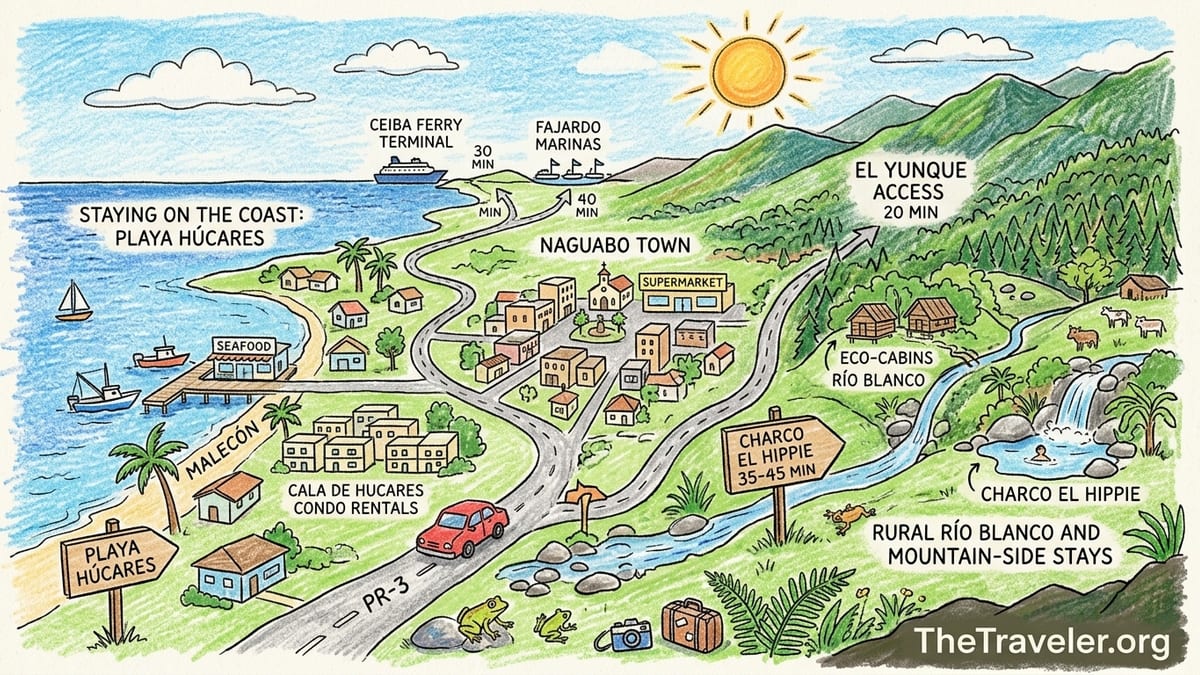
Understanding Naguabo’s Layout and Driving Times
Naguabo municipality stretches from mangrove-fringed coast to steep foothills of El Yunque. Visitors tend to experience it in three zones. Along the water there is Playa Húcares and the malecón, a modest waterfront strip with seafood restaurants, small guesthouses and walkable sea views. Inland, the rural barrios such as Río Blanco and Duque climb toward the forest, where you find riverfront cabins, small farms and a handful of eco-style stays. Then there is Naguabo Pueblo, the compact town center set inland from the bay, which has basic services, supermarkets and residential streets but less of a tourist scene than the coast.
For planning, it helps to anchor drive times. Under normal conditions, the drive from SJU to Naguabo via PR-66 and PR-3 takes roughly one hour by rental car. From Naguabo to Ceiba’s ferry terminal and regional airport it is typically about 30 minutes, depending on traffic around former Roosevelt Roads. Reaching Fajardo’s marinas usually takes 35 to 45 minutes, and Humacao’s Palmas del Mar resort area is generally 30 to 40 minutes to the south. These are practical but not negligible distances, especially after dark or in heavy rain.
Charco El Hippie, the popular waterfall and swimming hole, sits inland in the Naguabo hills. From Playa Húcares you should budget around 35 to 45 minutes each way by car along winding local roads. Southern access points to El Yunque from Naguabo’s side, near Río Blanco and Cubuy, can be as close as 20 to 30 minutes from some rural stays, but you should allow extra time because mountain roads are narrow and can slow to local traffic. Without a car, moving between coastal Naguabo, the town, Ceiba and these interior spots is difficult, and rideshare coverage is inconsistent once you leave the main San Juan metro area.
These distances frame the trade-offs. Staying directly in Naguabo cuts your daily driving to Charco El Hippie or the southern El Yunque trailheads but adds time every time you go to Fajardo marinas or Palmas del Mar. Basing in Ceiba, Humacao or Fajardo flips that equation. Understanding how often you plan to visit each area is key to choosing a base that feels like a relaxing home rather than a constant commute.
Staying on the Coast: Playa Húcares and Surroundings
Playa Húcares is not a conventional resort strip with big pool complexes and rows of beach clubs. It is a small waterfront community with a malecón, fishing skiffs and a cluster of seafood restaurants that draw Puerto Rican families on weekends. You can expect places grilling whole snapper and serving mofongo and tostones rather than high-rise hotel buffets. At night, especially on Fridays and Saturdays, there is a relaxed paseo atmosphere along the water, with music from bars and people strolling, but on weeknights it can be very quiet once dinner hours pass.
Lodging on or near this strip is a mix of small hotels, simple apartments and vacation rentals inside developments such as Cala de Hucares, a coastal complex that includes short-term rentals in condo-style buildings right by the water. Current listings in this development for October 2026 show fully air-conditioned beachfront apartments with kitchens and balconies rather than full-service hotel amenities, and many units advertise gated parking included for one car. This pattern is typical of the area. You are unlikely to find large resort pools or extensive kids’ clubs, but you can often park on-site, self-cater breakfast and walk or take a short drive to the restaurants lining the malecón.
From a practical perspective, staying on the coast makes restaurant access simple. Along the malecón you can eat fresh seafood without driving, and there are small bars for a nightcap. Supermarket access is less direct: full-size grocery stores sit closer to Naguabo Pueblo or along PR-3, roughly a 10 to 15 minute drive. For a longer stay you will probably do a supply run every couple of days. Road conditions on the main approach roads from PR-3 into Playa Húcares are generally straightforward, although you often share space with pedestrians and slow local traffic near the waterfront. Driving to Charco El Hippie from here involves leaving via PR-3 then climbing on smaller interior routes, which adds time compared to already being in the hills.
Coastal Naguabo works best if you want low-key sea views, easy access to traditional Puerto Rican food and a sense of being in a working coastal community rather than an insulated resort. A rental car is still close to essential, both for getting here from SJU and for day trips to Ceiba, Humacao and Fajardo. Travelers who imagine stepping out of a resort gate onto a wide swimming beach with hotel loungers may feel underwhelmed, but those who like watching fishing boats at sunrise and ending the day with a plate of seafood on a simple terrace tend to enjoy making Playa Húcares their base.
Rural Río Blanco and Mountain-side Stays
Río Blanco and the surrounding mountain barrios look and feel very different from the coast. These areas climb into the foothills of El Yunque, with rivers cutting through deep, green valleys and narrow roads curling up to small farms and houses. The atmosphere is quieter and cooler, particularly at night, and the sounds you notice most are coqui frogs and running water. It is here that you find many of Naguabo’s riverfront cabins, eco-lodges and countryside rentals marketed to travelers who want to wake up steps from a swimming hole or look out at forested ridges instead of the sea.
Current vacation rental listings in Río Blanco include small villas with private pools and river access, camp-style properties, and compact houses built with outdoor decks and hammocks. One example available in late 2026 is a modern container-style unit along the river with a plunge pool and parking area, described as suitable for two to three guests and clearly geared to couples or small groups. Other area properties such as farm stays and bed-and-breakfasts in the foothills near Naguabo highlight proximity to waterfalls and forest trails. While each place is different, they generally share a need for confident driving on narrow, sometimes steep roads and a willingness to be 20 to 30 minutes or more from the nearest supermarket.
Restaurant access in the mountains is more limited than on the coast. You may find small roadside kiosks or local comedores on the main interior roads, but you should not count on a strip of evening dining options within walking distance of your stay. In practice, many visitors cook in their rental kitchen or grill on-site and plan occasional trips down to Playa Húcares or Humacao for dinner. The upside is that you are closer to Charco El Hippie and to the southern access routes into El Yunque’s backcountry, which can translate into earlier starts on trail days and the ability to return to your cabin for a river swim by mid-afternoon.
Road conditions in Río Blanco and nearby interior barrios are generally paved but narrow, and in rainy periods you may encounter potholes or small washouts on the shoulders. Night driving requires extra care because of curves, limited lighting and the possibility of fallen branches. Parking at rural rentals is usually on private driveways or small clearings rather than structured garages. For these reasons, a rental car is not just helpful but indispensable here, and travelers uncomfortable driving on mountain roads may be happier basing on the coast or in Ceiba or Humacao instead.
Naguabo Town: Everyday Convenience over Scenery
Naguabo Pueblo, the inland town center, rarely appears on glossy travel marketing, but it offers some advantages if you prioritize convenience and local life over water views. Streets near the plaza include bakeries, small eateries and service businesses, and along the PR-3 corridor you find larger supermarkets, pharmacies and gas stations that serve the wider municipality. For budget-conscious travelers, simple guesthouses and apartments in or near town sometimes price lower than coastal or riverfront options while putting you closer to everyday services.
Evening atmosphere in town is functional rather than festive. You can expect local bars, cafeterias and food trucks rather than a curated tourist promenade. This can be appealing if you like seeing how people actually live and are comfortable operating in Spanish for most daily interactions. On the other hand, if you imagine walking out each night to dine next to the water or to sit at a bar with live music, you may find yourself driving to Playa Húcares several evenings a week, which somewhat undercuts the benefit of staying inland.
From a driving perspective, Naguabo Pueblo sits roughly in the middle of the region. It is slightly closer to supermarkets and the PR-53 highway connections toward Ceiba, Humacao and Fajardo than the coast, and it saves a few minutes on each run up into the mountains to reach Charco El Hippie or the southern El Yunque access points. Road conditions here are the most straightforward of the three main zones, with a grid of town streets and straightforward access to the main highways. Parking depends on your lodging choice. Some apartments and small hotels include off-street parking, while others may rely on curbside spaces.
Because buses are limited and rideshare services do not reliably cover this area, a car is still highly recommended even if you base in town. Naguabo Pueblo works well for travelers who want to split their time between errands, hikes and the occasional dinner on the malecón while keeping lodging costs relatively modest. It is less compelling if you dream of either waking up to waves or falling asleep to the sound of a nearby river, because you will mostly see those environments on day trips rather than outside your door.
Using Ceiba, Humacao or Fajardo as Your East Coast Base
Many travelers considering Naguabo also look at Ceiba, Humacao and Fajardo as alternative bases for an east coast itinerary. Each offers a different balance between convenience, amenities and atmosphere. Ceiba is the gateway for ferries to Vieques and Culebra and has a small regional airport. Humacao includes the large Palmas del Mar resort development with resort-style amenities. Fajardo has marinas for catamaran trips and established resort zones in the wider municipality, along with more dining options and services backed by years of tourism infrastructure.
Ceiba’s appeal is largely logistical. If you have early morning ferries to Vieques or Culebra, basing within a short drive of the terminal can shorten your day and reduce stress. Lodging immediately around the former Roosevelt Roads base remains limited and tends toward small hotels and rentals scattered along the coast and hills. You gain quick access to ferries and can still reach Naguabo in about 30 minutes by car, but you lose the distinctive malecón atmosphere of Playa Húcares or the river ambience of Río Blanco. Restaurant variety near the terminal itself is modest, so you may drive to Fajardo or Naguabo for more characterful meals.
Humacao’s Palmas del Mar area functions more like a self-contained resort district. Here you find condo resorts, some hotel-style properties, golf courses and organized activities. There are multiple restaurants, beach access points and small convenience markets inside the complex, though larger supermarkets sit a short drive away in town. For families who prize resort pools, on-site security and a range of services within a short walk or golf-cart ride, this can be a strong base. Driving times from Palmas del Mar to Naguabo hover around 35 to 45 minutes by car in normal traffic, which makes day trips to Playa Húcares or Charco El Hippie feasible but not effortless.
Fajardo remains the most established east coast hub north of Humacao. Its marinas host catamaran and boat tours to Icacos and nearby cays, and the broader municipality has a range of hotels and resorts as well as suburban-style services such as larger supermarkets and chain restaurants. Nightlife is still low-key compared with San Juan but livelier than Naguabo or Ceiba, especially around weekends. From central Fajardo to Naguabo you should plan on 35 to 45 minutes by car, depending on which part of town you start from. If your itinerary is heavy on boat trips, Bioluminescent Bay tours and offshore islands but you still want to visit Naguabo once or twice for seafood and scenery, basing in Fajardo often makes logistical sense.
In all three of these bases you can find properties with formal parking, easier highway access and, in Humacao and Fajardo, more varied restaurant scenes than in Naguabo itself. The trade-off is intimacy and sense of place. Naguabo feels distinctly small-town and coastal-rural. Ceiba, Humacao and Fajardo feel more like service hubs, resort complexes or marina towns. If you prioritize minimising driving to ferries and excursions and you like having supermarkets and restaurants close to your door, one of these might suit you better, with Naguabo visited as a highlight rather than a daily backdrop.
Key Trade-offs: Atmosphere, Access and Practicalities
Choosing where to stay around Naguabo is less about finding a single best area and more about aligning atmosphere with your daily logistics. Playa Húcares places you in a compact waterfront community with seafood restaurants and a weekend promenade feel but limited beach-style lounging and more modest supermarket access. Rural Río Blanco and nearby mountain-side stays give you river access, forest views and quiet nights, but they demand confident mountain driving and planning ahead for groceries and dinners. Naguabo Pueblo offers more everyday services at your doorstep but fewer obvious scenic rewards.
By comparison, Ceiba, Humacao and Fajardo tilt the balance toward convenience. Ceiba excels if ferry timing is central to your plan. Humacao’s Palmas del Mar serves travelers looking for resort amenities, structured activities and family-friendly pools. Fajardo is ideal if offshore islands and boat tours dominate your itinerary and you still want some restaurant and nightlife variety without returning to San Juan every night. In all three, you trade some of Naguabo’s small-scale charm for bigger infrastructure.
For specific activities the trade-offs are clearer. If visiting Charco El Hippie and exploring the southern reaches of El Yunque are priorities, staying in or near Río Blanco or at least within Naguabo municipality cuts your daily driving and lets you time your swims and hikes for quieter periods. If your main focus is day trips to Vieques or Culebra or repeated catamaran excursions from Fajardo, then basing in Ceiba or Fajardo can prevent long pre-dawn drives from Naguabo. For travelers most interested in a few seafood dinners and a short stroll along a working waterfront, a night or two in Playa Húcares combined with a broader base elsewhere can deliver the experience without committing your whole trip.
Across all options, having a rental car remains extremely useful, bordering on necessary. Regional buses are limited, timetables can change and rideshare coverage drops sharply once you leave the San Juan metropolitan area and Luquillo–Fajardo corridor. With your own vehicle you can move between coast and mountains, supermarket and trailhead on your own schedule, and you can adjust routes if you encounter roadworks or weather-related delays. Planning for at least one dedicated grocery stop early in your stay, wherever you base, will make life easier, especially in rural and coastal Naguabo where large supermarkets are a short drive away rather than on the corner.
The Takeaway: Who Should Stay Overnight in Naguabo?
Overnighting in Naguabo makes the most sense for travelers who value atmosphere and nature access more than resort infrastructure. If your ideal evening is parking the car and walking a few minutes to a small seafood place on the malecón, or grilling on the deck of a riverfront cabin after a day of hiking to waterfalls, Naguabo rewards you with a sense of being woven into local rhythms. Couples, small groups of friends and independent travelers comfortable driving, speaking some Spanish and planning their own meals are especially well-suited to basing in Playa Húcares, Río Blanco or the foothill barrios.
Families with young children who rely on pools, predictable on-site dining and structured activities might be happier using Humacao’s Palmas del Mar or a Fajardo-area resort as their main base, treating Naguabo as a day trip for Charco El Hippie and a waterfront lunch. Travelers whose trips revolve around early ferries to Vieques and Culebra may prefer Ceiba for at least the nights surrounding those crossings, visiting Naguabo when schedules allow. Visitors who do not want to rent a car, or who are uneasy driving mountain roads in the rain or after dark, are generally better off in areas with stronger transport options and denser services.
For many itineraries, the sweet spot is a hybrid approach. You might start with two or three nights in a river or mountain-side stay around Río Blanco to focus on El Yunque’s southern trails and Charco El Hippie, then shift to Fajardo or Humacao for boat trips, resort time and easier access to supermarkets and restaurants. Alternatively, you could anchor your trip in Fajardo or Ceiba and reserve one night in Playa Húcares to experience Naguabo’s seafood strip at an unhurried pace. Thinking of Naguabo not as a mandatory hub but as one flexible base among several will help you build an east Puerto Rico route that fits your travel style, time frame and comfort with driving.
FAQ
Q1. Do I need a rental car to stay in Naguabo?
Yes. Public transport in and around Naguabo is limited, and rideshares are not reliable in rural areas. A rental car makes it realistic to reach Playa Húcares, Río Blanco, Charco El Hippie, southern El Yunque access points and nearby towns like Ceiba, Humacao and Fajardo on your own schedule.
Q2. How long does it take to drive from San Juan’s SJU airport to Naguabo?
Under normal conditions the drive from SJU to Naguabo via PR-66 and PR-3 takes about one hour by car. Traffic, construction and weather can extend this, so it is wise to allow extra time if you are arriving in the late afternoon or during holiday periods.
Q3. Is Playa Húcares a good swimming beach?
Playa Húcares is better known for its malecón, seafood restaurants and small harbor feel than for wide, sandy swimming areas. Some sections of shoreline are suitable for a quick dip, but if you want broad swimming beaches with more sand and waves you will likely drive to other parts of the east coast.
Q4. What are road conditions like driving up to Río Blanco and Charco El Hippie?
Main routes are paved but often narrow, winding and with limited lighting. You may encounter potholes, steep sections and slow local traffic. Driving in daylight and taking your time is recommended, especially in rainy weather. A standard rental car is usually sufficient, but confident driving is important.
Q5. Are there supermarkets and pharmacies close to Naguabo accommodations?
Full-size supermarkets and pharmacies are mostly clustered in or near Naguabo Pueblo and along PR-3. From Playa Húcares or many rural stays you should expect a 10 to 20 minute drive to stock up. Plan an initial shopping trip early in your stay so you do not need to make frequent runs for basic supplies.
Q6. Is Naguabo a good base for visiting Vieques or Culebra?
Naguabo can work, but it adds extra driving. The Ceiba ferry terminal is usually about 30 minutes from Naguabo by car, so early morning departures require pre-dawn starts. If multiple ferry trips are central to your plan, staying closer to Ceiba for those nights is often more convenient.
Q7. How is the evening atmosphere in Naguabo compared with Fajardo or Humacao?
Naguabo’s evenings are low-key. Playa Húcares has a pleasant waterfront feel with seafood restaurants and music on weekends, but the town is generally quiet. Fajardo and the resort zones around Humacao offer more varied dining, bars and resort activities, though they remain calmer than San Juan.
Q8. Is Naguabo safe for visitors?
Like most small towns in Puerto Rico, Naguabo sees both local life and ordinary urban issues, but most visitors who exercise normal travel precautions feel comfortable. Lock your car, avoid leaving valuables visible, drive carefully on mountain roads and follow any local advice from your host about parking and walking after dark.
Q9. How many nights should I plan in Naguabo itself?
If you are focusing on Charco El Hippie and southern El Yunque access, two to three nights in Naguabo or nearby Río Blanco lets you explore without rushing. Travelers using Fajardo, Ceiba or Humacao as main bases might reserve just one night in Playa Húcares for a relaxed seafood evening and short coastal stay.
Q10. Who is better off visiting Naguabo only as a day trip?
Travelers who prefer full-service resorts, extensive restaurant choices and minimal driving after dark may be happier basing in Humacao or Fajardo and coming to Naguabo for a single day to see Charco El Hippie and enjoy a meal on the malecón. Those without a car, or who are uncomfortable with rural driving, should also treat Naguabo as a guided or day-trip destination rather than an overnight base.