


More news on this day
Record-breaking wildfires and searing heat are reshaping the peak holiday season in France and Spain in late July 2026, raising pressing questions for travelers about safety, disruption and whether to stick with summer plans.
Get the latest news straight to your inbox!
How severe are the current wildfires in France and Spain?
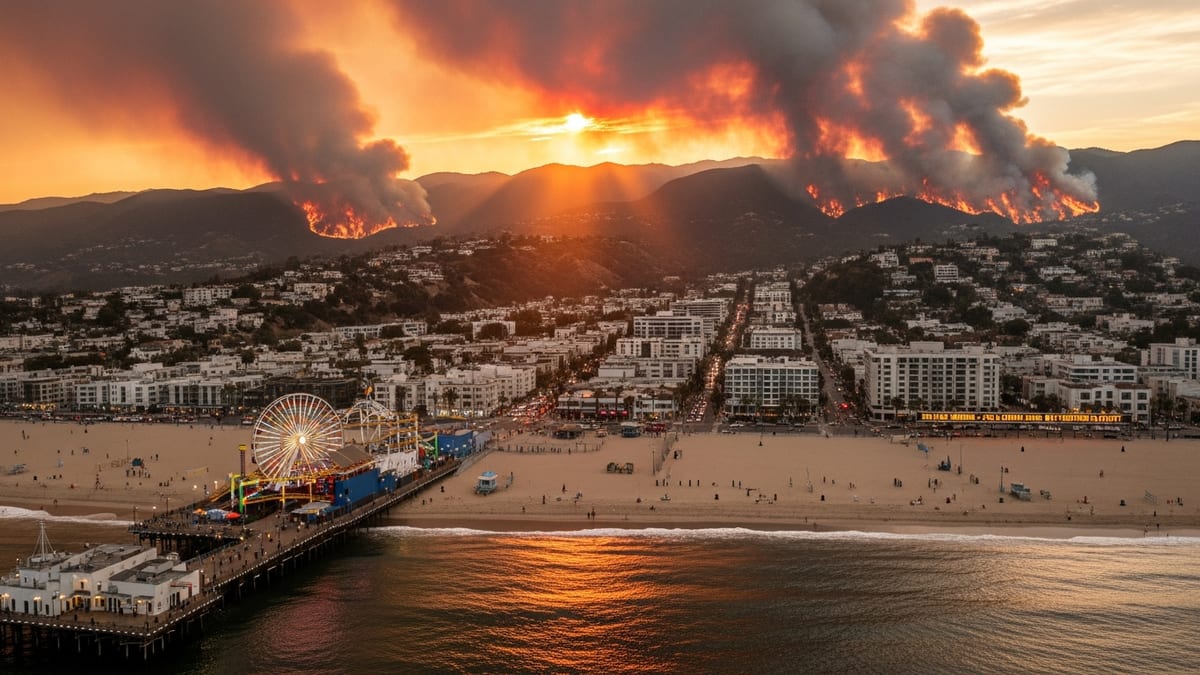
Publicly available information shows that France and Spain are facing one of their most intense wildfire periods in recent years, fueled by repeated heatwaves, drought and strong winds. In southwest France, a vast blaze near Bordeaux has burned an area described in local coverage as several times the size of Paris, forcing large-scale evacuations and straining national firefighting resources. Reports indicate that more than 220,000 people have been displaced in France alone as crews struggle to contain the flames.
In Spain, a series of major fires has scorched tens of thousands of hectares across central and eastern regions. Coverage from Spanish and international outlets notes that at least one blaze has been described as the largest recorded wildfire in the country, with firefighting tactics shifting toward protecting communities and infrastructure rather than fully extinguishing fast-moving fronts. Together, the fires in France and Spain are affecting hundreds of thousands of residents and visitors across multiple provinces.
Climate monitoring agencies and European institutions link the severity of this year’s fires to an exceptionally hot and dry start to the summer. June 2026 ranked among the hottest on record for western Europe, and national meteorological services in both countries have warned that successive heatwaves have left forests and scrubland tinder-dry. This combination of high temperatures, parched vegetation and gusty winds has created conditions in which new ignitions can spread rapidly.
Despite the dramatic images of burning hillsides and smoke plumes, it is important to recognize that the affected zones, while large, are still limited relative to the overall territory of both countries. Much of mainland France and Spain, particularly major cities and many coastal resorts, remains outside the immediate fire fronts. However, the scale of evacuations and the pressure on emergency services mean that even distant travelers may feel knock-on effects.
Are flights, trains and road travel still operating?
Airports in France and Spain are largely operating normally, according to airline updates and travel-industry reporting, with flights continuing to major hubs such as Paris, Madrid and Barcelona. So far, wildfires have had more impact on ground access than on runways, with occasional smoke-related visibility issues and localized closures of approach roads. Travelers are being advised to allow extra time for transfers and to monitor airline notifications for any last-minute schedule adjustments.
Rail services have been more directly affected in some areas. In southwest France, regional media and traveler reports describe disruption to rail lines running through forested zones near the main fires, including temporary suspensions or rerouting of services. Similar, though more localized, interruptions have been reported in parts of Spain where lines cross high-risk or actively burning areas, particularly in inland provinces. High-speed intercity routes between major urban centers are, for now, mostly maintaining service, but timetables can change on short notice if conditions worsen.
On the roads, closures are common around active fire zones as authorities prioritize access for firefighting vehicles and protect evacuees. Motorways and main highways that cross affected regions may experience rolling closures, diversions or reduced speed limits because of smoke and emergency operations. Drivers planning long-distance trips through southwest France, central Spain or high-risk rural areas are being urged by transport operators to check live traffic information shortly before departure and to be prepared to reroute.
These transport disruptions remain highly localized and dynamic. A destination that is reachable one day may face access restrictions the next if winds shift or a new hotspot emerges. Travelers with fixed itineraries that include overland connections through heavily affected regions should build in contingency time, consider flexible tickets where possible and keep accommodation providers informed of potential delays.
What are governments and forecasters advising travelers?
National travel advisories from several governments currently do not discourage all travel to France or Spain, but they emphasize heightened caution, especially in regions with active wildfires and extreme heat alerts. Recent updates from European and non-European foreign ministries highlight the risk of rapidly changing conditions and recommend that travelers avoid entering fire-affected areas, respect evacuation orders and follow local safety instructions.
Meteorological services in both countries have issued heat alerts for large parts of the Iberian Peninsula and southern France, warning of temperatures exceeding 40 degrees Celsius in some inland valleys. Spain’s civil protection authorities have specifically flagged that the arrival of another heatwave at the end of July is likely to push fire danger to “extreme” levels in several regions, prolonging and potentially intensifying the wildfire crisis. French forecasters have issued similar warnings for parts of the southwest and Mediterranean coast.
European Union agencies are closely tracking the situation through satellite monitoring and fire-risk mapping. The European Forest Fire Information System shows widespread high to very high danger ratings across much of Spain and southern and western France, with pockets of extreme danger where large fires are already burning. In response, the EU has deployed additional firefighting aircraft and support teams to both countries under its civil protection mechanism, reflecting the regional scale of the emergency.
For travelers, this means that official messaging is focused less on blanket prohibitions and more on informed risk management. Visitors are encouraged to stay tuned to local news, sign up for regional emergency-alert systems where available, and familiarize themselves with hotel or campsite evacuation procedures. Those heading to rural areas, national parks or popular hiking zones are being urged to check whether access has been restricted or trails have been closed due to high fire danger.
Which regions are most affected, and where remains relatively calm?
The worst-affected areas in France are currently in the southwest, including forested zones inland from the Atlantic coast near Bordeaux and the Gironde region. Media reports describe extensive evacuations from small towns, campsites and holiday homes in these corridors, along with closures of some popular lakes, beaches and forest recreation areas nearby. The economic impact is already being felt across the local tourism sector, with wineries, guesthouses and seasonal businesses facing cancellations during what is normally their busiest period.
In Spain, large fires have been concentrated in inland provinces such as Guadalajara and parts of Castile and León, as well as areas of Valencia and Aragón. These regions include important natural parks and rural tourism destinations, where walking routes, campgrounds and mountain roads may be closed. Agricultural zones have also been hit, with damage to farmland and forest plantations that provide seasonal jobs and attract agritourism.
By contrast, many of Europe’s headline city destinations remain relatively insulated from direct fire impacts, though they are still experiencing high temperatures. Paris, Madrid, Barcelona, Seville, Lyon, Toulouse and Valencia continue to welcome visitors, with major attractions open and urban services functioning. Popular coastal stretches along parts of the Atlantic and Mediterranean also remain accessible, although some resorts near affected forests are dealing with smoky skies or heightened fire restrictions.
Travelers should understand that conditions can vary dramatically over short distances. A single region may include both evacuated villages and unaffected towns only a short drive away. As a result, itinerary planning now requires a more granular approach, focusing on specific provinces and municipalities rather than broad national labels. Checking recent local coverage and, where available, regional government updates for the precise area you intend to visit has become essential.
So, is it safe to travel to France and Spain right now?
For most travelers visiting major cities and well-served coastal areas, current information suggests that trips to France and Spain remain broadly feasible, albeit in the context of intense heat and elevated wildfire risk. Airports are open, many rail links are running, and hotels and attractions outside of active fire zones are welcoming guests. However, the margin for disruption is significantly higher than in a typical summer, particularly for those planning road trips, rural stays or outdoor-focused holidays.
Safety considerations now revolve less around the likelihood of direct exposure to flames and more around the risk of fast-changing conditions, smoke, heat stress and sudden evacuations. Travelers who are elderly, have respiratory or cardiovascular conditions, or are traveling with very young children may wish to avoid the hottest inland areas and any region currently experiencing major fires. For others, it becomes a question of risk tolerance and flexibility, with a strong emphasis on staying informed each day.
Before departure, travelers are advised to review their insurance policies to ensure coverage for natural disasters and trip disruption, confirm refund or rebooking options with airlines and accommodation providers, and map out alternative routes in case a planned road or rail corridor closes. Once on the ground, minimizing time in forests and scrubland, respecting fire bans, and avoiding activities that could inadvertently ignite new fires are key elements of responsible travel.
Ultimately, the unfolding wildfire season in France and Spain is a reminder that Mediterranean summers are changing. While large parts of both countries remain open and welcoming to visitors, travel now demands more preparation, situational awareness and flexibility than in the past. Those who choose to proceed with their trips should do so with a realistic understanding of the risks, a plan for contingencies and a readiness to adapt quickly as conditions evolve.