


Taiwan remains one of East Asia’s best value destinations, but by 2026 prices for trains, accommodation and attractions have shifted enough that older budget guides are unreliable. This 2027-focused guide compares real-world costs in Taipei, Hualien and Kaohsiung, then builds practical seven-day budgets and itineraries so you can see how much a week in Taiwan really costs, in New Taiwan dollars and major foreign currencies.
Get the latest updates straight to your inbox!
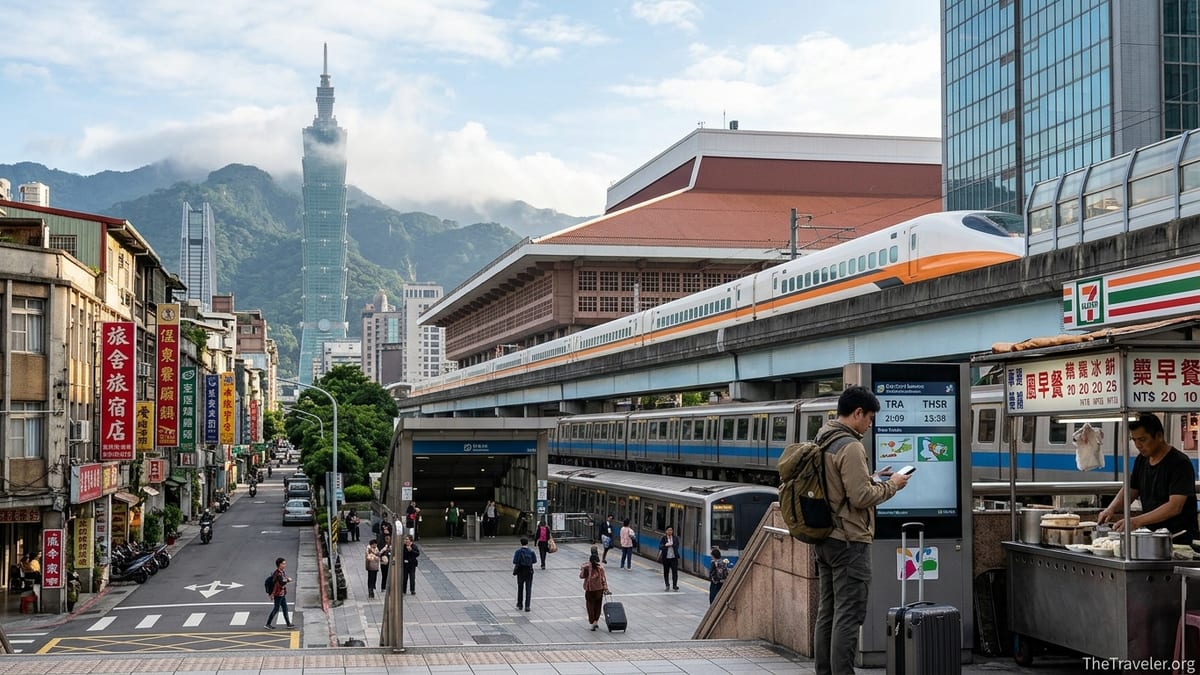
Key 2027 budget assumptions and currency overview
Before looking at individual cities, it helps to anchor some realistic numbers. Using late 2026 rates, a reasonable working exchange is roughly NT$30 to 1 US dollar, NT$33 to 1 euro and NT$24 to 1 Singapore dollar. Actual 2027 rates will fluctuate, but these rounded figures are close enough for a planning-stage budget and easy mental math.
Throughout this guide, international flights are kept separate from on-the-ground expenses. From North America or Europe, return fares to Taiwan in 2026 commonly range from about NT$18,000 to NT$35,000 depending on season and sales, but those costs vary too widely to fold into a sample weekly budget. Here we focus on what you spend after landing: accommodation, food, local transport, intercity trains, attractions, data, laundry and contingencies.
For orientation, a frugal backpacker who stays in dorms, rides conventional trains and eats mostly at night markets can realistically keep on-the-ground costs close to NT$1,800 to NT$2,200 per day, or around NT$12,000 to NT$15,000 for seven days in 2027. A midrange couple sharing hotels, mixing local food with some cafes and using high-speed rail is more likely to spend in the region of NT$4,500 to NT$6,000 per day in total, or NT$32,000 to NT$42,000 for a week. A comfort-focused solo traveler or couple who chooses private rooms in stylish hotels, frequent high-speed rail and more paid excursions may see budgets closer to NT$7,000 to NT$9,000 per day, or NT$49,000 to NT$63,000 for seven days.
These are not luxury numbers. Ultra-high-end hotels, private drivers and fine dining can push daily costs far beyond this range, but for most leisure travelers in 2027, these ballpark figures align with current 2026 prices and help frame the detailed examples below.
Where to stay: Taipei, Hualien and Kaohsiung price comparison
In Taipei, hostel beds and midrange hotels cluster around several convenient districts. Recent 2026 rate checks for popular hostels in Ximending, one of the city’s liveliest areas, show weeknight dorm beds typically starting around NT$700 to NT$900, with weekends often climbing to NT$1,200 or more. Near Taipei Main Station, capsule-style hostels and dorms still appear from about NT$400 to NT$600 on quieter midweek dates, but beds closer to the station and with better reviews trend higher, often around NT$700 to NT$900.
For private rooms, central Taipei business hotels and boutique properties in Ximending, Taipei Main Station and Zhongshan commonly price standard doubles around NT$2,200 to NT$3,500 on a normal weekday in late 2026, with many pushing toward NT$3,800 or more on Friday and Saturday. Very compact but clean double rooms in older buildings near the station can still sometimes be found in the NT$1,800 to NT$2,200 range, especially when booked early.
Compared with Taipei, Hualien remains noticeably cheaper for similar-quality accommodation. Hotels within an easy walk of Hualien Station include midrange chains such as Kindness Hotel Hualien and Finders Hotel Hualien Station, where standard rooms in 2026 often list around NT$1,800 to NT$2,400 on midweek nights. Sea-facing hotels nearer the waterfront and branded resorts can be higher, but for a typical traveler basing near the station for city and coast exploration, a realistic benchmark of about NT$1,800 to NT$2,200 per room per night works well for 2027 planning.
Kaohsiung, anchored around Kaohsiung Station and the newer Zuoying district near the high-speed rail terminal, generally sits between Taipei and Hualien in price. Older but centrally located business hotels close to Kaohsiung Station still surface in the NT$1,600 to NT$2,200 range for a double room booked in advance. Newer properties near Formosa Boulevard or the Pier-2 Art Center often run NT$2,400 to NT$3,200. Budget hostels are fewer than in Taipei, but capsule beds and dorms exist from roughly NT$500 to NT$800 on weeknights, again with weekend surcharges. Across all three cities, expect noticeably higher prices during Lunar New Year, the long weekend around National Day in October and major festival periods.
Moving around: MRT, local buses and rail in 2027
Taipei’s MRT remains the backbone of most travelers’ local transport. A short ride between central stations typically costs in the NT$20 to NT$30 range when paid with an EasyCard, while longer cross-city trips may reach NT$60 or slightly more. Buying a reusable EasyCard at airport or MRT counters usually costs NT$100 as a refundable deposit, with travelers loading any usable amount as stored value. For a visitor staying in central Taipei, budgeting about NT$120 to NT$180 per day for MRT and buses provides a safe margin, even with several trips.
Airport transfers are another core cost. From Taoyuan International Airport to Taipei Main Station, the airport MRT currently charges around NT$150 for a standard express ride. Private hotel-arranged cars and taxis cost far more, usually well over NT$1,000, but for most budget and midrange travelers the airport MRT or regular buses are the default choices.
Intercity travel brings Taiwan Railways conventional trains and the Taiwan High Speed Rail into play. The official standard-class adult fare for a reserved seat from Taipei to Zuoying, the high-speed rail station serving Kaohsiung, is NT$1,490 as of 2026. Recent fare tables confirm this figure for standard reserved seats, with slightly lower prices for non-reserved cars and higher fares for business class. The high-speed line runs along the western plains and does not serve Hualien, which sits on Taiwan’s east coast; travelers heading to Hualien use Taiwan Railways Administration (TRA) trains instead.
A typical non-reserved high-speed rail ticket between Taipei and Zuoying is a little cheaper than the reserved fare, and periodic promotions offer “early bird” discounts of around 10 to 35 percent on selected departures when booked weeks ahead. For example, late 2026 discount listings show Taipei to Zuoying standard-class seats reduced from NT$1,490 to around NT$1,445 or less on certain services with advance purchase quotas. TRA express trains between Taipei and Hualien, such as the Puyuma and Taroko services when operating, usually fall in the NT$440 to NT$520 range depending on train type and seat class, with slower local trains costing less but adding time.
Food, coffee and everyday expenses across three cities
One reason Taiwan remains affordable is the breadth of low-cost dining. In famous Taipei night markets, a filling meal built from items such as a NT$70 bowl of beef noodles, a NT$40 skewer of grilled meat and a NT$35 cup of bubble tea can still come in under NT$150 to NT$200. Fried chicken cutlets often cost around NT$70 to NT$90, while portions of oyster omelette or stinky tofu are frequently in the NT$60 to NT$90 band. Kaohsiung and Hualien night markets tend to be marginally cheaper, with many similar snacks a little below Taipei prices.
Convenience stores such as 7-Eleven and FamilyMart anchor ultra-budget meals. A triangle onigiri rice ball typically costs around NT$35, simple bento boxes and microwaveable meals often sit near NT$85 to NT$110, and canned coffee or tea drinks range from about NT$30 to NT$50. A traveler relying heavily on convenience stores and market food can keep daily food costs close to NT$300 to NT$450, especially outside heavily touristed pockets.
Moving up a notch, small traditional restaurants serving set meals or noodles usually price main dishes between NT$120 and NT$200. In central Taipei districts like Zhongshan or around Taipei Main Station, many ramen shops list bowls around NT$230 to NT$320, and independent cafes commonly charge about NT$120 to NT$180 for a latte and NT$150 to NT$250 for a light meal like a sandwich or salad. Western-style bistros and burger places in Ximending, Kaohsiung’s Pier-2 area or near Hualien’s waterfront more often charge NT$300 to NT$500 per main course, not including drinks.
For 2027 planning, a practical daily food budget looks like roughly NT$400 to NT$500 for a thrifty backpacker, NT$700 to NT$1,000 for a midrange traveler mixing local eats and cafes, and NT$1,200 or more for those who prefer sit-down restaurants and branded coffee chains for most meals.
Attractions, Taroko access and what is realistically open
Attractions can be a comparatively small slice of a Taiwan budget, but some headline experiences are not free. In Taipei, the observatory levels of Taipei 101 continue to charge a significant admission, with adult on-site tickets in 2026 around NT$600 to NT$800 depending on packages and time slots. Major museums such as the National Palace Museum have adult tickets that are usually under NT$400, while smaller city museums and historic sites often cost much less or are free on certain days.
Hot spring experiences vary widely. Public outdoor pools in Beitou or Wulai may charge something in the order of NT$40 to NT$200 per session, while more polished private-room hot spring hotels near Xinbeitou, Jiaoxi or Beitou’s main park often list hourly room rates from NT$800 upward for two people. Simple coastal day trips from Taipei, such as regional train journeys to Tamsui or Fulong, add only modest extra rail fares, generally below NT$100 to NT$150 each way.
In Hualien, the biggest question mark for 2027 is Taroko National Park. The April 3, 2024 earthquake caused serious damage that is still being repaired in late 2026, with official notices and independent trail-status trackers confirming that several famous gorge trails remain fully closed and others are only partially open. Park bulletins through 2026 describe phased reopenings alongside ongoing road controls in the Taroko Gorge section, and emphasize that some inner gorge areas and popular hikes are still off limits or subject to time-windowed access.
For budgeting, this means visitors should avoid assuming a full menu of gorge attractions or long hikes will be available in 2027. However, limited sections of the park, viewpoints and short walks that have reopened still offer scenic value with modest additional costs, such as shared-van transfers or hotel shuttle buses from Hualien Station in the NT$200 to NT$500 range one way. Taroko itself does not charge a general admission fee, so most spending relates to transport, optional guided tours and food, rather than tickets at trailheads.
Sample seven-day budget 1: Backpacker based mainly in Taipei
This first case assumes a solo backpacker spending seven nights based in Taipei, with day trips to nearby sights, using dorm beds and cheap eats. International flights are excluded. A realistic 2027 target might be about NT$14,000 to NT$16,000 for the week on the ground, or roughly US$470 to US$530 at NT$30 to the dollar.
Accommodation is the largest fixed cost. Staying in a good hostel dorm in Ximending or near Taipei Main Station at an average of NT$850 per night over a mix of weekdays and one weekend comes to roughly NT$5,950 for seven nights. Laboring to chase the very cheapest weeknight beds could bring this down a little, but weekend rates and limited inventory often erase the savings.
Food and everyday expenses for this traveler might average NT$450 per day, combining night-market dinners, convenience-store breakfasts and the occasional sit-down noodles or cafe. Over seven days that totals around NT$3,150. Local transport, mostly MRT and buses, may average about NT$150 per day if the traveler makes a day trip to places like Tamsui or Maokong on several days, so about NT$1,050 for the week, including an airport MRT return at around NT$300 total.
Add a modest attractions and extras budget of NT$3,500 for one high-ticket activity such as Taipei 101, museum entry, a hot spring visit, a hacked-together coastal day trip by train and buses, prepaid data eSIM or SIM (in the NT$300 to NT$600 range for a week of data), laundry and contingencies. Together, these items bring the total to roughly NT$13,650. Allowing a small buffer, a rounded estimate of NT$15,000 on the ground is a comfortable seven-day backpacker budget for 2027.
Sample seven-day budget 2: Midrange couple combining Taipei and Kaohsiung
The second scenario follows a couple sharing double rooms, splitting costs and traveling between Taipei and Kaohsiung by high-speed rail in standard class reserved seats. They spend three nights in Taipei, three in Kaohsiung and a final night back in Taipei before departure. On-the-ground spending excluding flights might reasonably fall in the NT$34,000 to NT$40,000 range in 2027, or around US$1,130 to US$1,330 at NT$30 to the dollar.
For accommodation, assume a solid midrange hotel near Taipei Main Station at around NT$2,800 per night for four nights, totaling NT$11,200, and a similar standard of hotel near Kaohsiung’s Formosa Boulevard station at about NT$2,400 per night for three nights, totaling NT$7,200. Together this produces NT$18,400 for seven nights, or NT$9,200 per person when shared.
Intercity transport uses Taiwan High Speed Rail. A standard reserved ticket from Taipei to Zuoying costs NT$1,490 per person in 2026, and the same applies in reverse, so a return pair of tickets totals NT$2,980 per person, or NT$5,960 for two. If the couple books early and secures modest early-bird discounts on one leg, they might shave several hundred dollars off this amount, but the full fare provides a conservative 2027 estimate.
Local transport and food combined might average about NT$1,400 per day for the couple, including MRT, buses, occasional taxis or rideshares, night markets, cafes and two or three restaurant meals in the NT$300 to NT$500 per main-course range. Over seven days this comes to around NT$9,800. Add an attractions and extras budget of around NT$7,000 to NT$8,000 to cover Taipei 101 tickets for two, museum visits, a harbor or island excursion in Kaohsiung, coffee and desserts, laundry and a contingency reserve. Summed together, these figures yield a seven-day on-the-ground spend of about NT$36,000 to NT$38,000 for the couple, excluding flights.
Sample seven-day budget 3: Comfort traveler including Hualien and Taroko
The final example targets a comfort-focused traveler who wants to visit both coasts in seven days, combining Taipei, Hualien and Kaohsiung. Because the high-speed rail does not serve Hualien, this itinerary uses a mix of conventional TRA trains and high-speed rail, plus private or hotel-arranged transfers. The tighter routing and added hotel moves increase costs and complexity compared with staying mostly in one region.
Assume two nights in Taipei, two nights in Hualien and three nights in Kaohsiung, staying in well-rated three-and-a-half to four-star hotels near major transport hubs. Reasonable late-2026 rates suggest budgeting around NT$3,600 per night in Taipei, NT$2,400 per night near Hualien Station and NT$3,000 per night in a stylish Kaohsiung hotel. This produces roughly NT$7,200 for Taipei, NT$4,800 for Hualien and NT$9,000 for Kaohsiung, totaling about NT$21,000 for seven nights.
For intercity travel, a reserved TRA express ticket between Taipei and Hualien can be costed around NT$500 one way in planning terms, so NT$1,000 return. A high-speed rail leg between Taipei and Zuoying remains NT$1,490 in standard class reserved. To mesh the loop in a week, a traveler might take TRA from Taipei to Hualien and back on days two and four, then ride high-speed rail from Taipei to Kaohsiung on day five and return on day seven if flying out of Taoyuan. Altogether this can approach NT$3,000 to NT$3,500 in longer-distance train tickets.
Within cities, MRT and buses might average NT$200 to NT$250 per day, amounting to around NT$1,600 for the week. Food for a comfort traveler who favors sit-down meals and better cafes could run close to NT$1,300 per day, so roughly NT$9,100 over seven days. For Taroko, where key trails remain disrupted, an organized small-group day tour from Hualien using permitted sections and viewpoints, or a hotel-arranged shuttle and short walks, might cost somewhere in the NT$1,800 to NT$3,000 range once 2027 operations stabilize. Adding Taipei observatory tickets, museums, a Kaohsiung harbor cruise and a few taxis, a realistic excursions and extras pot might be around NT$8,000 to NT$10,000.
Summing accommodation, food, local and intercity transport and excursions gives a total near NT$42,000 to NT$45,000 for this week-long, three-city trip in 2027. For a couple sharing the same route and rooms, the per-person cost would fall significantly, showing how multi-city comfort travel becomes much better value when expenses are divided.
Day trips from one base versus changing cities
A question many visitors raise is whether to base entirely in Taipei and make long day trips, or to change hotels and pay for more long-distance trains. Looking purely at money, staying in one Taipei hotel for seven nights often unlocks better nightly rates and eliminates repeated check-in and cleaning surcharges. A traveler could, for example, spend a bit extra on a more comfortable Taipei room at NT$3,000 per night instead of paying similar amounts in three cities, and then devote the saved time and mental energy to nearby excursions.
However, Taiwan’s geography and rail system make certain day trips inefficient. Visiting Hualien and the limited open sections of Taroko National Park as a very long day trip from Taipei is physically possible using an early-morning TRA express and late return, but round-trip tickets alone approach NT$1,000 and travelers spend five or more hours on trains. If they instead stay one or two nights in Hualien, they pay perhaps NT$2,400 to NT$4,800 extra in accommodation but gain full days on the coast and a more relaxed visit to the gorge, at the cost of one or two hotel moves.
Kaohsiung, by contrast, is better suited to a day trip by high-speed rail, at least for those willing to pay the NT$1,490 Taipei–Zuoying fare each way. A same-day return would cost nearly NT$3,000 in high-speed rail tickets and still carve out around four hours of train time, which only makes sense for travelers with very limited nights in Taiwan. Once a visitor plans to spend two or three days exploring Kaohsiung’s harbor, art districts and nearby islands, it becomes more logical to change hotels and base there, accepting one high-speed rail journey each way.
In 2027, with Taroko access still constrained and some famous gorge trails likely to remain closed or limited, it is worth questioning whether a seven-day itinerary that tries to squeeze Taipei, Hualien and Kaohsiung together offers good value. Each additional city adds train fares, hotel transfers and some dead time. For many travelers, combining just Taipei with either Hualien or Kaohsiung in a single week can provide a more relaxed, cheaper and more rewarding trip.
Practical money matters: payments, fees and price spikes
On the ground, Taiwan is steadily becoming friendlier to cards and mobile payments, but cash still plays a bigger role than in some neighboring economies. Larger hotels, chain stores, department stores and high-speed rail counters accept international credit cards, but smaller noodle shops, market stalls and some family-run guesthouses often remain cash only. Night markets in Taipei, Hualien and Kaohsiung increasingly show QR codes for local mobile wallets, yet visitors without Taiwanese bank accounts usually rely on cash for these purchases.
International cards work at most ATMs operated by major banks, though one-off withdrawal fees from both the local bank and the card issuer can add up. To control costs, many travelers take out a larger amount, such as NT$6,000 to NT$10,000, once or twice per trip rather than making small daily withdrawals. Using cards where possible, such as on high-speed rail sites, hotel bookings and larger restaurant bills, helps reduce the need for repeated ATM visits.
Weekend hotel surcharges are a clear feature of Taiwan’s domestic travel scene. In central Taipei and Kaohsiung, it is normal to see Friday and Saturday night rates for the same room run NT$600 to NT$1,500 higher than Tuesday or Wednesday, and popular coastal areas near Hualien can also jump sharply. The effect intensifies around major holidays: Lunar New Year in late January or February, the long weekend around National Day on October 10, and peak summer weekends. During these times, otherwise midrange rooms can briefly behave like high-end stays, and budget travelers may find dorms sold out or priced close to small hotels.
Travelers should also factor in small recurring costs that rarely appear in headline budgets. Self-service laundromats in Taipei, Hualien and Kaohsiung typically charge around NT$60 to NT$80 per wash cycle and a similar amount for drying, so a full laundry day may run NT$150 including detergent. Prepaid data eSIMs or airport SIMs for a week of high-speed data often cost in the NT$300 to NT$600 band, an amount worth planning up front. A contingency fund of at least NT$2,000 to NT$3,000 per person for unexpected taxi rides, medical visits or schedule changes gives breathing room in any 2027 plan.
Itinerary ideas, cost comparison and 2027 value assessment
Putting all of this together, it is easier to visualize concrete seven-day plans. A backpacker might spend all seven nights in a Taipei hostel near Ximending, taking day trips to Jiufen, Tamsui and Maokong by a mix of regional trains, buses and gondola, and budgeting roughly NT$15,000 on the ground. A midrange couple could split their week between four nights in Taipei and three in Kaohsiung, riding high-speed rail one way on a discounted departure and returning on a standard fare, with a combined spend in the mid-NT$30,000s excluding flights.
A comfort traveler who insists on both Hualien and Kaohsiung within the same week might follow a loop of Taipei to Hualien by TRA, return to Taipei, then high-speed rail to Kaohsiung and back, accepting a total budget nearer NT$42,000 to NT$45,000 to cover multiple hotel zones, train tickets and curated excursions such as limited-access Taroko viewpoints and Kaohsiung harbor cruises. For many visitors, this trip offers variety at a cost, both financial and in terms of time spent packing and transferring.
From a pure value perspective, Taiwan in 2027 still compares very favorably with Japan, South Korea and many Western destinations at similar levels of comfort. Night-market food, inexpensive intercity trains and widely available midrange hotels keep daily spending moderate, especially for couples or small groups who share fixed costs. The most significant upward pressures on budgets come from weekend hotel surcharges, festival spikes, and headline attractions such as observatory tickets and high-speed rail fares.
Travelers willing to avoid public-holiday weeks, book key trains and hotels a few months ahead, pay attention to Taroko National Park access notices and concentrate on two main bases instead of three or four will continue to find Taiwan one of Asia’s best-value trips in 2027. Whether you are backpacking through Taipei’s alleys, sipping coffee by Kaohsiung’s harbor or watching the Pacific from Hualien’s coast, careful planning turns these current prices into a transparent, manageable budget rather than an unpleasant surprise.