


More news on this day
American Airlines is beginning to roll out one of its most significant cabin upgrades in years, introducing new Flagship Suite business-class seats, refreshed premium economy cabins and updated amenities across parts of its widebody fleet as it prepares newly delivered and retrofitted aircraft for long-haul travel.
Get the latest news straight to your inbox!
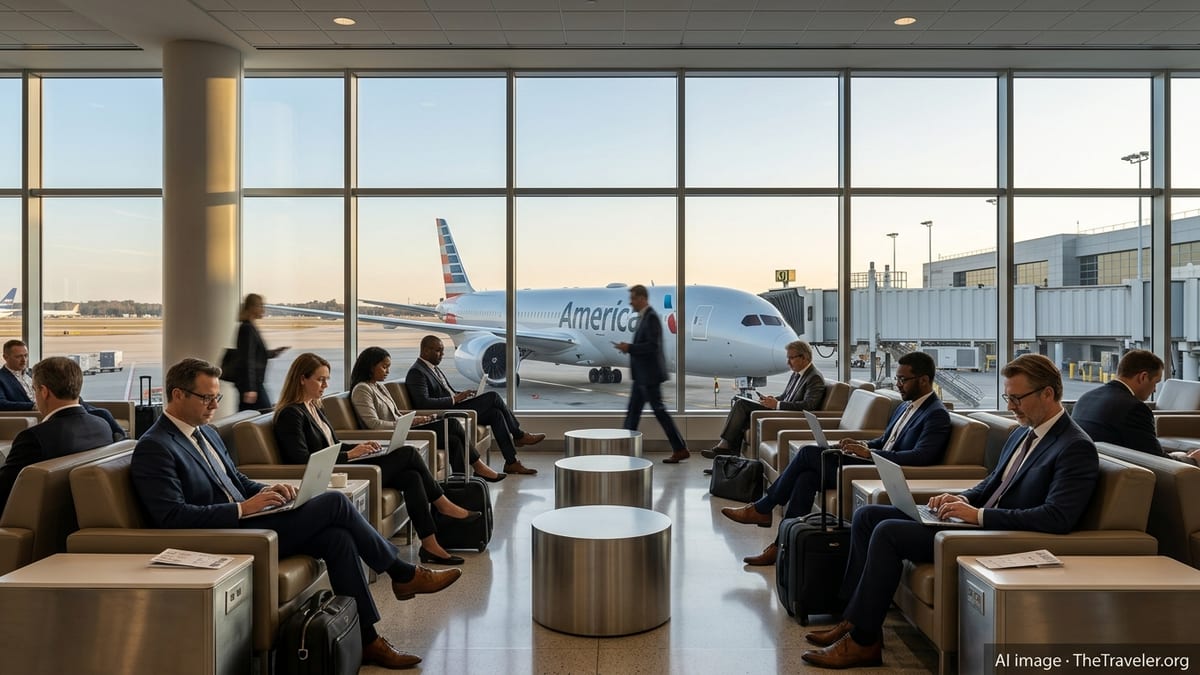
Flagship Suite Seats Take Center Stage on Long-Haul Jets
Publicly available information indicates that American’s latest Boeing 787-9 aircraft are leading the upgrade, featuring the carrier’s new Flagship Suite business-class product on select routes. The suites include privacy doors, expanded personal storage and a chaise-style seating position aimed at creating a more residential feel in the sky. The layout increases the proportion of high-yield seats at the front of the aircraft while keeping lie-flat beds as a standard for long-haul business travel.
According to published coverage and company filings, the new 787-9s pair these suites with an enlarged premium economy cabin, giving travelers an intermediate option between traditional economy and the most expensive seats. Reports describe this latest generation of cabins as a key part of American’s strategy to lift revenue by offering more premium seats on long-distance routes, particularly across the Atlantic and to South America and Asia.
The rollout is not limited to newly delivered jets. Planning documents and investor materials indicate that American intends to retrofit its existing Boeing 777-300ER fleet with the Flagship Suite product, replacing older first and business-class layouts with a single, more consistent premium cabin. The move is expected to simplify the onboard offering and reduce the number of different seat types across the long-haul fleet.
Additional widebody types are scheduled to follow. Disclosures highlight that the design direction established on the 787-9 is expected to inform refits on other long-haul aircraft, including the Boeing 787-8 and, over time, parts of the 777-200 fleet, as American works toward a more unified premium experience.
Premium Economy and Main Cabin See Quiet but Meaningful Changes
While the Flagship Suite branding draws most of the attention, the upgrades extend beyond the front cabin. American’s latest 787-9 layout adds a larger premium economy section that features redesigned seats with more privacy, enhanced headrests and increased storage. Travel industry reports note that the carrier views premium economy as a growth area, responding to demand from travelers who are willing to pay extra for comfort but do not require a full business-class suite.
In the main cabin, the new interiors introduce updated lighting, refreshed finishes and larger seatback entertainment screens on select aircraft. Company communications about the broader onboard refresh reference 4K-capable displays, new charging options such as USB-C ports and improved device storage points, reflecting a shift toward more tech-focused cabins even in economy.
These changes are part of what American describes in its public materials as a renewed focus on customer experience, which also includes revised soft products such as new amenity kits, updated bedding and expanded food and beverage options in premium cabins. For long-haul travelers, the result is a more visible distinction between cabin classes, with incremental improvements at each price point.
Industry analysts point out that by adding more premium seats while modernizing economy, American is aligning itself with a broader trend among major global airlines, which are leaning into high-yield cabins without abandoning efforts to keep economy competitive through technology and design upgrades.
Single-Aisle A321XLR Jets Poised to Bring Suites to Thinner Routes
Beyond widebodies, American’s forthcoming Airbus A321XLR aircraft are expected to play a central role in the upgrade program. The long-range, single-aisle jets are slated to receive a customized interior featuring Flagship Suite business-class seats in a herringbone layout, along with a smaller premium economy section and standard economy in the rear. This configuration is designed for transatlantic and transcontinental routes that do not require the capacity of a widebody but still attract high-paying passengers.
Planning information shared in recent years indicates that the first A321XLR deliveries were initially targeted for the mid-2020s, with updated guidance suggesting entry into service after regulatory certification is complete. When those aircraft arrive, they are expected to replace older premium-configured narrowbodies on some long-haul domestic and near-international routes, bringing enclosed suites to markets that previously offered only traditional lie-flat seats.
Travel industry coverage suggests that the A321XLR interior will mirror many of the design cues seen on the new 787-9s, including modern finishes, larger inflight entertainment screens and upgraded connectivity. That consistency is intended to make it easier for frequent travelers to understand what product to expect, regardless of whether they are flying on a widebody or a narrowbody aircraft.
For leisure travelers, the introduction of suites on a single-aisle jet could translate into more choice on long-haul point-to-point routes from secondary U.S. cities to Europe and beyond. Airlines across the Atlantic are racing to deploy the A321XLR on thinner routes, and American’s decision to outfit the aircraft with its flagship premium product positions it to compete for high-yield demand in those markets.
Lounges, Soft Products and Digital Tools Support the Hardware Refresh
American’s aircraft upgrades are being accompanied by investments on the ground and in the overall travel experience. Publicly available corporate presentations outline plans to expand and refurbish premium lounges, including additional Flagship-branded locations in major hubs such as Miami and Charlotte. These lounges are intended to complement the Flagship Suite cabins by offering a consistent premium journey from check-in to arrival.
At the same time, the airline has introduced updated amenity kits in premium cabins, featuring branded skincare products and redesigned packaging, as well as refreshed bedding, including new duvets and pillows. Reports on the onboard food and beverage program describe expanded champagne partnerships and upgraded coffee offerings, aligning the soft product with the elevated positioning of the new cabins.
Digital tools are also part of the modernization push. American has expanded connection-assistance technology in several hub airports, using messaging and rebooking capabilities to help customers navigate irregular operations. These tools are presented in company materials as a way to make disrupted journeys less stressful, complementing the physical improvements in the cabin.
For travelers, these developments mean that the experience around the flight is evolving alongside what is offered onboard. A more modern lounge network, enhanced inflight service and improved digital support collectively reinforce the higher-end image that the Flagship Suite product is meant to project.
What the Upgrade Means for Travelers Planning 2026 Trips
For passengers booking flights over the next year, the modernization program introduces both opportunities and some uncertainty. Only a subset of American’s long-haul fleet features the latest Flagship Suite cabins today, and retrofit schedules for aircraft such as the Boeing 777-300ER and 787-8 are unfolding gradually. Travelers focused on experiencing the newest product are advised by travel reports to pay close attention to aircraft type and seat maps when selecting flights, as not every 787-9 or 777 operates with the upgraded interior.
Travel media coverage notes that early deployments of the new cabins are concentrated on high-profile long-haul routes from major hubs, reflecting a common industry strategy of placing flagship products on marquee city pairs first. Over time, as more aircraft are delivered and retrofitted, a larger share of transatlantic and transpacific services is expected to feature suites and the latest premium economy seats.
Even for those flying on older configurations, the broader refresh of amenities, food and beverage and digital services is likely to be noticeable in the coming months. Taken together, these changes suggest that American is repositioning itself more firmly in the premium travel segment, betting that demand for upgraded cabins and services will remain strong.
As the program progresses, the balance of aircraft with and without the new interiors will continue to shift. For travelers, that makes 2026 a transition period in which careful flight selection can mean the difference between a familiar layout and one of the most modern business-class suites currently offered by a large U.S. airline.