


More news on this day
Holiday travelers moving through Tampa International Airport on Wednesday, November 25, 2026, faced a growing number of flight delays as stormy weather along the East Coast and heavy pre-Thanksgiving demand strained airline schedules, creating longer waits at gates even as the airport itself remained open and operating.
Get the latest news straight to your inbox!
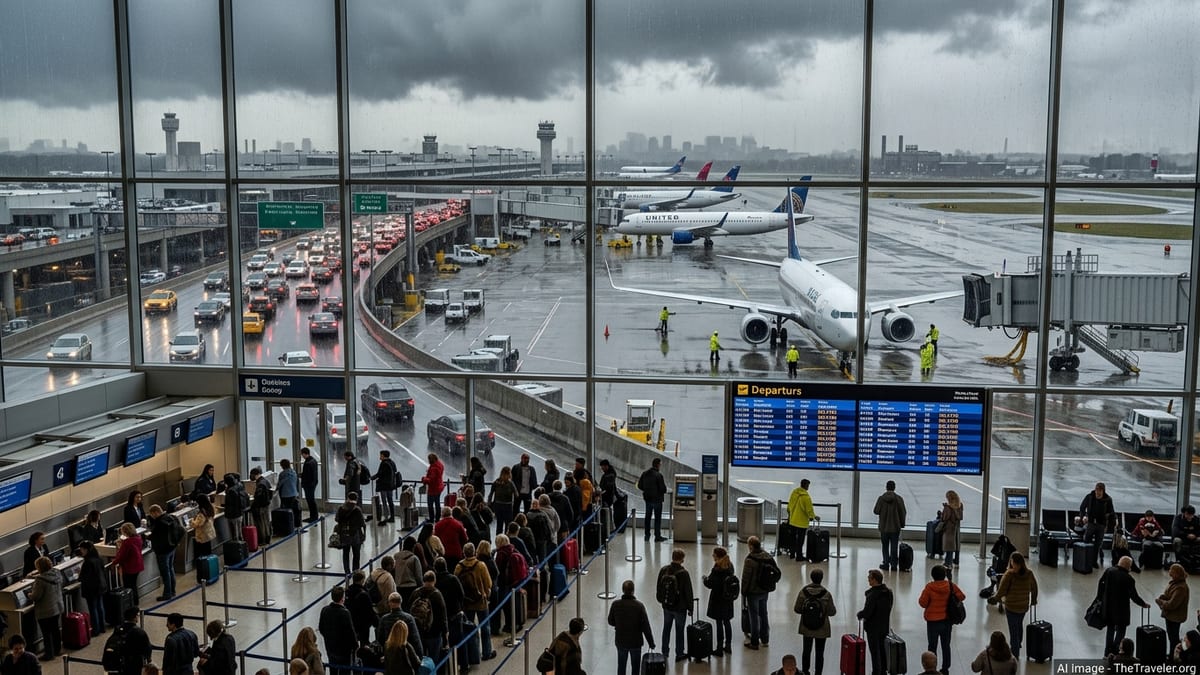
Stormy Thanksgiving setup slows air and road travel
Wednesday, November 25, 2026, was one of the busiest travel days of the Thanksgiving period, and a multi-day storm system affecting parts of the East Coast and Midwest added to congestion across highways and major hubs. Forecasts from national meteorological outlets on Wednesday afternoon highlighted rain, gusty winds and low clouds along key corridors, conditions that can reduce runway capacity and extend spacing between aircraft, particularly at large Northeast and Midwestern airports. Those constraints can ripple outward through airline networks as aircraft and crews fall behind their planned rotations.
The system brought heavy rain and strong winds to parts of the mid-Atlantic and New England from late Wednesday into Thursday, with forecasters warning of possible disruptions to both road and air travel during peak Thanksgiving movements. While Florida’s Gulf Coast, including Tampa, avoided the worst of the wind and rain seen farther north, airlines operating at Tampa International were still exposed to delays upstream at hubs such as New York, Atlanta and Chicago, where weather-related traffic management initiatives were in effect at different points during the day.
Federal forecasts described the weather impact as a potential source of scattered delays rather than a nationwide shutdown. However, the sheer volume of passengers concentrated into a small number of peak days meant that even modest schedule disruptions translated into long queues at check-in counters, security checkpoints and boarding gates, particularly during the morning and late afternoon waves of departures.
How Wednesday unfolded at Tampa International
Data from public flight-status boards for Tampa International on Wednesday showed a pattern typical of a heavy holiday travel day affected by regional weather issues. Many departures left more or less on time, but a noticeable share experienced delays ranging from several minutes to more than an hour, especially on routes tied into East Coast and Midwest hubs. Individual flight trackers listed multiple Tampa departures with posted delays of 20 to 40 minutes, and some services recorded longer hold times as aircraft awaited release slots or incoming connections from weather-affected areas.
At the same time, real-time information from the Federal Aviation Administration’s public status page for Tampa indicated no full-airport ground stop or formal delay program targeting Tampa International on November 25. That meant the FAA was not restricting overall arrival or departure rates for the airport itself, and operations such as takeoffs, landings and ground handling continued under normal local procedures. The delays that passengers encountered were instead largely tied to specific airlines and routes within their wider networks, reflecting late-arriving aircraft, crew repositioning and congestion at connecting airports.
Regional monitoring services that track aggregate performance described Tampa’s conditions on Wednesday as featuring many delayed flights but no closure of the airfield. Flight-status snapshots taken through the day showed banks of departures labeled as delayed alongside others marked on time, underscoring that the disruption was uneven. For travelers, that translated into a lottery of experiences: some passengers moved through with relatively little difficulty, while others faced extended gate waits, missed connections and last-minute schedule adjustments.
National strain from earlier system issues and continued high demand
Conditions in Tampa on Wednesday did not occur in isolation. In the days leading up to the Thanksgiving rush, U.S. airlines and airports were already working through the aftermath of a nationwide ground stop connected to an upgrade of Federal Aviation Administration systems earlier in November. Federal and airline briefings described how a new router introduced during the upgrade flooded older equipment with data, leading to a temporary halt in flight departures across the country. Although that incident had been resolved before Thanksgiving week and FAA systems were reported to be stable, it created residual schedule disruptions as carriers repositioned aircraft and crews.
Separately, one of the United States’ largest carriers experienced a technology outage around its primary hub earlier in the week. The failure led to delays and cancellations centered on that hub, but the resulting equipment and crew imbalances spread to other cities as aircraft rotated through their networks. By the time the pre-Thanksgiving peak arrived on Wednesday, national traffic flows were still sensitive to further disruption, whether from weather, local operational issues or additional minor system glitches.
Against that backdrop, travel volumes remained extremely high. Forecasts from national travel organizations ahead of the holiday projected more than 80 million people in the United States traveling at least 50 miles between Tuesday, November 24, and the Monday following Thanksgiving. Even if actual totals shift slightly from projections, the Wednesday before Thanksgiving routinely ranks among the busiest days of the year for both airports and highways. That combination of heavy demand, underlying network fragility and active weather meant that travelers at airports like Tampa saw elevated risk of delays even without a local ground stop or closure.
Impact on Tampa travelers and what caused individual delays
For passengers passing through Tampa International on November 25, the practical impact of these conditions showed up in longer processing times and unpredictable departure boards. With more passengers arriving earlier than usual to hedge against delays, security checkpoints and check-in counters experienced heavy surges at typical morning and evening peaks. Those flows were in line with pre-Thanksgiving patterns reported in other large U.S. airports, where lines sometimes extended well beyond standard queuing areas, particularly during the busiest hours.
Behind the scenes, airlines were contending with multiple causes of delay. Weather at origin or destination airports, particularly where heavy rain, wind or low clouds reduced runway throughput, triggered traffic management initiatives that slowed departures system-wide. Aircraft scheduled to operate flights from Tampa sometimes arrived late from weather-affected cities, compressing the time available for cleaning, refueling and crew changes. In some instances, carriers also faced crew duty-time limits, which can require replacing pilots or flight attendants if earlier delays have pushed them close to statutory working-hour caps. Those crew-related factors are not always visible on departure boards but can extend waits once they occur.
Passengers with connections through major hubs were particularly vulnerable. A late departure from Tampa could still arrive early enough to make a planned connection under normal circumstances, but when earlier operations at the hub had been disrupted, connection windows shrank or disappeared. That dynamics led some travelers to be rebooked onto later flights, occasionally arriving at final destinations much later than originally planned. At the same time, some flyers reported relatively smooth journeys, especially on point-to-point routes unaffected by the worst of the weather or where airlines had extra capacity to absorb minor delays.
What travelers should check for the rest of the holiday period
With the Thanksgiving travel period extending through Monday, November 30, Tampa-area passengers should expect conditions to vary over the coming days as the coastal storm system moves northeast and airlines continue to adjust schedules. Forecasts indicate that the heaviest rain and wind will affect areas far from Tampa, but connecting flights through affected hubs may still face periodic restrictions. Travelers flying on Thanksgiving Day itself or over the weekend could see comparatively lighter crowds than on Wednesday, yet schedules will remain tight, and any new disruption can still propagate across networks.
Because Tampa International did not face a formal FAA ground stop or extended airport-wide delay program on November 25, future disruptions are more likely to come from airline-specific decisions or weather events affecting other parts of the country rather than from local operational constraints. Travelers are therefore advised to monitor their individual flight status through airline apps or websites beginning 24 hours before departure and again on the day of travel. Same-day notifications can flag gate changes, revised departure times or equipment substitutions that may affect seating and baggage allowances.
Passengers whose flights are significantly delayed or canceled should review their carrier’s current travel alerts and rebooking policies, which some airlines have kept in place following the earlier nationwide system issues. These advisories can allow date or route changes without standard change fees on affected itineraries, although exact eligibility varies by airline and route. For those yet to travel home from Thanksgiving gatherings, building extra time into connections, traveling with essential items in carry-on luggage and considering earlier-in-the-day departures where possible remain prudent steps as the holiday travel period continues.