


More news on this day
Millions of Americans are setting out for Thanksgiving 2026 amid one of the busiest travel weeks of the year, with AAA projecting more than 81 million trips of at least 50 miles and forecasters warning that powerful coastal and Pacific storms, lingering disruption from a recent nationwide ground stop and crowded highways could combine to slow journeys across much of the United States.
Get the latest news straight to your inbox!
Near-record Thanksgiving travel despite slight dip from 2025
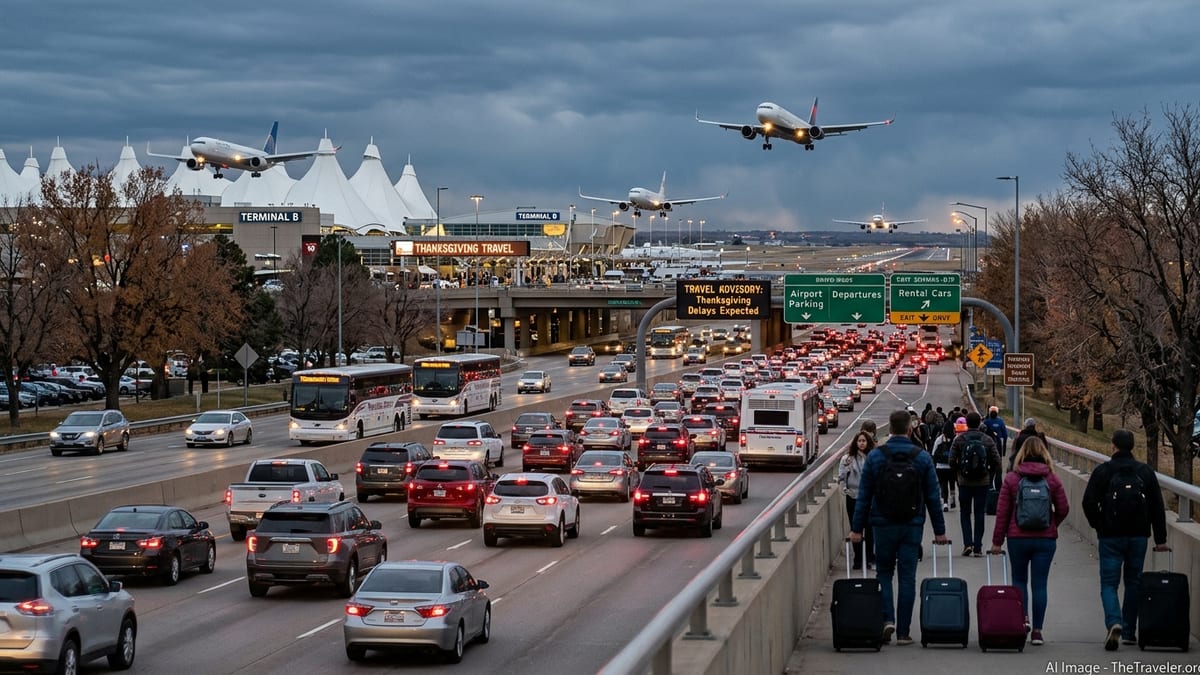
AAA forecasts that 81.5 million people in the United States will travel 50 miles or more from home between Tuesday 24 November and Monday 30 November 2026. The projection is marginally below the estimated 81.6 million travelers over the same period in 2025, ending a three-year run of increases but keeping overall volumes close to record levels. Road trips are expected to account for the vast majority of journeys, with air, rail and intercity bus travel making up a smaller share.
AAA’s national outlook indicates that nearly 90 percent of Thanksgiving travelers are likely to drive, despite fuel prices that remain higher than pre-pandemic averages. The association notes that many motorists are adjusting their departure and return times to avoid the heaviest congestion windows around major metropolitan areas, particularly on the afternoon and early evening before Thanksgiving and on the Sunday and Monday that follow the holiday.
In regional forecasts, some large hubs are preparing for traffic that will buck the slight national slowdown. Denver International Airport, for example, has projected passenger volumes above last year’s levels even as overall U.S. travel edges down. Other major airports, including those in the New York, Atlanta, Chicago and Los Angeles areas, expect some of their busiest days of the year as Thanksgiving coincides with school breaks and early holiday-season travel.
Air travel faces weather threats and recent ground stop aftershocks
Airlines, airports and federal regulators are entering the Thanksgiving period only days after the Federal Aviation Administration ordered a nationwide ground stop on 13 November 2026. According to the Department of Transportation and FAA summaries, departures were halted for roughly four hours and 45 minutes while officials responded to network instability that affected multiple air traffic facilities. The event led to more than 17,000 delayed or canceled flights and caused crew- and aircraft-positioning issues that some carriers have continued to work through in the lead-up to the holiday.
FAA documentation indicates that the ground stop has been linked in preliminary findings to the installation of new routers at facilities in Arkansas and Texas, which generated data loads that older equipment at several centers could not process reliably. Federal officials have said they are still investigating the incident’s root cause and have pledged additional safeguards before any broader technology changes are implemented. For Thanksgiving travelers, the main implications are the risk of residual schedule irregularities, particularly at hubs that saw the largest backlogs during the November disruption, and the possibility that airlines will operate with fewer spare aircraft and crew to absorb new delays.
Real-time flight tracking services are already recording significant disruption as the holiday period ramps up. By the afternoon of Wednesday 25 November, FlightAware data showed thousands of delays across the United States, though cancellations remained relatively limited. The pattern mirrors recent pre-Thanksgiving travel seasons, when most passengers eventually reach their destinations but increasing numbers experience missed connections, extended tarmac waits or late-night arrivals as carriers work to recover from storm systems and operational snags.
Coastal nor’easter and Pacific storms threaten holiday itineraries
Weather is emerging as the most immediate concern for many Thanksgiving trips. Forecasters at AccuWeather and the National Weather Service are tracking a strengthening storm system along the Eastern Seaboard that is expected to bring heavy rain, strong onshore winds and coastal flooding from the Carolinas to New England through Thanksgiving Day and into Friday 27 November. Meteorologists warn that wind gusts could reach 40 to 45 miles per hour in major Northeast cities, with localized stronger gusts near the coast and an AccuWeather Local StormMax wind potential of around 80 miles per hour in exposed areas.
The storm has already prompted high-profile schedule changes. In New York City, organizers of the Macy’s Thanksgiving Day Parade decided to postpone the event for the first time in its 100-year history, rescheduling it from Thursday to Saturday because of concerns about high winds and driving rain along the route. Authorities in coastal communities from South Carolina northward are preparing for major coastal flooding around high tide, which could temporarily close roads, inundate low-lying neighborhoods and complicate access to some barrier islands during peak travel hours.
On the other side of the country, a series of Pacific systems is bringing periods of heavy rain and mountain snow to the West Coast, particularly to Washington, Oregon and parts of California. Forecasters expect another storm to move into the Pacific Northwest on Thanksgiving Day, producing downpours on key highway corridors and snow at higher elevations in the Cascades and northern Sierra Nevada. While many Western airports anticipate operating near schedule before the strongest precipitation arrives, airlines have warned that visibility reductions, turbulence and icing conditions on some routes could still cause delays, especially for flights crossing the mountains or operating into smaller regional fields.
Road, rail and bus travelers navigate congestion and localized hazards
With nearly three-quarters of Thanksgiving travelers expected to drive, highways remain the focus for many families heading to and from gatherings. Transportation data firm INRIX projects that the heaviest road congestion will fall on the Tuesday and Wednesday before Thanksgiving, as well as on Sunday and Monday at the end of the long weekend. Urban bottlenecks are likely around major cities including Los Angeles, San Francisco, Seattle, Dallas, Atlanta, Chicago, Washington, New York and Boston, particularly in the late afternoon and early evening when commuter traffic overlaps with long-distance holiday trips.
The weather-related risks for drivers vary sharply by region. Along the Southeast and mid-Atlantic coasts, heavy rain, ponding on roadways and strong crosswinds could reduce visibility and make driving hazardous at times, especially on bridges and causeways. Farther north, from New Jersey through coastal New England, forecasters expect the combination of strong winds, saturated ground and high astronomical tides to produce pockets of coastal flooding, scattered power outages and debris on roads. In the West, wet and occasionally windy conditions are forecast along stretches of Interstate 5 and Highway 101, while snowfall at mountain passes could require tire chains, reduce speeds and, in some locations, temporarily shut key routes.
Rail and intercity bus networks are also gearing up for heavy demand. National passenger rail operator Amtrak has added capacity on several Northeast Corridor and state-supported routes around the holiday window, while warning that severe weather could affect operations on lines exposed to coastal flooding, downed trees or washouts. Bus companies report brisk bookings on popular corridors such as Los Angeles to the Central Valley, New York to Washington and Dallas to Houston, reflecting continued interest in lower-cost alternatives to flying, particularly on short- and medium-distance routes where train frequencies are limited.
What Thanksgiving travelers should monitor in the coming days
For those still en route or preparing to depart, the next several days will hinge on how weather systems evolve and how quickly transport networks can recover from any interruptions. Forecasters say the East Coast storm is expected to weaken as it lifts into Atlantic Canada after Friday, reducing the risk of additional large-scale disruption for return journeys later in the weekend. However, lingering impacts such as coastal flooding damage, downed power lines and saturated ground could continue to affect local roads, commuter rail lines and airport operations in some areas beyond the immediate storm window.
In the West, another round of Pacific moisture is forecast to bring additional rain and mountain snow into parts of the Northwest and northern California through the weekend, although much of the interior United States is expected to see comparatively quieter conditions. Travelers crossing the Rockies, Sierra Nevada or Cascades by road or air should keep a close eye on updated mountain weather advisories and be prepared for chain requirements, reduced visibility and possible short-notice closures on the highest passes.
Across all modes, transportation officials and travel providers are urging passengers to build extra time into their plans and to rely on official information sources for updates. Airline customers are advised to monitor carrier apps and flight-status tools regularly, confirm that their contact details are current for rebooking notifications and understand their options if weather or operational issues cause missed connections. Drivers are encouraged to check state transport department sites or 511 services for real-time road and traffic information, verify that vehicles are fuelled and winter-ready before setting out, and adjust departure times where possible to avoid the busiest windows identified by AAA and other forecasters.
While the combination of near-record traveler numbers, an unusually strong Thanksgiving nor’easter and residual strain from this month’s FAA ground stop is already producing delays and schedule changes, transportation agencies and operators emphasize that most journeys are still expected to go ahead. For many families, that will mean extra patience at airports, longer drives on congested highways or revised plans around parades and outdoor events, but still a realistic prospect of reaching their holiday tables over the long weekend.