


Landing at Denver International Airport is just the beginning of the journey. For many visitors, the real adventure starts once you pick up a rental car and head toward downtown Denver, Boulder, or the Rocky Mountains. This guide walks you through how rental cars work at Denver International Airport, what to expect from shuttles and deposits, how Colorado’s toll roads and traction laws can affect your bill, and whether renting a car is actually worth it for your trip.
Get the latest updates straight to your inbox!
How Denver Airport Rental Car Pickup Works
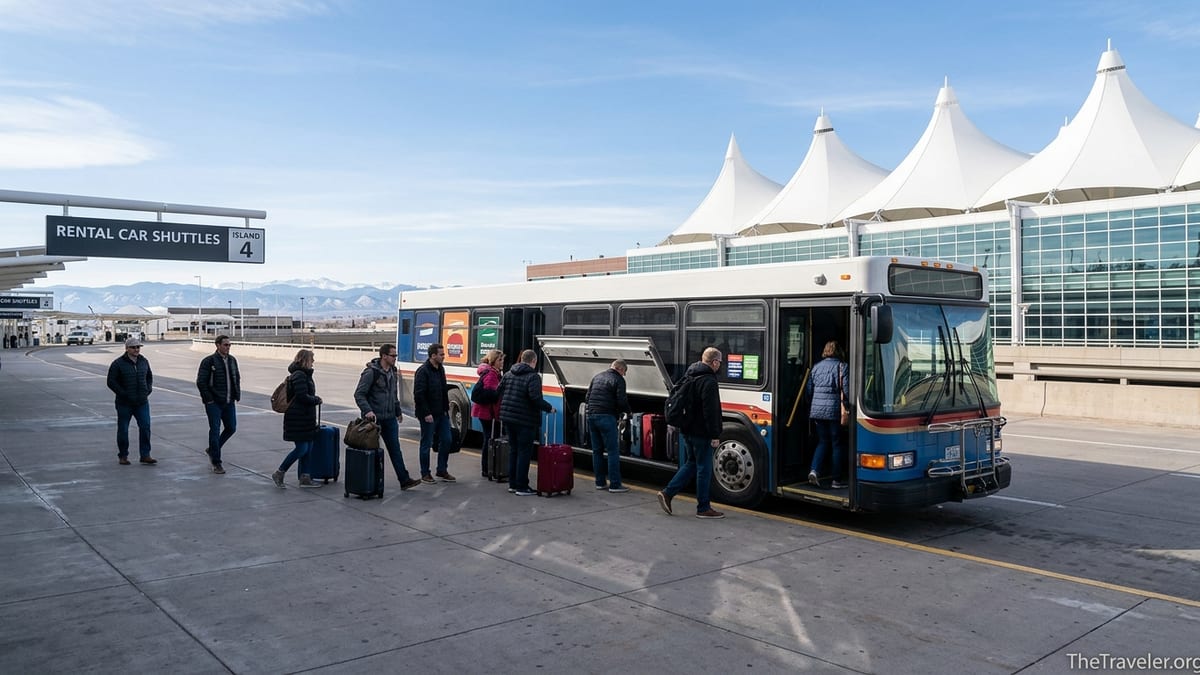
Denver International Airport does not have rental counters inside the main terminal the way many smaller airports do. All major agencies operate from large lots on airport property along Peña Boulevard, a few minutes’ drive from the Jeppesen Terminal. After you collect your baggage on Level 5, you will follow signs for "Rental Car Shuttles" and head outside to Island 4 on Level 5 on either the east or west side of the terminal. Free, branded courtesy buses from companies like Hertz, Avis, Enterprise, Alamo, Budget and others loop between the terminal and their lots throughout the day and night.
In practical terms, you should allow at least 20 to 30 minutes from walking out of the terminal to reaching your rental car. In busy ski season weekends or summer holidays, shuttles can fill quickly; you may have to wait for the next one. If your flight lands late at night, check your specific company’s Denver hours when you book. Most airport locations stay open for late arrivals, but some smaller or off-airport brands may close around midnight and move arriving customers to the next morning.
Once you arrive at the rental lot, the process is familiar: you confirm your reservation, show your driver’s license and credit card, choose a car in your booked category and complete the inspection. Denver’s lots are large, and cars are usually grouped by size and type, so you might be choosing among several different compact SUVs rather than a single specific model. If you are planning mountain travel, this is the moment to ask about all-wheel drive availability, winter tires in season, or roof racks for ski equipment.
The lots all sit just off Peña Boulevard, the main highway connecting the airport to the rest of the Denver metro area. As you exit, you will see clear signage for Interstate 70 toward Denver, E-470 toward the suburbs and Boulder connections, and local roads serving nearby airport hotels. Understanding these roads before you drive away can help you avoid expensive toll surprises and missed exits.
On-airport vs Off-airport Rental Companies
The companies with the largest presence at Denver International Airport are considered on-airport operators. That includes big brands under major families like Avis and Budget, Enterprise, National and Alamo, Hertz and Dollar/Thrifty, along with newer players such as Sixt and Fox. Their lots are located on airport land and connected by the official rental car shuttle loop. These locations tend to have the broadest fleet choices, from economy sedans to 4x4 SUVs and minivans, and they usually have longer operating hours that mirror the airport’s flight schedule.
There are also off-airport and local rental outfits that serve Denver flyers but are not part of the official airport loop. These companies might operate out of nearby parking facilities or independent lots a few miles from the terminal. For example, some smaller agencies use private parking shuttles that pick up at a different island than the main rental buses and then drive you to a shared facility. These locations sometimes offer cheaper base rates, but you may trade cost for convenience and late-night flexibility.
When comparing prices online, it is easy to mix up on-airport and off-airport locations because they are both labeled as serving Denver International Airport. Look closely at the pickup instructions and location notes. If you see language like “off-airport,” “meet-and-greet,” or a specific street address rather than just the airport code, build in extra time for shuttle transfers and confirm exactly where the shuttle picks up. If your trip involves a tight schedule, young kids, or a late arrival, the on-airport options are usually worth a modest premium for simplicity.
One more subtle difference is taxes and fees. On-airport rentals at Denver are subject to airport-specific surcharges and customer facility charges that can add a significant amount to a short rental. Off-airport locations may have lower or different fees but might charge higher base rates or require longer minimum rentals. The only way to compare fairly is to run sample reservations to the final pricing page and compare total cost, not just the daily rate advertised on the first screen.
Deposits, Insurance and Local Fees You Should Expect
As at most major U.S. airports, Denver rental car companies usually place a security hold on your credit card when you pick up the vehicle. For a typical midsize car rented from a national brand, this hold is often the estimated rental cost plus an additional 150 to 300 dollars. For example, if your weeklong rental is projected at 500 dollars, you may see a temporary authorization of 650 to 800 dollars. Debit card rentals, when allowed, can involve larger holds and additional documentation, so using a credit card is smoother.
Insurance is another area where Denver rentals can become unexpectedly expensive if you make decisions on the spot at the counter. Collision damage waivers, liability supplements and personal effects coverage are all typically offered at daily rates that can easily add 20 to 40 dollars per day to your bill. Before you travel, check whether your own auto policy covers rental cars and whether your credit card offers secondary or primary collision coverage. Many U.S. travelers discover that between their personal policy and a premium credit card, they already have sufficient protection for domestic rentals and can decline most add-ons.
Denver-specific extras often include toll programs and winter driving packages. Toll programs, which are discussed in more detail below, usually charge a per-day service fee plus the actual tolls you incur, or they automatically enroll you and then charge post-trip. Winter packages may guarantee a vehicle with all-wheel drive and appropriate tires or include snow chains where legally allowed. For instance, a rental agency might charge a flat weekly premium for an “AWD ski package” that includes a mid-size SUV and a roof rack, compared to the cheapest economy sedan rate available the same week.
Finally, keep an eye on fuel and additional driver fees. Prepaid fuel options can be convenient if you know you will return the car almost empty, especially with the airport nestled far from central Denver. However, prepaid prices are not always cheaper than nearby gas stations, and failing to refill under a standard plan can trigger per-gallon refueling charges that are dramatically higher than street prices. Additional driver fees in Colorado are common for non-spouse drivers, and they can add several dollars per day per person, which quickly matters on longer trips shared by friends.
Toll Roads Around Denver Airport and How Rental Tolls Work
Denver International Airport is connected to the metro area by a mix of free interstates and cashless toll roads. The main non-toll route into the city is Interstate 70 west from Peña Boulevard toward downtown Denver. Many GPS apps, however, will try to route you onto E-470 or the Northwest Parkway, which are all-electronic toll roads running along the eastern and northern edges of the metro area. These roads are convenient and often less congested than city freeways, especially during rush hour or when driving to Boulder, Broomfield or the northern suburbs.
For rental cars, the key is understanding how cashless tolling interacts with your contract. Most major agencies have their Colorado plates registered with the local toll authority. When you drive a rental through an E-470 toll point, cameras capture the license plate, and the toll is billed back to the rental company. The agency then charges you the toll amount plus an administrative fee. For some brands, that fee is a daily service charge that applies on every day you incur even a single toll, capped at a monthly maximum. For example, one national brand in Colorado has typically charged around 6 to 8 dollars per day plus tolls, with a cap in the 30 to 40 dollar range per rental month, while others offer a lower daily fee but no cap.
Since there are no manned booths or coin baskets, “avoiding” the fee by bringing your own cash is not an option. You also cannot stop safely near a toll gantry to exit; by the time you see it, your plate has usually been read. The most realistic choices are to decide before leaving the lot whether you intend to avoid toll roads entirely or accept that you will pay for their convenience. If you prefer to skip tolls, go into your navigation settings and turn off toll routes. That will push you toward I-70 and other free highways. The difference in time from the airport to downtown Denver may be 10 to 20 minutes in normal traffic, which many travelers consider a fair trade to avoid added fees.
For travelers heading farther afield, E-470 can save substantial time when connecting from the airport to I-25 toward Colorado Springs or to U.S. 36 toward Boulder. Imagine a family with kids landing midafternoon on a Friday and heading to Boulder for a weekend. Using E-470 and the Northwest Parkway might turn a 75-minute, traffic-heavy city drive into a smoother 45-minute trip, but those tolls plus service fees could easily add 20 to 30 dollars for a single round-trip. Budgeting for that and deciding whether the time savings matters to you is part of making an informed choice at the rental counter.
Mountain Driving, Traction Laws and Choosing the Right Car
Driving into the Colorado mountains is a highlight for many visitors, whether you are heading to ski resorts like Breckenridge and Vail in winter or to trailheads and mountain towns in summer. However, Interstate 70 west of Denver climbs steep grades, passes through the Eisenhower and Johnson tunnels above 11,000 feet, and is subject to sudden weather changes. From roughly September through May, Colorado’s traction laws can be activated on this corridor when conditions warrant. When the traction law is in effect between Morrison and Dotsero, passenger vehicles must meet specific requirements for tires, tread depth and traction devices.
In practical terms, if you plan to drive a rental car from Denver to Summit County or Vail during the snow season, you should strongly consider booking an all-wheel-drive or four-wheel-drive vehicle with proper all-weather or winter-rated tires. A front-wheel-drive sedan on worn all-season tires may technically be allowed during dry conditions, but if a storm blows in and traction requirements are triggered, you could be required to carry chains or other approved devices and still find yourself struggling for grip on icy climbs and descents. Local law enforcement can ticket drivers who do not comply, and serious crashes and pileups have been linked to under-equipped vehicles in bad weather.
Rental companies at Denver do not always guarantee winter tires on every AWD vehicle, and they rarely provide chains due to liability and damage concerns. That means simply booking “SUV” is not enough. When you reserve, look specifically for language like “4WD/AWD guaranteed” and ask the rental agent upon arrival about tire condition. If your plan is a mid-January ski week in Breckenridge, and the car offered is a two-wheel-drive sedan with obviously worn tires, it is worth pushing back politely for a safer alternative, even if it means an upgrade fee.
Even in summer, mountain driving demands respect. Steep descents west of the Eisenhower Tunnel will test your braking; using lower gears instead of riding the brakes can prevent overheating. Afternoon thunderstorms can bring sudden, heavy rain or even hail, reducing visibility. Cell service can be inconsistent in some canyons, and fuel stations become sparse beyond the larger towns. Before leaving Denver, top off your tank, carry water and snacks, and download offline maps for your route. Treat posted speed limits and advisory speeds on curves as real guidance, not suggestions. Locals may seem quick in the left lane, but as a visitor in an unfamiliar rental, it is safer to stay in the right lanes and let others pass.
Is a Rental Car Worth It in Denver?
Whether a rental car makes sense for your trip to Denver depends heavily on your plans. If you are staying downtown for a business conference, relying on the A Line commuter rail from the airport to Denver Union Station and then using ride-hailing, walking and light rail is often simpler and cheaper than renting a vehicle. Parking at downtown hotels can add 30 to 50 dollars per night, and you may barely use the car between meetings. In that scenario, you can save both money and stress by skipping a rental entirely.
For trips focused on the city and close-in neighborhoods like RiNo, LoHi and Cherry Creek, a hybrid approach can work well: take the train into town, use occasional rideshares and maybe rent a car for a single day from a neighborhood branch if you decide on a day trip to Red Rocks or Golden. You avoid multiple days of parking charges and only pay for a vehicle on the day you actually drive out of the city.
On the other hand, if your itinerary is built around exploring the Front Range and beyond, a rental car quickly becomes indispensable. Visiting Rocky Mountain National Park, ski resorts, small towns like Idaho Springs and Georgetown, or attractions like Mount Evans and Independence Pass is extremely difficult without your own wheels. Organized tours do exist but can be expensive and schedule-limited. For a family of four flying in for a week of skiing in Summit County, a five- or seven-passenger SUV rental, even at winter rates, can pencil out cheaper than four round-trip shuttle tickets plus local taxis and rideshares once you are in the mountains.
A middle scenario is the traveler whose stay combines a couple of nights in Denver with a few days in the mountains. In that case, you might take the train into the city on arrival, enjoy Denver car-free, and then pick up a rental from a downtown agency on the day you head west. This approach avoids airport facility fees on the days you do not need a car and can simplify downtown parking. On your last day, you could drive straight from the mountains to the airport, return the car and fly out, eliminating one city transfer entirely.
Practical Tips to Keep Your Denver Rental Smooth and Affordable
A few simple habits can make a noticeable difference in cost and convenience. First, book early for peak winter and summer dates. Ski season weekends, especially around holidays and major events, often see rental prices spike and certain vehicle categories sell out. Reserving an AWD SUV in November for a February trip to Vail is almost always cheaper and more secure than trying to find one the week before you fly. Similarly, popular summer weekends around national holidays can strain fleets as families head to national parks and mountain cabins.
Second, take the time during pickup to walk around the car and note any existing damage, including windshield chips and wheel scuffs. Denver and Colorado at large use sand and gravel on winter roads, so small chips on front bumpers and glass are common. Photograph anything you see and mention it to the attendant before you leave the lot. This extra two minutes can prevent headaches later if the damage is incorrectly attributed to your rental period.
Third, set your navigation preferences before exiting the lot. Decide whether you want to avoid tolls, confirm the address of your lodging, and pre-check your route into the mountains or city. It is far easier to do this while parked than while navigating unfamiliar interchanges in heavy traffic. If you are using your own phone for navigation, make sure you have a car charger or USB cable; a dead battery on I-70 at dusk is the last thing you want.
Finally, plan your fuel strategy. There are several gas stations along Peña Boulevard and in nearby Commerce City and Green Valley Ranch that tend to be cheaper than stations immediately adjacent to the airport exits. Filling up there on your way back can shave a few dollars off your bill and help you return the car with a full tank. Keep your final receipt, and if your contract later shows a refueling charge despite your fill-up, you will have documentation to contest it.
FAQ
Q1. Where do I catch the rental car shuttle at Denver International Airport? You catch all major rental car shuttles from Level 5 at the Jeppesen Terminal, on Island 4 outside the east and west doors. Look for signs that list specific rental brands, then board the bus for your company.
Q2. How long does it take to get from my gate to driving out of the rental lot? In normal conditions, plan on 45 to 60 minutes from deplaning to driving away, including time to reach baggage claim, walk to the shuttle stop, ride to the lot and complete paperwork. During peak ski season or holidays it can take longer, especially if there are lines at the rental counter.
Q3. Are there rental car companies at Denver that are cheaper because they are off-airport? Yes, several smaller or independent companies operate off-airport locations that can have lower base rates, but you may need to take a separate shuttle and their hours may be shorter. Always compare final total cost, including extra transport time and any added fees, not just the advertised daily rate.
Q4. Do I need an all-wheel-drive vehicle to drive in the Colorado mountains? You are not required to have all-wheel drive in all conditions, but it is strongly recommended in winter and during snow events on I-70 and other high passes. When traction laws are active, you must have proper tires and tread depth or approved traction devices, and an AWD vehicle with good tires is far safer and more confidence-inspiring than a basic two-wheel-drive sedan.
Q5. How do tolls work with a Denver airport rental car? When you drive a rental on cashless toll roads like E-470, cameras read the license plate and bill the rental company, which then charges you the toll amount plus a service fee. You do not pay at the road. To avoid surprise fees, decide before you leave the lot whether you want to avoid tolls using your GPS settings or accept that you will pay for the convenience.
Q6. Is a rental car necessary if I am just staying in downtown Denver? If you are only staying downtown or in nearby neighborhoods, you can usually skip a rental and use the airport train, walking, light rail and ride-hailing. Hotel parking costs add up quickly, and traffic and one-way streets can make driving more hassle than it is worth for a city-focused visit.
Q7. Can I add winter tires or chains to my Denver rental car? Most national rental companies in Denver do not offer chains because of potential vehicle damage and liability, and winter tires are not guaranteed on every vehicle. Some locations may designate certain cars for winter use or offer special mountain or ski packages. If proper winter equipment is important, book early, choose an AWD category and confirm details with the rental counter on arrival.
Q8. What kind of deposit should I expect on a Denver airport rental? For a typical rental using a credit card, expect the company to authorize the estimated rental charges plus roughly 150 to 300 extra dollars as a security buffer. Debit card rentals can involve higher holds, additional ID checks and restrictions on vehicle types, so a major credit card is generally easier.
Q9. Are there alternatives to renting a car for getting from Denver airport to the mountains? Yes, several shared shuttles and private transfer services run from the airport to major ski resorts and mountain towns, and some resorts offer their own bus connections. However, these can be costly for larger groups and may not serve smaller destinations, so many travelers still choose a rental car for flexibility, especially outside peak winter.
Q10. What should I do if a snowstorm is forecast during my trip? If a storm is coming and you plan to drive, check your vehicle’s tires, allow extra time, keep your fuel tank at least half full and monitor official road reports for traction law or closure updates. If conditions look severe, consider delaying your drive, using a shuttle instead, or staying closer to Denver rather than committing to high mountain passes in an unfamiliar rental car.