


Landing at Denver International Airport can feel overwhelming, especially if you are heading straight into the city and relying on Uber or Lyft. Long walks, confusing signage, winter weather and surge pricing can all add stress right after a flight. This guide walks you step by step from the gate to your rideshare pickup at Denver International Airport, explaining where exactly to go, how long things really take, what a typical fare looks like, and what to do late at night or when prices spike.
Get the latest updates straight to your inbox!
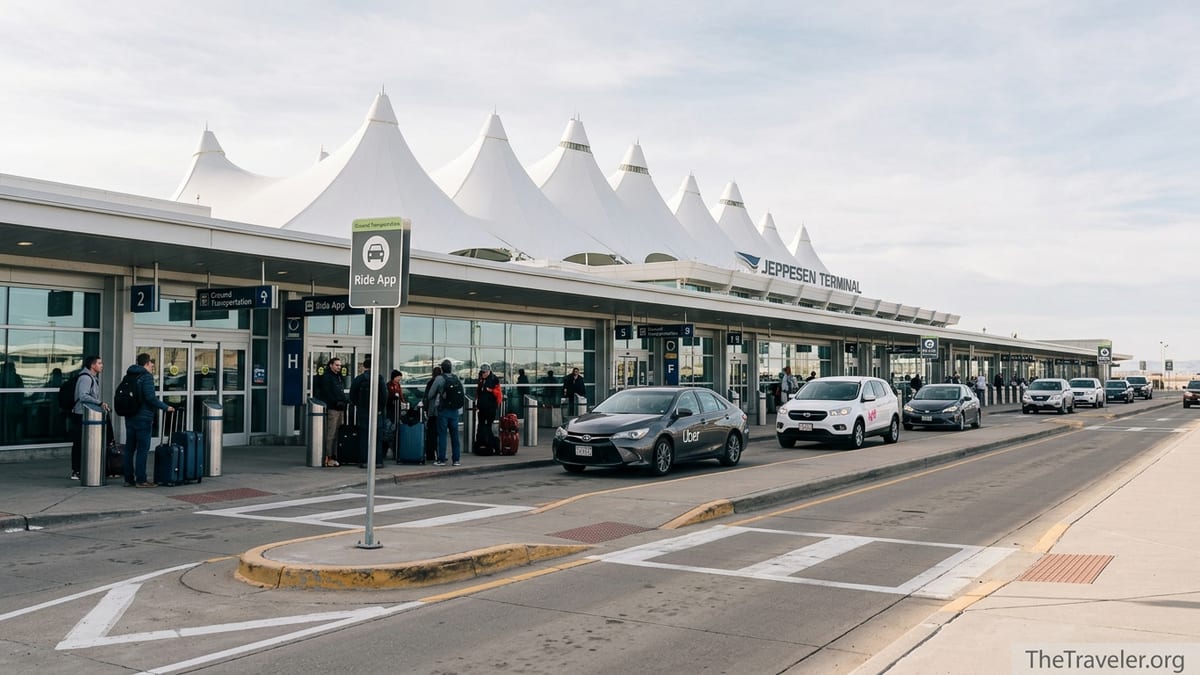
Understanding Denver International Airport’s Layout
Denver International Airport, often called DIA or simply DEN, is laid out in a way that can surprise first-time visitors. All flights arrive at one of three concourses, A, B or C, which sit apart from the main Jeppesen Terminal. After you land, you ride an underground train to the terminal before you can reach baggage claim, ground transportation or any rideshare pickup areas. Knowing this in advance helps you time your Uber or Lyft request so you are not paying for a driver to circle the airport while you are still underground.
Once the train drops you at Jeppesen Terminal, you come up to Level 5, which is the arrivals and baggage claim level. This is the same level where the main rideshare pickup island sits outside. That means almost everyone, whether arriving from Chicago on a domestic flight or from London on an international flight, will end up on Level 5 before heading out to meet their driver.
The terminal itself is split into two sides, East and West, which correspond to different airline check-in counters and door numbers. You will see doors numbered in the 500s on Level 5, such as 504 or 513, with separate signage for East and West. Rideshare pickup zones exist on both sides, so you do not need to cross the entire terminal; instead, you simply match the side shown in your app with the closest set of doors.
Because of this layout, the typical path for a rideshare passenger is: gate to train, train to Level 5, baggage claim if needed, then out to the rideshare island. In practice, even travelers with carry-on only should plan at least 20 to 30 minutes from touchdown to reaching the pickup area, longer if you land at a busy evening bank of arrivals.
Where Exactly to Go for Uber and Lyft Pickup
At Denver, standard Uber and Lyft pickups for most travelers happen on Level 5 at the commercial vehicle islands signed for app-based rides. After you collect your luggage or pass through the main arrivals hall, follow signs that say “Ground Transportation,” “Ride App” or “Rideshare.” These will lead you toward the doors that exit to Island 5, where Uber and Lyft drivers line up to meet passengers.
Once you step outside on Level 5, you will usually cross one or two traffic lanes until you reach a central island. On that island, look for markers indicating specific pickup zones, often labeled with letters such as F, G or H. The Uber and Lyft apps will typically give you a zone letter or a specific door number like “Door 510, Island 5, West.” For example, if your app says “West, Door 510,” you would exit via door 510 on the West side of the terminal, cross to Island 5 and wait near the sign that matches the letter shown in your app.
Both East and West sides work the same way. If you land on United and your bags arrive on the West side baggage carousels, it is usually easiest to keep your pickup on the West side. If you are arriving on airlines clustered on the East side, such as Delta or JetBlue, you can exit an East door and meet your rideshare there. Sticking to the side where your bags arrive means a shorter walk, which is especially helpful if you are hauling skis or visiting during a snowstorm.
Travelers who need additional assistance, such as wheelchair users or people with limited mobility, can request a curbside rideshare pickup at specific doors on Level 5. In practice, this means you might meet your Uber or Lyft closer to the terminal entrance, near door numbers in the 504 to 513 range, instead of walking out to the central island. If you know you will need that accommodation, it helps to note it in the app and allow a few extra minutes for the driver to position correctly at the curb.
Timing Your Request: From Gate to Level 5
One of the most common mistakes at Denver is requesting an Uber or Lyft the moment the plane lands. Because of the airport’s size and the mandatory train ride, you are rarely ready at the pickup area in under 15 minutes, and many drivers will either cancel or wait impatiently if you call them too early. A more realistic approach is to wait until you are on Level 5 and have your luggage in hand.
For a typical domestic arrival into Concourse B with only carry-on baggage, you can expect around 5 to 10 minutes to taxi to the gate, 5 minutes to deplane, and another 5 to 10 minutes to ride the train and walk to the main terminal. That adds up to roughly 20 to 25 minutes before you are standing at the doors leading out to the rideshare island. If you are comfortable moving quickly and traveling light, you might open your app as you step onto the train, but you should still plan to meet your driver at least 10 minutes later.
If you have checked bags, the timeline stretches. Baggage claim at Denver can be unpredictable, especially at peak evening times when multiple full flights from coastal hubs land back-to-back. Many travelers report waiting 20 to 40 minutes from arrival at the carousel until bags begin to appear, with occasional longer waits during storms or operational delays. In this scenario, it is better to wait until your suitcase has actually arrived on the belt before requesting a ride; otherwise, you risk your driver arriving, waiting, and then canceling while you are stuck watching an empty carousel.
For international arrivals, add extra time for passport control and customs. Depending on the time of day and how many long-haul flights land together, it can take anywhere from 20 minutes to well over an hour to clear the formalities and reach Level 5. In these cases, do not request a rideshare until you are fully through customs with your bags and walking toward the exits. A good rule of thumb at Denver is to prioritize finishing everything inside the terminal, then open the app only when you are physically ready to walk to the pickup area.
Typical Fares, Routes and Surge Pricing
Rideshare pricing at Denver International Airport fluctuates with demand, time of day, and weather. On a normal weekday afternoon with moderate demand, a standard UberX or Lyft ride from the airport to downtown Denver often falls in a rough range that many travelers describe as “similar to a mid-tier taxi fare,” while premium options like Uber Black, Lyft Lux or SUV services can cost two to three times more. Prices climb significantly on Friday evenings, powder days during ski season and during big events like Broncos home games or popular concerts at Red Rocks.
The route most drivers take into the city or to the southern suburbs usually involves Peña Boulevard connecting to Interstate 70 or E-470. Some drivers may choose the E-470 toll road to bypass traffic and reach areas like the Denver Tech Center or south Aurora more quickly. If your driver takes E-470, expect the tolls to be added to your final fare; for a typical trip this can add a noticeable extra cost compared with a route that stays on non-toll highways. If you prefer to avoid tolls, you can mention it politely to the driver just after pickup so they can adjust the route.
Surge pricing, sometimes labeled as “busy area pricing” in the apps, is common at Denver during peak times. For example, if you land on a Sunday evening in January just after a major snowstorm and 20 flights arrive within an hour, you might open the app and see base fares to downtown nearly double what you would pay on a quiet Tuesday midday. In those moments, many local passengers choose to wait 10 to 20 minutes to see if the surge calms down, or they head for alternatives like the A Line commuter rail if they are staying near downtown.
One practical strategy is to compare Uber and Lyft side by side before booking. In some informal price checks, travelers have found that one platform may be a few dollars cheaper at a given moment or offer a promotional discount for airport trips that the other does not. Checking both apps can also give you a sense of how severe the surge is; if both show very high prices and long wait times, you know demand is spiking across the board and can decide whether to pay the premium or switch to a taxi, train or shared shuttle.
Taxi, Train and Shuttle Alternatives
Rideshare is not the only way to leave Denver International Airport. For some travelers, especially solo passengers or those heading straight downtown, alternatives can be just as convenient and sometimes cheaper. The A Line commuter rail runs between the airport and Denver Union Station, with trains departing roughly every 15 minutes during most of the day. The ride is a straightforward trip into the city center, and from Union Station you can walk, take a local rideshare, or hop on a light rail or bus to reach neighborhoods like LoDo, RiNo or Capitol Hill.
Traditional taxis line up at designated stands on Level 5, separate from the rideshare island. Denver taxis generally operate with a combination of flat-zone and metered rates for popular destinations. A ride to the central business district is usually in the same broad price neighborhood as a standard UberX or Lyft when demand is low, but taxis can become relatively cheaper during extreme rideshare surge periods because their rates do not spike in the same dynamic way. If you arrive to find that Uber and Lyft quotes look unusually high, walking to the taxi stand and asking for an approximate fare to your destination can be a smart move.
Several private shuttle companies also operate from the airport to resort towns and Front Range cities. For example, you can book a shared shuttle to Boulder, Fort Collins or Colorado Springs, or a ski shuttle to destinations like Breckenridge or Vail during winter. These services often require advance reservations, and they pick up at specific ground transportation zones on Level 5 or at designated bus bays. For a family of four heading to a mountain condo with lots of gear, a door-to-door shuttle or private van can be more economical and less stressful than four separate rideshares or a rental car in heavy snow.
Hotel shuttles are another useful option if you are staying near the airport. Many airport hotels cluster along Tower Road and near the Pena Boulevard corridor, and they operate free shuttles that meet guests at preassigned zones on Level 5. If your flight is badly delayed and you decide to overnight near the airport, it can be faster and cheaper to call your hotel directly to confirm their shuttle pickup point and schedule instead of requesting a short, surging Uber or Lyft ride.
What to Expect During Late-Night Arrivals
Late-night arrivals at Denver have their own rhythm. Flight banks from the West Coast often land between 10 p.m. and midnight, and red-eyes from Hawaii, Alaska or international hubs can push passenger flows well into the early hours. The good news is that Uber and Lyft both operate 24 hours a day in the Denver area, and there is rarely a complete lack of drivers. However, wait times can stretch longer after midnight, especially on weeknights when fewer drivers choose to work overnight shifts.
At 1 a.m. on a Tuesday in March, for example, you might open a rideshare app and see only a handful of cars on the map, with estimated pickup times of 10 to 15 minutes instead of the 3 to 5 minutes common in the early evening. Prices can behave unpredictably: sometimes they remain reasonable due to low demand, but on other nights a sudden cluster of late flights or bad weather can cause a short-lived surge, even at 2 a.m. Because alternatives like the A Line rail and some shuttles reduce or stop service in the small hours, your choice might essentially narrow to rideshare or taxi.
If you are arriving very late with checked bags, build extra patience into your plan. Baggage handling tends to be slower during overnight shifts, and staffing in the terminal can be leaner. It is especially important not to call a driver until you physically have your luggage, since a 20-minute wait at an almost empty baggage carousel feels even longer when you know a driver is already burning unpaid time outside. Once you are ready, walk directly to the designated rideshare island; at night, it can be tempting to ask a driver to meet you in a quieter corner, but staying in the official pickup area is safer, better lit and compliant with airport rules.
For very late arrivals in winter, consider your own fatigue and the weather. If snow is falling or the wind is strong, wearing a warm layer for the short walk out to Island 5 will make a big difference, as there is little shelter while you wait for your car. In freezing conditions, some travelers prefer to take the first available taxi rather than waiting 15 minutes for a slightly cheaper rideshare. Both options are viable; the key is to check the app, glance at the taxi line and pick whichever gets you into a warm car fastest at that hour.
Practical Tips to Make Your Pickup Smoother
A few simple choices can make your Denver rideshare pickup much less stressful. First, keep your phone fully charged, or carry a small battery pack. Between boarding passes, messages and streaming, it is common to land with a nearly dead battery, and you will need enough power to request the ride, communicate with your driver and confirm the vehicle once it arrives. Charging stations are available in the concourses and near some seating areas on Level 5, so topping up briefly while waiting for baggage can save headaches outside.
Second, pay attention to the exact side and door number in your app. If Uber says “East, Door 507, Island 5,” and Lyft says “West, Door 510,” and you accidentally go to the wrong side, you could spend 10 minutes dragging luggage through the terminal or missing each other entirely. When in doubt, ask an airport staff member or look for large overhead signs that clearly label “East” and “West” above the entrances. Many drivers working the airport every day rely on passengers being in the right spot so they can weave through traffic efficiently.
Third, verify the license plate and car description before you get in. In the bustle of Denver’s Level 5, especially during a late snowstorm or a busy Sunday evening, multiple gray SUVs or white sedans may pull up in quick succession. Double-checking the plate and asking the driver to confirm your name assures you are climbing into the correct vehicle and not into another passenger’s ride. This is particularly important for solo travelers or those who may be tired after long-haul flights.
Finally, think about communication. If you have unusually large luggage like ski bags, bikes or musical instruments, use the in-app messaging to let your driver know as soon as the trip is confirmed. Many Denver drivers are used to handling ski gear in winter, but sending a quick note such as “Two passengers with one ski bag and two large suitcases, waiting at West Door 510” helps them position their vehicle and identify you in the crowd. Clear communication is equally useful if your flight is significantly delayed; updating your reserved ride time or messaging the driver once you land can prevent cancellations.
The Takeaway
Using Uber or Lyft from Denver International Airport is straightforward once you understand the sequence: ride the train to Jeppesen Terminal, collect your bags on Level 5, follow signs to ground transportation, and walk to the marked rideshare island on East or West. Most challenges stem from timing the request properly, navigating the sprawling terminal and managing occasional surge pricing or late-night delays.
By waiting until you are physically on Level 5 and ready to walk out, comparing prices between platforms, and keeping alternatives like taxis, the A Line rail and shuttles in mind, you can avoid unnecessary stress and cost. Whether you are heading to a downtown hotel, a conference in the Tech Center or a mountain weekend in Summit County, a bit of planning turns your Denver airport rideshare from a confusing afterthought into a smooth start to your trip.
FAQ
Q1. Where do Uber and Lyft pick up passengers at Denver International Airport?
Uber and Lyft pick up most passengers on Level 5 of Jeppesen Terminal at the designated rideshare island, usually referred to as Island 5, on either the East or West side. You follow signs for ground transportation and rideshare, then match the side and door number shown in your app.
Q2. When should I request my Uber or Lyft after landing at Denver?
It is safest to request your ride only after you are on Level 5 and have your luggage in hand. For carry-on only, that often means waiting until you step off the train into the main terminal; for checked bags, wait until your suitcase is on the carousel and you are ready to walk out.
Q3. How long does it take to get from the gate to the rideshare pickup area?
For a typical domestic flight with carry-on only, plan about 20 to 25 minutes from touchdown to reaching the pickup doors, including taxi time, deplaning and the underground train ride. With checked bags or international arrivals, it can easily stretch to 40 minutes or more.
Q4. How much does an Uber or Lyft from Denver Airport to downtown usually cost?
Exact prices vary by time, demand and traffic, but a standard rideshare to downtown Denver is generally in the same broad cost range as a traditional taxi on a non-surge day. During peak times, heavy snow or major events, surge pricing can push fares much higher, sometimes approaching what you would pay for a premium service.
Q5. Are taxis cheaper than Uber or Lyft from Denver International Airport?
Sometimes. When rideshare demand is low, Uber and Lyft may be slightly cheaper or similar to taxis for common routes like the central business district. However, during strong surge periods, taxi flat or metered rates can end up being a better deal than dynamically priced rideshares.
Q6. What are my options if I arrive very late at night?
Uber and Lyft operate 24 hours a day, and taxis are also available late at night, though you may wait longer for both. Some rail and shuttle services reduce frequency or stop overnight, so after midnight your realistic options are usually rideshare, taxi or a hotel shuttle if you are staying near the airport.
Q7. Can I take public transportation from Denver Airport instead of a rideshare?
Yes. The A Line commuter rail connects Denver International Airport with Union Station in downtown Denver. For many solo travelers staying near downtown, this train can be faster and more economical than a rideshare, especially when surge pricing is active.
Q8. What should I do if surge pricing is very high when I land?
If prices are spiking, you can wait 10 to 20 minutes to see if the surge eases, compare Uber and Lyft side by side, or switch to an alternative such as the A Line rail or a taxi. Checking all options before booking helps you avoid paying more than necessary.
Q9. How do I handle pickups with skis or large luggage at Denver?
Use the in-app messaging to tell your driver about bulky items like ski bags or oversized suitcases as soon as the trip is confirmed. Wait at the designated rideshare island on Level 5, and give a brief description of your gear so your driver can spot you easily in the crowd.
Q10. Is it safe to meet my rideshare outside at Denver Airport?
The official rideshare islands on Level 5 are well signed, lit and patrolled by airport staff and security, making them the safest place to meet your driver. Always verify the license plate and vehicle description in the app before getting in, and avoid accepting rides from anyone who approaches you without a confirmed booking.