


Planning a trip to the United Kingdom in 2026 now involves a crucial first step: working out whether you need a UK Electronic Travel Authorisation (ETA), a Standard Visitor visa, or no advance permission at all. Making the wrong choice can mean extra cost, unnecessary paperwork or, in the worst case, being denied boarding for your flight. This guide brings together the latest official rules to help you decide which option applies to your passport and your travel plans.
Get the latest updates straight to your inbox!
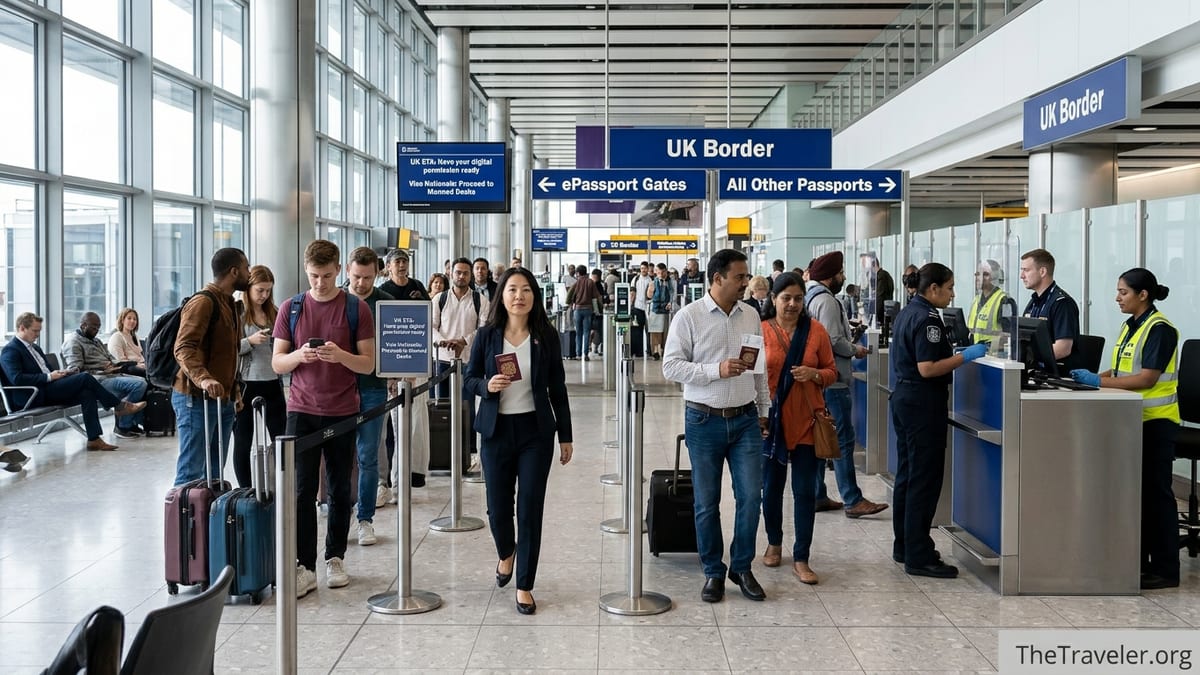
ETA versus Standard Visitor visa: the starting point
An Electronic Travel Authorisation is a digital permission to travel to the UK for eligible visitors who do not need a full visa. It is linked electronically to your passport, applied for entirely online or through the official UK ETA app, and at the time of writing costs £20 per person, payable by credit card, debit card, Apple Pay or Google Pay. Once granted, an ETA normally lasts for two years or until your passport expires, whichever is sooner, and can be used for multiple trips of up to six months at a time.
A Standard Visitor visa is different. It is an immigration permission in its own right, issued as a vignette in your passport or digital status after a separate visa application. You apply online, usually attend an appointment at a visa application centre outside the UK to give biometrics, and often need to provide supporting documents about your job, finances and travel plans. As of November 2026, a Standard Visitor visa for a stay of up to six months costs £135 plus any separate service fees charged by commercial visa centres.
Both the ETA and the Standard Visitor visa sit under the same “visitor” rules. They allow tourism, family visits, short business activities, short study and most types of transit. Neither option permits you to work in a regular job in the UK, access public funds, or settle. Repeated back-to-back visits that suggest you are trying to live in the UK on a visitor permission can also cause problems at the border.
Crucially, both an ETA and a Standard Visitor visa are permissions to travel, not guarantees of entry. When you land at Heathrow, Manchester, Edinburgh or any other UK port, Border Force officers can still question you and may refuse entry if your circumstances or answers do not match the visitor rules.
Who needs an ETA, a visa or neither: key nationalities
The UK does not apply the same rules to all foreign visitors. Everything starts with the nationality on your passport, not where you live. A dual national with a Canadian and Indian passport, for example, will be assessed differently depending on which passport they actually use to travel.
Nationals of the United States, Canada and Australia are classed as “non-visa nationals” for visitor purposes. They do not usually need a Standard Visitor visa in advance for tourism or short trips of up to six months. Instead, the UK is rolling out the ETA requirement to these passport holders. For a typical American family flying New York to London for a two-week holiday, this means each family member, including children, will usually need to apply for a £20 ETA linked to the passport they will present at boarding.
Most European Union passport holders, along with citizens of Switzerland, Norway, Iceland and Liechtenstein, also fall into the ETA route rather than the visa route for short visits. An Italian tourist spending a long weekend in Edinburgh, for instance, would normally travel on an ETA instead of applying for a full visa, unless they already hold an immigration status such as UK settled status.
By contrast, nationals of India, China and South Africa are generally “visa nationals” for visitor purposes. An Indian passport holder planning a 10-day business and sightseeing trip to London, or a Chinese family visiting relatives in Birmingham, normally must obtain a Standard Visitor visa before travel and do not have the option of an ETA. The same is true for most South African visitors. Residence in another country, such as living in Italy or the United Arab Emirates, does not change this underlying visa requirement.
British, Irish and Common Travel Area exceptions
British and Irish citizens sit entirely outside the ETA and Standard Visitor visa system when travelling on the passport that proves that citizenship. A British citizen returning home from Dubai or a Dublin-based Irish citizen flying to Manchester for a concert does not need an ETA or visitor visa to enter the UK. Their right of entry is based on citizenship and, within the Common Travel Area, long standing reciprocal arrangements.
The Common Travel Area links the UK, Ireland, the Isle of Man and the Channel Islands. Within this zone, British and Irish citizens can generally move, live and work without immigration permission. Other nationalities, however, still come under the usual UK immigration rules. A US tourist who flies to Dublin, spends a week in Ireland, then takes a ferry to Wales will normally need an ETA associated with their US passport even though there is no routine immigration control at the sea crossing.
An important special rule benefits certain residents of Ireland. Third country nationals who do not need a visa for short UK visits, but who are legally resident in Ireland and travel to the UK from elsewhere in the Common Travel Area, can in many cases travel without an ETA. For example, a Brazilian non-visa national with a valid Irish residence permission, travelling from Dublin to Belfast by train, may rely on their Irish residence evidence instead of an ETA. This exemption does not help Indian, Chinese or other visa nationals, who usually still need a visitor visa to enter the UK.
Transit rules also create limited exemptions. Some travellers who remain airside and do not pass through UK border control while connecting flights can avoid both an ETA and a visitor visa, depending on nationality and airline routing. Others, particularly visa nationals who must pass through immigration even for a short connection, may require a dedicated Visitor in Transit visa rather than an ETA.
Dual citizens, UK status holders and the Ireland resident question
British and Irish dual citizens are a particular edge case. UK government guidance explains that people who hold British or Irish citizenship cannot obtain an ETA based on another nationality. Instead, they are expected to establish their right of entry using an appropriate British or Irish document, such as a valid British passport, a passport showing a right of abode vignette, or a valid Irish passport. A Canadian and British dual national living in Toronto planning a city break in London should therefore renew or use their British passport, rather than apply for an ETA with their Canadian passport.
Other travellers who already have permission to live, work or study in the UK, including those with biometric residence permits or digital immigration status such as settled or pre settled status, also fall outside the ETA requirement when returning to the UK. Their existing permission to enter or remain is what matters. A French citizen with UK settled status flying back to Manchester from Paris after a business trip, for example, uses their EU passport plus their digital status, not an ETA or visitor visa.
For people who live in Ireland but are not Irish or British, the distinction between nationality and residence is critical. A US citizen lawfully resident in Ireland, travelling from Dublin to London, can normally take advantage of a specific ETA exemption for certain Irish residents if they hold suitable Irish issued documentation proving that residence. However, an Indian citizen resident in Ireland remains a visa national and will still usually need a Standard Visitor visa to visit the UK, even for a short weekend shopping trip to Liverpool.
It is also increasingly common for travellers to change passports between trips. Because an ETA is tied to a specific passport number, a new passport usually requires a new ETA, even if the old document has time left on its two year validity. A Standard Visitor visa vignette, by contrast, may sometimes be transferred or reused with the correct procedures, but travellers who renew a passport midway through a long term visitor visa should check whether they need a replacement vignette or to carry both passports.
What you can and cannot do as a UK visitor
The activities allowed under an ETA and a Standard Visitor visa are broadly the same since both sit under the Standard Visitor rules. Tourists can enjoy holidays around London, the Scottish Highlands or the Giant’s Causeway, attend concerts and sports events, or visit family and friends. Business visitors can join meetings, negotiate contracts, attend trade fairs and receive internal training from a UK branch of their employer, provided they are not taking up a permanent role in a UK based company.
Short courses are also permitted. A Canadian visitor taking a four week English language course in Brighton, or a German professional spending two weeks on a recognised training course in Manchester, can usually do so under an ETA or visitor permission if the course length stays within the six month visitor limit. For study beyond that, or where work placements are involved, a student visa may be required instead.
Visitors can transit the UK on their way elsewhere. A South African traveller with a Standard Visitor visa might combine a few days in London with a longer trip across Europe, flying onward to Paris or Rome from a UK airport. Where the only purpose is onward travel within 24 or 48 hours, some nationalities may instead use a dedicated Visitor in Transit route at a lower fee, but this still involves a visa application for most visa nationals.
What is not allowed is just as important. Working in a normal job, whether as a barista in Shoreditch or an IT contractor based in Canary Wharf, is outside visitor permissions. So is using repeated six month visits, year after year, to in effect live in the UK without an appropriate long term visa. In these situations, Border Force officers can cancel entry even if the traveller holds a valid ETA or a multi year visitor visa.
How to check your eligibility and apply
The official starting point for any traveller is the UK government’s online “check if you need a UK visa” and ETA guidance, which ask for your nationality, where you are travelling from and the reason for your visit. The checker then confirms whether you need a Standard Visitor visa, can use an ETA, or can enter for short visits with neither. Because rules and eligible nationalities change over time, travellers should repeat this check close to booking flights and again before applying.
ETA applications are completed online or in the UK ETA smartphone app. Applicants provide passport details, answer basic security and suitability questions, and upload or take a digital facial photograph. Payment is taken at the time of application and, according to current guidance, the £20 fee is non refundable once an application is submitted, even if it is refused. Decisions typically arrive by email, sometimes within hours but travellers are advised to apply several days before departure.
Standard Visitor visa applications involve more steps. After completing an online form that covers travel dates, purpose of visit, employment, income and previous travel history, applicants pay the £135 visa fee and book an appointment at a visa application centre. At the appointment they usually provide fingerprints, a photograph and any supporting documents such as bank statements, employment letters or an invitation from family in the UK. Processing times vary by country but planning a visa application at least several weeks before the intended travel date is prudent.
Both systems require you to use only the official UK government application portals or the named ETA app. Travellers should be cautious about unofficial websites that charge “service fees,” promise faster decisions, or imitate UK government branding without clearly stating that they are private companies. The official sites never ask applicants to pay via bank transfer or cryptocurrency, and provide receipts immediately after card or digital wallet payment.
Comparing ETA and Standard Visitor visa in real scenarios
Consider an American family of four from Chicago planning a 10 day Easter break in London in April 2027. They hold only US passports, are travelling for tourism and staying in hotels booked in advance. Under current rules, each family member would normally apply for an ETA at £20 per person, so £80 in total. No visa appointment is needed, and they keep confirmation emails on their phones for airline check in. At the border, they still must answer questions about their plans and show proof of onward travel and accommodation if asked.
Now take an Indian passport holder who has been living and working in Milan for several years under an Italian residence permit. She wants to fly Milan to London for a week long visit to friends and to attend a conference at a London university. Even though she lives in the European Union, her Indian nationality means she is a visa national, so she will typically need to apply online for a Standard Visitor visa, pay £135, attend a biometrics appointment in Italy and provide evidence of her employment, savings and conference invitation.
A different case involves an EU tourist with UK settled status. A Spanish software engineer who lived in London before Brexit and obtained settled status can visit the UK without an ETA or visitor visa by travelling on the same passport linked to their status. When they fly back to London from Barcelona for a week to see old friends, they use the ePassport gates or show their passport, and their digital status confirms their right of entry. If they later renew their passport, they must update their UK status record but still do not need an ETA for visits.
Finally, think about a traveller who changes passports. A Canadian frequent visitor obtained an ETA in early 2026 on a passport that expires in 2027. In mid 2027, she renews her passport and then books flights for a business trip to Manchester. Although her ETA has time left, it is tied to the old passport number, so she should apply for a new ETA on her renewed passport before travelling. If she instead held a long term Standard Visitor visa vignette valid until 2029, she might need to carry both the old passport with the visa sticker and the new valid passport, or apply to have the visa transferred, depending on official guidance at the time.
Costs, common mistakes and staying safe from scams
For short trips, cost often influences the decision where there is a choice. A US national eligible for either an ETA or a voluntary Standard Visitor visa because of past immigration issues might ask whether the added £115 for a visa brings any benefit. For most straightforward tourists, the ETA is the cheaper, simpler option. Visa nationals have no such choice and must budget for the £135 fee and any extra charges for premium appointments or document scanning services offered by visa centres.
Common mistakes include assuming residence trumps nationality, applying for an ETA when you are actually a visa national, or forgetting that children need separate ETAs or visas. Others submit applications using passport details that do not match the document they later present at the airport, such as an old passport number or a different spelling of their name, which can lead to airline check in problems.
Scams are another growing risk. Some unofficial websites mimic government pages and charge significantly more than £20 for an ETA application, sometimes without clearly explaining that they are intermediaries. Others falsely claim to sell “priority ETA approvals” or guarantee entry. Travellers should be wary of any site that withholds the final price until late in the process, requests payment by money transfer, or offers to “fix” past immigration issues for a fee. Using only clearly identified official portals and double checking the correct fee before entering card details are simple but powerful protections.
Because immigration policy evolves, especially as the ETA scheme is expanded to more nationalities, travellers should always confirm the latest position shortly before travel. Rules that applied to an Australian backpacker in 2024 may not be identical for the same person returning in 2027, and relying on old advice from friends or travel forums is a frequent cause of last minute surprises.
Final checks before you book your UK trip
The decision tree for most visitors can be summarised in three questions. First, what nationality is recorded in your passport right now. Second, are you travelling as a tourist, visitor, short term student, business visitor or in transit only. Third, where are you travelling from and do you hold any special UK or Irish status. Once you have these answers, the official UK eligibility checker can usually confirm whether you need an ETA, a Standard Visitor visa or neither.
If you are a non visa national, such as a US, Canadian, Australian or most EU passport holder, and you are visiting for less than six months, the ETA is likely to be your main route. If you hold a passport from India, China, South Africa or another visa national country, expect to apply for a Standard Visitor visa well in advance. British and Irish citizens, and people who already hold UK permission such as settled status, will in most cases not use either system for simple return visits.
Regardless of category, remember that neither an ETA nor a visitor visa is an absolute guarantee of admission. On arrival, UK Border Force can still ask detailed questions about your stay, your finances and your ties to your home country. Carrying evidence of onward or return travel, accommodation bookings and proof of employment or study at home can make that conversation smoother.
All information in this guide reflects official UK government rules and published fees as of 13 November 2026. Before you pay for flights or accommodation, set aside a few minutes to recheck your own nationality and route using the official tools, then apply early for the correct permission. A small amount of pre trip paperwork is a modest price to protect a long planned holiday or important business visit to the UK.