


More news on this day
International travel advisories for the Democratic Republic of the Congo have hardened in recent days, with governments widening warnings for Kinshasa and key eastern hubs such as Goma, Bukavu and Kisangani amid planned July protests, near-total disruption of commercial flights to the east, and heightened concern over the expanding use of drones around populated areas and strategic airports.
Get the latest news straight to your inbox!
Travel Advisories Tighten Nationwide After Mid-July Update
Publicly available advisories from several governments now classify the Democratic Republic of the Congo as a “do not travel” destination or apply the highest risk levels to large parts of the country. A United States advisory updated on July 15, 2026, maintains a Level 4 warning, citing armed conflict, health risks and limited consular assistance outside Kinshasa. Similar alerts from European governments underline a combination of political tensions, armed violence in the east and a fresh Ebola emergency declaration in May.
Recent guidance stresses that travelers who have transited the DRC may face boarding restrictions on flights destined for some countries, particularly when health measures are in place. Travelers are urged to check airline and border requirements closely, as rules can change with little notice and may affect onward journeys long after departure from Congolese airports.
Canadian, British and other advisories highlight that security conditions remain volatile nationwide, but especially in North Kivu, South Kivu and Ituri. Travel advice notes that attacks by armed groups, criminality and sudden roadblocks continue to affect key corridors, constraining both humanitarian movements and any remaining internal tourism.
Alongside conflict and health concerns, foreign ministries also point to the chronic fragility of essential services. Reports describe frequent power cuts, intermittent internet access and limited medical capacity beyond the largest cities, raising the stakes for any non-essential trip.
Kinshasa Faces Planned July Protests and Airport Transfer Risks
While the gravest violence remains concentrated in the east, Kinshasa is again a focal point for political tension. Updated British travel advice flags demonstrations planned in the capital on July 22, 2026, following earlier large and sometimes violent protests near diplomatic missions and government buildings. Observers warn that smaller, spontaneous gatherings could emerge before or after the main announced dates.
Travel information notes that protests in Kinshasa can escalate quickly, with roadblocks, burning debris and heavy security deployments affecting major arteries. International advice consistently urges travelers to avoid crowds, keep well away from government and party offices, and monitor local developments through media and hotel or airline briefings rather than attempting to approach protest sites in person.
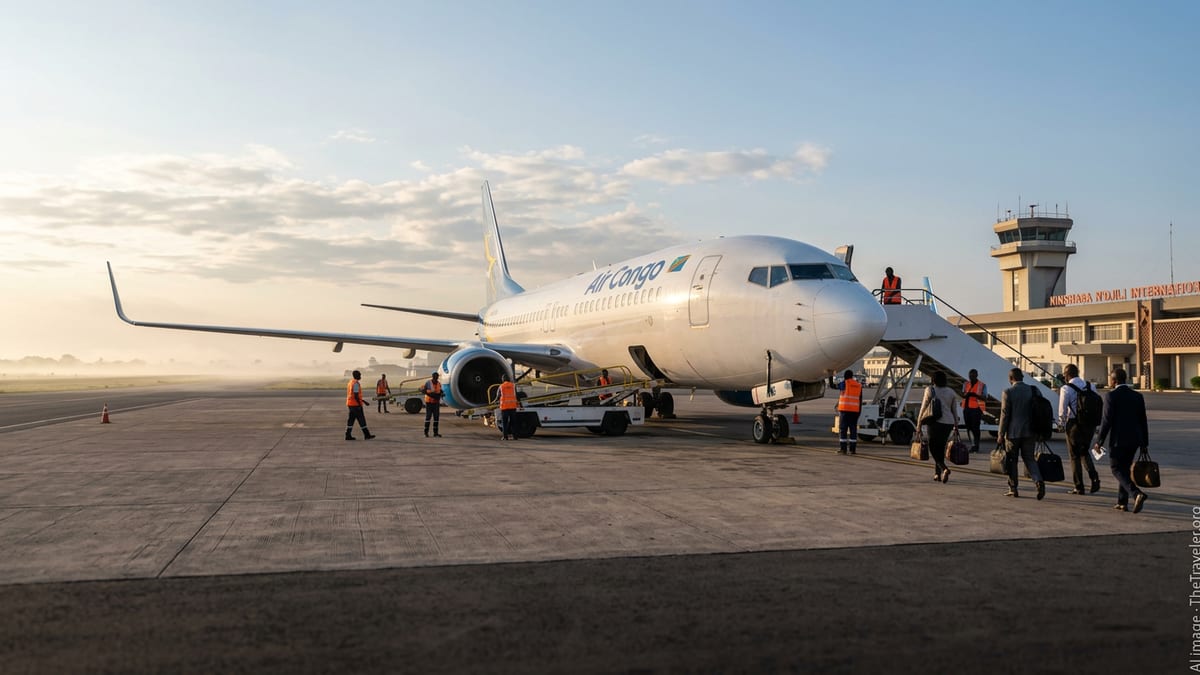
N’Djili International Airport, the main international gateway east of the city, is identified as a particular choke point. Canadian guidance describes the arrival experience as crowded and chaotic even under normal conditions, and warns that periods of civil unrest can disrupt access roads to the airport. Travelers are encouraged to allow extra time for transfers, arrange trusted transport in advance and remain alert to sudden checkpoints along the route between central Kinshasa and the terminal.
Publicly available information also notes that airport fees and documentation requirements are strictly enforced at N’Djili. Any disruption caused by protests, health checks or security alerts can amplify queues and complicate last-minute departures, leaving travelers vulnerable to missed flights if they arrive late or without proper paperwork.
Eastern Air Access Severely Curtailed in Goma and Bukavu
Eastern hubs that once served as launchpads for gorilla trekking and volcano hikes remain effectively cut off from regular international tourism. Canadian travel advice indicates there are currently no commercial flights serving Goma or Kavumu (Bukavu) airports, reflecting both security concerns and the impact of ongoing conflict in North and South Kivu provinces.
British and other European advisories explicitly discourage all air travel into and out of Goma, citing the proximity of active conflict lines and the risk of indirect fire or stray projectiles affecting aviation assets. Border crossings at Goma and Bukavu with Rwanda are also described as vulnerable to sudden closures, with recent restrictions linked both to security incidents and to efforts to contain Ebola transmission.
Travel information from multiple governments stresses that overland and lake routes into Goma and Bukavu carry substantial danger from checkpoints, ambushes and criminal activity. Even humanitarian and United Nations movements are subject to tight security procedures and route controls. For leisure travelers, advisories emphasize that attempted journeys into these areas would proceed against strong official guidance and without reliable emergency support.
Tour operators that once connected Kigali with Goma and Bukavu have largely suspended or heavily modified itineraries, according to regional media coverage. Industry reports suggest that any residual travel demand is being diverted to alternative Great Lakes destinations in Rwanda and Uganda, where cross-border access is more predictable.
Kisangani and Strategic Airports Under Scrutiny After Drone Incidents
The aviation picture is complicated further by the growing use of drones in eastern DRC airspace. A March 2026 briefing at the United Nations Human Rights Council, summarized by UN Geneva, condemned the use of drones in densely populated areas and referenced a recent strike in Goma that killed a UNICEF staff member and at least two other people. Human rights organizations argue that such incidents illustrate a deteriorating security environment for civilians and aid workers near airports and military positions.
In Kisangani, Bangoka International Airport has drawn renewed concern after a reported drone attack around the weekend of January 31 to February 1, 2026, which open sources attribute to forces aligned with the Congo River Alliance and M23. While detailed damage assessments have not been widely published, the episode underscores the vulnerability of strategic infrastructure, including airfields that handle both civilian and military traffic.
UN mission reporting indicates that peacekeeping forces have increased monitoring of aerial threats in eastern DRC, including training personnel on how to respond to drone activity. However, security analysts note that the proliferation of relatively inexpensive unmanned systems among armed actors makes it difficult to guarantee the safety of air corridors, particularly in contested provinces.
For travelers, the practical consequence is a higher likelihood of sudden airport closures, diverted flights or extended no-fly periods around key hubs. Aviation advisories suggest that carriers may cancel or reroute services on short notice if drone activity is detected near approach paths, further limiting already scarce options into cities such as Kisangani.
Health, Border Controls and Practical Considerations for Travelers
The security backdrop intersects with a robust public health response that also affects mobility. Dutch travel advice notes that the World Health Organization declared the country’s latest Ebola outbreak an international emergency on May 17, 2026. In response, some neighboring states have introduced tighter controls at land borders, particularly those with Uganda and Rwanda, and have restricted crossings for many categories of travelers.
For air passengers, health-screening measures and documentation checks can add significant time to both departure and arrival processes. The recent US advisory specifies that travelers who have been in the DRC within 21 days may be barred from boarding certain flights to US destinations, illustrating how national health rules can influence itinerary planning well beyond the Congolese frontier.
International guidance advises that anyone who decides to travel despite warnings should build in substantial buffers for missed connections and carry essential supplies in hand luggage, including medications and copies of key documents. Reports from travelers and consular information pages note that accommodation can fill quickly when flights are canceled or borders close suddenly, leaving limited options for stranded passengers.
Across Kinshasa, Goma, Bukavu and Kisangani, the consensus in publicly available travel and security assessments is that non-essential trips should be postponed. Those who must travel are urged to maintain flexible plans, remain vigilant around demonstrations and transportation hubs, and regularly review official advice as the situation evolves through the July protest period and beyond.