


More news on this day
Edinburgh Airport has been ranked the third-worst airport in the United Kingdom for flight punctuality, with new figures indicating that more than half of its departures were delayed over the most recent 12-month period analysed.
Get the latest news straight to your inbox!
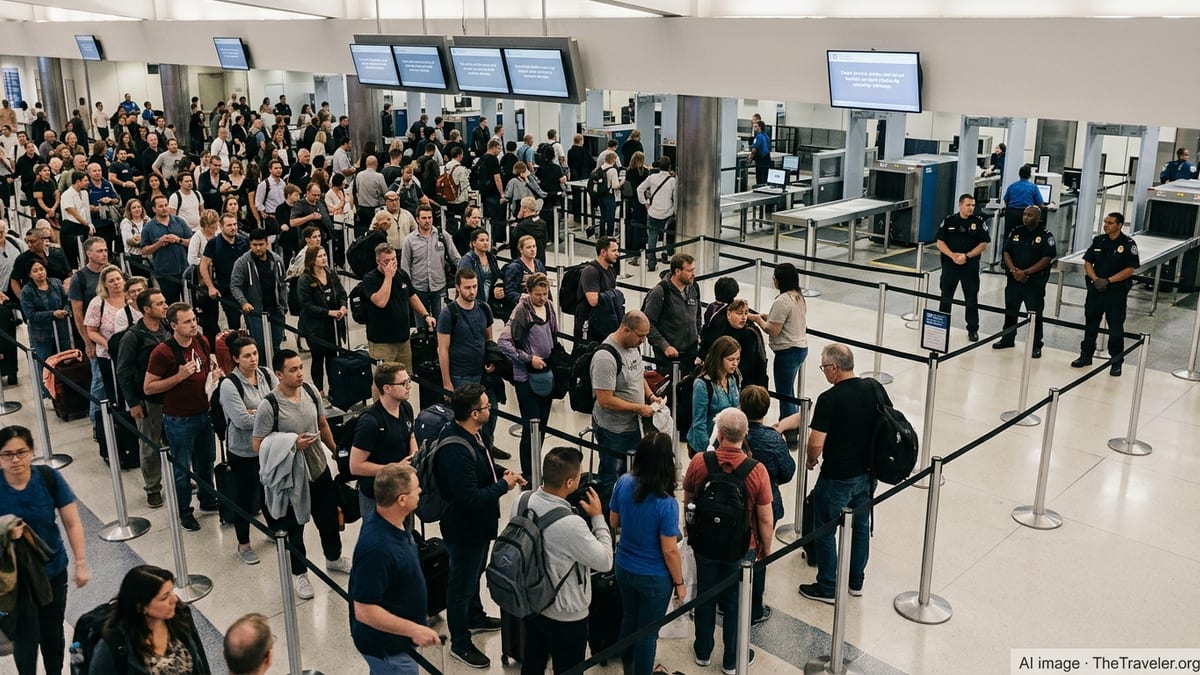
New data places Edinburgh near the bottom of UK rankings
The latest comparison of UK airports, based on Civil Aviation Authority punctuality statistics analysed by national media outlets, shows Edinburgh near the bottom of the table for on-time performance. Only two larger English hubs recorded worse overall delay figures, leaving Scotland’s busiest airport in third place among the poorest performers.
Coverage of the analysis indicates that more than half of flights leaving Edinburgh during the period studied failed to depart on time, using the common aviation benchmark of arriving or departing more than 15 minutes after schedule. That proportion puts the airport significantly behind several similarly sized UK competitors which managed to keep a clear majority of services on schedule.
The ranking adds to a developing picture of uneven reliability across the UK’s aviation network, with airports in London and the English Midlands also appearing repeatedly near the bottom of punctuality tables. While Edinburgh’s average delay times are shorter than those at some of the very worst performers, the frequency of late departures has drawn particular attention.
Reports note that the figures reflect performance across a full year, smoothing out seasonal spikes but also capturing the impact of busy summer and festive travel peaks. Analysts suggest that this timeframe gives a more representative picture of how consistently passengers can expect flights to operate on time.
Gatwick leads list of worst performers as regional hubs struggle
The same analysis places London Gatwick firmly at the bottom of the UK league for delays, with the country’s second-busiest airport again recording the longest average hold-ups. Other big English hubs, including Birmingham and Manchester, also feature among the least punctual, underlining the pressure on major regional bases handling large volumes of leisure and short-haul traffic.
Edinburgh’s position in third place means it is now grouped with these heavily used English airports that have struggled to keep flights running to schedule. Industry commentary links the challenges to a combination of air traffic control constraints, tight turnarounds on popular European routes and the lingering effects of pandemic-era staffing reductions across airlines and handling services.
By contrast, several smaller regional airports in England, Scotland and Northern Ireland are reported to have delivered significantly better on-time performance. Facilities with fewer daily movements and a higher proportion of point-to-point services, rather than dense hub connections, appear less exposed to knock-on disruption when delays occur elsewhere in the network.
Observers note that while individual airports receive much of the public criticism when flights run late, punctuality figures are influenced by a complex mix of operational decisions by airlines, staffing levels throughout the aviation ecosystem and external factors such as weather and military airspace restrictions.
Passenger demand surges at Scotland’s busiest airport
The punctuality concerns come at a time of rapid growth for Edinburgh Airport. Official traffic statistics show that it handled more than 15 million passengers in 2024, making it the sixth-busiest airport in the United Kingdom and by far the largest in Scotland in terms of annual footfall.
Industry data highlights that Edinburgh has been expanding its route network, particularly across Europe and to North America, with peak summer schedules placing considerable strain on terminal facilities and airfield capacity. As travel demand rebounded strongly after the pandemic, many airports saw queues lengthen and turnaround times stretch, with Edinburgh no exception.
Aviation analysts suggest that rapid growth can often outpace infrastructure and staffing plans, especially when airlines add capacity aggressively to capture demand. For passengers, the result can be a mix of crowded departure halls, tight security bottlenecks and gate congestion, all of which increase the risk that flights will miss their scheduled departure slot.
Comparisons with other major Scottish and northern English airports indicate that Edinburgh’s growth trajectory has been steeper in recent years, which may help explain why its punctuality rating has deteriorated more sharply than some rivals. However, experts point out that sustained investment in stands, taxiways and terminal processing can, over time, help busy airports bring delay statistics back under control.
How persistent delays affect travellers and airlines
For travellers, being based near an airport that regularly features in the lower half of punctuality tables can have practical consequences. Frequent late departures increase the risk of missed connections at onward hubs, complicate ground transport plans and generally erode confidence in published timetables.
From an airline perspective, consistently late departures can disrupt aircraft rotations across an entire network. A single delayed pushback in Edinburgh, for example, may reverberate into late arrivals at continental European destinations and then into further slippage on subsequent legs. Over time, such patterns can increase operating costs as carriers are forced to pay for crew overtime, reposition aircraft or compensate passengers under consumer protection rules.
Travel industry commentators also note a reputational effect. While most passengers understand that weather and air traffic control restrictions are beyond any one airport’s control, repeated experiences of queues, last-minute gate changes and extended waits on the tarmac can shape perceptions of a particular hub. In competitive markets where several airports serve overlapping catchment areas, punctuality can become a factor in travellers’ choice of departure point.
However, experts caution that year-on-year comparisons should be interpreted carefully. Variations in airline mix, changes to schedules and one-off events, such as air traffic control system outages, can all heavily influence a single year’s data, meaning that a poor ranking in one period does not necessarily lock an airport into a long-term pattern of delays.
Airport response and calls for wider system improvements
Public statements associated with the new rankings indicate that airports singled out for poor punctuality, including Edinburgh, have questioned the context and methodology of such comparisons. Management teams often argue that headline delay figures can overlook differences in route profiles, weather exposure and operational constraints that disproportionately affect certain locations.
Industry bodies and analysts, meanwhile, point to the need for coordinated improvements across the aviation system. Suggestions include continued investment in air traffic control technology, better sharing of real-time operational data between airlines and airports, and building greater resilience into schedules to absorb routine disruption without cascading knock-on delays.
For passengers planning trips through Edinburgh in the coming months, travel advisers recommend allowing extra time for connections, particularly where journeys rely on tight onward links from major European hubs. Booking earlier departures in the day, when operations are typically less affected by accumulated disruption, is also seen as one way to reduce the risk of significant delays.
While the latest figures cast an unflattering light on Edinburgh’s current performance, observers note that punctuality rankings have shifted over recent years as airports invest, restructure operations and adjust to changing travel patterns. The coming seasons are likely to show whether Scotland’s capital gateway can move itself out of the UK’s bottom tier for delays.